Understanding Gas Burner Modulation & Control Systems: A Technical Guide for Singapore Industrial Operations
Industrial gas burners operate across a wide spectrum of power outputs, demanding sophisticated modulation and control mechanisms to maintain optimal combustion efficiency, safety, and fuel economy. For industrial professionals managing manufacturing, chemical processing, or thermal treatment facilities across Singapore, understanding the principles of burner modulation—the dynamic adjustment of gas flow and air intake during operation—is critical to equipment longevity and operational cost management. Unlike fixed-output burners that simply switch on and off, modulating burners adjust their heat output continuously to match the thermal demands of the connected equipment, whether that's an industrial oven, boiler, or thermal processor. This technical guide examines the engineering principles behind modern gas burner control systems, the electronic components that enable precise modulation, and practical considerations for selecting and implementing these systems in demanding industrial environments.
The Fundamentals of Gas Burner Modulation and Control Architecture
Modern industrial gas burners employ modulation as a means of matching instantaneous heat demand with burner output, preventing energy waste and reducing thermal cycling stress on connected equipment. The modulation process operates through several integrated systems working in concert: the fuel supply system (regulating gas pressure and flow), the combustion air system (controlling air volume for proper stoichiometric ratios), the ignition and flame supervision system (ensuring safe ignition and continuous flame presence), and the control electronics that coordinate all three components.
The control architecture typically employs either proportional modulation (where burner output varies linearly across a range) or step modulation (where the burner operates at discrete output levels). Proportional systems offer superior efficiency and reduced thermal stress, as they continuously adjust to match load requirements without the cycling that occurs with step control. The modulation ratio—expressed as the relationship between maximum and minimum operating power—defines the turndown capability of the burner. For example, a burner with a modulation ratio of 3:1 can operate at any power level between its minimum and maximum ratings, providing significant flexibility for facilities with variable thermal loads.
In Singapore's industrial sector, where facility operators often manage equipment across extended operating hours, the economic benefits of modulation are substantial. By avoiding unnecessary high-power operation during partial-load conditions, modulating burners reduce gas consumption, lower emissions, and extend equipment service intervals. The control system communicates continuously with multiple sensors—temperature transducers, pressure sensors, and flame detectors—creating a closed-loop feedback system that maintains stable combustion across changing operational conditions.
Electronic Control Systems and Flame Detection Technologies
The electronic control module serves as the intelligence center of any modulating gas burner installation, processing sensor inputs and commanding the proportional fuel valve and air damper to maintain target operating parameters. Advanced control relays, such as the CBM Relay TMG 740-3, exemplify the sophisticated monitoring capabilities modern systems provide. This automatic burner control cabinet is specifically designed for intermittent-duty gas and dual-fuel burners with single or dual combustion heads, incorporating multiple flame detection options including ionization electrodes, UV cells, and infrared flame oscillation detectors.
Flame detection represents a critical safety function in any burner control system. Ionization detection, the most common method, relies on the electrical conductivity of the flame to verify combustion is occurring. An electrode positioned in the flame develops a small DC current proportional to flame intensity; if this signal drops below a predetermined threshold, the control system assumes flame loss and initiates safety shutdown. UV detection utilizes the ultraviolet radiation emitted by combustion, offering faster response times and immunity to electrical interference—advantages particularly valuable in industrial environments with high electromagnetic noise. Infrared flame oscillation detection monitors the flickering frequency characteristic of turbulent flame combustion, providing discrimination against false signals from hot surfaces or external radiation.
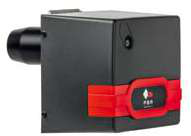
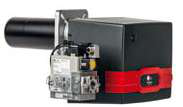
The integration between burner hardware and control electronics demands precise electrical specifications. The three-phase electrical supply required by many industrial burners (such as the FBR X GAS XP 60 CE TC EVO, _41, rated at 630 kW maximum) necessitates coordination with facility electrical infrastructure and control relay compatibility. Single-phase alternatives like the FBR GAS X2/M CE-LX4 TC (_31) serve smaller-duty applications with maximum output of 93 kW, demonstrating the spectrum of electrical configurations available for different industrial scales.
Control system response speed—the time required to detect load changes and adjust fuel/air ratios—directly impacts combustion stability and efficiency. Modern electronic proportional controllers achieve response times measured in milliseconds, enabling tight tracking of load variations without excessive overshoot or hunting. This precision prevents temperature excursions in connected equipment and minimizes unburned fuel emissions during transient conditions.
Practical Application Examples in Singapore Industrial Facilities
Singapore's diverse manufacturing base—encompassing food processing, pharmaceutical production, metal fabrication, and ceramics manufacturing—demonstrates varied burner modulation requirements. Consider a pharmaceutical manufacturing facility requiring precise temperature control in a thermal processing chamber. The operators specify a process temperature window of ±5°C; without modulation, a two-stage burner system would cycle between high and low power, causing temperature swings of 15-20°C that violate process specifications and compromise product quality. A proportional modulating burner system with continuous adjustment maintains the target temperature within specifications while reducing fuel consumption by 15-20% compared to on-off operation.
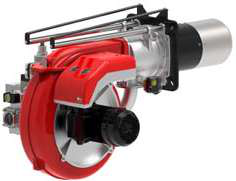
For a metalworking facility operating a hardening furnace with variable batch throughput, the FBR GAS XP 80/2 CE-LX4 TL (_41) provides flexible capacity across its 170-850 kW range. During partial-load periods—perhaps when running smaller batches or during warm-up phases—the modulating control system reduces fuel flow proportionally, avoiding the energy waste of full-power operation. The burner's 385 mm nozzle accommodates the fuel atomization required at these varying outputs, while the three-phase electrical supply integrates with the facility's industrial power infrastructure.
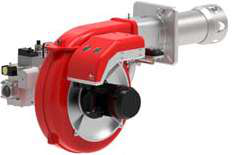
A food processing operation utilizing industrial steam generation demonstrates another practical scenario. Steam demand varies considerably with production scheduling—higher during peak processing hours, lower during cleaning cycles and product changeovers. A FBR GAS XP 80/M CE-LX4 TL (_41) burner system with 130-850 kW capacity automatically adjusts to match instantaneous steam demand, preventing boiler pressure overshoot that would trigger safety relief valves and waste steam (and the fuel energy that generated it).
Selection Criteria and Best Practices for Modulating Burner Systems
Selecting an appropriate modulating burner system requires systematic evaluation of several technical parameters. First, establish the equipment's actual thermal load range—not just the maximum capacity, but the typical operating range. Many facilities operate at partial load 60-80% of the time; a burner with poor turndown performance (large gap between minimum and maximum output) will waste fuel and struggle to maintain stable control in this regime. The modulation ratio specification becomes critical: burners with 5:1 or better turndown ratios provide superior part-load efficiency.
Electrical supply compatibility must be verified before selection. The distinction between three-phase equipment (represented by models like the XP 60, XP 80 series) and single-phase alternatives (such as the X2/M models with 93 kW maximum) directly impacts installation feasibility. Facility electrical distribution, control room infrastructure, and existing equipment compatibility should guide this decision.
Control system response characteristics should match the specific application. Fast-response systems suit equipment with significant thermal inertia (boilers, furnaces) where rapid control reactions prevent overshoot. Slower-response systems may be appropriate for large thermal masses where gradual adjustments are sufficient. The full range of burners and combustion equipment available through 3G Electric provides multiple options across these performance spectra.
Maintenance accessibility and support infrastructure matter significantly. Select burner designs that facilitate nozzle cleaning, electrode inspection, and control module service without extensive disassembly. Singapore's humid tropical climate demands particular attention to corrosion resistance and electrical connector protection in control systems exposed to facility environments.
Integration with Modern Facility Control Networks
Contemporary industrial facilities increasingly integrate burner control systems into facility-wide Building Management Systems (BMS) or SCADA platforms, enabling remote monitoring, energy management, and predictive maintenance. Modern gas burner systems with electronic controls should provide standard communication interfaces—Modbus, BACnet, or proprietary protocols—supporting this integration. Flame detection modules and pressure monitoring provide early warning of combustion instability, enabling preventive maintenance before catastrophic failures occur.
The environmental benefits of precise modulation control extend beyond facility-level economics. By maintaining optimal fuel-air ratios across the full operating range, modulating systems significantly reduce NOx and particulate emissions compared to on-off burner operation. For Singapore facilities subject to environmental regulations, this represents both a compliance advantage and a contribution to air quality in our densely populated industrial environment.
Closing: Optimizing Your Industrial Burner System
Gas burner modulation and electronic control systems represent sophisticated engineering solving real industrial challenges: precise temperature control, fuel economy, operational safety, and environmental responsibility. Whether you're upgrading existing equipment, troubleshooting combustion instability, or planning new thermal processing capacity, understanding these technical principles enables better decision-making and superior operational outcomes.
3G Electric has served Singapore's industrial equipment needs since 1990, with deep expertise in burner selection, specification, and integration. Our technical team can assess your specific thermal requirements, evaluate your facility's electrical and control infrastructure, and recommend appropriate gas burners with electronic controls and gas train systems matching your operational demands. Contact 3G Electric today to discuss your burner system requirements and discover how modern modulation technology can improve your facility's efficiency, safety, and reliability.