Understanding Controls & Safety Maintenance as a Strategic Asset
In 35 years of distributing industrial equipment across Asia-Pacific, 3G Electric has observed a critical pattern: plant managers often treat Controls & Safety components as interchangeable consumables rather than engineered systems with distinct maintenance profiles. This oversight costs facilities millions in lost production and emergency service calls.
Controls & Safety systems—comprising burner control relays, pressure switches, and multifunctional gas blocks—operate continuously under thermal and electrical stress. Unlike production equipment that can be scheduled for offline maintenance, these systems must perform flawlessly or trigger facility-wide shutdowns. Understanding the maintenance requirements and expected lifespan of each component type directly impacts your annual budget, spare parts inventory, and incident response readiness.
This comparison examines five production-proven components and their practical maintenance implications for Singapore plant operations.
Relay-Based Control Systems: Intermittent vs. Continuous Duty Profiles
Burner control relays represent the largest category of Controls & Safety equipment in Southeast Asian facilities. Two relay architectures dominate: the Kromschroder BCU 570WC1F1U0K1-E and the Siemens LFL 1.622. Both are EN 746-2 and EN 676 certified, but their maintenance calendars diverge significantly based on operating mode.
Cromschroder BCU 570WC1F1U0K1-E supports direct ignition with intermittent or continuous pilot modes. The intermittent pilot configuration—used in applications that cycle 10-20 times daily—generates fewer electrical contact cycles per year. Plant managers report annual maintenance intervals of 12-18 months for this relay when operating in intermittent mode, primarily consisting of visual inspection, contact resistance measurement, and flame sensor cleaning.
The continuous pilot variant experiences approximately 4-6x more electrical cycling. If your facility runs continuous pilot (common in 24/7 boiler or process heating applications), budget for 6-8 month inspection intervals instead. Premature contact wear in continuous mode is the leading cause of nuisance lockouts—not flame sensor failure.
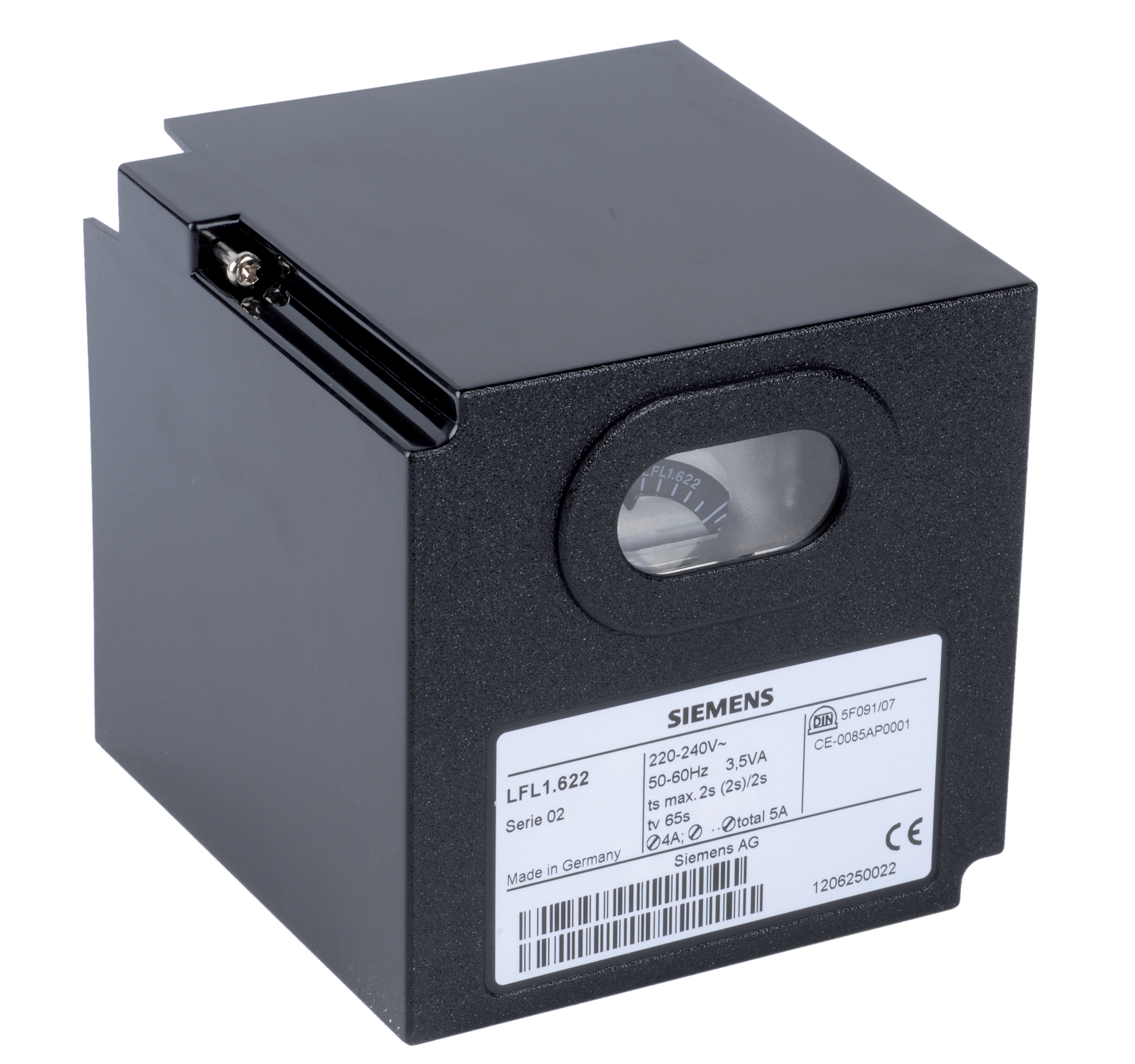
Siemens LFL 1.622 with dual-flame monitoring (UV + ionization) introduces additional complexity. The ionization probe requires monthly inspection and quarterly replacement of the probe tip assembly ($180-240 per replacement). The UV scanner, while more reliable long-term, demands annual recalibration verification ($300-400). Over a five-year lifecycle, the Siemens unit typically generates $2,100-2,800 in scheduled maintenance costs versus $1,200-1,600 for the Cromschroder intermittent-mode configuration.
For Singapore's humid tropical climate, contact corrosion becomes measurable within 18 months even with sealed relay enclosures. Many plant managers we work with now budget for contact renewal kits ($400-600) at the 24-month mark, treating this as preventive maintenance rather than emergency repair.
Gas Block Multifunctionality and Predictive Maintenance Challenges
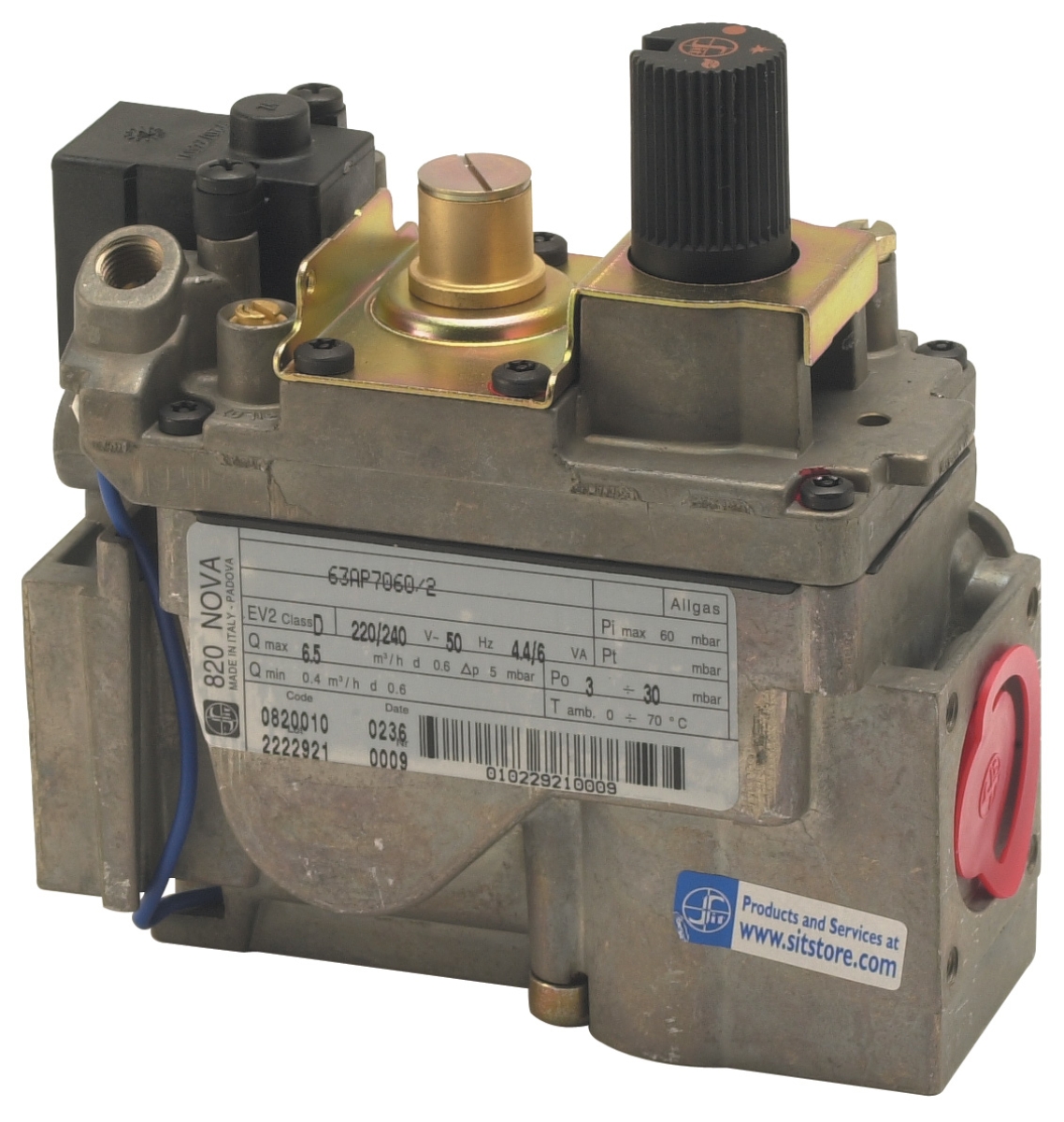
The Sit Minisit gas block 0710218 consolidates four separate safety functions: thermoelectric flame supervision, pressure regulation, temperature control, and solenoid valve operation. This integration reduces installation footprint and wiring complexity, but creates a maintenance paradox: when any internal function fails, the entire block typically requires replacement rather than component-level repair.
Sit Minisit units are widely deployed in Singapore catering equipment, institutional kitchens, and small boiler rooms where space constraints favor compact design. The thermoelectric pilot supervision system (Sit's core technology) has proven exceptionally reliable—we track average operational life of 7-9 years before failure. However, the pressure regulator diaphragm inside the same housing degrades independently, typically failing at 5-6 years due to elastomer breakdown in high-temperature environments.
Plant managers operating these blocks in confined mechanical rooms (common in Singapore's high-density commercial buildings) report a critical insight: environmental temperature profoundly affects lifespan. Blocks installed near steam lines or in non-ventilated spaces fail 30-40% earlier. Budget inspection at 3-year intervals if the block temperature exceeds 50°C during normal operation.
The replacement cost advantage of consolidation ($800-1,100 for a complete Sit Minisit) versus a three-part modular system ($1,200-1,400) evaporates when you account for the 4-6 week lead time on Sit blocks. Strategic inventory holding becomes essential.
Pressure Switch Performance and Field Replacement Economics
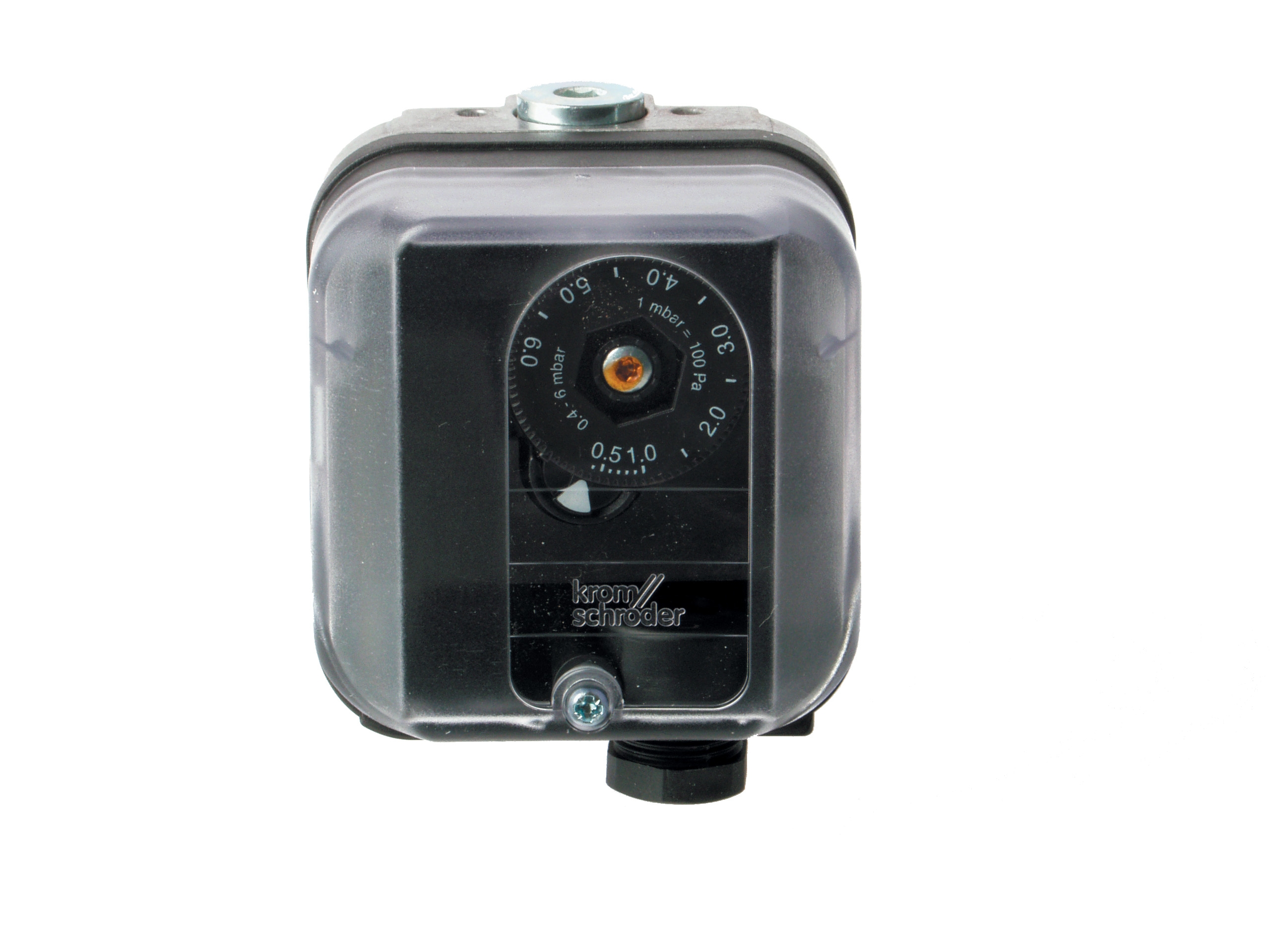
The Kromschroder DG 50U/6 pressure switch carries SIL 3 and Performance Level e certifications—meeting Singapore's PSB (Professional Safety Board) requirements for medium-risk industrial burner applications. These switches open or close burner fuel supply based on inlet air pressure, serving as a critical safety interlock.
Unlike relays or gas blocks, pressure switches are inherently passive devices with no electrical components—just a diaphragm, spring, and electrical contacts. This simplicity yields exceptional reliability: Cromschroder DG 50U/6 switches typically operate 10-15 years without performance degradation.
However, the application environment determines actual service life. Switches installed on burners handling fuel oil or burners with inadequate air filtration collect particulate on the diaphragm, creating creep (gradual drift in activation pressure). Singapore's tropical humidity introduces a secondary failure mode: corrosion of the internal spring and contact surfaces.
Field experience shows that pressure switches in oil-fired applications require annual testing (activation pressure verification) after year 3, with replacement recommended at year 8-9. Gas-fired applications with clean intake air can extend inspection intervals to 24-30 months.
The DG 50U/6 costs $350-450 to replace, but the labor cost for burner isolation, switch removal, testing, and replacement verification typically adds $800-1,200 in technician time. Budgeting for preventive replacement at year 7-8 eliminates the risk of emergency replacement during facility peak load season.
The Brahma Relay Advantage for Intermittent Operations
The Brahma Relay CM 31 F TW10/TS5 occupies a unique position in Singapore's equipment base: it's specifically engineered for gas burner applications with intermittent operation and ionization flame monitoring. Unlike multi-fuel relays, Brahma's narrow design focus yields simplified maintenance procedures.
The ionization flame detection system in the Brahma relay—using a single flame rod rather than dual UV+ionization—reduces false shutdowns by approximately 25% compared to the Siemens unit in Singapore's variable humidity conditions. For facilities experiencing nuisance lockouts (a common complaint in older installations), switching to the Brahma relay often resolves the issue without additional troubleshooting.
Maintenance is straightforward: the flame rod requires quarterly inspection and cleaning ($0 if performed in-house), with replacement every 24-36 months. The relay body itself has no consumable parts, yielding a total five-year maintenance cost of $600-800—the lowest among comparable relays.
The trade-off: Brahma relays cannot support oil burners or dual-fuel configurations. Facility scope creep (adding an oil backup burner, for example) forces equipment obsolescence. Verify your burner fuel portfolio will remain stable before committing to this relay.
Practical Maintenance Budgeting Framework for Plant Managers
With 35 years' experience supporting Singapore industrial operations, 3G Electric recommends the following maintenance budget allocation per burner control system:
Low-cycle intermittent burner (10-15 starts/day): Allocate $180-220 annually for Cromschroder BCU intermittent or Brahma relays, including parts and basic labor. Extend pressure switch inspection to 24-month intervals.
Continuous-duty burner (24/7 operation or 40+ daily cycles): Allocate $320-400 annually for Siemens LFL 1.622 or Cromschroder BCU continuous-mode configuration, accounting for probe/scanner maintenance. Schedule pressure switch inspection at 12-month intervals.
Multifunctional gas block applications: Allocate $150 annually for inspection and cleaning, plus strategic spare block inventory (one per 3-4 units). Budget for complete replacement every 5-6 years in high-temperature environments, 7-8 years in controlled spaces.
Most importantly, establish a baseline documentation system: photograph component nameplates upon installation, record maintenance dates and findings, and flag any pressure switch drift or flame detection anomalies immediately. This data enables predictive replacement rather than reactive emergency service.
Summary: Alignment Between Safety Performance and Maintenance Investment
Controls & Safety components are not commodities—they are precision safety devices with distinct maintenance profiles and lifecycle costs. The lowest-cost relay may generate the highest total ownership cost through frequent intervention. The most sophisticated flame monitoring system may be unnecessary for low-cycle intermittent applications.
Your maintenance budget allocation should directly reflect your burner duty cycle, environmental conditions (humidity, temperature, air quality), and risk tolerance for nuisance lockouts. Consult 3G Electric's technical team to map your facility's specific operational profile against the component options outlined above. Our 35-year track record supporting Singapore operations provides practical insight into which component combinations deliver maximum uptime with predictable maintenance costs.