Understanding Burners & Combustion Equipment Lifecycle
Burners and combustion systems are capital assets that define plant uptime, energy efficiency, and safety compliance. Unlike consumables, these systems operate across predictable lifecycle phases, each with distinct management requirements. For plant managers in Singapore, understanding this lifecycle is essential for budgeting, risk management, and maintaining competitive operational costs.
With over 35 years of industrial equipment distribution experience, 3G Electric has supported hundreds of Singapore plants through equipment transitions. The lifecycle approach recognizes that burner performance degrades gradually, replacement costs must be planned strategically, and system upgrades often deliver ROI through reduced energy consumption and maintenance frequency.
The burner lifecycle typically spans 10–20 years depending on fuel type, operating hours, maintenance quality, and environmental conditions. Gas burners tend toward the longer end; heavy oil and dual-fuel systems require more intensive monitoring. In Singapore's tropical climate with high humidity and salt-air exposure in coastal regions, corrosion and component degradation accelerate, shortening effective lifecycles by 2–4 years compared to temperate zones.
Phase 1: Initial Selection and Commissioning (Years 0–1)
The first lifecycle phase involves selecting the right burner architecture for your plant's thermal requirements, fuel availability, and control ambitions. Poor selection at this stage cascades downstream, creating maintenance inefficiency and missed efficiency opportunities.
Matching Power Output to Thermal Load
Burner selection must account not only for average thermal demand but for peak seasonal loads, future production expansion, and part-load efficiency. Many plants oversized burners by 20–30% to "future-proof" against growth, but oversized burners operate inefficiently at part load, increasing fuel consumption and emissions. The modern approach uses modulating or staged burners that maintain high efficiency across 30–100% load ranges.
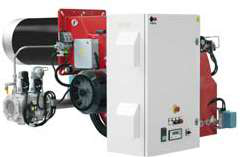
For two-stage systems like the FBR GAS XP 60/2 CE TC EVO, which delivers 116–630 kW, plant managers should model seasonal thermal profiles and select units operating in their optimal efficiency band 60–80% of the time. This requires baseline energy audits before procurement.
Control System Architecture
Burner control systems determine operational flexibility, safety margins, and maintenance frequency. Legacy on-off burners cycle frequently, wasting fuel and stressing ignition components. Modern systems with modulating controls reduce cycling, extend component life, and lower emissions by 15–25%.
Siemens safety relays like the LFL 1.622 and Kromschroder control units such as the BCU 570WC1F1U0K1-E provide integrated flame monitoring, ignition sequencing, and diagnostics that prevent nuisance lockouts and simplify troubleshooting. During commissioning, ensure technicians document baseline operating parameters—fuel pressure, air ratio, flame signal strength—for future diagnostic reference.
Commissioning Documentation
Plant managers often overlook commissioning documentation, yet baseline records are invaluable during troubleshooting years later. Secure full test reports, calibration certificates for pressure switches and flame detectors, control unit configuration printouts, and photos of installed components. This baseline becomes your diagnostic reference when drift occurs.
Phase 2: Routine Operation and Preventive Maintenance (Years 1–10)
The bulk of the burner lifecycle involves steady-state operation punctuated by scheduled and reactive maintenance. This phase determines whether you extract 10 years or 18 years of service from the equipment.
Monitoring Condition Indicators
Plant managers should establish a condition monitoring dashboard tracking:
- Fuel consumption trends: Gas or oil consumption per thermal unit output. A 3–5% annual increase signals burner drift, nozzle erosion, or air ratio degradation.
- Flame signal stability: Monitor signal strength at the control unit. Declining signals indicate flame rod fouling, electrode erosion, or combustion chamber damage.
- Ignition attempts per start cycle: Rising attempt counts—especially repeated lockouts followed by recovery—signal electrode wear, fuel system contamination, or control unit aging.
- Operating temperature profiles: Gradual temperature increases at constant load indicate refractory wear, fouling, or heat exchanger scaling.
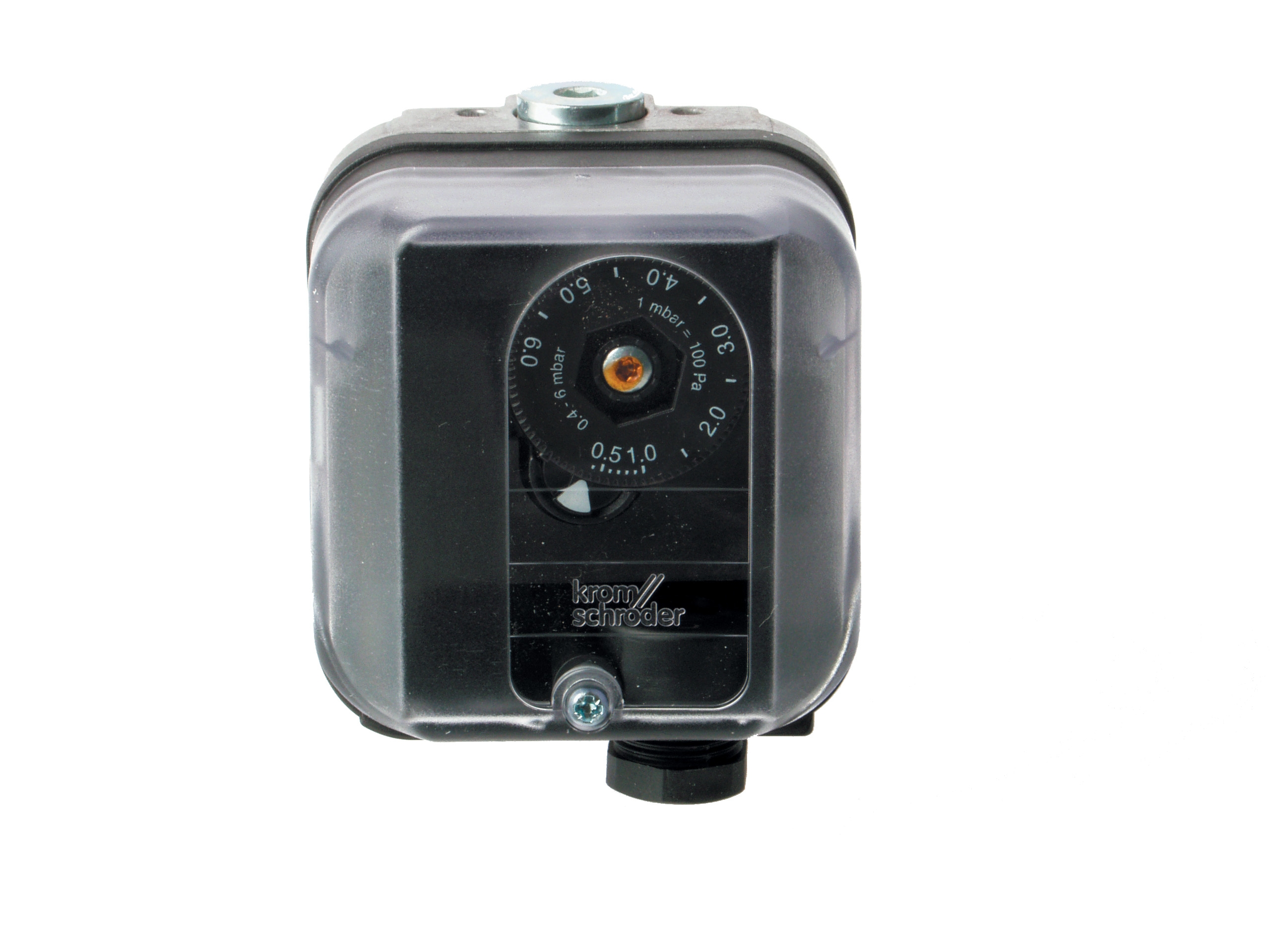
- Pressure switch response time: Slower response times on pressure switches like the Kromschroder DG 50U/6 suggest diaphragm degradation or seal leakage.
Scheduled maintenance should follow equipment manufacturer guidance but be adjusted based on local conditions. In Singapore, the high humidity and salt-air environment warrant:
- Quarterly inspections for coastal plants: Visual checks of external corrosion, electrical connector conditions, and visible fouling.
- Semi-annual fuel system cleaning: Fuel filters and strainers require more frequent replacement in humid climates; water contamination accelerates corrosion of fuel delivery components.
- Annual control unit testing: Flame detector responsiveness, ignition transformer output, and pressure switch calibration should be verified annually, not just at mandatory certification intervals.
- Bi-annual electrode and nozzle inspection: Erosion, carbon buildup, and mechanical wear progress faster under continuous operation; visual inspection guides replacement timing rather than waiting for failure.
Certain components have predictable lifespans and should be replaced proactively:
- Ignition electrodes: 5–7 years or 10,000 ignition cycles
- Flame rods/UV detectors: 7–10 years
- Air damper servos: 8–12 years
- Burner nozzles: 8–15 years depending on fuel quality
- Pressure switch seals: 10–12 years
Planning these replacements during scheduled maintenance shutdowns prevents emergency lockouts and ensures spare parts availability.
Phase 3: Aging System Recognition and Upgrade Planning (Years 10–15)
As burners approach 10 years of operation, performance drift accelerates and maintenance frequency increases. This phase requires deliberate decision-making: continue reactive maintenance on aging systems or invest in replacement.
Red Flags for System Aging
Plant managers should escalate replacement planning when observing:
- Lockout frequency exceeding twice monthly: Indicates multiple component wear (likely electrodes, flame detector, and pressure switch simultaneously).
- Fuel consumption increases of 8–12% above baseline: Suggests combustion efficiency has degraded below acceptable tolerances; air ratio tuning no longer recovers performance.
- Control unit repair costs exceeding 15% of new unit cost annually: Parts availability becomes problematic; diagnostic difficulty increases.
- Refractory or furnace wall damage visible during inspections: Burner aging often correlates with downstream equipment degradation; replacement windows may align with facility refresh cycles.
- Regulatory compliance uncertainty: Aging control systems may not meet updated emissions or safety standards (EN 746-2, EN 1854, FM/UL requirements); compliance verification becomes costly and risky.
Upgrades during the aging phase should target efficiency and operational resilience:
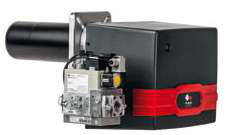
- Transition to modulating burners: Dual-fuel systems like the FBR KN 1300/M TL EL enable fuel switching and part-load efficiency, reducing annual energy costs by 10–20% compared to staged systems.
- Integrate advanced flame detection: Modern UV/ionization dual-sensing (as in the Siemens LFL 1.622) reduces nuisance lockouts by 40–60%, improving plant availability and operator confidence.
- Upgrade control architectures: Modern safety relays provide integrated diagnostics, reducing commissioning time and enabling predictive maintenance data collection.
- Implement combustion air optimization: Upgraded air damper controls and oxygen trimming systems reduce excess air, improving efficiency by 3–8%.
Plant managers should initiate replacement projects 12–18 months before planned retirement:
1. Conduct energy audit (months 12–10 before replacement): Establish thermal baseline; model upgrade scenarios (efficiency gains, fuel switching capability, modulation range).
2. Evaluate fuel strategy (months 11–9): Assess gas availability, oil quality, dual-fuel economics. Upgrading burners often justifies switching to preferred fuels.
3. Secure budget and approvals (months 10–8): Equipment costs plus installation labor and commissioning testing; plan capital procurement.
4. Procure and schedule installation (months 8–4): Lead times for specialized burners (dual-fuel heavy oil systems) can reach 12–16 weeks; avoid urgent ordering.
5. Arrange decommissioning and disposal (months 6–3): Plan for old burner removal, fuel system flushing, and proper equipment recycling.
6. Conduct commissioning and baseline testing (month 1): Full functional testing, efficiency verification, staff training, and documentation.
Phase 4: System Retirement and Knowledge Transition
When burners reach 15–20 years of operation, retirement becomes unavoidable. The final lifecycle phase focuses on knowledge preservation and smooth transition to replacement systems.
Decommissioning Safety
Fuel systems must be properly isolated, purged, and flushed to prevent ignition hazards and fuel spillage. Gas systems should be depressurized and vented; oil systems drained and residual fuel removed. Control systems should be isolated from electrical supplies and safely grounded. This work requires qualified technicians and should follow local Singapore WorkSafeBC-equivalent protocols.
Knowledge Capture
Before decommissioning, document:
- Operating parameter history: Fuel pressures, air ratios, combustion temperatures, efficiency measurements.
- Maintenance records: Component replacements, repair costs, recurring issues.
- Lessons learned: What worked well, what caused downtime, suggested improvements for replacement systems.
- Staff training: Ensure new team members observe final operation and receive knowledge transfer on system quirks and emergency procedures.
Partners like 3G Electric support equipment transitions by maintaining spare parts availability for aging systems during overlap periods, sourcing compatible replacement components, and facilitating training on new control architectures. Establishing relationships with distributors early—during the routine operation phase—ensures you have trusted technical resources when replacement decisions accelerate.
Strategic Takeaways for Plant Managers
Successful burner lifecycle management requires viewing equipment not as point purchases but as 15+ year capital assets deserving structured planning. Key actions:
- Establish baseline documentation during commissioning; use it for diagnostic comparison throughout the lifecycle.
- Implement condition monitoring for fuel consumption, flame signals, and ignition attempts; trending reveals aging before failure.
- Plan preventive replacements of electrodes, flame detectors, and nozzles proactively; avoid cascading failures.
- Recognize aging indicators by year 10–12; initiate replacement planning before lockout frequency becomes operationally disruptive.
- Align upgrades with efficiency and fuel strategy goals; replacement opportunities justify investment in advanced features.
- Budget 12–18 months for replacement cycles; rushed procurement leads to poor system fit and installation complications.
- Preserve institutional knowledge; decommissioning should include thorough documentation and staff training transfer.
For Singapore plant managers operating in tropical, high-humidity environments, these timelines compress by 15–25%; aging equipment shows accelerated corrosion and electrical component degradation. Proactive lifecycle management—rather than reactive firefighting—ensures reliable, efficient combustion systems supporting your facility's competitive performance.