Understanding Dual-Fuel Burner Architecture and Failure Patterns
Dual-fuel burners—systems capable of operating on both gas and heavy oil—present unique diagnostic challenges for HVAC contractors. Unlike single-fuel systems, dual-fuel configurations introduce fuel-switching logic, dual nozzle designs, fuel line isolation, and redundant ignition pathways that can fail independently. In Southeast Asian industrial operations, where ambient temperature, humidity, and fuel quality vary significantly across regions, these systems experience higher failure rates during seasonal transitions and fuel transitions.
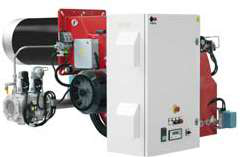
The FBR KN 1300/M TL EL heavy oil burner exemplifies modern dual-fuel technology, operating at 2-stage modulation with thermal power ranging from 1700 to 11500 Mcal/h. This capability demands sophisticated control coordination—any misalignment between fuel supply pressure, ignition timing, and control relay logic cascades into combustion instability or complete system lockout.
Common failure patterns in dual-fuel systems fall into three categories: fuel-switching faults (system fails to transition between fuels cleanly), control relay mismanagement (ignition sequence breaks during fuel transition), and nozzle contamination (fuel quality degradation prevents atomization on secondary fuel). Contractors must develop diagnostic protocols addressing each category systematically.
Diagnostic Procedure 1: Fuel-Switching and Control Relay Validation
Step 1: Verify Fuel Supply Pressures at Both Inlets
Before suspecting control logic failure, confirm both fuel lines deliver correct operating pressures. Gas burners typically operate at 15–25 mbar; heavy oil systems require 8–12 bar. Southeast Asian contractors should account for altitude variations (affecting air pressure calibration) and seasonal humidity changes that corrupt pressure transducers.
Action: Using a calibrated dual-input pressure gauge, measure gas inlet pressure and oil inlet pressure simultaneously during normal operation. Note any drift beyond ±5% of design specification. If oil pressure reads below 7 bar on a system rated for 8–12 bar, suspect fuel pump cavitation or filter blockage rather than control relay failure.
Step 2: Examine the Control Relay Ignition Sequence
The Kromschroder Relay BCU 570WC1F1U0K1-E represents industrial-grade burner control logic supporting direct ignition and intermittent/continuous pilot modes. When fuel-switching occurs, this relay manages ignition transformer energization, solenoid valve sequencing, and flame detector monitoring in precise millisecond windows.
Diagnostic approach: Request a functional test sequence from the facility operator. During manual fuel-switching (gas-to-oil or oil-to-gas transition), observe whether the control relay:
- Closes the first fuel solenoid before opening the second fuel solenoid (preventing dual-fuel combustion)
- Energizes the ignition transformer 1–2 seconds before opening the secondary fuel solenoid
- Monitors flame detection for at least 5 seconds after secondary fuel introduction
- Displays green/amber/red status lights (or equivalent) indicating each sequence step
If the relay skips any step or transitions too rapidly, the semiconductor logic may be corrupted. EN 746-2 and EN 676 compliance mandates these sequences—non-compliance indicates relay replacement is necessary.
Step 3: Pressure Switch Validation Under Load
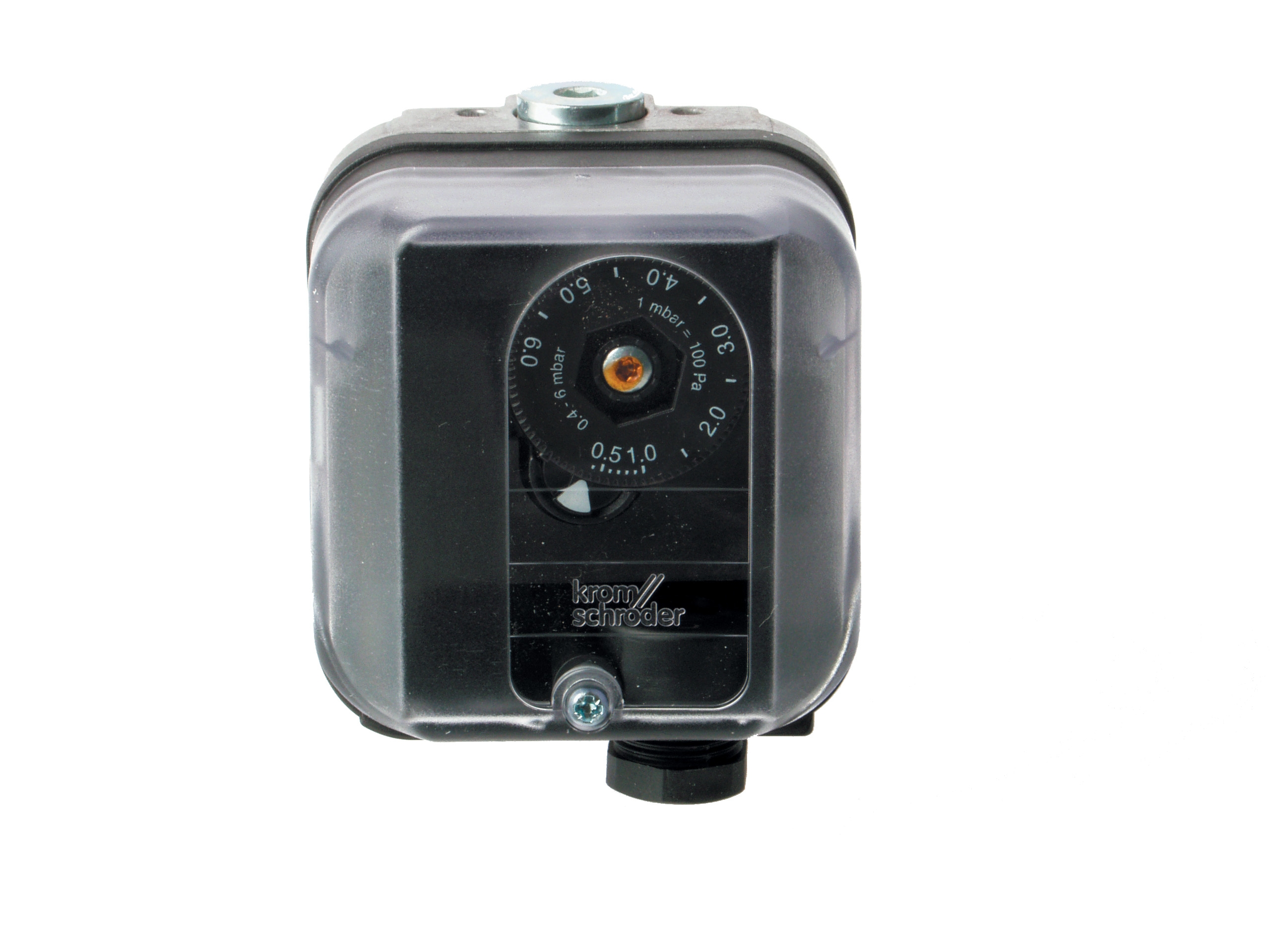
The Kromschroder Pressure switch DG 50U/6 is a critical safety device rated SIL 3, preventing burner ignition if air/fuel pressures fall below safe thresholds. This device must respond instantly during fuel transitions—a delayed response allows transient combustion anomalies to occur.
Practical test: With the burner in standby, manually increase air pressure incrementally using the combustion air fan control. The pressure switch should activate (closure signal) at the design setpoint ±2%. If activation occurs erratically or lags by more than 0.5 seconds, the diaphragm is likely fatigued or the internal poppet valve is sticking due to fuel residue contamination.
In humid Southeast Asian climates, salt spray and moisture ingress corrode the pressure switch stem, causing sluggish response. Contractors should inspect the switch housing for corrosion (whitish or greenish deposits) and recommend replacement if visible.
Diagnostic Procedure 2: Flame Detection and Combustion Stability During Fuel Transitions
Flame Detector Alignment and Soot Contamination
The Siemens Relay LFL 1.622 safety control unit integrates UV and ionization flame monitoring—each technology has distinct failure modes during fuel transitions. UV detectors respond to any flame emissions; ionization sensors require combustible ions in the flame zone. When switching from gas to heavy oil, ionization response delays 0.5–2 seconds as oil droplets must fully vaporize and ignite, creating ionic pathways.
Diagnostic procedure:
1. Obtain a portable combustion analyzer or UV/flame detection test device (many HVAC contractors maintain one for safety verification).
2. During normal gas combustion, confirm the flame detector responds within 1 second of ignition (pilot flame lighting).
3. Manually command fuel-switch to heavy oil. If the flame detector does not confirm secondary flame within 3 seconds, the burner should lockout (safety interlock activates). If the burner remains running without flame confirmation, the flame detector circuit is faulty.
4. Visually inspect the flame detector lens. Heavy soot accumulation (black coating) reduces UV transmission by 30–60%, delaying detection. Contamination is the most common cause of delayed flame response in dual-fuel systems operating in dusty Southeast Asian industrial zones.
Corrective action: If soot is visible, clean the detector lens with a soft, lint-free cloth and appropriate solvent (check Siemens documentation for specific solvents). If cleaning restores normal response, schedule fuel nozzle and combustion air inspection (soot indicates incomplete combustion). If cleaning does not restore response within acceptable limits, replace the flame detector.
Combustion Stability After Secondary Fuel Introduction
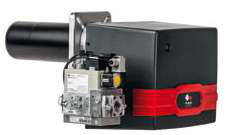
The FBR GAS XP 60/2 CE TC EVO gas burner operates cleanly with minimal soot production. However, when the same burner system transitions to heavy oil operation, combustion temperature, flame geometry, and emission characteristics change dramatically. Instability manifests as flame flickering, audible pulsation (80–150 Hz frequency), or intermittent flame detector dropout.
Root cause analysis:
- Air/fuel ratio imbalance: Heavy oil atomization requires specific air velocity at the nozzle. If combustion air damper position does not adjust during fuel transition, the air/fuel ratio becomes too rich (excess fuel) or lean (excess air).
- Nozzle wear: Oil nozzles have tighter tolerances than gas burner nozzles. Wear or carbon buildup disrupts atomization spray pattern, creating large fuel droplets that burn incompletely.
- Fuel temperature variance: Heavy oil viscosity changes with temperature. Southeast Asian ambient conditions (28–38°C) combined with heated fuel lines create viscosity swings. Contractors must verify fuel temperature at the nozzle inlet matches design specifications (typically 40–60°C for heavy oil).
- Stable flame: Steady color (orange-yellow), minimal movement, no audible pulsation
- Unstable flame: Flickering edges, color variation (blue to yellow), audible rumbling or pulsation sound
If instability occurs, measure combustion air damper position and compare against the system's design documentation. Most dual-fuel burners require the damper to move 15–30% between gas and oil modes. If the damper position is locked or moves only 5%, the damper actuator (often a 24V stepper motor or pneumatic cylinder) is faulty.
Diagnostic Procedure 3: Fuel Nozzle Condition and Atomization Testing
Visual Inspection and Blockage Assessment
Fuel nozzles are the primary failure point in dual-fuel systems, especially in regions with inconsistent fuel quality (common in Southeast Asia). Oil nozzles contain internal screens and swirl chambers that accumulate sediment, water, and carbon deposits. Gas nozzles are less vulnerable but still subject to carbon buildup from incomplete combustion.
Inspection checklist:
1. Shut down the burner and allow cooling (minimum 30 minutes for heavy oil systems).
2. Safely isolate fuel supply (close solenoid valve, close fuel line isolation cock, verify zero pressure).
3. Remove the nozzle assembly. For the FBR KN 1300/M, this typically involves removing 2–4 bolts and disconnecting the fuel line.
4. Hold the nozzle up to bright light (not a flame source). Look through the spray hole(s):
- Clear opening: Light passes through with minimal obstruction—nozzle is serviceable
- Partial blockage: Light passes through reduced opening—sediment has accumulated; recommend cleaning or replacement
- Complete blockage: No light passes through—replace nozzle immediately
5. Check for external carbon encrustation (black, crusty coating). Carbon indicates combustion-side contamination; mild carbon can be cleaned, but heavy buildup requires replacement.
6. Inspect the nozzle seat (where nozzle threads into burner head) for corrosion or scoring. If seat is damaged, fuel can leak past the nozzle seal.
Humidity-related failure: Southeast Asia's high humidity (70–90% typical) accelerates corrosion of steel nozzle components. Contractors should recommend stainless steel nozzle upgrades for facilities with consistently humid environments or coastal locations exposed to salt spray.
Atomization Testing (Field Procedure)
If a nozzle appears clean but combustion remains unstable, the internal swirl chamber may be partially obstructed or the spray pattern may be distorted. A simple field test confirms nozzle function:
Procedure:
1. With the nozzle removed and the burner secured on a workbench, introduce low-pressure compressed air (2–3 bar) into the nozzle fuel inlet.
2. Direct the nozzle spray into a clear container or bucket.
3. Observe the spray pattern:
- Correct pattern: Fine mist, uniform cone shape, consistent distribution
- Faulty pattern: Large droplets, asymmetric cone, or single-stream spray (cone partially blocked)
If the pattern is faulty, attempt cleaning with fuel-safe solvents (diesel or light oil). If cleaning does not restore the pattern, replacement is mandatory.
Common Faults and Rapid Decision Trees
Fault: Burner Fails to Transition from Gas to Oil
Step 1: Confirm gas solenoid closes (pressure at gas inlet drops to zero).
- YES: Proceed to Step 2.
- NO: Gas solenoid is stuck open; replace control relay or test solenoid coil with multimeter (should show 12–24V DC when relay energizes secondary fuel circuit).
- YES: Proceed to Step 3.
- NO: Oil fuel pump is not running or oil line is blocked; verify pump power supply and inspect fuel filter.
- YES: System is functioning normally; investigate operator procedure (fuel-switch sequence may be too rapid).
- NO: Clean flame detector lens or replace if cleaning does not restore response.
Fault: Burner Trips to Lockout During Oil Operation (After 10–30 Minutes of Runtime)
Likely cause: Nozzle contamination causing progressive atomization degradation. As droplet size increases, flame temperature rises, triggering high-temperature safety shutdown.
Action: Remove and inspect oil nozzle (follow Procedure 3 above). If blockage is present, clean or replace. If nozzle is clear, inspect fuel filter (very fine screens may be restricting flow). Check fuel tank for water accumulation (condensation is common in Southeast Asia's humid climate); drain tank if water is visible.
Fault: Flame Detector Responds Sluggishly During Gas-to-Oil Transition (Delay > 2 Seconds)
Likely causes (in priority order):
1. Flame detector lens is contaminated with soot (most common)
2. Ionization detector ceramic electrode is aged or damaged
3. Oil nozzle atomization is poor, creating large droplets that burn with delay
Action: First, clean the flame detector lens. If response remains slow, inspect the oil nozzle. If nozzle is clean, the ionization electrode requires replacement (part of the Siemens LFL 1.622 unit).
Maintenance Recommendations for Southeast Asian Facilities
Given the region's high humidity, coastal salt spray exposure, and variable fuel quality, contractors should recommend:
1. Quarterly fuel nozzle inspection (or every 500 operating hours) instead of annual intervals
2. Semi-annual fuel filter replacement with high-efficiency (10–25 micron) elements
3. Annual flame detector lens cleaning (or quarterly in very dusty environments)
4. Pressure switch verification annually using calibrated gauges (humidity affects accuracy)
5. Control relay functional testing annually per EN 746-2 sequences
Stock replacement parts at the facility: spare oil nozzle, gas nozzle, fuel filter elements, and flame detector. With 3G Electric's 35+ years of equipment distribution experience, contractors can access quality replacement components for Kromschroder, Siemens, and FBR burner systems with reliable delivery timelines throughout Southeast Asia.
Conclusion
Dual-fuel burner troubleshooting requires systematic diagnosis of three independent systems: fuel supply (solenoids, pressure switches, nozzles), control logic (relays, timing sequences), and flame detection (UV/ionization sensors). By following the diagnostic procedures outlined above, HVAC contractors can isolate faults with confidence and avoid unnecessary component replacement. Southeast Asian climate conditions demand heightened attention to contamination, humidity-related corrosion, and fuel quality variance—factors that accelerate failure in dual-fuel systems compared to single-fuel installations.