Understanding Pumps & Compressors Failure Modes in Tropical Climates
Pumps & Compressors operating in Southeast Asian environments face unique challenges that differ from temperate-zone operations. High humidity, temperature fluctuations, and corrosive salt-laden air in coastal facilities create accelerated degradation pathways. With 35+ years of experience supplying industrial equipment throughout the region, 3G Electric has documented that 60% of unplanned pump failures stem from environmental factors rather than mechanical defects.
The tropical climate of Southeast Asia—particularly in Malaysia, Singapore, Thailand, and Indonesia—accelerates seal degradation, promotes bacterial biofilm formation in hydraulic lines, and increases corrosion rates on ferrous components. Understanding these environment-specific failure mechanisms is critical for implementing effective troubleshooting protocols.
When a pump or compressor underperforms, industrial professionals must systematically evaluate three diagnostic categories: mechanical integrity (bearing wear, seal degradation, impeller damage), hydraulic/pneumatic performance (pressure loss, flow rate reduction, cavitation), and environmental factors (contamination ingress, temperature deviation, humidity effects). This structured approach prevents misdiagnosis and ensures efficient repair execution.
Systematic Troubleshooting Protocol for Flow and Pressure Issues
Step 1: Baseline Data Collection
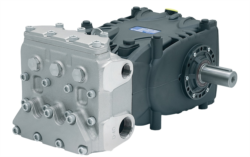
Before initiating repairs, establish current operating parameters against manufacturer specifications. For high-performance industrial pumps like the Pratissoli KF30, which delivers 106 L/min at 200 bar, document actual readings using calibrated pressure gauges and flow meters. Southeast Asian facilities operating in humid environments should verify that measurement instruments have been recently calibrated—moisture ingress into gauge mechanisms is common in tropical regions.
Record the following data points:
- Inlet and outlet pressure readings at the pump
- Actual volumetric flow rate (compare against nameplate specification)
- Motor current draw (indicates mechanical load changes)
- Fluid temperature at pump outlet (should not exceed 60°C under normal operation)
- Visual inspection for leakage points, discoloration, or unusual vibration
Step 2: Pressure Loss Diagnosis
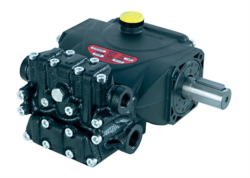
If measured pressure falls below specifications, systematically isolate the problem source. For compact industrial pumps like the Interpump E1D1808, which operates at 180 bar, pressure loss typically indicates either:
Internal leakage (wear): Measure case drain flow. Excessive case drain flow indicates internal component wear—the pump's displacement is being lost internally rather than delivered to the outlet. Typical case drain flow should not exceed 5% of rated displacement.
External leakage (seals): Inspect all connection points, shaft seal area, and case drain port. Seal degradation in Southeast Asia's high-humidity environment often occurs prematurely. If leakage originates from the shaft seal, the pump requires seal replacement or complete overhaul.
System blockage (filters/lines): A blocked return filter creates backpressure that reduces net pump outlet pressure. Verify that return-line filters have not exceeded service life. In coastal facilities, salt aerosol contamination accelerates filter media saturation.
Load-induced pressure: Confirm that system demand actually requires rated pressure. Many troubleshooting calls result from operators expecting full-capacity pressure when the connected system load is insufficient. Verify load calculations against equipment design specifications.
Step 3: Flow Rate Reduction Troubleshooting
When volumetric flow drops below specification, investigate root causes in priority order:
Cavitation damage: If the pump produces unusual noise (grinding or chattering) and flow is low, cavitation may be occurring. This occurs when inlet pressure drops below fluid vapor pressure, creating vapor bubbles that collapse violently and damage internal surfaces. Southeast Asian facilities with long suction lines are particularly vulnerable. Solution: check suction line for restrictions, verify inlet fluid level (for tank-fed systems), increase tank venting, or reduce suction line length.
Fluid contamination: Contaminated hydraulic fluid causes pump wear and reduced displacement. Fluid cleanliness per ISO 4406 code should be maintained at 18/16/13 or better. In humid tropical environments, water ingress through tank breather vents is common—verify that tank dehydrating breathers are functioning. For the Pratissoli MW40 (211 L/min capacity), contaminated fluid reduces effective displacement within weeks.
Viscosity deviation: Tropical ambient temperatures cause hydraulic fluid viscosity to drop below optimal ranges. Fluid viscosity should remain within ±10% of design specification. If facility temperature exceeds design parameters, verify cooling system operation or select a higher-viscosity fluid grade suitable for Southeast Asian climates.
Internal wear progression: If pressure is normal but flow is low, internal leakage indicates advancing wear. Measure case drain flow; if exceeding 10% of rated displacement, overhaul becomes economically justified to prevent catastrophic failure.
Compressor-Specific Troubleshooting and Repair Procedures
Air Quality and Moisture Management
Compressor problems in Southeast Asia frequently stem from moisture and particulate ingress due to high humidity. Unlike centrifugal or gear pumps handling incompressible fluids, compressors concentrate atmospheric contaminants into pressurized air lines, causing downstream equipment damage.
Diagnostic approach: Install a moisture separator immediately downstream of the compressor discharge. Observe condensate volume daily; excessive condensate (more than 5 liters per 8-hour shift for a 100 hp compressor) indicates inadequate air drying capacity. In Southeast Asia's 80%+ humidity environments, standard coalescing filters require replacement every 500–1000 operating hours rather than manufacturer-recommended 2000-hour intervals.
Implement desiccant dryers (not refrigerated dryers) in facilities near coastal areas where salt-laden humidity creates corrosion risks. A 100 hp compressor generating 400 cubic feet per minute requires a desiccant dryer rated for at least 450 cfm to maintain dew point below -20°C.
Pressure Drop and Capacity Loss
Compressor discharge pressure dropping gradually indicates either valve wear or filter restriction. For facilities with compressors delivering multiple-stage pressure (common in manufacturing), perform pressure checks at each stage outlet:
- Stage 1 discharge: should reach ~90 psi
- Stage 2 discharge: should reach ~150 psi
- After-cooler outlet: pressure slightly lower than final discharge
If pressure loss occurs between stages, valve seats may be damaged—disassemble, inspect for pitting or erosion, and replace valve components. If pressure loss occurs after after-cooler, check cooler core for scale accumulation—tropical water sources often contain mineral deposits that block cooling passages.
Compressor Unloader Valve Malfunction
Unloader valves regulate start/stop cycles. When unloaders fail in Southeast Asian environments, compressors run continuously without reaching set-point pressure or cycle excessively. Moisture ingress into valve pilot lines causes stiction (sticky friction).
Repair procedure: Isolate compressor from main air system. Disconnect pilot line to unloader valve. Flush pilot line with clean, dry compressed air to remove moisture and particulate. If unloader still functions erratically, disassemble valve body and inspect spool—visible corrosion or scoring requires component replacement. For facilities operating above 120 psi, use stainless-steel pilot valves to mitigate corrosion in humid environments.
Practical Repair Execution and Component Replacement Strategies
Seal Replacement Protocol
For pumps like the Interpump ET1C1612 SX*D20, shaft seals degrade rapidly in Southeast Asia's high-humidity environment. Proper seal replacement prevents system fluid loss and environmental contamination.
Procedure:
1. Depressurize system completely and lockout/tagout prime mover
2. Remove pump from piping (note all connection orientations for reassembly)
3. Drain fluid into approved container
4. Remove shaft nut and coupling
5. Support pump body to prevent tilting as shaft is withdrawn
6. Inspect shaft surface for scoring—even minor scratches prevent new seal from sealing; light honing (600-grit) restores surface finish
7. Install new seal with installation sleeve to prevent cutting on shaft threads
8. Rotate shaft slowly through full revolution; seal should engage smoothly
9. Reassemble coupling with proper alignment (run-out <0.05 inch is critical)
In tropical facilities, schedule seal inspections every 6 months rather than annual intervals due to accelerated degradation.
Bearing Replacement and Alignment
Bearing failure accounts for 25% of pump unplanned downtime in Southeast Asian industrial facilities. Humidity and thermal cycling cause bearing races to lose preload, generating radial play and noise.
Replacement strategy:
- Use sealed bearings (bearing designation with "2Z" or "2RS" suffix) in humid environments rather than open bearings
- Apply light grease coating (per bearing manufacturer specifications) inside bearing cavity before installation
- Install bearing with slight press fit (typically 0.0005–0.0010 inch interference)
- Verify shaft runout after bearing installation; total runout should not exceed 0.002 inch
After reassembly, run pump at half-speed for 15 minutes while monitoring bearing temperature—temperature should not exceed 60°C. Gradual temperature increase during break-in is normal; sudden temperature spikes indicate misalignment.
Filter and Fluid Management During Repair
When disassembling pumps in humid tropical environments, particulate ingress during service windows represents significant risk. Establish controlled maintenance protocols:
1. Perform all disassembly in enclosed areas with positive-pressure filtration
2. Use only lint-free shop towels and sealed component storage containers
3. Flush all internal passages with new, clean fluid (ISO 18/16/13 or better) before reassembly
4. Replace all disposable seals (O-rings, gaskets) with new components—do not reuse seals after disassembly
5. Install new high-efficiency pump inlet filter before system startup
For high-flow applications like the Pratissoli SS71153 (122 L/min), install a 10-micron suction strainer and 3-micron return filter minimum. Southeast Asian facilities with open-top reservoirs require additional protection—consider transitioning to closed-loop systems with tank breather desiccant cartridges.
Prevention and Condition Monitoring Integration
Predictive Maintenance Metrics
Modern industrial facilities should transition from reactive troubleshooting to condition-based monitoring. Establish baseline measurements for key indicators:
- Vibration analysis: Install accelerometers on pump/motor mounting bases. Bearing wear produces increasing vibration at specific frequencies (bearing fundamental frequency ±spindle speed harmonics). Monthly trending identifies degradation 4-6 weeks before failure.
- Fluid analysis: Quarterly oil analysis through accredited laboratories detects wear metals (iron, copper, aluminum) indicating component degradation. In Southeast Asia, consider monthly analysis during monsoon seasons when contamination ingress increases.
- Thermography: Infrared imaging of motor windings and bearing housings reveals temperature anomalies indicating degradation. Seal failures produce temperature rises of 5–10°C above baseline.
- Pressure trend monitoring: Automated data logging of pump discharge pressure and case drain flow identifies pressure loss progression—enabling planned maintenance versus emergency repair.
Regional Supply Chain Coordination
With 35+ years of experience in Southeast Asian industrial operations, 3G Electric understands that repair timelines depend on component availability. Maintain strategic spare parts inventory including complete seal kits, bearing sets, and control valves for critical equipment. For high-performance pumps in primary production lines, consider maintaining second units in standby configuration—enabling equipment rotation during maintenance windows without production interruption.
Establish relationships with qualified rebuild centers in your region—facilities in Thailand, Malaysia, and Singapore offer professional pump overhaul services that align with local warranty and compliance requirements.
Conclusion
Successful Pumps & Compressors troubleshooting in Southeast Asia requires systematic diagnostic protocols adapted to tropical environmental challenges. By implementing structured pressure/flow analysis, understanding equipment-specific failure mechanisms, and executing precision repair procedures, industrial professionals can reduce unplanned downtime from 40+ hours annually to under 10 hours. 3G Electric's technical team remains available to support complex diagnostics and recommend appropriate replacement equipment when repair economics are unfavorable.