Understanding Hydraulic System Architecture in Southeast Asian Processing Plants
Southeast Asian processing facilities—including palm oil extraction, chemical manufacturing, food processing, and automotive assembly—rely heavily on hydraulic power for reliable, high-pressure fluid delivery. Over 35 years of industrial equipment distribution experience, 3G Electric has supported procurement engineers across the region in specifying complete hydraulic systems that perform under demanding tropical conditions: high humidity, temperature fluctuations, and extended operational cycles.
Hydraulic systems in processing plants differ fundamentally from standalone equipment. They integrate pumps, pressure regulation, control nozzles, and manifold networks into cohesive circuits that must maintain precise pressure, flow consistency, and safety margins. Procurement engineers must evaluate three critical dimensions: volumetric capacity (flow rate in L/min), system pressure (bar rating), and component compatibility to ensure seamless integration.
The tropical climate of Southeast Asia introduces specific challenges. Fluid viscosity changes with ambient temperature, seals degrade faster under humidity stress, and corrosion risk increases in coastal and humid-inland facilities. Equipment selection must account for these environmental factors from the specification phase, not retrofit later.
Pump Selection: Matching Flow and Pressure to Processing Demands
Industrial pumps form the heart of hydraulic systems. Two primary considerations guide pump selection: the required flow rate (L/min at rated RPM) and the working pressure (bar) the system must sustain.
For mid-range processing applications requiring balanced flow and moderate-to-high pressure, the Pratissoli KF30 delivers 106 L/min at 200 bar with 40 kW power consumption. This specification suits applications including:
- Industrial cleaning and surface preparation systems
- Plastic injection molding auxiliary circuits
- Textile machinery hydraulic actuation
- Light-duty food processing equipment (pump-driven conveyor systems, cutting mechanisms)
The KF30's 72 kg weight and compact footprint make it practical for retrofit into existing Southeast Asian facilities where space constraints are common. Its Italian engineering (Pratissoli, part of Interpump Group) emphasizes reliability across extended operating hours—critical for 24/7 processing plants.
For higher-capacity operations, the Pratissoli MW40 provides 211 L/min at 210 bar with 85 kW power input. This larger displacement suits:
- Large-format thermoforming and industrial molding
- Hydraulic press systems for composite manufacturing
- High-volume cleaning and coating systems
- Heavy-duty material handling and stamping presses
The MW40's 264 kg mass requires proper mounting and foundation design but delivers the volumetric and pressure capabilities necessary for aggressive processing cycles. Procurement engineers must verify facility electrical infrastructure (85 kW motor supply) before specification.
For compact, high-pressure applications where space and weight are critical, the Interpump PUMP E1D1808 L offers an alternative: 8 L/min at 180 bar, consuming only 2.72 kW with 5 kg weight. This gear pump excels in:
- Precision injection systems (adhesive, sealant application)
- Hydraulic tool power packs
- Portable or mobile equipment hydraulics
- Secondary circuit actuation in larger systems
The E1D1808 L's compact profile allows mounting within control cabinets or equipment housings, reducing overall footprint—valuable in congested Southeast Asian manufacturing environments.
Pressure Regulation and Safety Integration
Specifying a pump without corresponding pressure control creates risk. System overpressure damages components, ruptures hoses, and creates safety hazards. Regulatory compliance across Southeast Asia increasingly requires certified safety mechanisms in industrial hydraulic systems.
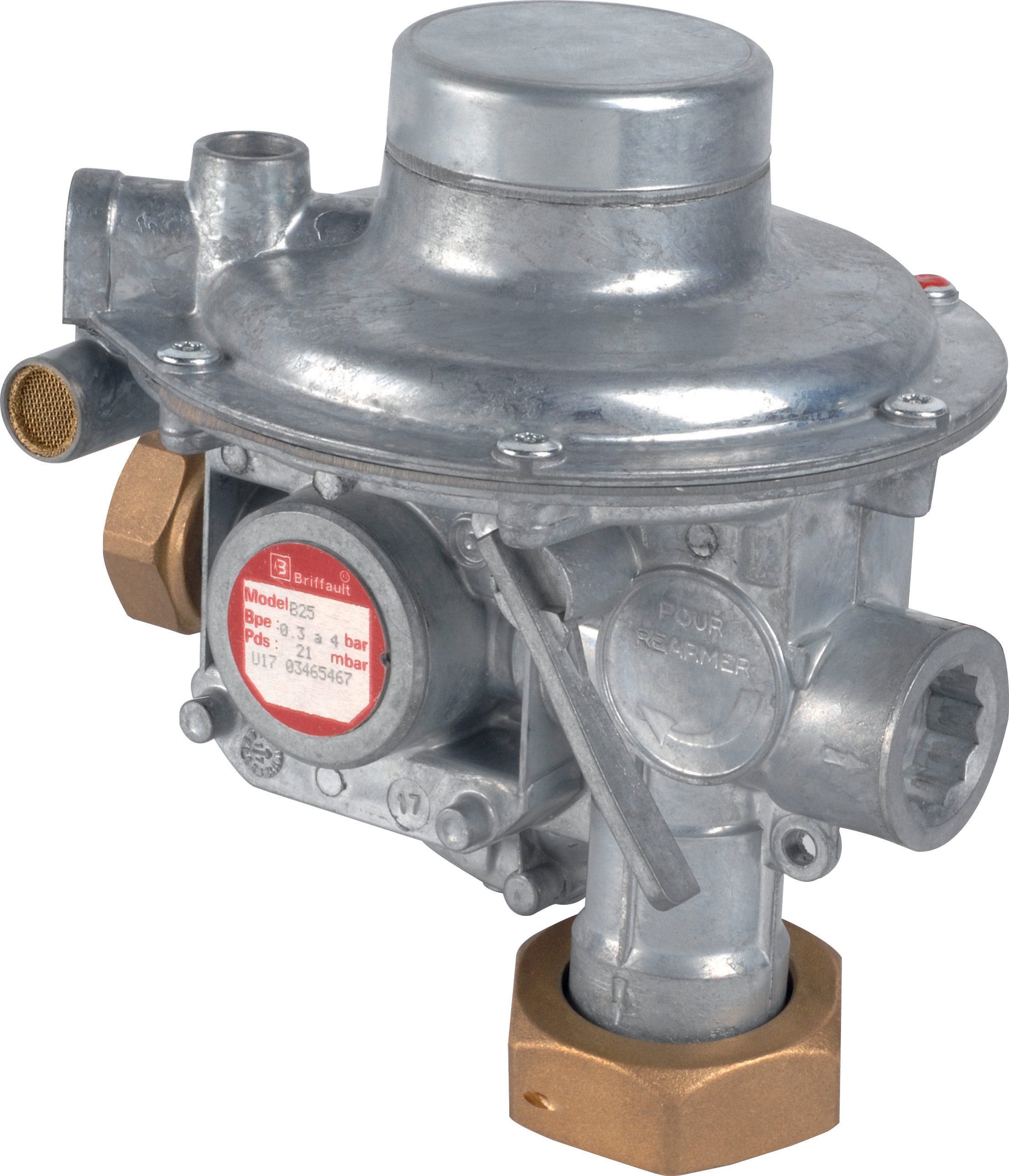
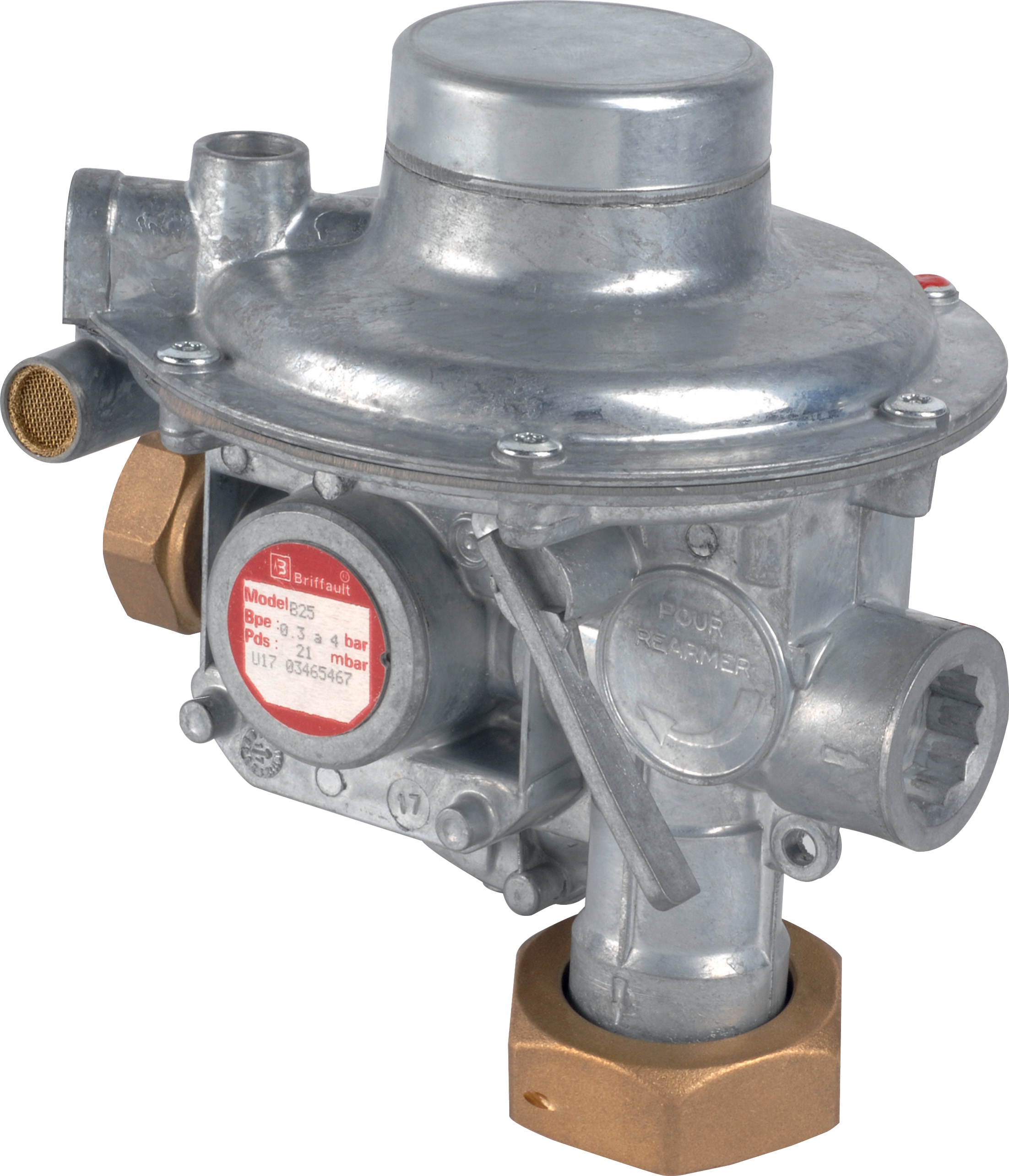
The Francel B25/37mb Pressure Regulator with Safety Relief provides integrated regulation at 37 mbar outlet pressure with 10 mm vent sizing. While marketed as a laboratory/lab-scale regulator, it serves critical secondary functions in larger processing systems:
- Pilot pressure circuits: Many industrial pump control systems use low-pressure pilot lines (20-40 mbar) to modulate main pump displacement. The Francel B25/37mb maintains precise pilot pressure, preventing pump hunting and energy waste.
- Instrument and sensor supply: PLC feedback systems, pressure transducers, and proportional valve pilot stages require stable, clean low-pressure supply. This regulator delivers calibrated outlet pressure.
- Safety interlock circuits: Modern hydraulic systems employ pilot-operated safety valves that sense system pressure via low-pressure sensing lines. The B25/37mb's integrated relief protects these circuits.
For primary system pressure relief (protecting main pump discharge), larger proportional or direct-acting relief valves rated for full pump flow and system pressure are required—these function outside this regulator's scope. Procurement engineers must specify both: a low-pressure regulator for pilot/control circuits and a main relief sized for total volumetric flow.
Integrating regulators early in system design prevents expensive field modifications. Southeast Asian facilities often operate older systems lacking modern pilot pressure regulation—retrofitting creates opportunities for efficiency gains and improved component longevity.
Spray Nozzle Selection for Processing and Cleaning Circuits
Processing plants frequently incorporate spray/wash circuits for product cooling, cleaning, coating, and lubrication. Nozzle selection dramatically affects spray pattern consistency, pressure drop, and fluid consumption.
The Euspray Flat Jet Nozzle HP 1/4"M BSPT index 30 angle 25° delivers targeted spray geometry for multiple Southeast Asian applications:
- Food processing: Spray cooling of extruded polymers, blanched vegetables, or processed foods
- Industrial cleaning: Degreasing and contamination removal from machinery, molds, or part surfaces
- Coating and lubrication: Precise fluid application to textiles, metals, or composite surfaces
The 25° spray angle and index 30 design provide:
- Narrow spray pattern: Focused fluid delivery reduces overspray and fluid consumption—critical cost factor in extended operations
- BSPT connection: Compatible with British Standard piping common throughout Southeast Asia (inherent from colonial-era infrastructure and current regional standards adoption)
- High-pressure rating: Handles outlet pressures from Pratissoli pumps (200+ bar) without erosion or pattern distortion
Procurement engineers should specify nozzles matching system pressure. At 200 bar (KF30 outlet pressure), the Euspray flat jet delivers full geometric pattern without pressure-induced degradation. Undersizing nozzles creates excessive back-pressure, reducing pump efficiency and increasing heat generation—problematic in tropical climates where cooling capacity is already stretched.
Nozzle arrays (multiple nozzles in manifold arrangement) enable uniform coverage. For example, a KF30-based cleaning system might employ 4-6 Euspray nozzles in a manifold, each receiving flow-balanced pressure from a distribution block. This architecture improves process consistency versus single-nozzle designs.
System Integration: Practical Design Considerations for Southeast Asian Facilities
Successful hydraulic system deployment in Southeast Asia requires integration thinking beyond component selection:
Thermal management: Tropical ambient temperatures (28-35°C year-round, higher in equipment enclosures) accelerate fluid degradation. Specify adequate cooler capacity—a rule of thumb: heat rejection equal to 15-20% of input power. A KF30 system (40 kW input) requires approximately 6-8 kW cooling capacity. Many Southeast Asian facilities under-specify cooling, leading to fluid breakdown and pump failure within 2-3 years.
Fluid compatibility: Ensure pump, regulator, and nozzle materials match specified hydraulic fluid. Seals compatible with ISO VG 46 or ISO VG 68 mineral oil differ from those rated for high-water-content or synthetic fluids. Document fluid selection in procurement specifications to prevent field incompatibilities.
Filtration and contamination control: Southeast Asian industrial environments carry high ambient dust loads. Hydraulic systems require 10-micron absolute (or finer) main-line filtration and preferably offline kidney-loop filtration to maintain ISO 4406 cleanliness code 17/15/12 or better. Undersized filtration creates component wear and system downtime.
Electrical infrastructure: Verify motor supply capacity and phase availability. Single-phase or 3-phase 380V, 400V, or 415V supplies vary across Southeast Asia. Pump motors (40 kW KF30, 85 kW MW40) require dedicated circuits with appropriately sized starters and protection devices. Voltage fluctuations common in the region (±10%) require soft-starter or variable-frequency drive (VFD) consideration for sensitive applications.
Pressure line sizing: Undersized piping reduces efficiency and increases heat. Velocity guidelines: main discharge 2-4 m/s, return lines 0.6-1.2 m/s. A KF30 discharging 106 L/min (1.77 L/s) requires 1-1.25" ID discharge hose for optimal efficiency. Procurement engineers often specify line sizes reactively; specify proactively during system design.
Maintenance accessibility: Southeast Asian facilities frequently operate with limited maintenance depth. Design systems for simplicity: gravity return reservoirs, easily accessible filter bowls, and clearly marked bleed/drain points. Over-complex manifold systems create liability if skilled technicians are unavailable.
Procurement and Specification Best Practices
3G Electric's 35+ years of experience in industrial equipment distribution across Southeast Asia highlights common specification errors:
1. Over-specifying pressure: Selecting 250-300 bar systems when 200 bar adequies creates unnecessary component cost and energy waste.
2. Under-specifying flow: Starting with insufficient L/min ratings forces expensive upgrades within 18-24 months as production scales.
3. Ignoring thermal requirements: Most Southeast Asian hydraulic failures trace to inadequate cooling, not pump defects.
4. Mismatched component ratings: Combining a 200 bar pump with 150 bar hoses or valves creates safety risk and premature failure.
5. Inadequate filtration: Cost savings on filter elements generate 10x higher costs in component replacement.
Procurement engineers should develop system specifications collaboratively with:
- Production engineering: Required flow, pressure, and duty cycle (continuous, intermittent, shock loads)
- Facility maintenance: Local technical capability, spare parts availability, and preferred suppliers
- Environmental teams: Fluid disposal procedures, spill containment, and regulatory compliance
- Electrical teams: Power supply capacity, motor specifications, and control voltage availability
Conclusion
Hydraulic system specification for Southeast Asian processing plants demands integrated thinking. Component selection—pump flow/pressure, regulator accuracy, nozzle geometry—must align with facility infrastructure, tropical climate realities, and maintenance capability. Leveraging 3G Electric's regional expertise, procurement engineers can specify reliable, efficient hydraulic systems that operate effectively across 24/7 processing cycles.
The combination of Pratissoli KF30 or MW40 pumps, Francel pressure regulation, and Euspray spray nozzles provides a foundation for robust industrial applications. System success depends on proper sizing, integration, and ongoing maintenance discipline.