How to Select and Install Gas Valve Regulation Systems in Singapore Industrial Applications
Gas valve regulation systems are critical components in industrial heating, combustion, and burner applications across Singapore's manufacturing and process industries. Proper selection and installation of gas valves directly impacts operational safety, energy efficiency, and equipment longevity. This technical guide provides industrial professionals with the knowledge to evaluate regulation requirements, select appropriate valve components, and implement systems that comply with safety standards while optimizing performance for your specific application parameters.
Understanding Gas Valve Regulation Fundamentals
Gas valve regulation involves controlling gas flow, pressure, and delivery to combustion equipment through a combination of mechanical and electrical components. At its core, a regulation system manages pressure differential—the difference between inlet and outlet pressure—to maintain consistent fuel supply across varying load conditions.
Industrial gas regulation systems typically consist of three primary elements: the solenoid valve (electromagnetic control), the pressure regulation mechanism, and the safety interlock system. The solenoid valve acts as the on/off control, operated by electrical signals that energize a coil to open or close the valve seat. Pressure regulators maintain outlet pressure within specified parameters, typically measured in millibar (mbar) or bar units. Safety systems prevent gas flow when conditions are abnormal.
In Singapore's tropical industrial environment, selecting valves with appropriate pressure ratings and material specifications is essential. Ambient temperature fluctuations, humidity, and corrosive elements from coastal industrial zones require components rated for extended environmental stress. Understanding pressure classification is fundamental: a 200mbar system handles low-pressure gas applications, while 600mbar-6bar systems address medium to high-pressure industrial processes.
The electrical architecture of your regulation system determines compatibility with facility power infrastructure. Singapore industrial installations typically operate on single-phase 230V AC or three-phase supplies, making voltage selection critical during component specification. Solenoid coils must match facility voltage precisely; common specifications include 12V AC/DC, 24V AC, and 230V AC options, each suited to different control architectures and safety protocols.
Technical Specifications and Product Component Selection
Selecting the correct solenoid coil and valve assembly requires matching pressure ratings, connection sizes, and electrical specifications to your application requirements. The solenoid valve selection process begins with understanding your system's operating pressure range and maximum flow requirements.
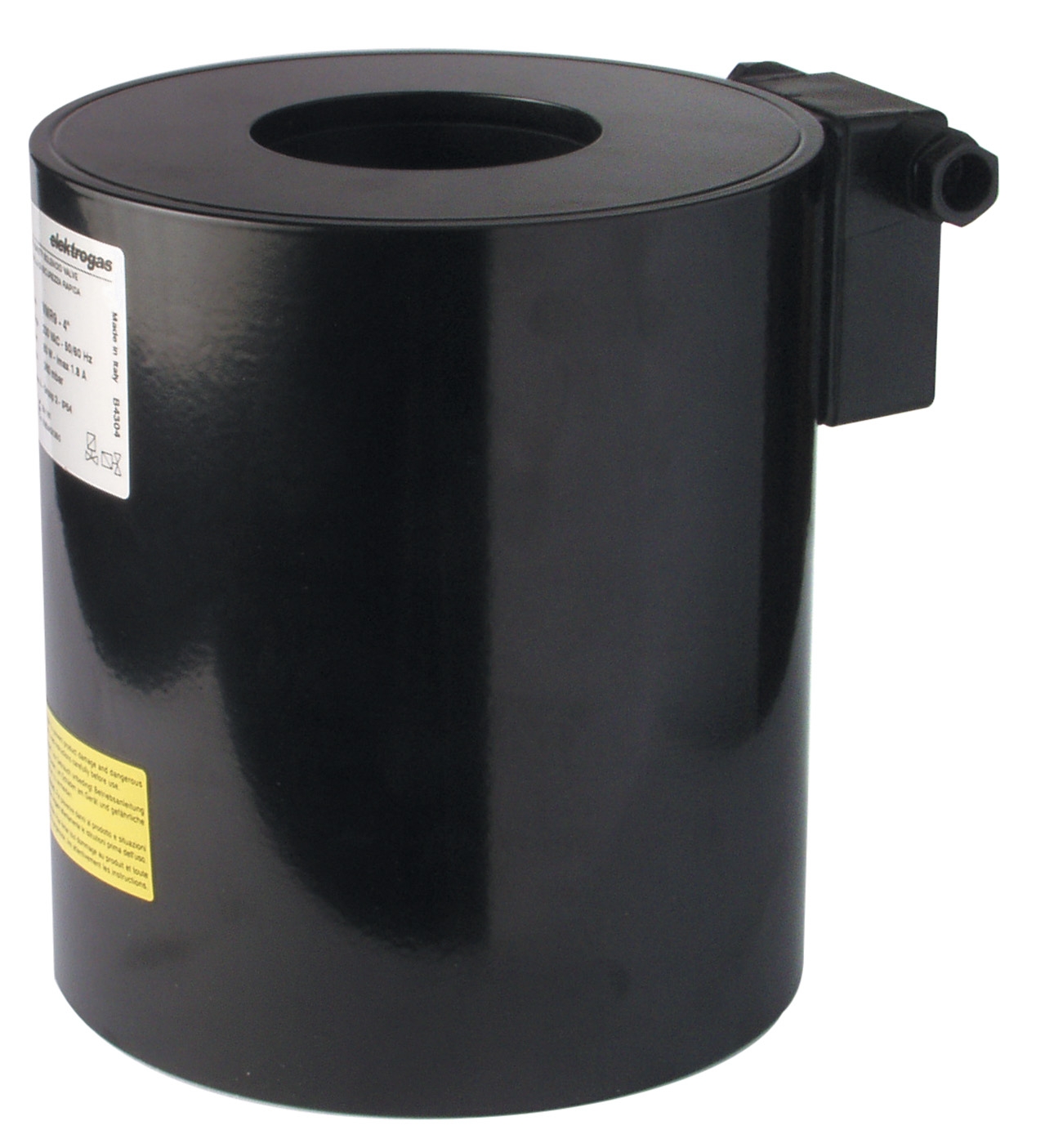
For low-pressure applications up to 200mbar, the CBM Coil 1930.1814 (230V VML 2"1/2-3" 200mbar, SKU: ELK26121) [PRODUCT_IMAGE:ELK26121] provides reliable regulation for small to medium burner systems. This 230V coil is rated for direct connection to standard Singapore industrial power supplies and accommodates connection sizes from 2.5 to 3 inches, suitable for distributed gas systems in multiple-burner installations.
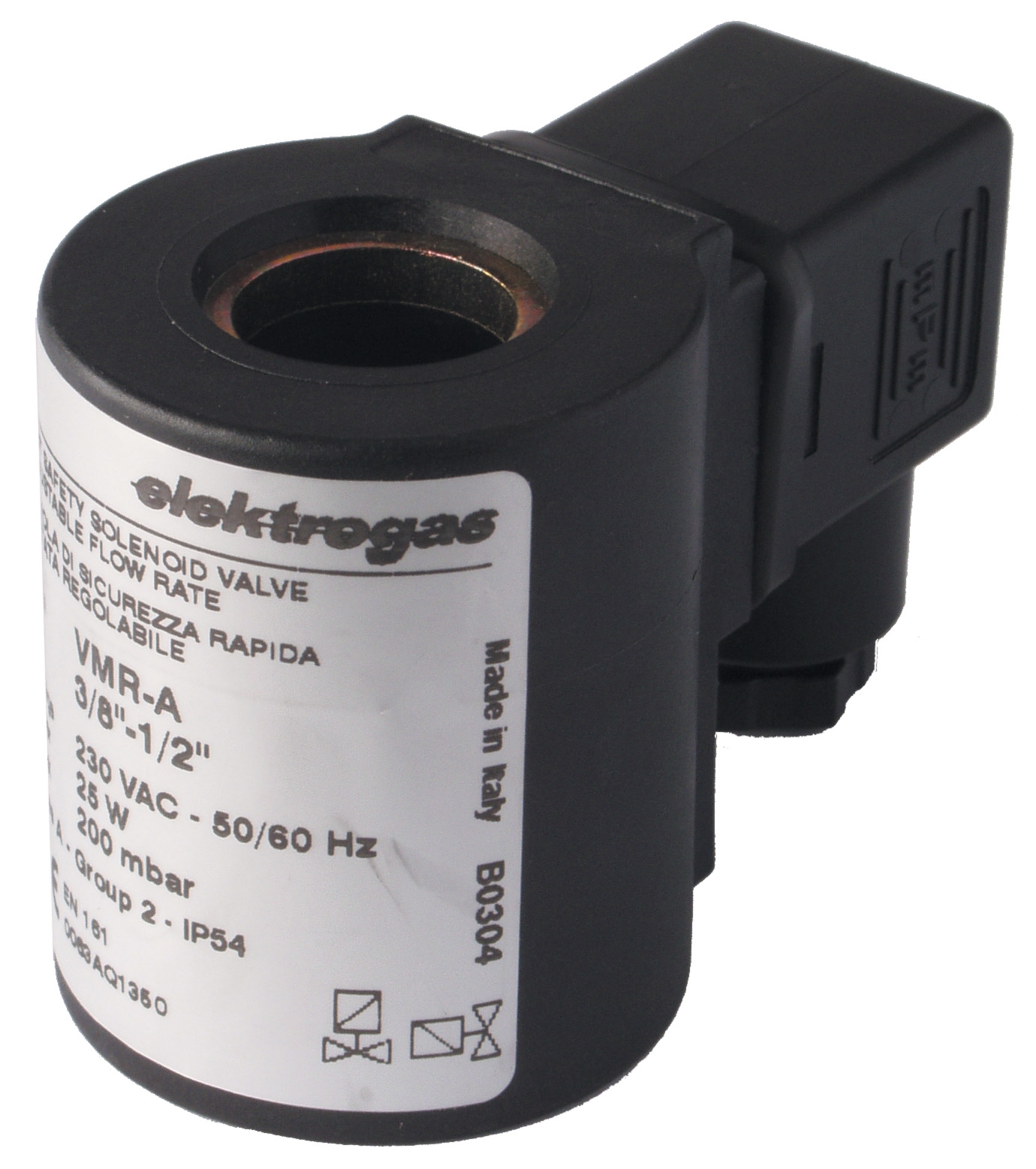
For applications requiring higher pressure regulation, the CBM Coil 1930.3100 (230V EVRMNCOT 3/8"-1" 600mbar-6bar, SKU: ELK26302) [PRODUCT_IMAGE:ELK26302] delivers capability across a 10:1 pressure ratio, handling both low and high-pressure gas supplies. With 8W power consumption and 230V operation, this coil integrates into existing facility electrical systems without specialized infrastructure modifications. Connection options from 3/8 inch to 1 inch diameter accommodate various piping configurations common in Singapore industrial settings.
For low-voltage control circuits or systems utilizing 12V DC safety interlock logic, the CBM Coil 1930.3700 (12V AC/DC EVRMNCOT 3/8"-1" 600mbar-6bar, SKU: ELK26326) [PRODUCT_IMAGE:ELK26326] provides equivalent pressure regulation with 22W power capacity and dual AC/DC compatibility. This specification is particularly valuable in facilities utilizing programmable logic controllers (PLCs) or distributed control systems that standardize on 12V command voltages.
For 24V control systems common in modern industrial automation, the CBM Coil 24V AC for ELV7....2/4/6/8 [PRODUCT_IMAGE:ELV93006] integrates with standard automation architectures. The 24V standard offers electrical isolation benefits and reduced control circuit stress compared to higher voltage alternatives, improving safety margins in complex multi-burner installations.
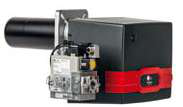
When designing gas burner regulation systems, pressure valve selection must coordinate with burner specifications. The FBR X GAS XP 60 CE TC EVO burner [PRODUCT_IMAGE:002345_41] represents high-capacity industrial combustion equipment, rated for 232-630 kW output with 250mm nozzle configuration and three-phase electrical supply. Burner systems of this scale demand precision regulation components capable of maintaining stable fuel delivery across dramatic load swings from minimum to maximum firing rates.
Step-by-Step Installation and Configuration Process
Step 1: System Pressure Assessment
Measure your gas supply inlet pressure using a calibrated manometer at multiple points during operation to confirm actual pressure conditions. Document minimum and maximum pressures under full load. This data determines which valve assembly specifications meet your requirements—critical to preventing equipment damage from over-pressure or starvation from under-pressure conditions.
Step 2: Component Selection and Compatibility Verification
Select solenoid coil voltage matching your facility's standard control voltage. Verify connection port sizes accommodate your piping without requiring additional adapters. Confirm pressure rating exceeds your documented maximum supply pressure by at least 20% safety margin.
Step 3: Piping and Mechanical Installation
Install the solenoid valve assembly downstream of the main gas shutoff valve, with inlet and outlet ports clearly labeled according to pressure specifications. Use appropriate thread sealant (PTFE tape or pipe thread compound) rated for gas applications. Mount the assembly securely to prevent vibration transmission to connected piping, which can cause premature seal wear.
Step 4: Electrical Connection
Connect solenoid coil terminals according to voltage specifications. Implement safety interlocks ensuring gas flow only during authorized burner operation. For 230V direct connection, incorporate proper overload protection. For 12V or 24V systems, utilize industrial-grade power supplies with appropriate capacity and short-circuit protection.
Step 5: Pressure Regulation Adjustment and Testing
With gas supply isolated, adjust regulation mechanisms to target outlet pressure. Slowly re-establish gas supply and measure outlet pressure under no-flow conditions, then under operating conditions. Allow 15-30 minutes for thermal stabilization before final verification.
Selection Criteria and Best Practices for Singapore Industrial Environments
Pressure differential (Δp) ratings directly affect component longevity and system reliability. Lower differential ratings (200mbar) suit applications with stable inlet pressures and minimal load variation. Higher ratings (600mbar-6bar) accommodate systems subject to significant pressure fluctuation or where inlet supply stability cannot be guaranteed—common in Singapore industrial zones served by municipal gas distribution networks.
Connection size selection balances flow capacity against pressure drop across the valve. Oversized components (3 inch connections) suit high-volume applications but occupy significant space; undersized valves restrict flow and increase pressure drop. Calculate mass flow requirements in kg/h based on burner specifications and select valve CV (flow coefficient) values accordingly.
In tropical Singapore environments, material selection prevents corrosion and maintains seal integrity. Verify that internal valve components and seals are compatible with your specific gas type (natural gas, propane, or industrial fuels). Bronze or stainless steel wetted surfaces resist corrosion superior to standard steel in humidity-rich environments.
Electrical supply reliability impacts system safety. Where facility power is unstable or subject to brief interruptions, specify solenoid coils with AC voltage ratings that tolerate ±10% voltage variation. For critical applications, implement uninterruptible power supplies (UPS) maintaining coil de-energization capability during power loss, ensuring fail-safe valve closure.
Annual maintenance intervals should include manual valve operation testing (even when powered), inspection of electrical connections for corrosion, and pressure verification under operating load. Singapore's salt-air industrial environments accelerate terminal corrosion; periodic terminal cleaning with dielectric grease extends electrical reliability 40-60% beyond unprotected installations.
Conclusion and Expert Support Available
Proper specification and installation of gas valve regulation systems requires matching component capabilities to application parameters—a process combining technical knowledge with practical understanding of your facility's specific conditions. Whether you're implementing regulation for new burner installations like the FBR industrial burner systems or upgrading existing systems, component selection directly impacts safety compliance, operational efficiency, and maintenance costs.
3G Electric has served Singapore's industrial equipment needs since 1990, providing authorized distribution of leading gas valve and regulation components from CBM and FBR manufacturers. Our technical team understands the unique challenges of Singapore's industrial environment—from tropical humidity to coastal corrosion factors—and can guide selection of regulation systems optimized for your specific application, facility power infrastructure, and operational requirements.
Contact 3G Electric's technical specialists to discuss your gas valve regulation requirements. We provide detailed product specification sheets, pressure rating consultations, and installation support ensuring your system operates safely, efficiently, and reliably. Browse our complete selection of gas valves and regulation components or reach out to our team for personalized application engineering support today.