Understanding System Integration in Industry Applications
Industrial professionals often focus on individual equipment specifications when making purchasing decisions, but the real performance gains come from understanding how different components work together within integrated systems. Whether you're managing a manufacturing plant, automotive facility, or precision cleaning operation in Singapore, the way your pressure regulation, fluid delivery, and application systems interact directly impacts productivity, safety, and operational costs.
With over 35 years of experience supplying industrial equipment to Southeast Asian manufacturers, 3G Electric has observed that the most efficient operations result from thoughtful system design rather than simply purchasing high-specification components in isolation. This article explores how to evaluate equipment choices across three critical functional areas and make integration decisions that deliver real business value.
Pressure Regulation as the Foundation Layer
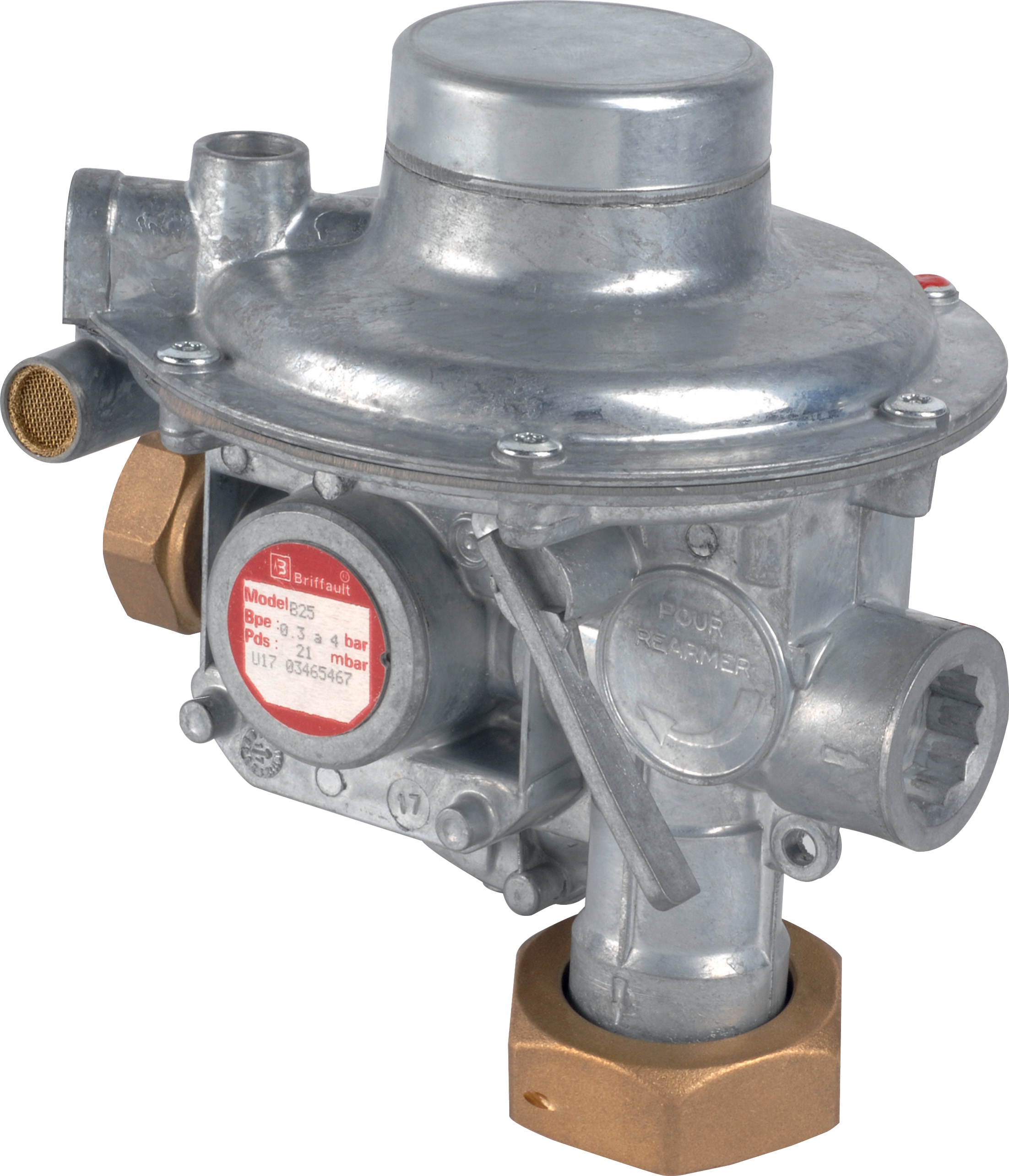
Every pressurized system begins with reliable pressure regulation, yet this component often receives insufficient attention during equipment selection. The Francel B25/37mb pressure regulator with safety relief exemplifies the type of foundational component that enables predictable system behavior across multiple industry applications.
This regulator delivers a consistent 37 mbar outlet pressure with integrated safety relief through a 10 mm vent. For Singapore manufacturers working in laboratory gas distribution, medical equipment production, or precision coating applications, this specification ensures:
Consistent Performance - The fixed 37 mbar outlet pressure maintains uniform conditions across your application point, whether you're controlling spray nozzle atomization, burner fuel air ratios, or laboratory gas flows. This consistency becomes critical when you're running multiple production lines simultaneously.
Safety Compliance - The integrated safety relief removes the need for separate downstream protection devices, simplifying your system architecture and reducing potential failure points. In Singapore's regulated manufacturing environment, this integrated approach helps satisfy compliance requirements while reducing installation complexity.
System Predictability - When pressure regulation is solved at the foundational level, you can confidently specify downstream components. Your spray nozzles, pumps, and application systems all operate within known parameters, making troubleshooting faster and maintenance more predictable.
The critical insight for system designers is that pressure regulation quality directly affects the performance ceiling for all downstream components. Selecting undersized or inadequate regulation at this level creates cascading problems that no amount of premium pump or nozzle specification can overcome.
Fluid Delivery System Selection: Matching Flow and Pressure Demands
Once you've established reliable pressure regulation, the next integration layer involves selecting pumps that deliver appropriate flow rates at the pressures your applications demand. Industrial facilities in Singapore typically run diverse applications simultaneously—cleaning operations, coating processes, hydraulic systems—each with different flow and pressure requirements.
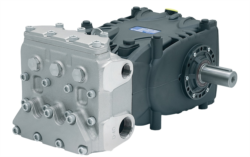
The Pratissoli KF30 industrial pump and Pratissoli MW40 industrial pump represent two distinct points on the performance spectrum, each optimized for different application categories:
Pratissoli KF30 Specifications:
- 106 L/min flow rate
- 200 bar maximum pressure
- 40 kW power requirement
- 72 kg mass
This model suits mid-range industrial applications: general-purpose cleaning, standard coating processes, and auxiliary hydraulic systems where you need reliable flow without premium power consumption. The 106 L/min output handles multiple spray nozzles or application points simultaneously while staying within typical Singapore facility electrical infrastructure.
Pratissoli MW40 Specifications:
- 211 L/min flow rate (approximately double the KF30)
- 210 bar maximum pressure
- 85 kW power requirement
- 264 kg mass
The MW40 targets high-throughput operations: large-scale cleaning facilities, industrial coating lines, and integrated systems serving multiple production departments. The doubled flow rate justifies its significantly higher power draw only when your facility requires continuous high-volume fluid delivery.
System Integration Perspective: The choice between these pumps should reflect your actual facility demand profile, not theoretical maximum capabilities. Many Singapore manufacturers overspecify pump capacity, resulting in unnecessary electrical costs and component stress. A practical approach involves mapping your peak simultaneous demand across all applications, then selecting the pump that handles this realistic peak plus 15% safety margin.
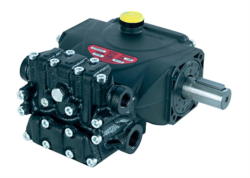
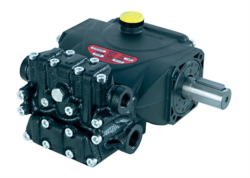
For specialized applications requiring precise, low-flow delivery, the Interpump E1D1808 compact gear pump offers an alternative approach:
- 8 L/min flow rate
- 180 bar pressure rating
- 2.72 kW power consumption
- 5 kg compact mass
This model integrates into space-constrained facilities or serves as a secondary, dedicated pump for precision applications that require decoupling from main system flow.
Spray Application Systems: Where Pressure Meets Precision
The final integration layer involves spray nozzles and application equipment that convert your regulated pressure and delivered flow into productive work. This is where system integration decisions have immediate, visible impact on production quality.
The Euspray flat jet nozzle with 25° spray angle and 1/4" M BSPT connection represents a standard choice for industrial cleaning and coating applications. The nozzle's index 30 design and 25° spray angle work optimally when integrated with pressure and flow parameters from your upstream system.
Integration Considerations for Spray Nozzles:
Nozzle performance depends critically on receiving the correct pressure and flow from your pump and regulator combination. A nozzle designed for 150 bar operation will deliver poor spray pattern if receiving only 80 bar, and will experience premature wear or failure if forced to operate at 250 bar.
For Singapore manufacturers integrating spray systems, the practical selection process involves:
1. Define Application Requirements - Determine the spray pattern area, coverage uniformity, and intensity needed for your specific cleaning or coating process. Different applications favor different spray angles and flow rates.
2. Work Backward Through the System - A given spray nozzle requires specific inlet pressure and flow. This requirement defines the pump minimum specifications. Your pump selection then determines the regulator and pressure control strategy needed.
3. Verify Component Compatibility - Ensure connection types (BSPT, NPT, SAE) match across all components. The 1/4" M BSPT connection on the Euspray nozzle must match your pump outlet or manifold connections. Mismatched connections force costly adapters and increase failure risk.
4. Account for System Losses - Pressure drops occur across hoses, fittings, and filters between your pump outlet and spray nozzle inlet. A realistic system design includes 10-15% pressure margin to account for these losses.
Practical Integration Guidance for Singapore Manufacturers
Drawing on 3G Electric's 35 years of experience with Southeast Asian industrial facilities, several integration principles consistently produce optimal results:
Right-Sizing Over Specification Chasing - The most efficient systems balance component capabilities with actual facility demands. Overspecifying pumps or pressure ratings creates unnecessary costs and operational complexity. Conversely, underspecifying creates bottlenecks that ripple throughout your operation.
Component Standardization - Select equipment from manufacturers (like Pratissoli, Francel, and Euspray) that offer modular component lines. This simplifies spare parts management, operator training, and future system expansion.
Preventive Specification - Include built-in protection mechanisms like integrated safety relief (as in the Francel regulator) rather than relying on downstream protective devices. This reduces component count and failure risk.
Facility-Specific Configuration - Singapore's diverse industrial base means no single equipment combination suits all facilities. A small precision manufacturing operation has completely different requirements than a large automotive component cleaning facility. Your equipment selection should reflect your actual operational profile.
Conclusion
Successful industrial equipment selection extends beyond comparing individual component specifications. The professional approach involves understanding how pressure regulation, fluid delivery, and spray application systems interact within an integrated whole. By evaluating your actual facility demands, working systematically through system layers, and ensuring compatible component selection, you create reliable, efficient operations that deliver predictable results.
3G Electric's three-decade history supplying Southeast Asian manufacturers demonstrates that thoughtful system integration consistently outperforms premium single-component selection. Whether you're designing new systems or optimizing existing installations, apply these integration principles to achieve your facility's operational and financial objectives.