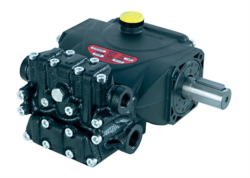
Understanding Pumps & Compressors Failure Patterns in Tropical Climates
With over 35 years of experience supplying industrial equipment across Southeast Asia, 3G Electric has observed that Pumps & Compressors failures often stem from environmental factors unique to this region. High humidity, temperature fluctuations, and contaminated cooling water create conditions that accelerate wear on both rotary and positive-displacement equipment.
The most critical insight for maintenance teams: failure rarely happens suddenly. Instead, you're looking at a progression from early warning signs to catastrophic breakdown. Tropical humidity promotes corrosion on pump casings and compressor valve seats. Dust infiltration clogs filtration systems faster than manufacturers anticipate. Water ingress in compressor intercoolers creates microbial growth that blocks passages.
Your maintenance team's job is to recognize these patterns before they cascade into equipment failure. Unlike manufacturers' generic diagnostic charts, this guide focuses on what actually happens when equipment operates in Singapore's 85% humidity, Thailand's seasonal heat spikes, and Indonesia's inconsistent power quality.
Systematic Troubleshooting Framework: The Five-Point Diagnostic Approach
1. Noise and Vibration Mapping
Before you touch anything, listen and feel. Different failure modes produce distinct acoustic signatures:
Cavitation noise (rapid crackling, like gravel in a blender) indicates your pump inlet pressure has dropped below atmospheric. In Southeast Asian plants, this typically means:
- Suction line blockage from algae growth in feed tanks
- Impeller inlet vane erosion from abrasive particles
- Priming failure after the system sits idle overnight (tropical condensation issues)
Bearing knock (rhythmic, metallic tapping at shaft speed) means your bearings are past the warning stage. Southeast Asian humidity accelerates bearing degradation because moisture penetrates oil film layers.
Action: Measure bearing temperature with infrared thermometer. If >70°C on standard bearings, schedule replacement within 48 hours—don't run to failure in humid conditions.
Mechanical looseness (rattling that changes with load) indicates foundation bolts have loosened or internal clearances have increased. This is particularly common with centrifugal pumps on older concrete pads exposed to thermal cycling.
Action: Check all mounting bolts (metric and imperial sets are common in multi-generational Southeast Asian plants). Torque to original specifications using calibrated wrenches, not impact tools.
2. Pressure and Flow Performance Baseline Testing
Every pump and compressor should have documented baseline performance data from commissioning. If yours doesn't, establish one immediately—this becomes your diagnostic reference.
For Pumps: Measure discharge pressure and flow rate simultaneously. Plot these against motor amperage draw. When discharge pressure drops 5-10 bar below baseline while amperage remains constant, you're looking at internal leakage—worn pump seals or damaged impeller vanes.
For Compressors: Monitor discharge pressure, inlet temperature, and intercooler outlet temperature. A compressor delivering full pressure but at elevated discharge temperature signals intercooler fouling from water contamination or scale buildup—endemic in Southeast Asian hard-water regions.
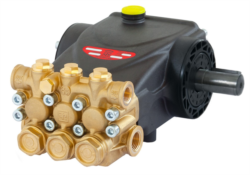
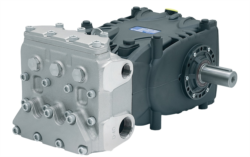
References for comparison: Pratissoli KF30 maintains 200 bar baseline pressure across a 106 L/min flow range. Pratissoli MW40 delivers consistent 210 bar at 211 L/min. If your equipment falls below these performance windows, internal degradation is occurring.
Action: Create a simple spreadsheet with date, discharge pressure, flow rate, and amperage. Record weekly. A 2-3 bar drift over a month is normal; a sudden 10+ bar drop means investigation is urgent.
3. Oil and Fluid Analysis—The Silent Indicator
This is where maintenance teams separate themselves from shops that only react to alarms. Oil condition tells you what's happening inside before symptoms appear.
Standard checks:
- Color change: New mineral oil is amber; darkening to dark brown suggests overheating or oxidation. In Southeast Asia's heat, oil oxidation occurs faster—consider synthetic alternatives for critical equipment.
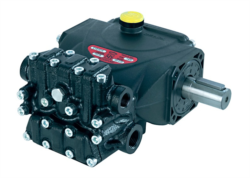
- Particle count: Drain 1 liter into a clean container. Let it settle 10 minutes. Any visible sediment means filtration is failing or internal wear is accelerating. Gear pumps like Interpump E1D1808 L operating at 2800 rpm generate fine particles if bearing wear begins—particle count jumps from ~50 particles/mL to 200+ particles/mL within 2 weeks of bearing distress.
- Water content: Southeast Asian humidity means water ingress is constant. Oil should test <500 ppm water. Above 1000 ppm, bearings corrode rapidly. Drain and refill with fresh oil; inspect your breather systems (they're probably clogged with humidity).
- Viscosity: Use a viscosity test kit or send samples to a certified lab. Thin oil (viscosity drop >10%) signals overheating; thick oil means oxidation and additive depletion. Either way, change it.
4. Temperature Mapping Under Load
Thermography is invaluable, but you don't need expensive IR cameras to start. Contact thermometers work if you take consistent readings from consistent locations.
Critical measurement points:
- Motor surface: Should be <50°C above ambient in humid conditions. Above 70°C indicates cooling airflow restriction (common when dust coats cooling fins).
- Discharge line: Rising discharge temperature without pressure increase means the pump is working harder to move fluid—internal friction is increasing. This is your warning for Pratissoli SS71153 pump seals beginning to fail.
- Gear pump housing: These run hotter than centrifugal pumps. Interpump ET1C1612 should run <65°C at rated 160 bar. If you're hitting 75°C, your load profile exceeds rated duty—either reduce peak pressure demands or schedule preemptive seal replacement.
Action: Take thermal images or contact temperature readings at the same time each day (recommend 2 PM, peak plant temperature). Plot weekly. Trends matter more than absolute values.
5. System Integration Testing—The Overlooked Diagnostic
Most equipment failures aren't the pump or compressor's fault—they're system failures that the equipment reports through abnormal behavior.
Common integrations to verify:
- Suction source quality: Is your feed tank clean? Are strainers clogged? Southeast Asian plants often draw from gravity tanks exposed to dust and insect debris. Suction blockage creates cavitation in centrifugal pumps even if the pump itself is flawless.
- Discharge line sizing: Undersized discharge piping creates backpressure that reduces equipment life. If someone installed 1-inch discharge piping on a Pratissoli MW40 pump (designed for 2-inch), you'll see premature seal failure and cavitation—not because the pump is bad, but because system design is poor.
- Relief valve setting: Verify with a calibrated test gauge (not the onboard dial). Many relief valves in Southeast Asian plants drift 10-20 bar from original setpoint due to thermal cycling and corrosion. A misset relief creates erratic pressure behavior that masks the actual problem.
- Electrical supply quality: Single-phase voltage imbalance >3% causes motor current to spike unevenly. Unbalanced three-phase power is common near coastal areas (salt-air corrosion on transformers). Check phase voltage with a multimeter across L1-L2, L2-L3, and L3-L1. All three readings should be within 2% of each other.
Practical Maintenance Protocol for Common Southeast Asian Scenarios
Scenario A: Sudden Pressure Loss During Monsoon Season
Most likely cause: Water ingress into the system through damp breathing or condensation in the air line.
Diagnostics:
1. Drain a sample from the discharge line into a clear bottle. If cloudy or discolored, water is present.
2. Check compressor intercooler for moisture or scale (use a flashlight to peer into sight glass).
3. Test inlet filter pressure drop—clogged elements trap moisture.
Resolution: Replace desiccant dryers in air lines. In Southeast Asia's 85%+ humidity, standard silica gel dryers need replacement every 3-4 weeks during monsoon—not the manufacturer's quoted 6-month interval. Install upgraded hygroscopic cartridges rated for tropical climates.
Scenario B: Gradual Flow Decline Over 3-6 Months
Most likely cause: Biological fouling in suction lines or internal impeller vane erosion from abrasive particles.
Diagnostics:
1. Measure flow output while maintaining constant discharge pressure (via relief valve adjustment). Compare to baseline.
2. If flow dropped 15-20% but discharge pressure is stable, internal leakage is occurring (seal degradation).
3. If both flow and pressure dropped proportionally, the issue is suction-side blockage or cavitation.
Resolution: For suction blockage, clean strainers and inspect feed tanks for algae (chlorinate if necessary). For internal seal degradation, plan a rebuild. Don't wait—running with failed seals destroys the pump housing.
Scenario C: Unexpected Shutdown or Motor Overload Trip
Most likely cause: Relief valve failure (stuck closed), blockage in discharge line, or bearing seizure beginning.
Diagnostics:
1. Manually open relief valve slowly (do this with discharge gauge installed). Pressure should drop smoothly. If it won't move or snaps open suddenly, relief valve is stuck.
2. Trace discharge line for kinks, dents, or blockages. Listen for hissing (indicates partial blockage).
3. Feel motor housing—if extremely hot, bearing trouble is likely. If warm or cool, it's not a bearing issue.
Resolution: Replace relief valve cartridge immediately—don't try to free it. If blockage exists, identify the source (scale, ice, foreign object) and clear the line. If bearing is hot, stop the equipment and schedule bearing replacement before restart.
Recommended Equipment for Your Troubleshooting Kit
- Calibrated pressure test gauge (0-400 bar range, 2.5% accuracy minimum)
- Thermometer with contact probe (essential for bearing and discharge line temperature)
- Oil analysis kit or access to ISO-certified lab
- Multimeter (for electrical circuit and phase voltage checks)
- Acoustic detector or stethoscope (surprisingly useful for bearing noise)
- Flow meter (simple turbine or paddle-wheel type; ultrasonic is better but pricey)
- Baseline documentation for every pump and compressor (commissioning pressure, flow, amperage, temperature)
3G Electric supplies spare components and complete replacement units for all major pump families. Our 35+ years of Southeast Asian market experience means we understand failure patterns in your climate. Keep contact information for your local 3G Electric service representative—they can help interpret your diagnostic data and recommend next steps.
Moving Forward: Building a Diagnostic Culture
The best maintenance teams don't troubleshoot when equipment fails—they diagnose progressively using data collected during normal operation. Start with the Five-Point Diagnostic approach on one critical pump or compressor. Document your findings. Within 3 months, you'll recognize patterns specific to your facility's conditions, climate, and load profiles.
Southeast Asian industrial plants face unique challenges: humidity, thermal cycling, dust, and power quality issues that aren't common in temperate climates. Equipment designed for Geneva doesn't always perform identically in Singapore or Bangkok. By building a local diagnostic playbook, your maintenance team becomes the true expert—not the manufacturer's generic troubleshooting chart.