Understanding Pumps & Compressors Specification Standards
Pumps & Compressors represent mission-critical equipment in industrial operations worldwide, yet procurement decisions often hinge on incomplete technical data and misaligned specifications. Over 35+ years as a global equipment distributor, 3G Electric has guided thousands of procurement engineers through the complexity of selecting pumps and compressors that meet both international standards and operational requirements.
Specification standards serve three critical functions: they establish minimum performance thresholds, ensure interoperability across systems, and provide baseline criteria for quality assurance. For procurement engineers managing multi-regional supply chains, understanding how ISO, ASME, EN, and regional standards intersect is essential to avoiding costly specification mismatches and equipment failures.
ISO Standards and International Compliance Framework
Core ISO Standards for Industrial Pumps
The International Organization for Standardization (ISO) provides the foundational specifications for centrifugal, gear, and positive displacement pumps. Key standards include:
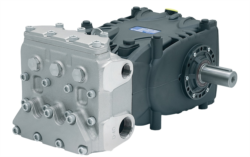
ISO 5199 — Centrifugal, Mixed Flow, and Axial Pumps — Class II: Establishes mechanical reliability, hydraulic efficiency, and test requirements for industrial centrifugal pumps. This standard is critical when evaluating pumps like the Pratissoli KF30, which delivers 106 L/min at 200 bar and must meet ISO mechanical sealing and vibration limits for industrial applications.
ISO 4413 — Industrial Hydraulic Fluid Power Systems — General Rules and Safety: While primarily addressing hydraulic systems, this standard influences pump specification for pressure-rated applications. Equipment operating at 200+ bar (such as the Pratissoli MW40 at 210 bar) must conform to this framework to ensure safe integration into larger hydraulic systems.
ISO 1219-1 — Fluid Power Diagrams, Symbols and Circuit Diagrams: Though schematic-focused, this standard ensures procurement engineers can cross-reference pump specifications against circuit documentation and validate that performance parameters align with system design requirements.
ISO 9906 — Rotodynamic Pumps — Hydraulic Performance Acceptance Tests (Classes 1, 2, 3): Defines performance validation protocols. When procuring high-precision pumps, this standard determines acceptable tolerance ranges for flow rate, pressure head, and power input. For example, a 106 L/min pump must demonstrate ±3% accuracy under ISO 9906 Class 2 testing.
Regional Certifications and Compliance Variants
While ISO standards provide international baselines, regional requirements introduce critical variations:
European Union (CE Marking): Pumps and compressors sold within EU markets require CE certification under Machinery Directive 2006/42/EC. This involves conformity assessments, technical file documentation, and compliance with vibration directive 2006/44/EC. Procurement engineers should verify that suppliers provide full EU technical files and declarations of conformity.
North America (ASME/API Standards): The American Society of Mechanical Engineers (ASME) B73.1 standard covers centrifugal pumps for chemical processing. API 610 addresses centrifugal pumps for petroleum applications. For compressors, ASME PED (Pressure Equipment Directive) compliance is mandatory for systems exceeding 1 liter capacity at pressures above 200 bar.
Asia-Pacific Standards: Singapore's SPRING Singapore (Standards, Productivity and Innovation Board) aligns with ISO standards but requires local registration for certain equipment classes. China's GB/T standards may differ in pressure relief thresholds and material specifications, affecting sourcing decisions for manufacturing operations across the region.
Pressure Equipment Directive (PED) Compliance: Equipment rated for >0.5 bar and specific volume combinations falls under PED classification in EU markets. Procurement engineers must confirm whether compressors exceed PED thresholds (typically Category II or higher), which affects certification costs and lead times.
Technical Specification Parameters: Decision Matrix for Procurement
Critical Performance Metrics
Beyond standards compliance, procurement engineers must evaluate five interconnected technical parameters:
1. Volumetric Flow Rate (L/min or m³/h):
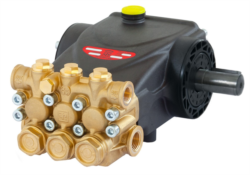
This parameter determines whether equipment meets system demand. The Interpump E1D1808 L delivers 8 L/min—appropriate for precision applications—while the Pratissoli SS71153 provides 122 L/min for high-volume industrial operations. Procurement decisions should include 15-20% safety margin above peak system demand to ensure sustained performance under variable load conditions.
2. Operating Pressure Rating (bar or PSI):
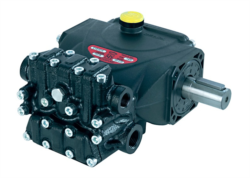
Pressure classifications determine system integration viability. Equipment operating at 160-210 bar represents industrial-grade performance suited for manufacturing, construction, and hydraulic power applications. The Interpump ET1C1612 SX*D20 at 160 bar offers cost-effective pressure handling, while 210 bar systems (MW40 family) support higher-intensity applications requiring precision control.
3. Power Input (kW) and Efficiency Ratings:
Power consumption directly impacts operational cost and electrical infrastructure requirements. The KF30 requires 40 kW input, while the MW40 demands 85 kW—nearly double the capacity. Procurement engineers must confirm available electrical supply capacity and evaluate energy costs across equipment lifecycle (typically 7-10 years for industrial pumps). Higher-efficiency models (95%+ hydraulic efficiency per ISO 9906) reduce running costs by 10-15% annually.
4. Operating Speed (rpm):
Pump speed affects noise, vibration, and component wear. Gear pumps operating at 2800 rpm (E1D1808) generate higher noise (~80 dB) but suit high-speed hydraulic circuits. Lower-speed equipment (800-1750 rpm) produces less noise and vibration, favoring noise-sensitive environments. Procurement specifications should reference acceptable noise limits per ISO 3744 (Sound Power Level Determination).
5. Weight and Physical Footprint:
For space-constrained facilities, compact designs are critical. The E1D1808 at 5 kg suits modular installations, while the SS71153 at industry-standard weight supports fixed mounting systems. Procurement engineers must verify installation space and ensure equipment can be accessed for maintenance without facility redesign.
Material Specifications and Corrosion Resistance
Material selection directly impacts longevity in diverse industrial environments. The Interpump ET1C1612 SX*D20 incorporates PTFE (polytetrafluoroethylene) construction, delivering superior chemical resistance in aggressive environments. For applications involving saltwater exposure (marine, offshore, or coastal facilities), stainless steel variants reduce corrosion maintenance costs by 40-60% over 10-year operational periods.
Procurement specifications should reference ASTM standards for material verification:
- ASTM A276 (Stainless Steel): For wetted components in corrosive environments
- ASTM B117 (Salt Spray Testing): Validates corrosion resistance under accelerated aging
- ASTM D4378 (Elastomer Selection): Ensures sealing materials compatibility with operational fluids
Building Your Procurement Specification Document
Template Framework for Global Compliance
Procurement engineers should structure specifications using this hierarchical approach:
Tier 1 — Regulatory Requirements:
Document applicable standards (ISO, ASME, EN, regional certifications). For example: "Equipment must comply with ISO 5199 Class II and CE Marking requirements per EU Machinery Directive 2006/42/EC."
Tier 2 — Performance Parameters:
Define volumetric flow, pressure rating, power input, and speed tolerances. Example: "Pump shall deliver 100-110 L/min (±5% tolerance per ISO 9906 Class 2) at 200 bar nominal pressure with 50 kW maximum input power at 1500 rpm."
Tier 3 — Material and Construction Standards:
Specify materials, sealing systems, and corrosion protection. Example: "All wetted components shall be 316 stainless steel; seals shall be NBR-compatible; external surfaces shall be powder-coated per ASTM B117 salt spray testing (1000-hour minimum)."
Tier 4 — Testing and Validation:
Require third-party certifications and performance testing. Example: "Equipment shall include ISO 5199 acceptance test certificates and performance curves within ±3% deviation from rated specifications. Supplier shall provide ISO 9906 classification documentation."
Tier 5 — Documentation and Support:
Ensure technical data availability for maintenance teams. Example: "Supplier shall provide complete technical manuals, spare parts lists, seal compatibility matrices, and maintenance interval guidelines in English and regional language variants."
Global Supply Chain Considerations
When procuring internationally, specification frameworks must account for supply chain complexity:
Lead Time Validation: Equipment sourced from specialized manufacturers like Pratissoli and Interpump typically requires 6-12 week lead times for certified models. Procurement specifications should include contingency timelines and identify approved equivalent models.
Spare Parts Availability: Standardized specifications ensure long-term support. Procurement engineers should confirm that spare parts (seals, wear rings, bearings) are available through regional distributors like 3G Electric across 35+ years of relationships with equipment manufacturers, avoiding future obsolescence issues.
Certification Reciprocity: Not all certifications transfer between regions. A CE-marked pump may require additional ASME documentation for North American installations. Procurement specifications should clarify certification requirements for each target market and assign responsibility for obtaining regional compliance documentation.
Currency and Price Stability: Specifications tied to rigid performance parameters (rather than brand or model) allow procurement teams to evaluate multiple suppliers and negotiate competitive pricing without sacrificing quality or compliance standards.
Practical Implementation: From Specification to Purchase Order
Developing procurement specifications for Pumps & Compressors requires balancing technical precision with operational flexibility. Begin by documenting baseline system requirements: volumetric flow demand, operating pressure, fluid compatibility, and environmental constraints. Map these requirements against ISO standards applicable to your target markets.
Next, evaluate equipment against the five performance metrics (flow, pressure, power, speed, footprint) and identify acceptable tolerance ranges. A 10% safety margin above peak demand is industry standard practice. For equipment spanning multiple regional markets, specify compliance with the most stringent applicable standard (typically EU PED or ISO standards) to maintain universal applicability.
Finally, structure your purchase order to include performance curves, certification documentation, spare parts lists, and maintenance schedules. This approach ensures procurement teams, operations managers, and maintenance technicians work from unified technical baselines, reducing installation delays and optimizing equipment lifecycle value.
3G Electric's 35+ years as a global distributor provides access to comprehensive technical resources, certification documentation, and regional compliance expertise—supporting procurement engineers in translating complex specification frameworks into reliable, compliant equipment selections.