Understanding Pumps & Compressors Maintenance Fundamentals
Pumps & Compressors are critical assets in industrial operations, yet many maintenance teams rely on reactive rather than preventive approaches. With 35+ years of experience as a distributor of industrial equipment across Asia-Pacific markets, 3G Electric has observed that systematic preventive maintenance reduces unplanned downtime by 40-60% and extends equipment life by 3-5 years.
The difference between a pump or compressor that fails at 5 years versus 10+ years comes down to consistent monitoring, early detection of wear patterns, and timely component replacement before catastrophic failure occurs. Singapore's tropical climate—with high humidity, temperature fluctuations, and corrosive salt-air environments in coastal industrial zones—makes preventive protocols even more critical. Equipment exposed to these conditions experiences accelerated seal degradation, bearing wear, and internal corrosion if not properly maintained.
This guide focuses on practical preventive maintenance and diagnostic testing methodologies that maintenance teams can implement immediately to detect problems before they become expensive failures.
Section 1: Establishing a Preventive Maintenance Schedule for Pumps & Compressors
Daily Visual Inspections (15 minutes)
Your maintenance team should conduct brief visual checks each operating shift:
- Leak detection: Inspect all connection points, shaft seals, and housing joints for oil, water, or pressure leakage. Even small weeps can indicate seal degradation requiring imminent replacement.
- Noise and vibration baseline: Listen for unusual grinding, squealing, or knocking sounds that deviate from normal operating signature. Vibration changes often precede bearing failures by weeks.
- Temperature sensing: Use an infrared thermometer to check housing surface temperature. A 10-15°C rise above baseline indicates potential internal friction increase.
- Gauge readings: Verify pressure and flow rate indicators remain within specification bands. Gradual pressure loss suggests internal wear; sudden loss indicates seal or valve failure.
Weekly Performance Testing (1 hour)
Conduct detailed assessments every 5-7 operating days:
- Pressure and flow rate logging: Record discharge pressure, inlet pressure, and flow rate at consistent load conditions. Create a running log to identify trends. A 5% pressure drop over 2 weeks may signal impeller cavitation or internal leakage requiring investigation.
- Suction line inspection: Check inlet filter condition and suction pressure. High suction restriction (exceeding -0.3 bar) indicates filter saturation and cavitation risk.
- Vibration measurement: Use a simple handheld vibration meter (frequency range 10-1000 Hz) to measure bearing/pump housing vibration. Establish baseline values for your specific equipment, then flag any increase >25% as requiring detailed diagnosis.
- Temperature profiling: Compare discharge fluid temperature to inlet temperature. For hydraulic pumps, acceptable rise is typically 10-15°C at full load. Temperature rise >20°C indicates internal friction increase or cooling system degradation.
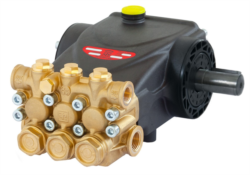
For high-pressure applications like the Interpump PUMP W2035 L ATEX, weekly testing is essential due to elevated stress on seals and bearings.
Monthly In-Depth Diagnostics (2-3 hours)
Perform comprehensive testing monthly to catch developing problems:
- Oil analysis sampling: Extract hydraulic oil or coolant samples for laboratory analysis. Testing reveals:
- Water content showing seal leakage or condensation ingress
- Viscosity changes indicating thermal stress
- Metal particle composition identifying which components are wearing
Establish baseline values, then flag samples exceeding wear thresholds (typically >2 mg/L ferrous particles) as requiring component inspection.
- Acoustic emission testing: Use ultrasonic listening devices tuned to 20-40 kHz range to detect friction and cavitation sounds invisible to normal hearing. Sudden acoustic signature changes reliably predict bearing failures 2-4 weeks before mechanical failure.
- Seal condition assessment: Inspect visible seals (shaft seals, filler caps, drain plugs) for discoloration, hardening, or extrusion. Silicone-based seals deteriorate in tropical heat; replacement intervals in Singapore are typically 12-18 months versus 24-36 months in temperate regions.
- Valve function testing: For systems with pressure relief valves, verify cracking pressure and flow capacity remain within specification. Test by slowly increasing load while monitoring pressure response—sluggish pressure rise indicates valve stiction requiring cleaning or replacement.
Quarterly Major Inspections (4-6 hours)
Every 3 months, conduct comprehensive system evaluation:
- Coupling and shaft alignment: Use dial indicators to verify pump-to-motor coupling alignment. Misalignment >0.1 mm contributes significantly to seal and bearing failure. In Singapore's temperature cycling, thermal growth can alter alignment; quarterly re-verification is essential.
- Fluid system integrity: Pressure-test all hoses and connections to 1.5× maximum operating pressure. Hose degradation accelerates in tropical heat; visible cracking or bulging indicates replacement urgency.
- Strainer/filter replacement: Replace inlet strainers and suction filters per manufacturer schedule or when pressure differential exceeds specification (typically 0.3-0.5 bar). Clogged filters are the #1 cause of pump cavitation and bearing failure.
- Performance efficiency curve: Operate the pump/compressor across its full load range (20%, 40%, 60%, 80%, 100%) while logging pressure and flow. Compare to baseline efficiency data. Efficiency loss >10% indicates impeller wear or internal leakage requiring overhaul planning.
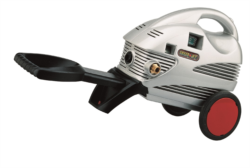
For compact, high-flow systems like the Interpump GREEN JET GX24 VARIOJET, quarterly testing ensures the lightweight design's delicate sealing surfaces remain optimized.
Section 2: Diagnostic Testing Protocols for Common Failure Modes
Detecting Cavitation (Vapor Lock)
Cavitation—formation of vapor bubbles at pump inlet—causes rapid component damage if undetected. Signs include:
- Pitting damage on impeller and housing (visible only during disassembly)
- Acoustic signature: repetitive popping or crackling sounds
- Performance loss: flow rate drops despite constant motor speed
- Pressure fluctuations: discharge pressure oscillates ±5-10 bar unpredictably
- Inlet filter clogging (most common)
- Suction line restrictions or undersized piping
- Fluid level too low (reservoir-fed systems)
- Temperature too high (reduces fluid vapor pressure threshold)
Identifying Bearing Wear
Bearing failure represents 35-45% of all pump/compressor failures. Early detection is critical:
Vibration signatures:
- Early stage: 0.5-1.0 mm/s vibration, primarily high-frequency (>5 kHz). Detectable only by ultrasonic or spectrum analysis.
- Intermediate stage: 1.0-2.5 mm/s vibration, identifiable by touch (light rattling sensation when hand placed on housing).
- Advanced stage: >2.5 mm/s vibration, audible grinding or knocking, visible rotor movement at coupling.
Oil analysis indicators: Elevated iron content (Fe >5 mg/L) and copper/tin content (indicating bearing metal) confirm bearing wear. Combine with vibration data for high-confidence diagnosis.
Detecting Seal and Internal Leakage
Seal degradation causes internal leakage, reducing pressure and flow while generating heat. Three diagnostic methods:
Method 1 – Pressure decay test: Isolate the pump outlet with a valve (no flow condition). Record discharge pressure every 30 seconds for 5 minutes. Pressure drop >2% in 5 minutes indicates internal leakage; >5% indicates significant seal wear requiring imminent replacement.
Method 2 – Flow loss at constant pressure: Maintain constant discharge pressure while measuring flow rate. Compare to baseline. Flow reduction >10% with stable pressure indicates pump wear; >15% requires overhaul.
Method 3 – Infrared thermal imaging: Photograph pump housing with an infrared camera. Internal leakage causes friction heat—expect a 5-10°C halo around seal areas in early degradation, 15-25°C in advanced degradation. Hot spots concentrated at shaft seal regions confirm seal leakage.
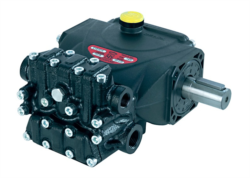
For high-pressure units like the Interpump WS151 R ATEX and Interpump E3B2121I, seal integrity testing is critical due to elevated pressure stress.
Detecting Impeller Wear and Efficiency Loss
Progressive impeller wear reduces flow capacity and efficiency. Detection requires performance curve testing:
Test procedure:
1. Ensure stable operating temperature (wait 30 minutes at half-load for thermal stabilization)
2. Record baseline: at constant discharge pressure (e.g., 100 bar), measure flow rate
3. Repeat monthly at identical conditions
4. Calculate efficiency: (theoretical power ÷ actual motor input power) × 100%
5. Flag efficiency loss >5% within 6 months or >10% within 12 months
Typical wear patterns:
- First 12 months: minimal efficiency loss (0-2%)
- 12-24 months: gradual degradation (2-8%)
- 24+ months (if poorly maintained): accelerated loss (8-20%+)
Tropical Singapore environments compress timelines; expect first-stage wear detection 15-20% earlier than temperate climate schedules.
Section 3: Implementing a Condition Monitoring Program
Setting Up Your Baseline Database
All preventive maintenance is comparison-based. Your first step is creating baseline values for each pump/compressor:
Baseline data to capture (first 100 operating hours):
- Pressure at 20%, 50%, 75%, 100% load
- Flow rate at each load point
- Discharge and inlet temperature at each load
- Vibration velocity (mm/s) and frequency spectrum (Hz)
- Motor current draw (amperage) at each load
- Bearing temperature by infrared (housing surface)
- Oil analysis report (viscosity, water content, particle count)
- Acoustic emission reading (ultrasonic intensity)
- Coupling alignment (dial indicator readings at 4 points around circumference)
Document these in a spreadsheet or CMMS (Computerized Maintenance Management System) software. Include date, operating hours, ambient temperature, and operator notes. This baseline becomes your reference for all future testing.
Creating Alert Thresholds
Define specific thresholds triggering maintenance action:
- Yellow alert (investigate): 10% deviation from baseline
- Orange alert (schedule maintenance): 15% deviation or trending toward threshold
- Red alert (emergency shutdown): 25% deviation or catastrophic indicator (sudden pressure loss, excessive vibration, temperature spike >25°C above baseline)
For example, if your baseline shows 200 L/min at 150 bar:
- Yellow: <180 L/min or >220 L/min at 150 bar discharge
- Orange: 170-179 L/min or sustained downtrend over 2-week period
- Red: <160 L/min or pressure collapse within 60 seconds under load
Assigning Monitoring Responsibilities
Successful programs assign specific individuals accountability:
- Daily operator checks: Equipment operators (no special training required)
- Weekly technician testing: Maintenance technician Level 2+ (vibration meter, thermometer, pressure gauge training)
- Monthly oil analysis: Send samples to certified laboratory; plant technician coordinates sampling
- Quarterly diagnostics: Maintenance supervisor or senior technician (requires advanced troubleshooting knowledge)
- Annual overhaul planning: Plant engineer, with input from equipment supplier (3G Electric can provide guidance on rebuild vs. replacement decisions)
Using Data for Predictive Maintenance
After 6 months of data collection, patterns emerge enabling predictive maintenance:
Example analysis:
- Month 1 baseline: pressure 200 bar, flow 35 L/min, vibration 0.4 mm/s
- Month 2: pressure 198 bar, flow 34.8 L/min, vibration 0.42 mm/s (normal variance)
- Month 3: pressure 195 bar, flow 34.2 L/min, vibration 0.45 mm/s (slight downtrend)
- Month 4: pressure 192 bar, flow 33.5 L/min, vibration 0.48 mm/s (consistent downtrend)
- Month 5: pressure 188 bar, flow 32.8 L/min, vibration 0.52 mm/s (orange alert—trending)
- Month 6 projection: pressure 184 bar, flow 32.0 L/min, vibration 0.56 mm/s (crosses yellow threshold)
Linear regression analysis shows seal leakage degrading at 2-3% per month. Schedule seal replacement within 4 weeks, before reaching red alert at month 7-8. Proactive maintenance costs $2,000-3,500 for seals; reactive failure costs $8,000-15,000 in emergency repair plus downtime.
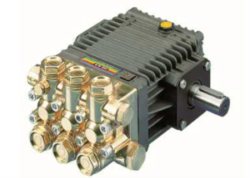
For complex systems with multiple pumps like those using the Interpump PUMP WW950 R+FL.184TC, this data-driven approach prevents cascade failures across interdependent equipment.
Section 4: Maintenance Team Training and Documentation
Essential Skills for Your Team
Effective preventive maintenance requires these competencies:
1. Pressure and flow measurement: Understanding gauge types (analog vs. digital), common errors (temperature compensation, transducer accuracy), and interpretation of fluctuating readings
2. Vibration analysis basics: Recognizing that high-frequency vibration (2-10 kHz) indicates bearing problems, mid-frequency (500 Hz-2 kHz) indicates impeller cavitation, and low-frequency (<500 Hz) indicates unbalance or misalignment
3. Thermal imaging interpretation: Knowing that uniform hot spots differ from localized heat concentrations; seal leakage creates concentrated hot zones while impeller wear creates diffuse heat
4. Oil analysis literacy: Understanding what particle counts mean, how water content affects seals, and recognizing abnormal wear metals in test results
5. System troubleshooting logic: Using structured diagnostic approaches (eliminate variables systematically) rather than random part replacement
3G Electric, with 35+ years serving Asia-Pacific maintenance operations, recommends annual refresh training for all technicians and biennial certification testing to maintain skill consistency.
Documentation and Record-Keeping
Maintenance effectiveness depends on thorough documentation:
- Individual equipment files: One file per pump/compressor containing: nameplate data, baseline testing results, all maintenance performed with dates and technician names, component replacement history, and trending analysis
- Spare parts tracking: Maintain inventory of critical spares (seals, bearings, impellers, gaskets) with lead times and reorder thresholds
- Failure history database: When failures occur, document root cause analysis and corrective actions to prevent recurrence
- Supplier contact information: Maintain current contact details for 3G Electric and component manufacturers for urgent technical support
Knowing When to Upgrade or Replace
After 7-10 years of operation, maintenance teams face rebuild vs. replacement decisions. Consider these factors:
- Age of equipment: Seals and bearings naturally degrade; total cost of ownership favors replacement after 10 years
- Repair costs: If annual maintenance exceeds 15% of equipment replacement cost, replacement is economically justified
- Availability: If equipment is critical and rebuilds require 4-6 weeks downtime while new equipment is available in 2 weeks, replacement may justify higher upfront cost
- Technology improvements: Modern pumps/compressors may offer 15-25% better efficiency, recovering energy costs within 3-5 years
3G Electric stocks modern alternatives like the Interpump E3B2121I offering compact footprints and higher efficiency ratings, helping teams make informed upgrade decisions.
Conclusion: Long-Term Benefits of Preventive Maintenance
Singapore's demanding industrial environment—tropical heat, humidity, and salt-air corrosion—makes preventive maintenance not optional but essential for competitive operations. Maintenance teams implementing systematic monitoring, early detection, and scheduled component replacement achieve:
- 50-60% reduction in unplanned downtime
- 30-40% reduction in emergency repair costs
- 3-5 year extension of equipment life
- Improved product quality through consistent, optimized pump/compressor performance
- Safer operations through detection of developing failures before catastrophic events
The investment in technician training, monitoring equipment (vibration meters, infrared cameras, oil analysis programs), and documentation systems is recovered within 12-18 months through reduced emergency repairs and extended equipment life.
3G Electric has supported Singapore maintenance teams since 1990, providing not just equipment but technical guidance on optimizing operations. Your maintenance program success depends on commitment to systematic monitoring, operator training, and transparent documentation of trends over time.
Begin with daily visual inspections and weekly pressure/temperature logging. Add oil analysis and vibration monitoring within 60 days. Establish your baseline database within 6 months. By month 12, your team will be predicting failures weeks in advance, scheduling maintenance during planned downtime, and achieving remarkable reductions in emergency repairs.