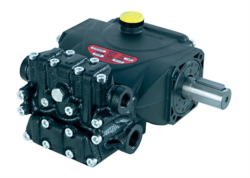
Understanding Predictive Diagnostics for Pumps & Compressors
Modern plant operations demand reliability over convenience. When your Pumps & Compressors fail, production stops. Rather than waiting for catastrophic failure, plant managers must adopt predictive diagnostic protocols that catch degradation in early stages.
Predictive diagnostics differs fundamentally from traditional preventive maintenance. Preventive approaches follow fixed schedules regardless of actual equipment condition. Predictive methods use real-time data—vibration signatures, temperature gradients, pressure anomalies, and flow rate deviations—to forecast failure windows and optimize maintenance windows around production schedules.
3G Electric's 35 years distributing industrial equipment across Southeast Asia has demonstrated that plants implementing condition-based monitoring reduce unplanned downtime by 35-45% while extending equipment lifecycle. This approach is particularly valuable in Singapore's high-cost manufacturing environment where every hour of downtime directly impacts bottom-line profitability.
The key is establishing baseline performance profiles for your specific Pumps & Compressors units. Each piece of equipment has unique operational signatures influenced by installation conditions, fluid characteristics, load profiles, and ambient factors. Without baseline data, abnormal conditions remain invisible until catastrophic failure occurs.
Establishing Equipment Baselines and Monitoring Parameters
Successful predictive diagnostics begins with comprehensive baseline documentation during commissioning. Too many plants skip this critical step, then struggle to identify abnormalities months later.
Essential baseline parameters include:
- Vibration signature: Measure overall vibration levels (displacement, velocity, acceleration) at multiple points on pump/compressor housing, including bearing housings and foundation. Document both vertical and horizontal axes. Increases exceeding 20% above baseline typically indicate bearing wear or misalignment.
- Thermal profile: Record operating temperatures under standard load conditions at pump discharge, motor windings, bearing areas, and reservoir. Unexpected temperature rises of 10-15°C suggest fluid breakdown, seal degradation, or excessive friction.
- Pressure-flow relationship: Document the pump discharge pressure and flow rate at various operating speeds under full load. Deviations suggest internal component wear or partial blockage.
- Acoustic signature: High-frequency sound patterns reveal cavitation, bearing damage, or mechanical looseness. Modern condition monitoring systems can isolate these acoustic fingerprints automatically.
- Fluid condition: Establish baseline particle count (ISO 4406), water content (Karl Fischer), and viscosity. These metrics deteriorate predictably and reveal internal degradation before mechanical failure.
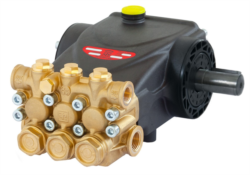
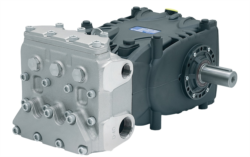
For high-performance units like the Pratissoli KF30 operating at 200 bar pressure or the Pratissoli MW40 delivering 211 L/min, baseline documentation proves invaluable. These Italian-engineered pumps maintain exceptional efficiency, but detecting early degradation requires consistent monitoring against established reference points.
Implement continuous or periodic monitoring using installed sensors connected to your plant's condition monitoring system. Weekly data collection provides sufficient frequency for trending analysis. Plot data on control charts with upper and lower action limits based on manufacturer specifications and your operational history.
Root Cause Analysis: The Decision Tree Approach
When monitored parameters deviate from baseline, systematic root cause analysis prevents misdiagnosis and costly repairs. Plant managers must approach deviations methodically rather than replacing components reactively.
Pressure loss scenario: Your pump discharge pressure drops 15 bar while flow rate remains constant. Common causes cluster into categories:
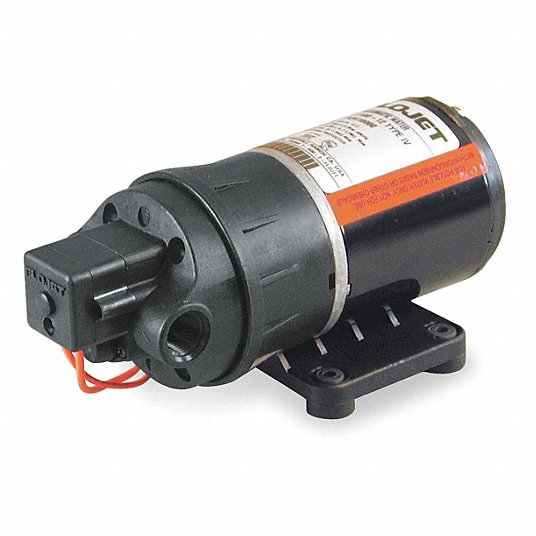
Internal component wear produces gradual pressure decay over weeks or months. Pump gears, pistons, or vanes experience friction against cylinder walls. Check if pressure loss correlates with operating hours since last overhaul. The Interpump E1D1808 L gear pump delivers 8 L/min at 180 bar under standard conditions—sustained drops below 165 bar after extended operation typically indicate gear or bearing wear requiring service.
Seal degradation causes pressure spikes intermittently as leakage increases. Mechanical seals fail progressively, creating internal bypassing that manifests as erratic pressure readings. Thermal imaging reveals localized heat around seal areas.
Valve stack issues trigger pressure loss confined to specific operating ranges. If pressure drops only at certain speeds, internal valve spool binding or pilot drain blockage is likely. Clean or service valve stacks before replacing the entire pump.
Filtration blockage creates false pressure signals. A clogged suction strainer reduces effective pump displacement, appearing as pressure loss. Check filter condition before investigating pump internals. Maintain filter change schedules based on fluid condition analysis, not arbitrary time intervals.
Flow rate reduction scenario: Your pump delivers 180 L/min instead of the 211 L/min specification at 210 bar. This indicates:
Speed reduction from worn motor bearings or belts. Measure actual pump shaft rpm with a tachometer. If rpm is below specification, the issue lies upstream with the drive system, not the pump itself.
Cavitation inception occurs when suction pressure falls below vapor pressure, creating vapor bubbles that collapse during compression. This manifests as noise, vibration increases, and flow reduction despite normal discharge pressure. Check suction line restrictions, fluid temperature (cavitation worsens at elevated temperatures), and inlet line air leakage.
Internal leakage through worn case drains or pilot passages. High-pressure leakage returns fluid to reservoir at reduced system pressure, reducing net output. The Pratissoli SS71153 operates at 160 bar with 122 L/min output—sustained flow below 110 L/min suggests internal circuit leakage requiring seal or component replacement.
Fluid viscosity variation affects pump performance significantly. Cold startups produce higher output than hot running conditions. Document flow rates at consistent operating temperatures. Viscosity outside the 40-50 cSt range at operating temperature degrades performance. Upgrade to synthetic fluids with better temperature stability if seasonal variations impact flow.
Temperature elevation scenario: Pump or motor temperature rises 15-20°C above baseline:
Inefficiency from component wear increases friction and heat generation. Worn pump internals work harder, consuming more power and producing more heat. This typically accompanies pressure loss and occurs gradually over months.
Inadequate cooling from reservoir design or heat exchanger fouling. Validate that heat dissipation capacity matches actual load. Clean cooler cores quarterly in high-dust environments. Singapore's tropical humidity accelerates fouler accumulation.
Bearing friction from worn bearings produces localized heating. Measure temperature at bearing housing specifically. If other areas stay normal but bearing area elevates significantly, bearing replacement is imminent.
Fluid degradation from oxidation or thermal breakdown increases internal friction. Elevated temperatures accelerate oxidation, creating a vicious cycle. Fluid analysis reveals acid number (TAN) increases and viscosity index decline. Plan fluid replacement before oxidation reaches critical levels.
Document your diagnostic process. When patterns emerge across multiple units, systematic records reveal systemic issues—installation problems, specification mismatches, or environmental factors—that affect entire production lines.
Maintenance Planning and Component Sourcing Strategy
Predictive diagnostics identifies maintenance windows, but plant managers must execute efficiently. This requires advance component sourcing and scheduling coordination.
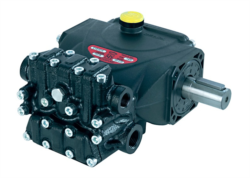
When diagnostics suggest bearing replacement will be necessary within 2-3 months, contact your equipment distributor immediately. Interpump ET1C1612 SX*D20 units and other high-pressure compact pumps utilize specialized bearings and seals specific to their pressure ratings. Lead times from suppliers range from 2-4 weeks, particularly for Italian-engineered Pratissoli components.
3G Electric's 35-year history distributing industrial equipment across Singapore and regional markets means immediate access to original replacement components. Specify exact pump model, serial number, and hours-in-service when requesting parts. Counterfeit seals and bearings circulate in Southeast Asian supply chains; source exclusively from established distributors.
Scheduling optimization strategies:
- Batch maintenance windows: When diagnostics indicate multiple units require service within a 4-week window, consolidate maintenance into single production shutdown periods rather than multiple interruptions. This minimizes overall productivity impact.
- Redundancy planning: If your process cannot tolerate pump unavailability, maintain staged equipment that can be deployed as replacement units during service. High-performance units like the Pratissoli KF30 (40 kW, 106 L/min) serve as excellent spare capacity pumps.
- Fluid change coordination: Align bearing/seal service with hydraulic fluid changes. Fresh fluid extends new component lifespan and ensures contamination doesn't immediately degrade replacement parts.
- Documentation for warranty: Maintain detailed service records that support warranty claims on premature failures. Original components installed by qualified technicians typically carry manufacturer protection; improper installation voids coverage.
Advanced plant managers use predictive data to negotiate maintenance contracts with equipment suppliers. Rather than fixed annual fees regardless of actual service needs, usage-based contracts align costs with actual equipment condition. Your diagnostic data substantiates maintenance frequency needs.
Implement a simple spreadsheet tracking each pump/compressor unit: baseline parameters, monitoring intervals, current trending data, estimated service dates, and component costs. Update monthly. This living document guides budgeting and prevents crisis maintenance scenarios that disrupt production schedules and inflate repair costs.
Predictive diagnostics transforms Pumps & Compressors management from reactive firefighting to strategic operational planning. Plant managers who implement these frameworks reduce unplanned downtime, extend equipment life, and optimize maintenance spending—critical advantages in competitive Singapore manufacturing markets.