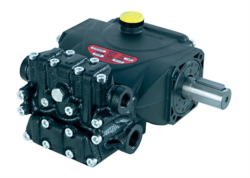
Understanding Pumps & Compressors Maintenance Fundamentals
Pumps & Compressors represent some of the most critical yet maintenance-intensive equipment in industrial operations. Unlike static machinery, these dynamic systems experience continuous internal stress from fluid dynamics, thermal cycling, and pressure fluctuations. For maintenance teams across Southeast Asia, developing a proactive lifecycle management strategy—rather than reactive repair approaches—directly impacts operational reliability and budget predictability.
With over 35 years of experience distributing industrial equipment, 3G Electric has observed that maintenance team performance ultimately determines whether pumps operate at design specifications or deteriorate prematurely. The difference often comes down to understanding equipment-specific degradation patterns and implementing condition-based maintenance protocols before failures occur.
Two major equipment families dominate the region's industrial landscape: Interpump compact gear pumps and Pratissoli high-flow centrifugal models. Each presents distinct maintenance requirements, warning signs, and service intervals that maintenance teams must understand to optimize equipment life.
Compact Pump Maintenance: Interpump E-Series & ET-Series Lifecycle Patterns
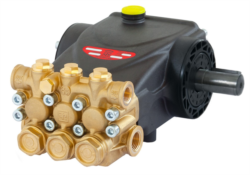
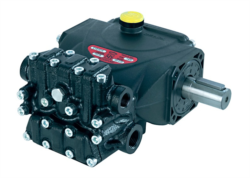
Interpump compact industrial pumps like the E1D1808 L and ET1C1612 SX*D20 operate at higher rotational speeds (2800 rpm and 1750 rpm respectively) while delivering modest flow volumes. This speed-efficiency trade-off creates specific maintenance considerations that differ markedly from larger displacement pumps.
Early-Stage Wear Indicators (0-6 Months)
Interpump compact models typically show initial wear patterns in seal assemblies within the first operating months. Maintenance teams should monitor:
- Fluid temperature rise during idle periods (indicating internal leakage past thrust bearings)
- Audible pitch changes during operation (often preceding seal failure by 4-8 weeks)
- Pressure spikes at startup before stabilization (seal degradation reducing fluid cushioning)
The E1D1808 L, operating at 2800 rpm with 2.72 kW input, experiences higher bearing stress than lower-speed alternatives. Seal inspection should occur at 500-hour intervals rather than manufacturer-recommended 1000-hour schedules, particularly in tropical Southeast Asian environments where ambient temperatures accelerate elastomer degradation.
Mid-Cycle Maintenance (6-18 Months)
After initial stabilization, fluid analysis becomes critical. Gear pumps like the ET1C1612 SX*D20 generate fine wear particles as gear teeth experience micro-pitting under load. Regular oil sampling every 250 operating hours identifies particle concentration trends before they cause catastrophic damage.
PTFE-constructed models (such as the ET1C1612 SX*D20) require specialized attention. PTFE components don't degrade like traditional elastomers but can become brittle under prolonged thermal stress. Maintenance teams should verify PTFE seal flexibility annually through gentle physical inspection—loss of compliance indicates replacement timing within 6-12 months.
Extended Lifecycle Considerations (18+ Months)
Interpump compact pumps typically achieve 5000-7000 operating hours before major overhaul becomes necessary. However, this timeline compresses significantly under continuous-duty conditions common in Southeast Asian manufacturing. Maintenance teams operating equipment at sustained 90%+ load capacity should plan overhauls at 3500-4500 hours rather than manufacturer guidelines, particularly for the high-pressure models (180-200 bar) where internal stress accelerates component degradation.
High-Flow Pump Maintenance: Pratissoli Series Lifecycle Management
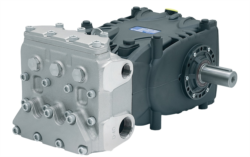
Pratissoli high-performance industrial pumps—including the KF30 series at 106 L/min and MW40 series at 211 L/min—operate at lower rotational speeds (800 rpm for SS71153 models) with significantly higher displacement. This architecture creates fundamentally different maintenance demands than compact models.
Initial Commissioning Phase (0-3 Months)
Pratissoli high-flow pumps require extended break-in periods compared to compact alternatives. During commissioning, maintenance teams should document:
- Baseline pressure readings under standard load conditions (pressure spikes during break-in are normal; sustained elevation indicates installation problems)
- Fluid circulation rates and temperature at full displacement (baseline for future trending)
- Vibration signatures at operating speed (high-displacement pumps generate characteristic resonance patterns)
The KF30 pump, delivering 106 L/min at 40 kW, typically shows 8-12% pressure variance during initial 200 hours as internal components seat properly. This behavior differs markedly from compact models and shouldn't trigger intervention unless pressure exceeds design specs.
Preventive Maintenance Windows (3-12 Months)
High-flow Pratissoli models benefit from oil analysis every 500 operating hours. Unlike gear pumps, these designs tolerate slightly elevated particle counts while maintaining performance—however, trending data reveals degradation patterns months before catastrophic failure.
For the MW40 pump (211 L/min, 210 bar, 85 kW), maintenance teams should implement quarterly fluid condition assessments examining:
- Viscosity stability (heat acceleration common in 40°C+ tropical environments)
- Water content (humidity infiltration through breathers accelerates corrosion)
- Acid number trends (indicating oxidation rates in existing hydraulic fluid)
These preventive measurements cost minimal resources compared to emergency repairs resulting from fluid degradation.
Extended Service Life (12+ Months)
Pratissoli high-flow pumps routinely achieve 8000-12000 operating hours before major service, substantially exceeding compact pump lifecycles. However, this extended service life depends critically on thermal management. In Southeast Asian facilities where ambient temperatures frequently exceed 35°C, maintenance teams must verify cooling system performance monthly.
The SS71153 pump (122 L/min, 37.5 kW, 800 rpm) represents an intermediate-displacement design vulnerable to thermal degradation when cooling systems fail. Temperature trending over 12-month periods reveals whether cooling capacity matches operational load—early detection prevents premature failure and unplanned downtime.
Comparative Maintenance Cost Analysis: Interpump vs. Pratissoli Lifecycle Economics
Maintenance team budgets must account for not only parts replacement but also labor, fluid costs, and productivity losses during service windows. Comparing compact and high-flow pump families reveals meaningful cost dynamics:
Compact Model Economics (Interpump E1D1808 L, ET1C1612 SX*D20)
Smaller displacement and lower flow requirements mean reduced hydraulic fluid consumption—critical in high-downtime environments. Seal replacement kits for compact models typically cost 15-25% of equivalent Pratissoli kits. However, shorter service intervals (500 hours vs. 1000 hours) and higher-speed operation create more frequent maintenance visits.
Estimated 5-year maintenance cost per unit: $3,500-$4,200 (including fluid, seals, bearings, and labor for 8-10 service cycles).
High-Flow Model Economics (Pratissoli KF30, MW40, SS71153)
Higher displacement requires larger fluid reservoir and longer service intervals, reducing annual maintenance visits. However, component replacement costs are proportionally higher—bearing and seal kits for MW40 pumps cost 60-80% more than compact alternatives.
Critically, high-flow pumps' extended service life (2-3x longer than compact models) distributes maintenance costs across longer operational periods. The MW40 pump achieving 10,000 hours before overhaul amortizes component costs more favorably than compact models requiring overhaul at 5,000 hours.
Estimated 5-year maintenance cost per unit: $5,200-$6,800 (including fluid, seals, bearings, and labor for 4-6 service cycles)—but supporting 2-3x higher cumulative output.
When Lifecycle Replacement Becomes Economical
Maintenance teams operating equipment in high-utilization scenarios (6000+ annual operating hours) should evaluate lifecycle replacement strategies. Compact models may require complete replacement every 3-4 years; high-flow Pratissoli units can operate 6-8 years under equivalent conditions. This extended lifecycle often justifies higher initial capital investment, particularly where downtime costs exceed $500/hour.
Practical Maintenance Planning for Southeast Asian Operations
Effective lifecycle management requires documentation and trending. Maintenance teams should implement:
Equipment-Specific Tracking Protocols
- Pressure logs every operating day (reveals gradual performance decline)
- Fluid analysis every 250-500 hours (identifies degradation before failure)
- Temperature monitoring during peak-load periods (confirms cooling system adequacy)
- Vibration baseline measurements at commissioning and annual intervals
Southeast Asian ambient temperatures (28-40°C year-round) accelerate seal degradation and fluid oxidation compared to temperate regions. Maintenance teams should apply 15-25% more frequent service intervals for:
- Seal inspection and replacement (compact models: 400-hour intervals instead of 500)
- Fluid analysis (high-flow models: 400-hour intervals instead of 500)
- Bearing replacement assessments (all models: annual evaluation rather than 18-month cycles)
With 35+ years' equipment distribution experience, 3G Electric recommends maintaining minimum spare inventory including seal kits, bearing assemblies, and specialized gaskets for critical units. Sourcing these components reactively during emergencies typically adds 40-60% premium costs compared to planned acquisition.
For Interpump compact models, maintain 2 complete seal kits per unit. For Pratissoli high-flow models, maintain 1 seal kit and 1 bearing assembly per unit—their longer service intervals justify slightly lower inventory ratios.
Condition-Based vs. Time-Based Maintenance
Maintenance teams should transition from calendar-based (time) maintenance toward condition-based approaches. While manufacturer guidelines specify intervals, equipment-specific monitoring data—particularly pressure and temperature trending—often reveals optimal service timing within 10-25% variance from published schedules.
Implementing oil analysis, pressure trending, and temperature monitoring allows maintenance teams to extend intervals slightly for equipment operating under light loads while contracting intervals for high-utilization units, optimizing both costs and reliability.