Understanding Pumps & Compressors in HVAC Applications
Pumps and compressors serve distinct but complementary roles in HVAC systems. Compressors pressurize and circulate refrigerants through cooling and heating cycles, while pumps move water, glycol solutions, and other heat-transfer fluids through piping networks. For HVAC contractors, understanding these components is essential for designing efficient systems, troubleshooting performance issues, and ensuring long equipment life.
With over 35 years of experience as an industrial equipment distributor, 3G Electric has supported contractors across diverse climates and facility types. Whether you're installing chiller loops, heat pump systems, or complex multi-zone HVAC networks, selecting the right pumps and compressors directly impacts system efficiency, reliability, and operating costs.
Sizing Pumps for HVAC Water Systems
Flow Rate Calculation
The foundation of pump selection is calculating required flow rate. HVAC water systems require flow rates based on cooling or heating load and the allowable temperature differential:
Flow Rate (GPM) = Cooling Load (BTU/hr) ÷ (Temperature Rise × 500)
For example, a 100-ton cooling system with a 10°F temperature differential requires approximately 240 GPM. Using oversized pumps wastes energy; undersized pumps create insufficient circulation and poor temperature control.
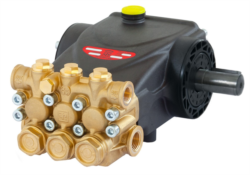
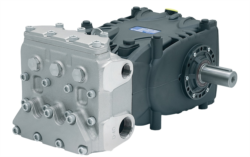
Common HVAC flow rates range from 50 GPM for small residential heat pumps to 500+ GPM for large commercial systems. The Pratissoli KF30 delivers 106 L/min (28 GPM)—suitable for mid-sized residential or light commercial loops. For larger systems requiring higher flow, the Pratissoli MW40 provides 211 L/min (56 GPM), making it appropriate for substantial commercial HVAC applications.
Pressure Requirements
HVAC water loop pressures typically range from 20-60 PSI, depending on system design, pipe friction losses, and elevation. Contractors must account for:
- Static pressure: System elevation and standing column height
- Dynamic losses: Friction through pipes, fittings, coils, and valves
- Equipment requirements: Minimum inlet pressures for chillers, boilers, and zone valves
Most HVAC systems operate well below 100 bar pressure. The KF30 and MW40 both exceed typical HVAC requirements, offering operating pressures of 200 and 210 bar respectively. This overhead provides safety margin and allows single-pump solutions for systems with higher-than-average friction losses.
Material Selection
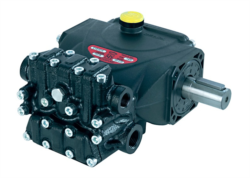
HVAC water systems require pumps compatible with common heat-transfer fluids. Standard cast-iron or ductile-iron construction works for water-based systems. Glycol solutions (used in freeze-protected systems) may require compatible seals—synthetic elastomers or PTFE construction prevents degradation. The Interpump ET1C1612 features PTFE construction, making it suitable for glycol-based or chemically aggressive fluids common in some HVAC applications.
Compressor Selection for Refrigerant Circulation
Tonnage and Compressor Displacement
Refrigerant compressors are sized by cooling capacity (tons) and displacement volume. A 10-ton air conditioning unit requires a compressor that circulates sufficient refrigerant to remove 120,000 BTU/hr. Compressor displacement (measured in cc per revolution) directly correlates to flow—larger displacement means higher refrigerant circulation at the same operating speed.
Contractors must verify compressor displacement matches the system design. Undersized compressors cannot maintain proper refrigerant charge circulation, reducing cooling capacity and causing high superheat. Oversized compressors cycle excessively, shortening component life and increasing energy consumption.
Pressure Ratios and Operating Conditions
Refrigerant compressors operate within specific pressure ratios—the discharge pressure divided by inlet pressure. High-efficiency systems maintain lower pressure ratios (3:1 to 5:1), while systems operating across extreme temperature differentials may experience ratios exceeding 8:1. Exceeding design pressure ratios causes excessive heat generation, oil breakdown, and premature failure.
When selecting compressors for non-standard conditions (high ambient temperatures, low evaporator setpoints, or altitude), verify the compressor's rated operating envelope. Specialty compressors designed for high-lift applications prevent reliability problems.
Integration with Other Components
Compressors don't operate in isolation. Proper integration requires:
- Oil management: Compressors need continuous oil circulation; improper installation can starve bearings
- Suction line design: Undersized suction lines increase pressure drop and compressor work; oversized lines risk oil return problems
- Discharge pressure control: Unloading valves and capacity modulation prevent excessive discharge pressures
- Liquid injection: Many modern systems use vapor injection or liquid cooling for efficiency; ensure compressor design supports these features
System Integration and Performance Optimization
Coordinating Pumps and Compressors
In complex HVAC systems—particularly those with multiple zones, heat recovery loops, or hybrid operation—pumps and compressors must operate in concert. Water-side pumps maintain consistent flow to heat exchangers while refrigerant compressors manage refrigerant state and pressure. Mismatched operation creates temperature swings, cycling issues, and poor efficiency.
For example, a chiller system's water pump must maintain minimum evaporator flow to prevent freeze-up while the compressor modulates capacity. If the pump shuts down before compressor capacity reduction, evaporator pressure drops dangerously. Proper control sequences prevent these conflicts.
Variable Speed Operation
Modern HVAC systems increasingly employ variable-frequency drives (VFDs) on water pumps to reduce energy consumption. A pump sized for peak load delivers significant oversupply at part-load conditions—VFDs reduce speed, cutting power consumption by 20-40%.
Compressor modulation operates differently. Capacity control through unloading valves, variable displacement swash plates, or variable-speed drives prevents energy waste at part load. However, compressor efficiency typically declines at very low capacities; contractors should verify minimum operating points to maintain acceptable performance.
The KF30 and MW40 provide flexible mounting and control options suitable for VFD integration, offering contractors the ability to optimize water-side energy consumption.
Maintenance Access and Service Planning
During design and installation, plan for maintenance access. Pumps require periodic seal inspection and replacement; compressors need oil analysis and filter changes. Isolating ball valves, Union fittings, and adequate clearance above and below equipment simplify future service.
Establish preventive maintenance schedules appropriate to your climate and system type. High-ambient regions stress compressors; frequent shutdown-startup cycles in mild climates stress pump seals. Documenting baseline pressures, temperatures, and vibration levels enables early detection of degradation.
3G Electric's 35+ years supporting industrial customers includes guidance on maintenance planning—don't hesitate to consult equipment datasheets and application notes when planning service intervals.
Practical Selection Examples
Residential Heat Pump System
A 3-ton heat pump serving a 1,200 sq ft home requires:
- Compressor: Sized for 36,000 BTU/hr cooling/heating capacity
- Water pump (if hydronic): 15-20 GPM capacity for indoor fan coil or radiant loop
- Pressures: Compressor operates ~200-400 PSI refrigerant side; water loop stays under 50 PSI
The Interpump E1D1808 delivers 8 L/min at compact size, making it suitable for small auxiliary loops (pool heating, supplementary hot water) in residential applications.
Medium Commercial Chiller Loop
A 50-ton commercial chiller cooling a multi-story office building requires:
- Chiller compressor: Designed for 600,000 BTU/hr capacity with capacity modulation
- Distribution pump: 240 GPM minimum to maintain 10°F temperature differential
- Pressures: Refrigerant side ~150-400 PSI; chilled water loop ~30-50 PSI
The Pratissoli MW40 at 211 L/min (56 GPM) handles secondary loops or individual zone circuits, while primary distribution may use larger centrifugal pumps. The Pratissoli SS71153 at 122 L/min supports high-demand applications requiring robust flow and pressure stability.
High-Ambient or High-Lift Application
Systems operating in hot climates or with extreme temperature differentials require:
- High-capacity compressors designed for elevated pressure ratios
- Oversized condenser fans to maintain reasonable discharge pressures
- Additional suction-line heat exchanger or economizer for capacity recovery
- Robust water pumps maintaining consistent cooling water circulation
In such applications, reliable, high-pressure-rated components prevent premature failures. 3G Electric's distribution network ensures access to specialty equipment designed for demanding conditions.
Conclusion
Successful HVAC projects depend on correctly selecting and integrating pumps and compressors. By calculating actual system loads, understanding pressure requirements, and ensuring proper component coordination, contractors deliver reliable, efficient systems. Leverage 3G Electric's expertise and component availability to source equipment matching your specific application needs—whether standard residential systems or complex commercial installations.
Consult equipment datasheets, engage with equipment manufacturers for challenging applications, and plan maintenance from the outset. Over 35 years, we've supported contractors in building HVAC systems that perform reliably across diverse environments.