Understanding the Purpose of Pumps & Compressors Equipment Audits
For procurement engineers overseeing industrial facilities in Southeast Asia, Pumps & Compressors represent significant capital investments and operational expenses. A thorough equipment audit goes beyond simple visual inspection—it's a systematic evaluation of your installed base to determine performance efficiency, maintenance burden, compliance status, and upgrade potential.
With 35+ years of experience as an industrial equipment distributor, 3G Electric has observed that procurement teams often operate equipment beyond its optimal performance window simply because they lack clarity on current system conditions. Equipment audits bridge this knowledge gap, providing the quantitative data needed for informed procurement decisions. Whether you're managing a processing plant in Thailand, a manufacturing facility in Vietnam, or a petrochemical operation in Indonesia, auditing existing Pumps & Compressors enables you to optimize capital expenditure, reduce operational costs, and improve system reliability.
The audit process answers critical questions: Are your current systems performing within manufacturer specifications? What is the true cost of ownership for each installed unit? Which equipment poses reliability risks? Where do upgrade opportunities exist? How does your inventory align with operational demands?
Phase 1: Data Collection and Performance Benchmarking
Begin your audit by establishing a complete inventory of all Pumps & Compressors equipment currently installed across your facility or operation. This inventory serves as your audit baseline and should include:
Equipment Information to Document:
- Manufacturer, model number, and serial number
- Installation date and original procurement cost
- Current operating hours and maintenance schedule compliance
- Current location and application within your process
- Nameplate specifications (flow rate, pressure rating, power input, RPM)
Working with your operations and maintenance teams, collect actual performance data over a 2-4 week period. Record flow rates at the pump or compressor discharge using calibrated instruments, measure inlet and discharge pressures simultaneously, document power consumption via electrical meters, and log operating temperatures at critical points.
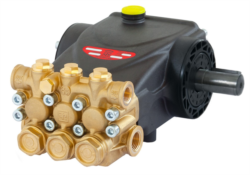
Compare actual performance data against nameplate specifications. A Pratissoli KF30 pump, for example, is rated for 106 L/min flow at 200 bar pressure with 40 kW power input. If your KF30 is consistently delivering only 85 L/min at the same pressure, this performance degradation signals maintenance needs or imminent failure risk.
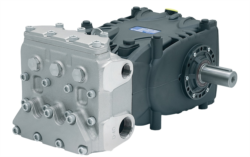
For high-pressure applications, reference equipment like the Pratissoli MW40 delivering 211 L/min at 210 bar with 85 kW power to establish performance benchmarks. If similar systems in your facility show significantly different performance characteristics under comparable loads, investigate root causes immediately.
Document performance trending over time. Modern procurement engineers can utilize simple spreadsheets or facility management systems to track monthly or quarterly readings. Performance degradation trends often appear weeks or months before catastrophic failure, providing procurement teams with advance notice to schedule replacements during planned downtime rather than responding to emergency failures.
Phase 2: Condition Assessment and Reliability Evaluation
Combine performance data with physical condition assessment to determine equipment reliability status. Partner with your maintenance technicians to conduct visual inspections and preliminary diagnostics on each unit.
Critical Condition Indicators:
Listen for abnormal noise—cavitation sounds, bearing noise, or irregular pulsations indicate developing problems. Measure vibration at pump or compressor casings; elevated vibration suggests bearing wear, misalignment, or internal component degradation. Feel discharge line temperature; unexplained temperature rises indicate internal friction or inefficient flow dynamics. Inspect seals and connections for leakage—any external fluid loss means internal clearances have likely enlarged, reducing efficiency and increasing failure risk.
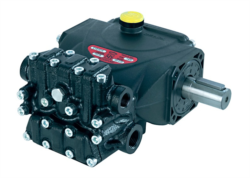
For compact units like the Interpump E1D1808 L gear pump rated for 8 L/min at 180 bar, physical compactness should not excuse detailed inspection. Check for seal weeping, verify gear mesh noise patterns, and confirm that RPM matches the 2800 rpm design specification. Compact pumps operating in high-pressure applications often show minimal external failure warning signs before sudden loss of function.
Evaluate maintenance history for patterns. Equipment requiring increasingly frequent servicing, seal replacements, or component repairs approaches end-of-life. Cross-reference maintenance costs against equipment replacement costs—when annual maintenance expenditure exceeds 50% of replacement cost, upgrade becomes economically justified regardless of remaining nameplate lifespan.
Compliance Verification:
Southeast Asian industrial operations must satisfy multiple regulatory frameworks. Verify that all Pumps & Compressors equipment meets applicable pressure equipment directives, have valid third-party certifications where required, and comply with local electrical and safety standards. Outdated equipment may lack compliance documentation, creating legal liability and operational risk.
Phase 3: Application Mapping and Load Analysis
Understanding how each piece of equipment contributes to your process workflow is essential for procurement decisions. Map each pump and compressor to its specific application, document the process parameters it must support, and confirm whether the equipment is appropriately sized for current and anticipated future demands.
Load Profiling:
Review operating logs to understand actual versus nameplate duty. Many facilities install equipment for peak capacity scenarios but operate near minimum load 80% of the time. This practice wastes energy and accelerates component wear. The Pratissoli SS71153 pump rated for 122 L/min at 160 bar with 37.5 kW motor power represents a significant investment; if your application only requires 60 L/min flow 90% of the time, you're operating inefficiently and should consider appropriately-sized replacement equipment.
Document seasonal or cyclical variations in demand. Many Southeast Asian facilities experience significant flow and pressure variations driven by production scheduling, raw material availability, or ambient temperature changes. Equipment selected based on peak-load scenarios often operates sub-optimally during normal conditions.
Identify future demand trends. Are production volumes increasing? Will your facility expand? Does your roadmap include new process lines? Audit findings should inform procurement strategy for the next 3-5 years, not just address current deficiencies.
Application-Equipment Mismatch Analysis:
Confirm that equipment specifications align with application requirements. High-pressure applications requiring sustained operation at 150+ bar demand different pump designs than moderate-pressure applications. Equipment selected for intermittent duty often fails prematurely when subjected to continuous operation. The Interpump ET1C1612 SX*D20 pump delivering 12 L/min at 160 bar with PTFE construction suits specific high-pressure hydraulic applications; installing it in general-service applications misallocates capital and may compromise system reliability.
Phase 4: Economic Analysis and Procurement Recommendations
Transform audit data into actionable procurement decisions by conducting comprehensive economic analysis. For each piece of equipment, calculate:
True Cost of Ownership (TCO):
Add original purchase cost to cumulative maintenance expenditure, repair costs, and energy consumption costs. Project future costs based on equipment age and condition trends. Compare TCO for retaining existing equipment versus replacement with modern alternatives.
Energy efficiency analysis deserves particular attention in Southeast Asia where electrical costs vary significantly by region and utility. Newer Pratissoli equipment, for instance, incorporates design improvements delivering equivalent flow-pressure performance at 5-15% lower power input compared to legacy equipment. Over a 5-year operational horizon, energy savings alone may justify replacement of older, less-efficient units.
Spare Parts Availability and Support Risk:
Equipment obsolescence creates procurement risk. If your facility operates equipment manufactured 15+ years ago, identify remaining spare parts availability and assess vendor continuity risk. 3G Electric's 35+ years experience as an industrial equipment distributor enables us to source replacement components across multiple manufacturers and product lines, but availability becomes increasingly constrained for very old equipment.
Standardization Opportunity:
Audits often reveal that facilities operate multiple pump families across different pressure and flow ranges, each requiring distinct spare parts inventory and technician expertise. Consolidating toward standardized equipment families reduces inventory carrying costs, simplifies maintenance training, and accelerates repair and troubleshooting.
Procurement Strategy Development:
Based on audit findings, develop a phased procurement roadmap. Prioritize replacement of equipment rated high-risk for failure, equipment with unacceptable efficiency performance, or systems approaching end-of-service life. Schedule replacements to align with planned maintenance windows rather than waiting for failure-driven emergency procurement.
For critical systems, consider redundancy investments. Rather than operating a single high-capacity pump, deploying two appropriately-sized units provides operational resilience—one unit maintains process flow while the other undergoes maintenance, and single-unit failure doesn't interrupt production.
Work with procurement and finance teams to structure capital allocation across identified needs. Equipment upgrades often qualify for accelerated depreciation or efficiency-focused incentive programs in Southeast Asian markets, improving financial outcomes compared to simple full-cost capitalization.