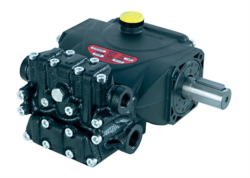
Understanding Pumps & Compressors Energy Impact in Singapore Operations
Pumps & Compressors are among the largest energy consumers in industrial plants, often accounting for 20-30% of total electricity expenditure. For Singapore manufacturers operating in competitive global markets with rising utility costs, energy efficiency directly impacts profitability. Unlike maintenance issues that emerge suddenly, energy waste occurs silently and continuously—an oversized pump running at partial capacity or a compressor with poor valve efficiency bleeds operational budget daily.
The challenge intensifies in Singapore's tropical climate, where cooling loads from equipment operation add secondary energy costs. With over 35 years of industrial equipment distribution experience, 3G Electric has observed that most plants operate their Pumps & Compressors inefficiently due to three common issues: equipment selected for peak demand rather than average load, lack of flow monitoring during operation, and deferred maintenance that degrades efficiency over time.
This guide provides plant managers with actionable strategies to quantify energy waste, select appropriate equipment, and establish monitoring practices that deliver measurable cost reduction.
Assessing Current Energy Performance and Identifying Waste
Before upgrading equipment or changing operational practices, establish baseline metrics. Most plant managers know their energy bills but not how much each asset consumes. Start by calculating the specific energy consumption of your Pumps & Compressors installations.
Key Performance Indicators to measure:
- Specific Energy Consumption (kWh per unit output): Divide total kWh consumed by flow rate (L/min) or pressure delivered (bar). This reveals whether equipment operates efficiently at current duty.
- Power Factor: Industrial compressors operating below 80% load efficiency often have poor power factors, increasing reactive power charges on Singapore utility bills.
- Pressure Drop Across System: Measure inlet and discharge pressure; excessive drop indicates valve restrictions, blocked filters, or undersized piping stealing 5-15% efficiency.
- Runtime vs. Production Output: Log compressor run hours against production volume. Idle running time indicates oversizing or demand-side inefficiency.
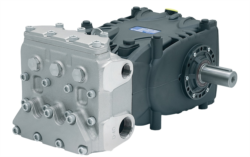
For example, the Pratissoli KF30 pump delivers 106 L/min at 200 bar with 40 kW input, yielding 0.377 kW per L/min. If your installation shows 0.5+ kWh per L/min, energy losses through throttling or bypass are occurring.
Conduct an energy audit by measuring actual discharge flow and pressure under normal production. Compare findings to pump curves or compressor specifications. Oversized equipment—a 50-hp pump running at 40% capacity—wastes energy continuously through throttling, pressure relief bypass, or internal leakage.
Right-Sizing Equipment for Average Operating Demand
The most expensive mistake plant managers make is purchasing Pumps & Compressors for peak demand rather than average demand. While peak load considerations are necessary for system design, operating oversized equipment at partial load dramatically increases specific energy consumption.
Equipment Selection Strategy:
Review your production data from the past 12 months. Most manufacturing plants operate at 60-75% of peak capacity on average days. Size primary equipment to handle this average load at peak efficiency, then address peak demand with secondary systems.
For instance, if your process averages 150 L/min at 200 bar but peaks at 200 L/min once per shift, select equipment rated for 150 L/min (running at optimal efficiency) and add a smaller boost pump for peak events. This costs less in capital and saves significantly in ongoing energy consumption.
Pratissoli's modular range supports this approach. The Pratissoli MW40 pump delivers 211 L/min at 210 bar—suitable for processes averaging 180-200 L/min. Smaller processes that previously used this oversized unit can now select the KF30 model (106 L/min at 200 bar), reducing baseline energy consumption by 40-50%.
Pressure Optimization:
Operating at higher pressure than necessary drives energy consumption exponentially. Many plants maintain 210 bar system pressure to accommodate one or two high-pressure applications while most circuits require only 160 bar. Every additional 10 bar increases pump energy consumption by approximately 5-7%.
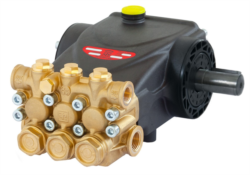
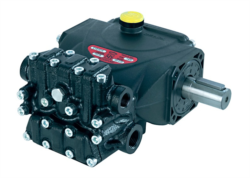
Conduct a pressure circuit analysis. If your process can operate at 160 bar instead of 210 bar, switching to equipment like the Interpump ET1C1612 pump (12 L/min at 160 bar, 3.68 kW) for auxiliary systems reduces energy costs without compromising performance. The Pratissoli SS71153 pump (122 L/min at 160 bar, 37.5 kW) offers another mid-range option for systems where lower pressure suffices.
Implementing Real-Time Monitoring and Operational Controls
Once right-sized equipment is installed, monitoring systems prevent efficiency degradation. Singapore plants with sophisticated automation can implement variable frequency drives (VFDs) on pump and compressor motors, but even basic manual monitoring delivers 10-15% energy savings.
Essential monitoring practices:
- Daily pressure and flow logs: Track discharge pressure and flow rate during standard production runs. Increasing pressure at constant flow signals equipment wear (internal leakage, valve drift), prompting maintenance intervention before efficiency drops further.
- Filter condition monitoring: Blocked inlet filters increase motor load and reduce flow, forcing operators to open relief valves. Replace filters when pressure differential reaches 0.5 bar above clean baseline.
- Suction pressure verification: Low suction pressure (cavitation risk) increases energy consumption and equipment damage. Maintain minimum 0.3 bar absolute suction pressure for centrifugal pumps, 0.8 bar for gear pumps.
- Temperature trending: Rising discharge temperature indicates internal friction (worn seals, bearing issues, or throttling). Excessive heat wastes energy and shortens equipment life.
For high-demand applications, implement differential pressure switches that alert operators when filter blockage or suction problems emerge. Many Singapore plants discover 15-20% efficiency losses simply by addressing clogged filters monthly—a maintenance cost of under SGD 200 prevents thousands in wasted energy monthly.
Operational Controls:
Establish pressure setpoint discipline. Compressor discharge pressure should match actual process demand, not default settings. Reduction of system pressure from 210 bar to 190 bar saves 8-10% energy if process equipment tolerates the change—a simple valve adjustment with no capital cost.
For variable-demand processes, manual valve adjustment or VFD installation maintains pump/compressor output near actual load. This is particularly valuable for Singapore industries with seasonal demand fluctuation (food processing, chemical manufacturing, marine services).
Maintenance Integration for Sustained Efficiency
Equipment efficiency degrades progressively with use. A pump operating efficiently today will consume 5-10% more energy within 2-3 years without proper maintenance. Plant managers often treat maintenance as a cost center rather than recognizing its role in energy conservation.
Efficiency-focused maintenance schedule:
- Monthly: Inspect pump/compressor inlet filters, suction strainers, and discharge line condition. Clean or replace as needed.
- Quarterly: Measure discharge pressure and flow under standard load. Compare to baseline—increases signal wear requiring overhaul planning.
- Semi-annually: Check all relief valve settings, proportional valve response, and system accumulator precharge (for hydraulic systems). Drift in these components increases wasted energy through bypass losses.
- Annually: Perform thermography scans on pump and motor casings. Hot spots reveal internal friction or bearing wear before catastrophic failure.
3G Electric's 35+ years of experience in Singapore operations demonstrates that well-maintained Pratissoli and Interpump equipment sustains efficiency specifications for 5,000+ operating hours. Deferred maintenance compounds—a 5% efficiency loss in month one becomes 15% loss by month six if root causes aren't addressed.
For example, internal leakage in a worn pump like the Interpump E1D1808 compact gear pump (8 L/min at 180 bar) increases gradually. Early detection through pressure monitoring permits seal replacement before efficiency collapses by 30%.
Conclusion: Energy Efficiency as Competitive Advantage
Singapore plant managers operating in competitive industries cannot ignore energy costs. Pumps & Compressors represent controllable energy expense—unlike raw materials or labor, efficiency improvements directly increase profitability with no production trade-off.
The pathway is straightforward: measure current performance, right-size equipment to average demand rather than peak load, reduce operating pressure where feasible, implement monitoring to prevent degradation, and maintain disciplined maintenance schedules. Combined, these practices typically reduce Pumps & Compressors energy consumption by 20-30%, delivering ROI within 18-36 months while improving reliability.
3G Electric's industrial equipment specialist team can assist with baseline energy audits, equipment selection modeling, and performance validation. Contact our Singapore operations to schedule a consultation for your plant's Pumps & Compressors optimization.