Understanding Industry Applications for Pharmaceutical and Food Processing
The pharmaceutical and food processing sectors across Southeast Asia—particularly in Thailand, Vietnam, Malaysia, and Singapore—operate under stringent regulatory requirements that demand precise equipment control and repeatability. Industry applications in these sectors require more than basic functionality; they demand integrated systems that deliver measurable precision, traceability, and reliability.
With over 35 years of experience as a distributor to industrial operations across the region, 3G Electric understands that procurement engineers in these industries face unique challenges: balancing regulatory compliance with operational efficiency, managing equipment across multiple production sites, and sourcing components that integrate seamlessly with existing infrastructure.
Pressure regulation and spray delivery systems form the backbone of three critical processes: active pharmaceutical ingredient (API) processing, liquid coating and sterilization, and precision fluid dispensing in food manufacturing. Each demands different specifications, but all require the same level of precision and reliability.
Pressure Regulation Systems for Pharmaceutical API Processing
Active pharmaceutical ingredient (API) processing requires strict pressure control because most chemical reactions depend on maintaining exact pressure parameters. Too much pressure risks equipment damage and batch contamination; too little compromises yield and product quality.
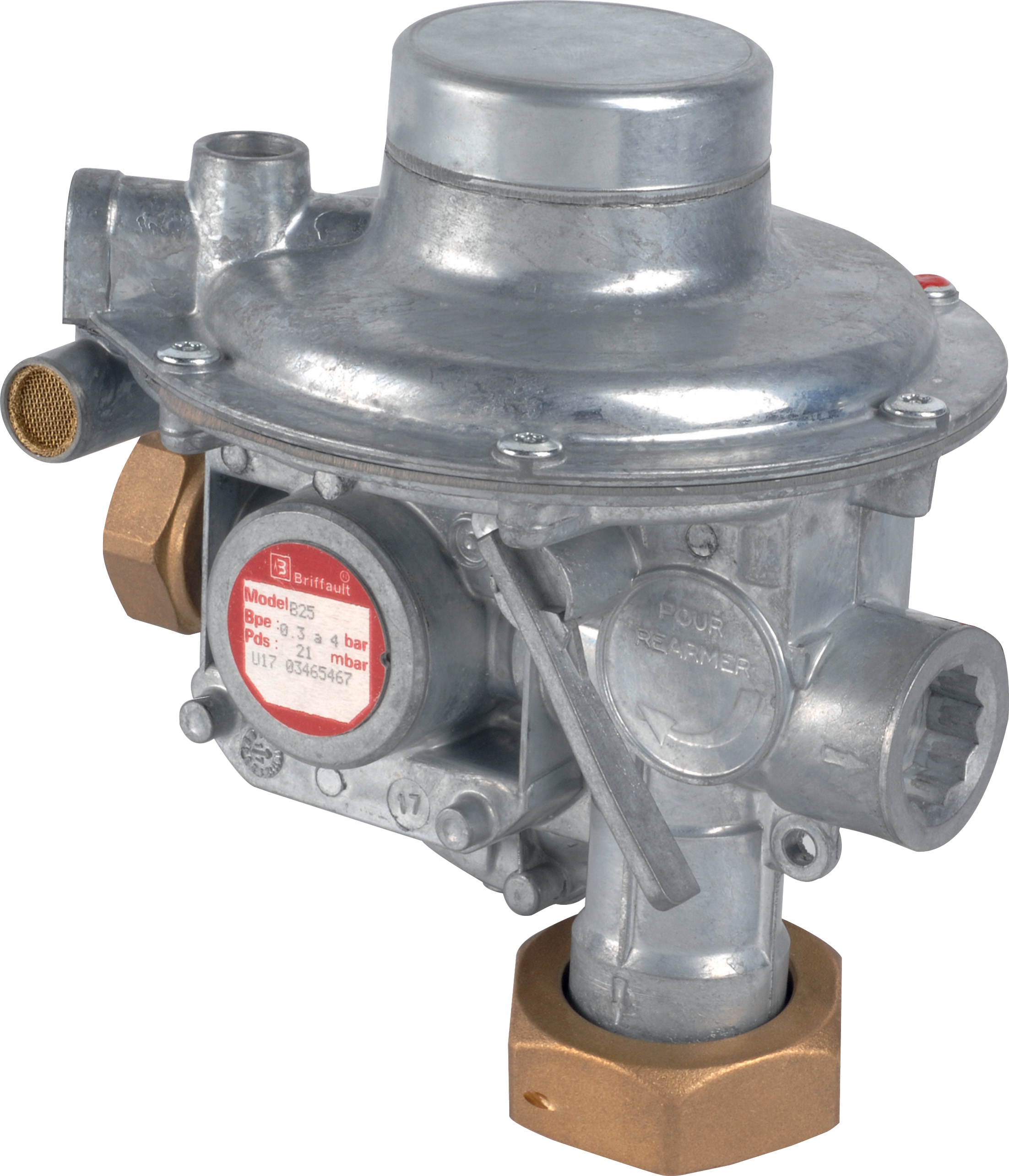
The Francel B25/37mb pressure regulator exemplifies the type of system procurement engineers specify for laboratory and pilot-scale pharmaceutical operations. With integrated safety relief, 37 mbar outlet pressure stability, and a 10 mm vent design, this regulator serves multiple functions in a single, compact unit. For pharmaceutical operations, this means:
- Integrated safety: The relief valve protects against overpressure conditions without requiring separate safety equipment, reducing installation complexity and cost
- Precise outlet control: 37 mbar delivery ensures consistent mixing and reaction conditions across batches
- Venting reliability: The 10 mm vent size accommodates laboratory and small-scale production volumes without backpressure issues
Procurement engineers specifying this system for API processing should coordinate with quality assurance teams to document baseline pressure curves and establish periodic calibration schedules. In Southeast Asian facilities, where ambient temperature variation can affect regulator performance, baseline testing under local climate conditions is essential.
High-Capacity Pump Systems for Large-Scale Production
As pharmaceutical and food processing operations scale from pilot production to commercial volume, pump capacity and pressure consistency become paramount. Larger facilities require equipment that maintains performance across extended operating hours while delivering consistent output.
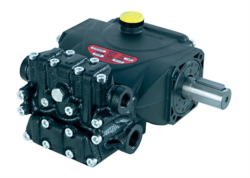
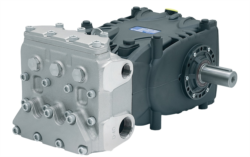
The Pratissoli MW40 pump (85 kW, 211 L/min, 210 bar) and the Pratissoli KF30 pump (40 kW, 106 L/min, 200 bar) represent the industrial-scale fluid delivery backbone that Southeast Asian procurement engineers integrate into pharmaceutical and food production systems.
Selecting between pump models requires understanding your facility's specific demands:
- KF30 specifications: Ideal for mid-capacity operations requiring 106 L/min continuous delivery—suitable for ingredient mixing, buffer preparation, and process water circulation in facilities processing 100–500 kg batches daily
- MW40 specifications: Built for high-volume production with 211 L/min delivery—appropriate for large-scale extraction, purification, and food product lines handling 1,000+ kg daily volumes
Both pumps are Italian-engineered by Pratissoli (Interpump Group), meaning they meet CE standards and deliver the reliability expected in regulated manufacturing. For Southeast Asian facilities, this European engineering background often simplifies regulatory documentation during inspections.
Procurement engineers should note that these pumps perform most efficiently when integrated with matching pressure control systems. Oversizing or undersizing creates operational inefficiency and accelerates wear. Working with 3G Electric's technical team to model your facility's fluid demand ensures right-sizing.
Precision Spray Systems for Coating, Cleaning, and Sterilization
Pharmaceutical tablet coating, vial sterilization, and food surface treatment all depend on precise spray pattern delivery. Industry applications in these areas require nozzles that maintain consistent spray geometry, angle, and droplet distribution across extended production runs.
The Euspray flat jet nozzle (1/4" M BSPT, index 30, 25° angle) delivers the precision spray pattern control that pharmaceutical and food processing operations demand. Key specifications relevant to procurement engineers:
- 25° spray angle: Optimal for coating operations where you need directional coverage without excessive overspray. In tablet coating processes, this geometry reduces material waste by 15–20% compared to wider-angle nozzles
- Index 30 design: Allows fine-tuning of spray pattern intensity through precise orifice sizing. Procurement engineers can specify nozzle sets with multiple indices to accommodate different coating viscosities and flow rates
- 1/4" M BSPT connection: Standard thread compatible with most industrial spray headers and manifold systems used across Southeast Asian facilities
1. Pair the Euspray nozzle with a high-capacity pump system (like the KF30 or MW40)
2. Integrate pressure regulation to maintain consistent outlet pressure during 4–8 hour coating campaigns
3. Establish preventive maintenance schedules for nozzle inspection and cleaning—coating materials can accumulate in orifices
4. Document spray pattern performance as part of batch records for regulatory compliance
For food processing applications—particularly in dairy, beverage, and prepared food manufacturing—the same spray system supports sanitization and surface treatment protocols required by FSSC 22000 and HACCP standards common across Southeast Asia.
System Integration and Procurement Strategy
Connecting components into a coherent system requires attention to four critical variables:
1. Flow compatibility: Your pump's output (measured in L/min) must match your nozzle array's collective consumption. A KF30 pump delivering 106 L/min cannot supply 20 Euspray nozzles requiring 8 L/min each; procurement engineers must calculate nozzle count and verify pump capacity
2. Pressure alignment: Pressure regulators must deliver outlet pressure matching your process requirements and nozzle specifications. Oversizing nozzles for a given pressure wastes energy; undersizing creates inconsistent spray patterns
3. Filtration integration: Neither pumps nor regulators tolerate contamination. For pharmaceutical and food operations, specifying 10–25 micron pre-filtration on pump inlet prevents costly downtime and protects product integrity
4. Documentation for compliance: Southeast Asian regulatory bodies (Thailand FDA, Vietnamese pharmaceutical authority, Singapore HSA) increasingly audit equipment specifications and maintenance records. Procurement engineers should maintain equipment datasheets, calibration certificates, and performance baseline documentation
Multi-facility procurement considerations: Many Southeast Asian pharmaceutical and food companies operate multiple production sites. Standardizing on specific pump models (either KF30 or MW40) and regulator types across facilities simplifies spare parts management, technician training, and troubleshooting. 3G Electric's 35+ years experience supporting regional operations means we maintain consistent inventory to support this standardization approach.
Maintenance, Spare Parts, and Total Cost of Ownership
Procurement engineers often focus narrowly on equipment purchase price, but pharmaceutical and food processing operations run continuously. Total cost of ownership—including maintenance, replacement parts, and downtime costs—typically exceeds hardware cost within 2–3 years.
For the pump systems referenced in this guide, key maintenance items include:
- Seal kits and bearing replacement: Scheduled every 2,000–3,000 operating hours for continuous-duty applications
- Nozzle replacement and cleaning supplies: Budget for quarterly nozzle inspection and annual replacement for high-use coating lines
- Regulator calibration: Every 12–18 months for pharmaceutical operations; documented by certified technicians
Establishing relationships with local 3G Electric service partners ensures access to genuine replacement components and technical support without long international lead times. This matters critically in Southeast Asia, where supply chain disruptions can halt production for weeks.
Conclusion: Specification and Implementation Best Practices
Successful industry applications of pressure regulation and spray systems in Southeast Asian pharmaceutical and food processing depend on three factors: precise specification matching your facility's throughput and regulatory environment, integrated system design ensuring component compatibility, and proactive maintenance planning for long-term reliability.
Procurement engineers should approach equipment selection not as isolated component purchasing, but as system integration projects. The Francel regulator, KF30 pump, MW40 pump, and Euspray nozzle represent individual components of a complete fluid delivery architecture.
3G Electric's experience serving pharmaceutical, food processing, and manufacturing operations throughout Southeast Asia positions us to support your specification development, system design review, and ongoing technical support. Contact our technical team to discuss your facility's specific requirements and explore how these systems integrate into your production environment.