Understanding Pressure Regulation in Modern Singapore Manufacturing
Pressure regulation forms the backbone of safe and efficient industrial operations. Whether managing compressed gas distribution, hydraulic systems, or spray applications, proper pressure control directly impacts product quality, equipment longevity, and worker safety.
Singapore's manufacturing environment—characterized by precision electronics, semiconductor support, food processing, and chemical production—demands equipment that delivers consistent pressure under variable operating conditions. With over 35 years of industrial equipment distribution experience, 3G Electric has supported Singapore plant managers in implementing robust pressure management systems that reduce operational downtime and maintain compliance with local safety standards.
The challenge for plant managers is selecting pressure regulation equipment that balances three competing demands: precise outlet pressure maintenance, rapid response to load changes, and long-term reliability with minimal maintenance intervention. Understanding how different regulator types perform across your facility's specific applications helps optimize capital investment and operational efficiency.
Selecting Pressure Regulators for Laboratory and Industrial Gas Distribution
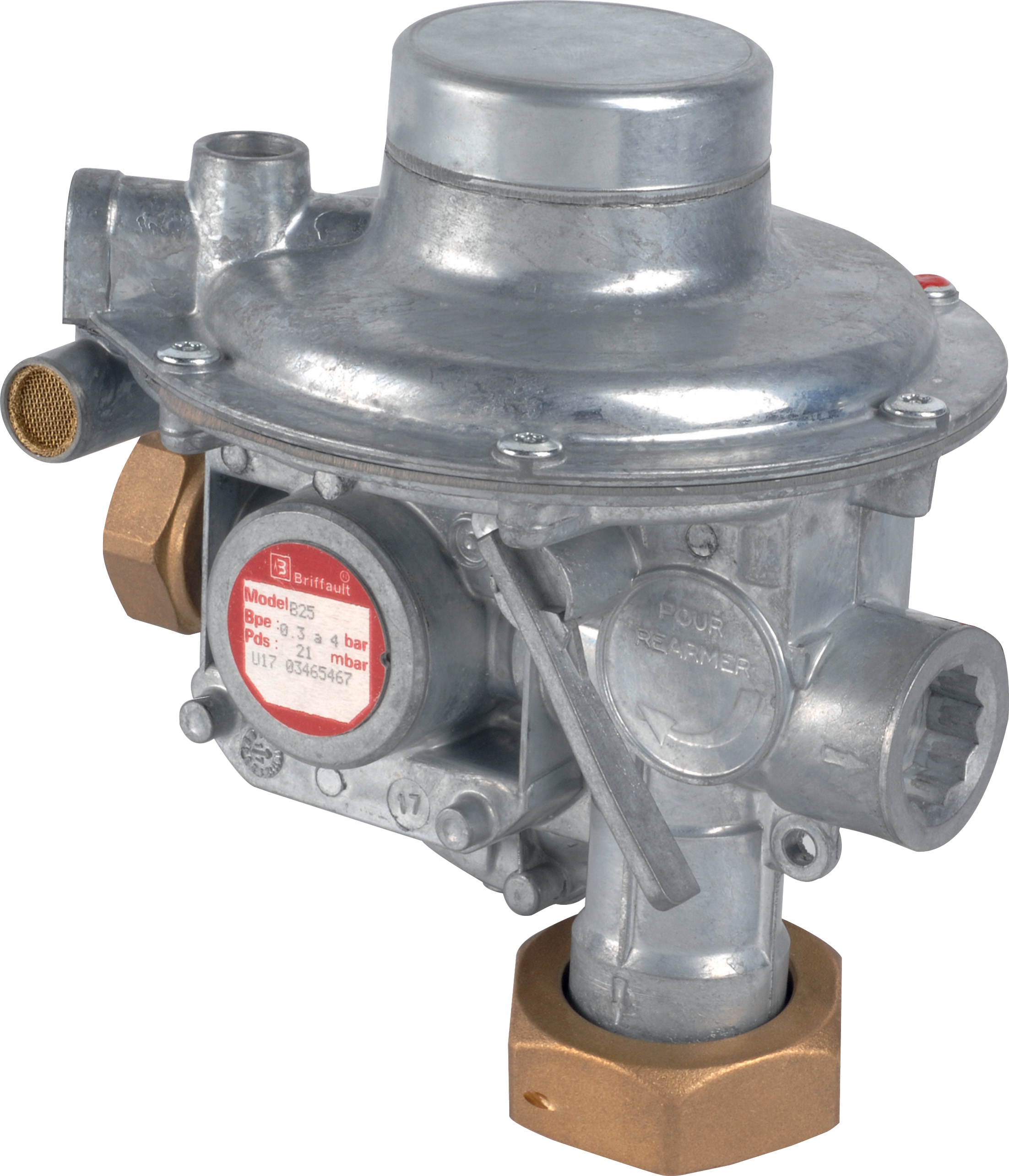
Gas distribution systems in Singapore manufacturing facilities range from small laboratory environments to large-scale industrial processes. The Francel B25/37mb pressure regulator with integrated safety relief provides a compelling solution for facilities requiring consistent 37 mbar outlet pressure with built-in overpressure protection.
This regulator type offers several advantages for plant managers overseeing multiple gas lines:
- Integrated Safety Architecture: The combined regulator and safety relief design eliminates the need for separate downstream protection devices, reducing system complexity and potential leak points. This becomes particularly valuable in Singapore's high-humidity environment, where additional connection points can accelerate corrosion.
- Precise Laboratory-Grade Control: With 37 mbar outlet pressure regulation and a 10 mm vent size, this equipment suits semiconductor fabrication support operations, analytical laboratories, and precision manufacturing processes common throughout Singapore's industrial sector.
- Simplified Installation: Fewer components mean faster commissioning and reduced inventory management. Plant managers benefit from streamlined procurement and maintenance procedures across multiple production lines.
When evaluating gas regulators for your facility, consider these selection criteria:
Operating Pressure Range: Verify that inlet pressures from your gas supply consistently fall within the regulator's design specifications. Singapore's industrial gas suppliers typically deliver compressed gases at 200+ bar; your regulator must safely step this down to process requirements.
Outlet Pressure Stability: Precision manufacturing demands outlet pressure variations of less than ±5%. Test regulators under actual load conditions before committing to facility-wide installation.
Material Compatibility: Singapore's tropical climate with salt-air exposure near coastal industrial zones requires corrosion-resistant materials. Verify that regulator body and internal components resist degradation from humidity and chemical environments.
Maintenance Access: Select regulators with accessible vent lines and relief mechanisms for periodic inspection. In Singapore's 24/7 manufacturing environment, equipment requiring extended downtime for maintenance creates unacceptable production disruptions.
Integrating Pressure Regulation with High-Flow Fluid Systems
Many Singapore manufacturing plants operate integrated systems combining pressure regulation with high-volume fluid delivery. When gas or hydraulic systems must deliver precise pressure while maintaining substantial flow rates, equipment coordination becomes essential.
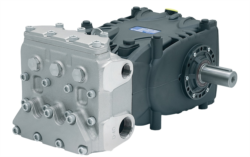
For plants requiring substantial pumping capacity, the Pratissoli KF30 high-performance industrial pump (106 L/min at 200 bar, 40 kW) and Pratissoli MW40 pump (211 L/min at 210 bar, 85 kW) provide Italian-engineered solutions developed by Interpump Group. These pumps, available through 3G Electric, integrate effectively with pressure regulation systems to create managed fluid delivery across multiple production lines.
The practical integration workflow for plant managers involves:
System Pressure Matching: Your pumping capacity and pressure regulator must align with downstream process requirements. A 211 L/min pump delivering 210 bar serves high-volume applications (industrial cleaning, coating systems, material processing) more efficiently than oversized equipment consuming excess energy.
Load Response Coordination: Quality pressure regulators respond to sudden demand changes by modulating control elements, preventing pressure spikes that can damage downstream equipment. Pairing these regulators with properly-sized pumps minimizes energy waste during partial-load operation—critical in Singapore where electricity costs represent significant operational expenses.
Redundancy and Reliability: Large-scale operations benefit from multiple pressure regulation zones with independent safety relief. This architecture allows isolated maintenance without halting entire production lines—essential for Singapore facilities operating 24/7 schedules.
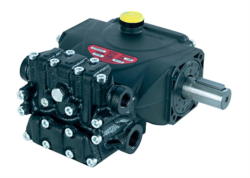
For smaller-scale precision applications requiring compact equipment, the Interpump PUMP E1D1808 L (8 L/min at 180 bar, 2.72 kW, 5 kg) delivers high-pressure capability in minimal space. This pump suits auxiliary systems, precision coating operations, and test equipment common in semiconductor-related manufacturing.
Optimizing Spray Systems and Nozzle Selection with Pressure Control
Industrial spray applications—including precision coating, surface treatment, cleaning, and humidification—depend critically on pressure regulation working in concert with appropriate nozzle selection.
The Euspray flat jet nozzle (HP 1/4" M BSPT, index 30, 25° spray angle) represents a precision spray component suitable for manufacturing environments requiring targeted fluid application. Combined with proper pressure regulation, such nozzles deliver consistent spray patterns essential for:
- Coating Uniformity: Electronics manufacturing and precision assembly require uniform coating coverage. Stable pressure regulated through a flat jet nozzle produces consistent droplet velocity and pattern width, critical for component reliability.
- Surface Treatment Control: Chemical processing and finishing operations depend on predictable spray geometry. The 25° spray angle concentrates liquid distribution in a defined zone, reducing overspray waste and improving material utilization—directly impacting production costs in Singapore's expensive industrial space.
- Equipment Protection: Excessive pressure damages spray equipment and nozzles, driving maintenance costs upward. Proper pressure regulation maintains equipment within design parameters, extending service life and reducing unexpected shutdowns.
For plant managers implementing spray systems, the technical workflow includes:
Nozzle Pressure Rating Verification: Confirm that your pressure regulator maintains outlet pressure within the nozzle's specified operating range. The Euspray flat jet nozzle series includes pressure ratings; operating outside these ranges reduces spray quality and accelerates internal erosion.
Flow Rate Calculation: Multiply the nozzle's L/min capacity by the number of nozzles operating simultaneously to ensure your pump and pressure regulator combination can deliver required flow without pressure collapse. For multi-line spray operations, undersized equipment compromises spray quality across the entire system.
Spray Pattern Documentation: Establish baseline spray pattern characteristics (coverage width, droplet size distribution, wetting uniformity) when commissioning spray systems. Regular pattern inspection identifies nozzle wear before quality degradation becomes evident in finished products.
System Isolation: Design spray circuits with ball valves isolating individual nozzle zones. This allows maintenance or replacement without depressurizing the entire system—minimizing downtime in continuous production environments.
Practical Implementation Strategy for Singapore Plant Managers
Implementing effective pressure regulation across your facility involves systematic planning and evidence-based equipment selection.
Audit Current Systems: Document all pressure-dependent processes, current regulator performance (outlet pressure stability, maintenance frequency, safety incidents), and equipment age. Facilities operating 15+ year-old regulators frequently experience gradual performance degradation imperceptible to operators until failures occur.
Benchmark Against Process Requirements: Establish pressure specifications for each production zone. Do your current regulators consistently achieve ±5% outlet pressure stability? Are relief systems responding appropriately to pressure transients? Quantifying performance gaps identifies which systems warrant investment.
Standardize on Compatible Equipment: 3G Electric's 35+ years supporting Singapore's industrial sector demonstrates the value of establishing relationships with distributors offering comprehensive product ranges. Standardizing on compatible regulators, pumps, and nozzles from proven manufacturers (Francel, Pratissoli/Interpump, Euspray) simplifies maintenance training, reduces spare parts inventory, and enables rapid troubleshooting across multiple production lines.
Plan Phased Implementation: Rather than replacing all equipment simultaneously (creating capital intensity and operational risk), implement upgrades systematically. Begin with highest-risk or highest-throughput processes where pressure regulation failures create greatest impact.
Document and Train: Create maintenance procedures specific to your installed equipment. Train operations and maintenance teams on regulator adjustment procedures, safety relief testing, and failure diagnostics. In Singapore's multi-lingual workforce, visual documentation alongside language-specific procedures improves consistency and safety.
Monitor Performance: Establish pressure monitoring at critical system points using analogue or digital gauges. Regular documentation reveals trends (gradual pressure drift, increasing fluctuation) enabling preventive maintenance before failures occur.
With systematic planning and appropriate equipment selection through 3G Electric's technical support, Singapore plant managers can optimize pressure regulation across their facilities, improving reliability, safety, and cost efficiency simultaneously.