Understanding Industry Applications: Pressure Control vs. Flow Delivery for HVAC Systems
When specifying equipment for industry applications, HVAC contractors often encounter a fundamental decision: should the system prioritize pressure regulation or maximize flow delivery? This distinction becomes critical in Singapore's diverse manufacturing and industrial sector, where equipment operates in humid, compact facilities with exacting performance requirements.
With over 35 years of experience distributing industrial equipment across Southeast Asia, 3G Electric has observed that many contractors approach this decision backwards—they select pumps first, then attempt pressure management. A more effective strategy reverses this logic: define your pressure requirements, then select flow capacity accordingly.
The pressure regulator approach suits applications requiring precise outlet pressure with variable input conditions. The flow-delivery approach prioritizes consistent volume output across multiple distribution points. For HVAC contractors supporting industrial facilities, understanding when each system type delivers superior performance directly impacts installation reliability and maintenance costs.
Pressure Regulation Systems: When Precision Pressure Matters Most
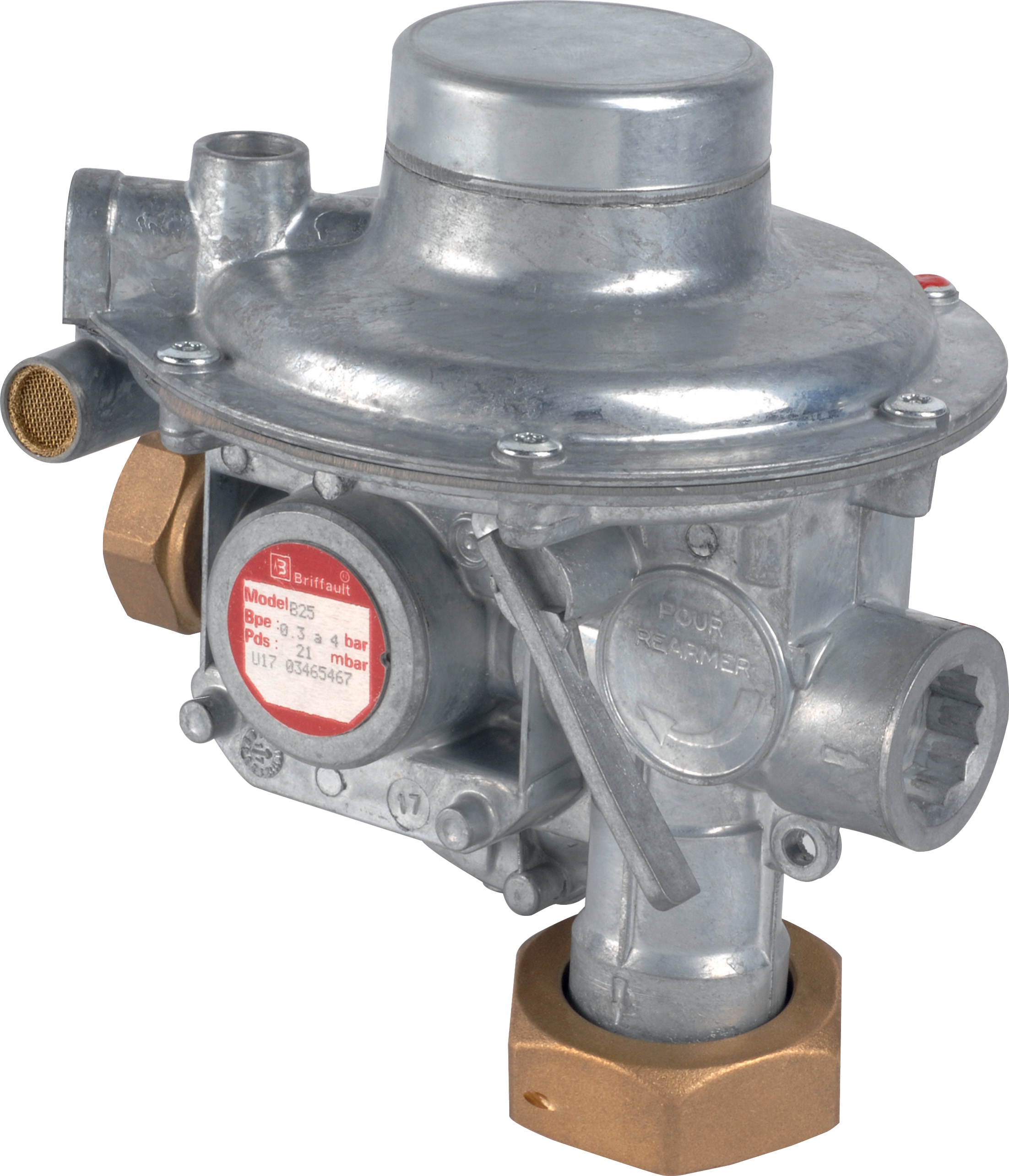
Pressure regulators like the Francel B25/37mb with integrated safety relief excel in applications where maintaining exact outlet pressure takes priority over high volume throughput. This regulator delivers a fixed 37 mbar outlet pressure regardless of input fluctuations—a critical requirement in laboratory environments, precision manufacturing facilities, and sensitive industrial gas distribution networks.
For HVAC contractors, pressure regulators become essential when:
- Building management systems require stable pressure signals – Many modern HVAC control systems rely on pneumatic feedback at precise pressure levels. A 37 mbar output from the Francel B25/37mb maintains consistent signal integrity across distributed sensors and actuators.
- Safety-critical applications demand built-in relief – The integrated safety relief prevents dangerous overpressure conditions in confined spaces or sealed systems common in Singapore's multi-story industrial buildings.
- Gas distribution spans multiple floors or zones – Unlike pumped systems, pressure regulators don't degrade performance across long distribution runs; they maintain setpoint pressure at every outlet.
- Low-volume, high-reliability gas systems – Laboratory-grade equipment in pharmaceutical manufacturing, semiconductor facilities, or precision testing requires the stability that dedicated pressure regulation provides.
The Francel system's 10 mm vent design accommodates relief flow without creating backpressure issues—important when installed in equipment rooms with limited ventilation. Singapore's tropical climate demands components that handle moisture without performance drift; the regulator's mechanical design delivers this reliability.
Flow Delivery Systems: Maximizing Capacity for Industrial Operations
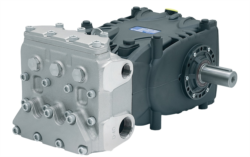
High-performance industrial pumps like the Pratissoli KF30 and MW40 prioritize flow volume and sustained pressure delivery across demanding applications. The KF30 delivers 106 L/min at 200 bar, while the more powerful MW40 provides 211 L/min at 210 bar—specifications that serve applications requiring simultaneous, continuous fluid delivery across multiple service points.
For HVAC contractors supporting manufacturing facilities, these flow-delivery systems become essential for:
- Multi-zone cooling or heating systems – A manufacturing facility with separate HVAC zones serving different departments requires pump systems that deliver consistent flow to multiple branch circuits simultaneously. The MW40's 211 L/min capacity supports complex piping networks without pressure drop compromises.
- High-demand industrial cleaning operations – Food processing plants, electronics manufacturing, and automotive facilities integrate HVAC with precision cleaning systems. The Pratissoli pumps maintain pressure stability even when cleaning nozzles operate in rapid sequence.
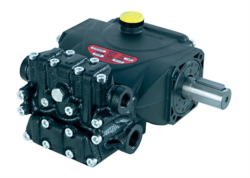
- Backup or standby cooling systems – Critical facilities often maintain redundant HVAC capacity. Pump-based systems allow contractors to install parallel circuits that automatically activate during primary system maintenance, with the Interpump E1D1808 serving as a compact, economical secondary option (8 L/min, 180 bar).
- Temperature control in precision environments – Semiconductor fabs and pharmaceutical cleanrooms require chilled-water systems with stable, continuous flow. Pump systems deliver the consistent volumetric output these applications demand.
The Pratissoli MW40, weighing 264 kg and operating at 85 kW, suits permanent installation in dedicated mechanical rooms common in Singapore's industrial parks. Its Italian engineering heritage reflects decades of reliability testing in demanding European environments—performance characteristics that translate directly to tropical Singapore operations.
System Selection Strategy: Matching Industry Applications to Your Facility Type
The decision between pressure regulation and flow delivery hinges on your facility's fundamental operating model:
Select Pressure Regulation (Francel B25/37mb) when:
- You're specifying pneumatic HVAC control systems in laboratory or semiconductor environments
- Gas distribution reliability matters more than absolute flow volume
- Equipment rooms have space constraints requiring compact component placement
- Your maintenance team prefers mechanical simplicity over electrical/mechanical hybrid systems
- Budget priorities emphasize safety and signal stability over throughput capacity
- Your facility requires simultaneous flow to multiple HVAC zones or branch circuits
- Precision spray cooling or misting systems are integrated with HVAC operations
- Your installation serves manufacturing environments with variable demand cycles
- Equipment room infrastructure includes dedicated power supply and adequate drainage
- Your maintenance team has experience with pump-based systems and can support periodic servicing
Most sophisticated HVAC installations for industrial facilities combine both technologies. A high-capacity pump (like the MW40) provides primary flow delivery to main distribution lines, while pressure regulators (Francel B25/37mb) control branch circuits serving sensitive equipment or building automation systems. This strategy leverages pump efficiency for volume while maintaining precision pressure control where needed.
The Euspray flat jet nozzle (25° spray angle, index 30) frequently connects downstream of pump systems, converting pressurized flow into targeted cooling or humidification patterns. When paired with the Pratissoli pumps, this nozzle enables HVAC contractors to design precision spray-cooling systems for electronics manufacturing or data center environments—applications increasingly common in Singapore's technology corridor.
Practical Implementation: Singapore Environmental Factors
Singapore's maritime tropical climate introduces specific equipment selection considerations:
Humidity and Corrosion – Both pressure regulators and pumps require stainless steel or corrosion-resistant materials. The Pratissoli systems feature robust construction suitable for humid mechanical rooms; the Francel regulator's sealed design prevents moisture ingress into sensing mechanisms.
Space Optimization – Singapore's compact industrial facilities demand efficient equipment layout. Pressure regulators occupy minimal footprint, while pump systems require adequate clearance for maintenance access. Plan your specification with site constraints in mind.
Electrical Supply Consistency – Singapore's grid is exceptionally reliable, but pump systems require stable three-phase power. Pressure-only systems (regulators) function independently of electrical supply, offering redundancy advantages in critical facilities.
Maintenance Resource Availability – 3G Electric's 35+ years in Southeast Asia ensures immediate parts availability and technical support. When selecting between system types, consider your internal maintenance capability and access to service resources.
Making Your Final Selection
The most reliable HVAC installations for industrial applications begin with defining what your facility actually needs: Is this a precision control application requiring stable, low-volume pressure signals? Or a high-demand cooling operation requiring sustained, large-volume flow delivery across multiple zones?
Pressure regulators like the Francel B25/37mb answer the first question with exceptional precision and reliability. Flow-delivery systems like the Pratissoli MW40 or KF30 address the second with industrial-grade performance.
Most sophisticated facilities require both. Work with your equipment supplier to design a system architecture that combines the stability of pressure regulation with the capacity of pump-based flow delivery. This hybrid approach maximizes reliability while ensuring your HVAC system scales with your facility's actual operational demands.
As Singapore's manufacturing sector continues evolving toward precision electronics, biotechnology, and advanced semiconductors, HVAC contractors who understand these fundamental distinctions will position themselves to specify systems that deliver superior performance, lower maintenance costs, and greater operational flexibility.