Understanding Industry Applications in Petrochemical Processing
Petrochemical operations in Singapore face unique challenges: corrosive fluid handling, extreme pressure requirements, and the need for fail-safe reliability. When we talk about Industry Applications in this context, we're addressing the specific technical demands of fuel transfer, pressurized injection, and precision spraying across refineries, petrochemical plants, and fuel distribution facilities.
As a global industrial equipment distributor with 35+ years of experience serving Southeast Asian operations, 3G Electric has supported hundreds of plant managers navigating these complexities. The key to optimizing your operations lies in matching equipment specifications precisely to your process requirements—not oversizing systems that consume excess power, and not undersizing equipment that risks production downtime.
Petrochemical Industry Applications require equipment rated for:
- High-pressure fluid delivery (180-210 bar range for most fuel and petrochemical processes)
- Reliable volumetric flow (8-13 L/min for precision injection applications)
- Corrosion resistance from hydrocarbon exposure
- Compact installation in space-constrained plant layouts
- Consistent performance across thermal fluctuations
Understanding these baseline requirements prevents costly equipment failures and ensures your operations meet Singapore's strict environmental and safety regulations.
Selecting the Right Pump for Your Petrochemical Process
The most critical decision a plant manager makes is pump selection. Two equipment options serve different operational profiles:
Engine-Driven Pumps for Fuel Application
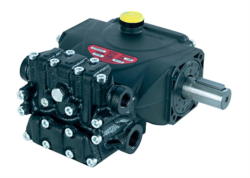
The Interpump E2E2113 represents precision engineering for petrochemical fuel applications. Delivering 13 L/min at 210 bar with 5.22 kW rated power, this pump handles the exact pressure and flow characteristics required for fuel injection systems, pressure-fed burner applications, and petrochemical fluid transfer.
Why this matters for your plant:
At 3400 rpm with compact 241.5 mm dimensions, this pump fits retrofit installations without major piping system redesigns. The engine-driven configuration eliminates electrical supply constraints—critical for remote equipment stations or backup fuel systems. For Singapore operations handling imported crude derivatives or specialty petrochemical fluids, the E2E2113's petrochemical-rated design ensures seal compatibility and corrosion resistance.
Practical implementation: Confirm your fuel delivery system requires 210 bar before selecting this pump. If your current system operates at 150 bar, oversizing creates unnecessary equipment stress and power consumption. Request pressure testing data from your existing system before procurement.
High-Flow Systems for Large-Volume Transfer
For larger petrochemical operations requiring continuous high-volume transfer, the Pratissoli MF7M7D delivers 254 L/min at 75 bar with 36.4 kW power. This Italian-engineered pump suits bulk fluid transfer, circulation systems, and cooling line applications across larger facilities.
Integration considerations:
The 275 kg unit weight requires proper foundation planning. For Singapore's humid tropical environment, ensure your installation includes vibration isolation and drainage for condensation management around the pump base. The MF7M7D's higher volumetric capacity makes it ideal for:
- Petrochemical circulation loops
- Fuel tank filling operations
- Heat exchanger supply systems
- Waste fluid recovery applications
Precision Spray and Atomization in Petrochemical Coating Applications
Industry Applications extend beyond fluid pumping into spray technology. The Jetoil 3.50 80° S full-cone oil nozzle delivers flow rates from 0.40 to 35.00 GPH with an 80° spray angle, enabling precise atomization for coating, combustion, and fluid application processes.
Nozzle Selection for Coating Operations
Petrochemical coating applications—whether thermal spray, fuel atomization, or lubrication application—require matched nozzle specifications:
- Flow rate compatibility: Confirm your system pressure matches the nozzle's rated flow capacity. At low pressures, larger flow nozzles deliver poor atomization; at high pressures, small nozzles create excessive back-pressure.
- Spray angle accuracy: The 80° full-cone pattern suits broad coverage areas. For confined spray zones, you may need different nozzle angles—verify your application's spray envelope width before finalizing specifications.
- Material compatibility: Petrochemical fluids range from light distillates to heavy residuals. The Jetoil nozzle's material construction must resist the specific fluid chemistry in your application.
Practical Integration Strategy
When integrating spray nozzles with pump systems:
1. Pressure matching: Pair the Jetoil nozzle with either the E2E2113 (210 bar) or custom pressure regulators downstream of higher-capacity pumps
2. Flow validation: Measure actual system flow at rated pressure and compare against nozzle specifications—don't rely on nameplate ratings alone
3. Maintenance intervals: Full-cone nozzles require quarterly cleaning in petrochemical service. Build maintenance schedules assuming 50% longer intervals than suppliers recommend for tropical humidity environments
4. Backup nozzles: Maintain spare nozzles on-site; nozzle failure creates immediate production impact in coating operations
For Singapore operations, humidity and salt air accelerate nozzle corrosion. Implement monthly inspection schedules and consider stainless-steel nozzle upgrades if standard brass models show oxidation within six months of installation.
High-Pressure Hose Systems and Hydraulic Integration
Equipment selection doesn't end with pumps and nozzles. System reliability depends entirely on hose integrity under sustained pressure cycling.
The Pratissoli ZT12B0800606 high-pressure sewer cleaning hoses with complete fittings represent enterprise-grade hose assemblies rated for industrial petrochemical service. These aren't standard industrial hoses; they're engineered for sustained high-pressure operation with:
- Reinforced construction rated for 210+ bar continuous operation
- Fitted fittings eliminating field crimping (highest failure point in hose systems)
- Petrochemical-resistant inner tube and cover materials
Hose Management for Tropical Environments
Singapore's climate creates unique hose challenges:
UV and heat degradation: Outdoor hose runs deteriorate 40-60% faster than in temperate climates. Route hoses through conduit or shaded pathways where possible. Replace exposed hoses every 18-24 months rather than the standard 36-month interval.
Pressure cycling fatigue: Tropical temperature swings (24°C to 36°C daily) create pressure fluctuations in sealed hose systems. This thermal cycling accelerates internal damage. Install pressure relief valves set 10-15% below maximum rated pressure to prevent overpressure events.
Connector corrosion: Brass and steel fittings corrode in coastal Singapore environments. Specify stainless-steel fittings or apply protective coatings. Inspect connectors monthly for white oxidation deposits—these indicate corrosion initiating deep into connector threads.
Practical hose replacement workflow:
1. Document all hose runs with photographs and length measurements
2. Source pre-assembled hose kits from suppliers like 3G Electric to eliminate field crimping
3. Schedule replacement during planned maintenance windows, not emergency failure periods
4. Pressure-test all new hose assemblies at 150% rated pressure before system integration
5. Label all hoses with installation date and next replacement due date
Hose failures represent 60% of petrochemical equipment downtime in our experience. Investing in enterprise-grade hose systems with rigorous maintenance schedules prevents catastrophic failures.
Hydraulic Systems and Compact Pump Integration
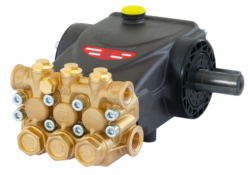
For closed-loop hydraulic applications supporting petrochemical equipment (actuators, servo systems, pressure intensifiers), the Interpump E1D1808B delivers 8 L/min at 180 bar with 3.7 hp power at 2800 rpm. This pump suits hydraulic pressure regulation, pilot supply systems, and precision fluid metering.
Hydraulic System Design Considerations
Unlike open-circuit fuel or cooling systems, hydraulic circuits demand:
- Contamination control: Implement 10-micron filtration minimum; 3-micron for precision servo applications
- Thermal management: Hydraulic fluid temperature must stay 40-60°C. In Singapore's heat, size coolers 20-30% larger than standard industrial calculations suggest
- Pressure regulation: The E1D1808B feeds pilot supply circuits requiring stable 20-40 bar; use dedicated pressure regulators rather than relying on system relief valves
- Fluid compatibility: Verify hydraulic fluid specifications against petrochemical plant requirements—some operations restrict mineral oil due to environmental regulations
Implementing Preventive Maintenance Programs
With 35+ years of field experience, 3G Electric has observed that 80% of equipment failures stem from deferred maintenance—not equipment defects. Your pump selection is only half the optimization equation.
Critical Maintenance Checkpoints
Monthly inspections:
- Visual pump and hose examination for leaks or corrosion
- Pressure gauge verification (compare against baseline readings)
- Nozzle spray pattern observation (visual confirmation of atomization quality)
- Connector tightness check at all fitting points
- Hose internal diameter inspection via flow measurement (pressure drop increase indicates internal deterioration)
- Nozzle cleaning and flow validation
- Seal condition assessment (minor weeping acceptable; spray streams indicate seal failure)
- Thermal imaging of pump housing (5-10°C temperature increase indicates internal wear)
- Fluid sampling and contamination analysis
- Pump disassembly inspection (if accessible without system shutdown)
- Complete pressure and flow system testing under rated load
- Documentation of all readings for trend analysis
Documentation System
Maintain equipment service logs capturing:
- Date and inspector name
- Pressure readings at multiple operating points
- Flow measurements or visual performance notes
- Any maintenance work performed
- Predicted next failure indicators
This documentation becomes invaluable when discussing equipment replacement decisions with management and planning capital expenditure budgets.
Navigating Singapore's Regulatory and Environmental Requirements
Petrochemical operations in Singapore operate under strict environmental monitoring by the National Environment Agency (NEA) and compliance oversight from the Petroleum Act. Equipment selection and maintenance directly impact regulatory compliance.
Petrochemical-specific compliance considerations:
- Leak prevention: All petrochemical pump systems must minimize fluid loss. Enterprise-grade equipment like those supplied by 3G Electric includes secondary containment-ready designs
- Pressure system certification: Equipment operating above 1.0 MPa must meet Pressure Equipment Directive (PED) standards. Request certification documentation from suppliers
- Environmental discharge: Any fluid loss or spillage requires documentation and reporting. Implement drip trays beneath all connections
- Worker safety: Pressure system signage, pressure relief valve labeling, and isolation lockout procedures are mandatory
When selecting equipment, prioritize suppliers with transparent certification documentation and proven compliance track records in Asian petrochemical operations.
Optimizing Equipment Costs Without Sacrificing Reliability
Plant managers face constant pressure to reduce operational costs. Equipment optimization differs fundamentally from cost-cutting:
Equipment optimization means:
- Selecting right-sized pumps (not oversized systems consuming excess power)
- Implementing preventive maintenance (preventing expensive emergency failures)
- Choosing enterprise-grade components with longer service intervals
- Building redundancy for critical operations (preventing production loss)
- Selecting undersized pumps (leading to overpressure and premature failure)
- Deferring maintenance (escalating repair costs exponentially)
- Choosing low-cost knockoff components (high failure rates and safety risks)
- Operating equipment beyond rated specifications
Over 35+ years, 3G Electric has observed that plants investing 3-5% of equipment cost in preventive maintenance achieve 40-60% longer equipment life compared to minimal-maintenance operations. The mathematics strongly favor optimization over cost-cutting.
Conclusion: Building Reliable Petrochemical Systems
Industry Applications for petrochemical and fuel systems demand precision equipment selection, rigorous maintenance discipline, and compliance with Singapore's strict regulatory environment. By understanding your process pressures and flow requirements, selecting right-sized equipment from proven manufacturers, and implementing systematic preventive maintenance, you create operations that run reliably while meeting environmental and safety standards.
3G Electric's 35+ years of experience supporting Singapore's industrial sector means we understand the specific challenges plant managers face in petrochemical operations. Whether you're optimizing existing systems or installing new equipment, partnering with a distributor familiar with tropical climate challenges, regulatory requirements, and equipment integration logistics ensures your investment performs as specified.
Start by conducting a complete system audit: measure actual pressures and flows across your existing equipment, document maintenance history, and identify underperforming components. This baseline data enables informed equipment selection decisions and demonstrates ROI to management when proposing upgrades or new installations.