Introduction: Building Your Measurement & Detection Toolkit
Proper Measurement & Detection equipment forms the foundation of effective maintenance operations. Whether you're troubleshooting HVAC inefficiencies, monitoring expansion tank pressure, or tracking temperature fluctuations across thermal systems, selecting the right instruments directly impacts your team's response time and diagnostic accuracy. With over 35 years of experience supplying industrial equipment globally, 3G Electric understands that maintenance teams face different constraints: budget limitations, environmental operating ranges, accuracy requirements, and installation complexity.
This comparison focuses on five critical Measurement & Detection solutions that address real maintenance scenarios: pressure gauges for visual monitoring, digital transmitters for precise readings, temperature probes for thermal diagnostics, flow measurement tools for HVAC validation, and portable inflators for system charging operations. Understanding the strengths and limitations of each category helps you allocate resources effectively and reduce downtime.
Analog Pressure Gauges vs. Digital Transmitters: When to Use Each
Analog and digital pressure measurement serve different maintenance needs, and the choice depends on your monitoring approach—visual inspection versus automated data logging.
Analog Pressure Gauges: Immediate Visual Confirmation
The Preciman Stainless Steel Vertical Pressure Gauge D63 0/+40 Mbar exemplifies traditional analog instrumentation. With a 63mm dial size and ±1.6% accuracy rating, this gauge provides immediate pressure visualization without electricity or calibration. Key advantages include:
- Reliability: No electronic components mean fewer failure points in harsh environments
- Low maintenance: No batteries, no software updates, no data connectivity issues
- Cost-effective: Minimal initial investment and no long-term operational expenses
- Field readability: Maintenance technicians can observe pressure trends during system operation without opening digital interfaces
The G1/4 connection with copper alloy wetted parts suits heating systems and low-pressure industrial monitoring across global temperature variations. This gauge excels when your team needs quick pressure confirmation during routine checks, pressure line troubleshooting, or when monitoring backup heating circuits that don't require continuous data recording.
Digital Transmitters: Precision and Remote Monitoring
The Dwyer 616KD-13V-TC Differential Pressure Transmitter represents modern Measurement & Detection capabilities. Operating at 0–1 IN W.C measurement range with barbed process connections for 3–5 mm tubing, this transmitter delivers:
- 4-20 mA output: Direct integration with building management systems (BMS) and industrial controllers
- Low power consumption: 21 mA maximum supports battery-backed or solar-powered monitoring stations
- Differential pressure measurement: Captures pressure relationships rather than absolute values, critical for filter monitoring and flow verification
- Remote diagnostics: Maintenance staff can monitor pressures from control rooms or mobile devices
Differential transmitters serve predictive maintenance strategies where you track filter clogging, ductwork balance, or coil performance degradation. Unlike visual gauges, transmitters generate historical data that reveals pressure trends before system failures occur.
Temperature Measurement: Selecting Probes for Industrial Process Control
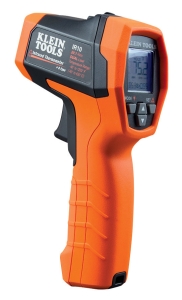
Temperature Measurement & Detection directly impacts HVAC efficiency, refrigeration safety, and thermal system diagnostics. Your probe selection influences response speed, accuracy class, and installation requirements.
PT100 RTD Probes for Accuracy and Stability
The Dwyer Probe AVG PT100 OHM RTD L.65 provides industrial-grade temperature sensing with ±0.6% accuracy at 0°C. Constructed with flexible copper capillary tubing and flange clip mounting, this probe delivers:
- Wide operating range: -35.5 to +115.5°C covers heating systems, chilled water loops, and process monitoring
- Fast response time: Copper materials conduct heat rapidly compared to stainless steel sheaths
- Flexible installation: Copper capillary allows routing through tight spaces without conduit costs
- Repeatability: PT100 resistance elements maintain calibration longer than thermocouples in industrial environments
Maintenance teams deploying RTD probes gain advantages in detecting temperature stratification within pipes, validating boiler output performance, and confirming refrigerant system superheat conditions. The flexible design accommodates existing piping layouts without costly modifications.
Practical Application: Use RTD probes when you need sustained accuracy across multiple seasons. Their superior stability compared to thermocouples justifies higher initial costs in permanent monitoring installations. For portable diagnostic work, RTD response times (typically 10–20 seconds) are slower than K-type thermocouples, so consider your troubleshooting workflow.
Flow and Pressure Measurement Integration for HVAC System Validation
Effective HVAC Measurement & Detection combines multiple parameters to diagnose system imbalances comprehensively. Single-parameter monitoring often misses root causes.
Average Flow Probes for Air Distribution Verification
The Dwyer Metal Average Flow Probe MAFS-16 measures static and total pressure across 16 cm probe length, providing airflow data without removing ductwork sections. Benefits include:
- Non-intrusive installation: Tap into duct walls at strategic points; no system shutdown required
- Static-dynamic separation: Distinguishes between pressure loss (duct friction) and velocity pressure (actual airflow speed)
- Validates design performance: Confirms HVAC systems deliver designed airflow despite aging or fouled components
- Filter condition assessment: Static pressure rise across filters indicates clogging trends before equipment stress increases energy consumption
Expansion Tank Management: Pressure Control and System Charging
Heating system efficiency depends on proper expansion tank pressurization. Incorrect pressure causes water loss, corrosion acceleration, and reduced heat transfer capacity.
Portable Inflators for Quick System Charging
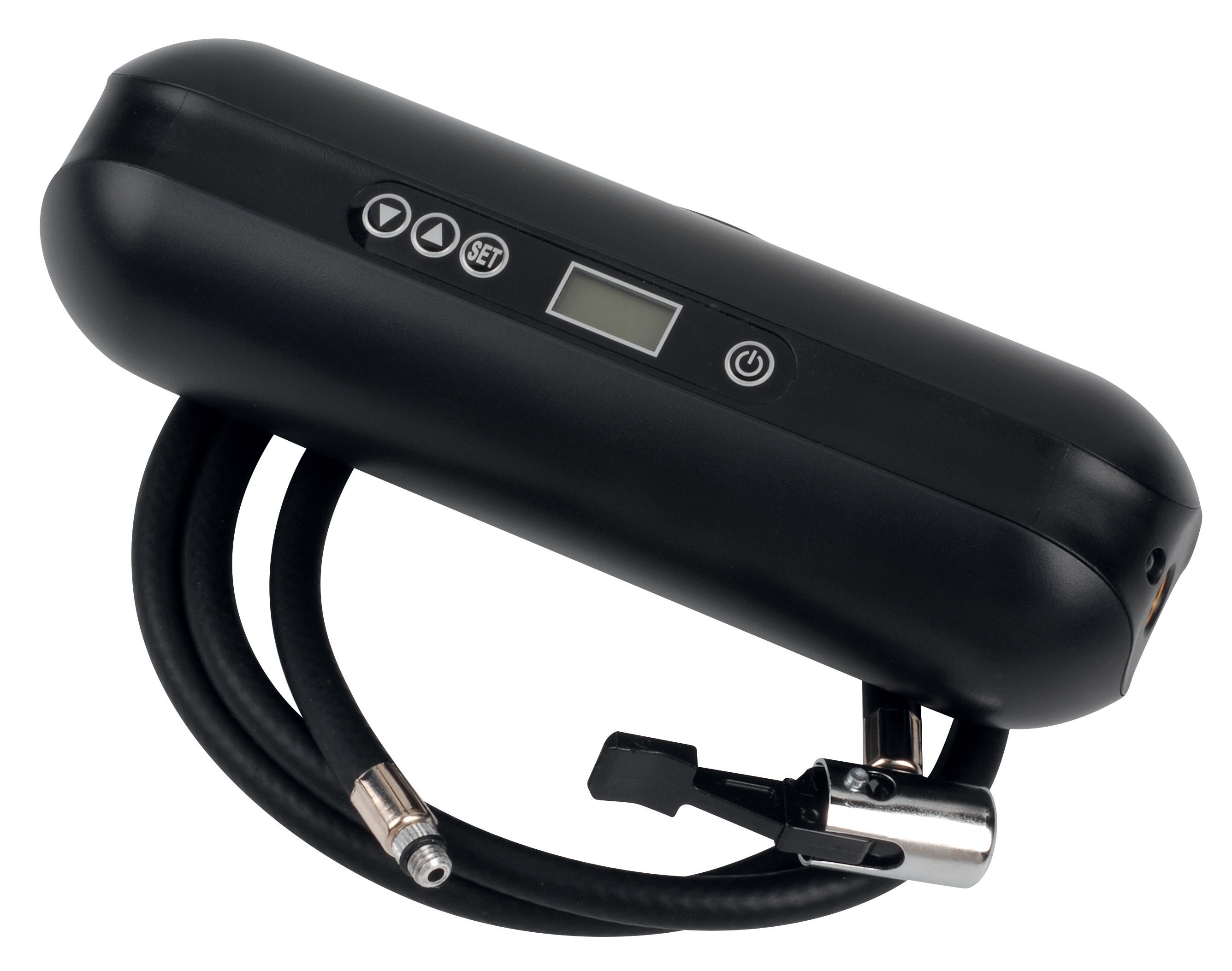
The CBM Expansion Tank Inflator Battery 2000 mAH streamlines pressure adjustment procedures. Operating across -20 to 60°C with 10.3 bar maximum rated pressure, this device:
- Eliminates manual pumping: Battery-powered inflation reduces technician fatigue during seasonal maintenance
- Supports multiple units: Toggle between bar, psi, and other pressure displays for technicians familiar with different measurement systems
- Fast charging cycles: 2000 mAH battery capacity inflates multiple tanks per charge without returning to the workshop
- Temperature-compensated: Accuweather operation means you inflate tanks correctly whether you're working in frozen northern climates or tropical regions
This Measurement & Detection tool accelerates expansion tank maintenance, which historically consumed disproportionate service call time. Faster inflation procedures reduce labor costs and enable technicians to address additional system issues during the same visit.
Maintenance Team Workflow: Building Your Detection Strategy
Successful Measurement & Detection implementation requires workflow integration, not just equipment procurement. 3G Electric's three decades of experience shows that maintenance teams adopting structured measurement practices reduce emergency service calls by 30–40%.
Recommended Approach:
1. Visual baseline: Use analog gauges like the Preciman gauge during monthly walk-throughs to identify obvious pressure anomalies
2. Differential monitoring: Deploy transmitters such as the Dwyer 616KD-13V-TC on filter banks and critical pressure points to track degradation trends
3. Temperature validation: Install RTD probes like the Dwyer PT100 at outlet points to confirm system output meets design specifications
4. Flow verification: Use flow probes like the MAFS-16 quarterly to validate that pressure differentials actually produce expected airflow
5. Pressure maintenance: Keep portable inflators like the CBM unit accessible for immediate expansion tank adjustments before pressure-related failures develop
This layered approach—combining analog observation, digital trending, and periodic detailed diagnostics—maximizes your team's ability to catch emerging problems before they cascade into facility shutdowns.
Accuracy Specifications and Environmental Selection Criteria
Different measurement applications demand different accuracy classes. Overspeeding performance requirements unnecessarily increases costs; undershooting creates diagnostic blind spots.
Accuracy Classifications for Maintenance Decisions:
- ±1.6% (Analog gauges): Adequate for process monitoring where ±0.5 bar variations don't impact system function; unsuitable for refrigerant superheat calculations
- ±0.5% (Digital transmitters): Sufficient for filter monitoring and ductwork diagnostics where trending matters more than absolute precision
- ±0.6% (RTD temperature probes): Meets industrial control requirements for thermal systems; supports both monitoring and active temperature regulation
Cost-Benefit Analysis: Initial Investment vs. Diagnostic Capability
Building your Measurement & Detection toolkit requires capital allocation. Strategic purchasing balances immediate needs against future scaling.
Entry-level configuration (Budget: $800–1200 USD): One analog gauge, one temperature probe, one portable inflator. Suitable for teams managing single facilities or 2–3 HVAC systems.
Mid-tier configuration (Budget: $2500–4000 USD): Analog gauges plus 2–3 digital transmitters, RTD probes, flow probe, inflator. Appropriate for multi-building campuses or facilities with 5+ major mechanical systems.
Enterprise configuration (Budget: $8000–15000 USD): Comprehensive transmitter network, redundant temperature sensors, flow diagnostic capability, plus portable instruments for emergency response. Justified in mission-critical facilities (hospitals, data centers, manufacturing) where downtime costs exceed $10,000 per hour.
Over three-year ownership, digital transmitter networks typically generate ROI through reduced emergency service calls and optimized maintenance scheduling. Analog gauges provide immediate cost recovery through their extreme durability—a quality gauge often outlasts the systems it monitors.
Conclusion: Implementing Measurement & Detection for Your Team
Effective maintenance strategies depend on reliable Measurement & Detection equipment that your team can deploy confidently across diverse applications. Whether you're establishing a preventive maintenance program from scratch or upgrading aging instrumentation, the comparison between analog gauges, digital transmitters, temperature probes, flow measurement tools, and portable inflators clarifies which technologies serve your specific needs.
3G Electric supplies all these instrument categories globally, with technical support teams who understand industrial applications beyond simple specification lookup. Our 35+ years supporting maintenance operations across Europe, Asia-Pacific, Africa, and the Americas means we recognize regional climate variations, local electrical standards, and facility-specific measurement challenges that generic equipment guides overlook.
Your next step: Audit your current monitoring capabilities against the tools presented here, identify gaps where you're relying on guesswork rather than data, and prioritize those areas for systematic improvement. Start with visual baselines using analog instruments, then layer in digital transmitters for your highest-priority systems, and progressively build comprehensive diagnostic capability across your facility portfolio.