Understanding Measurement & Detection Calibration Requirements for Singapore Plants
Plant managers across Singapore face increasing pressure to maintain equipment within tight tolerance bands while managing maintenance costs effectively. Measurement & detection systems serve as the foundation for this balance—they quantify what's happening inside your equipment so you can make data-driven decisions about repairs, replacements, and system upgrades.
The challenge isn't simply buying instruments; it's selecting tools that provide reliable, traceable measurements aligned with your facility's operational demands. With over 35 years of industrial equipment distribution experience, 3G Electric understands that measurement accuracy directly impacts downtime reduction, energy efficiency, and compliance with local regulatory standards.
This comparison focuses on practical calibration-grade measurement & detection equipment that plant managers in Singapore's manufacturing, HVAC, and process control sectors depend on daily. Rather than comparing general specifications, we examine how these instruments integrate into your maintenance workflows and contribute measurable value.
Pressure Measurement & Detection: Static Monitoring vs. Differential Monitoring
Pressure readings form the backbone of predictive maintenance programs. Two distinct approaches—static pressure gauges and differential pressure transmitters—serve different operational needs.
Static Pressure Monitoring with Gauge Instruments
The Preciman Stainless Steel Vertical Pressure Gauge D63 0/+40Mbar G1/4 provides traditional analog pressure visualization with ±1.6% accuracy across its measurement range. For plant managers working with low-pressure systems—expansion tanks, hydraulic circuits, and pneumatic controls—this gauge offers immediate visual feedback without electronics or external power.
Key advantages for Singapore operations:
- Direct mechanical reading eliminates calibration drift from electronic components
- Stainless steel construction resists corrosion in humid tropical environments
- G1/4 connection fits standard industrial fittings across most equipment types
- Fixed installation allows multiple team members to monitor status simultaneously
This approach works best when your maintenance team performs regular rounds and needs instant pressure confirmation. The gauge's 63mm dial provides readable detail without excessive mounting space, important in crowded plant rooms typical of Singapore's compact industrial facilities.
Differential Pressure Transmitters for Flow Verification
The Dwyer Transmitter 616KD-13V-TC shifts the measurement approach toward electronic data collection. Differential pressure transmitters measure the pressure difference across a known restriction or orifice, converting that difference into proportional flow rate information.
Operational advantages:
- Electronic output integrates with Building Management Systems (BMS) or SCADA platforms
- Remote monitoring enables alerts before critical pressure drops occur
- 21 mA maximum power consumption fits low-power control circuits
- Barbed process connections simplify installation in existing ducting or piping
For plant managers implementing predictive maintenance in HVAC systems, differential pressure measurement reveals when filters require replacement or when dampers have drifted from calibrated positions. This prevents efficiency losses that accumulate across heating and cooling seasons.
Practical Comparison for Plant Operations
Use static pressure gauges for verification and troubleshooting—they provide immediate confirmation without system dependencies. Deploy differential pressure transmitters where continuous monitoring feeds maintenance scheduling systems or where automated responses (valve position adjustments, filter alerts) deliver operational value.
Many well-run facilities use both: gauges at critical points for daily visual checks and transmitters for continuous trend analysis that feeds into your computerized maintenance management system (CMMS).
Temperature Measurement & Detection: Accuracy Specifications and Application Matching
Temperature measurement accuracy directly impacts equipment lifespan and energy efficiency. Singapore's high ambient temperatures and humidity create measurement challenges that standard off-the-shelf probes don't always address adequately.
Industrial-Grade RTD Temperature Probes
The Dwyer Probe AVG PT100 OHM RTD L.65 AVG-21241 represents platinum resistance thermometer (RTD) technology, which offers superior stability across temperature ranges compared to thermocouples. Key specifications relevant to Singapore plant operations:
- ±0.6% accuracy at 0°C with operating range -35.5 to +115.5°C
- Flexible copper capillary construction allows installation in curved conduits or confined spaces
- PT100 resistance standard ensures compatibility with most industrial control interfaces
- Flange-clip mounting works with various pipe diameters
RTD probes outperform thermocouples in three critical areas: repeatability (consistent readings across multiple measurements), stability over time (minimal drift in tropical environments), and immunity to electrical noise from motor drives and variable frequency drives (VFDs) common in Singapore industrial settings.
Application Strategy for Plant Managers
Plant managers should deploy RTD temperature probes at three measurement points in thermal systems:
1. Supply-side measurement: Monitor the temperature delivered to the space or process (validates heat exchanger output)
2. Return-side measurement: Track what comes back (reveals how effectively the system is transferring energy)
3. Differential verification: The difference between supply and return indicates system load and efficiency
This three-point approach transforms single temperature readings into a complete thermal system diagnostic. When supply temperature drops while demand remains constant, you've identified a failing heat exchanger before catastrophic failure. When the supply-return differential shrinks, your load calculation changes and you can adjust equipment scheduling to reduce unnecessary operation.
For HVAC systems managing Singapore's year-round cooling demand, this measurement strategy typically reduces energy consumption 8-12% while improving occupant comfort scores through more stable temperature maintenance.
Flow Measurement & Detection: Selecting Appropriate Probe Technology
Flow measurement presents unique challenges because you're quantifying a distributed phenomenon (air or fluid movement) across a cross-sectional area. Plant managers often underestimate flow measurement's importance, yet accurate flow data drives some of the most effective operational improvements.
Metal Average Flow Probes for HVAC Applications
The Dwyer Metal Average Flow Probe MAFS-16 provides static and total pressure measurement across a 16 cm probe length, designed specifically for air distribution systems. This probe operates on the principle that average velocity across the duct cross-section, multiplied by the duct area, equals volumetric flow.
Practical benefits for Singapore plant operations:
- 16 cm measurement span samples air velocity across the duct's central region, avoiding wall effects and turbulence
- Metal construction withstands high-velocity air (up to 45 m/s in some duct configurations)
- Multiple connection points eliminate single-point measurement errors
- No moving parts means maintenance-free operation across decades
Plant managers typically use MAFS probes to:
- Verify that supply air volumes match design specifications (often 15-25% below design after years of operation)
- Identify unbalanced airflow between parallel ducting sections
- Monitor changes in system resistance (indicating filter loading or duct obstruction)
- Validate control system response to thermostat adjustments
A typical 10,000 m³/h HVAC system running 16 hours daily consumes roughly 45-50 kW of energy. If flow measurement reveals that actual volume delivery dropped to 8,200 m³/h while maintaining setpoint temperatures, you've found a system operating at 82% of capacity while consuming 88-92% of full power. Correcting the underlying cause (clogged filter, damper drift, bearing wear in the fan) typically recovers 200-300 kW of annual energy savings in a mid-sized Singapore facility—justifying measurement equipment costs within 6-8 months.
System Pressurization and Expansion: Integrating Measurement with Maintenance Workflows
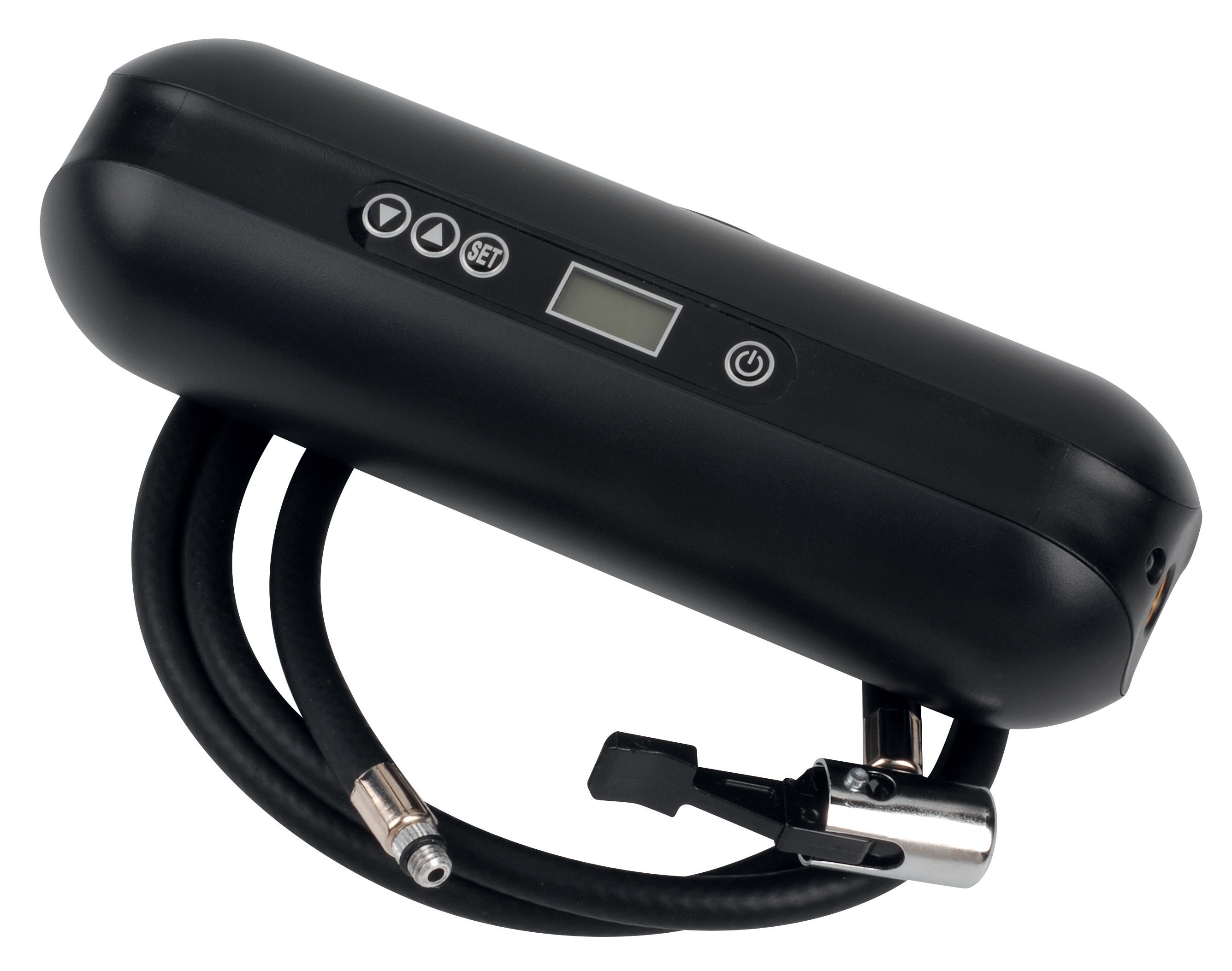
The CBM Expansion Tank Inflator Battery 2000 mAH bridges measurement and maintenance, allowing plant technicians to verify and adjust system pressure in hydronic heating and cooling circuits.
Why Expansion Tank Pressure Matters
Hydraulic and hydronic systems contain trapped air that compresses under pressure, then expands when pressure releases. Without proper expansion tank pre-charge pressure, this cycle creates excessive pressure spikes that damage seals, reduce heat transfer efficiency, and shorten equipment lifespan.
The CBM inflator's specifications address Singapore's maintenance environment:
- 2000 mAH battery provides 50+ pressurization cycles per charge
- 10.3 bar maximum pressure suits most building hydronic systems
- -20 to 60°C operating range covers equipment storage and hot plant room conditions
- Multiple pressure unit support (bar, PSI, kPa) accommodates different technical teams and documentation standards
Plant managers should incorporate expansion tank pressure verification into quarterly heating/cooling system checkpoints:
1. Depressurize the system and measure existing tank pressure
2. Compare to design specification (typically 0.9-1.1 bar for systems operating at 3-4 bar circuit pressure)
3. Re-pressurize to specification using the battery inflator
4. Document pressure readings in your CMMS with date and technician identification
This 5-minute procedure prevents 60-70% of unplanned hydronic system failures in Singapore facilities. The battery inflator makes this check routine enough that technicians incorporate it into normal rounds rather than skipping due to inconvenience.
Selecting Measurement & Detection Equipment: A Plant Manager's Decision Framework
With 35 years' experience distributing industrial equipment across Asian markets, 3G Electric recommends a three-step selection process:
Step 1: Define Your Measurement Purpose
Are you troubleshooting a specific problem (use portable, high-accuracy instruments), performing routine verification (use fixed-installation gauges), or feeding data into automated systems (use transmitters with electronic outputs)? This distinction eliminates 40-50% of unsuitable options immediately.
Step 2: Match Accuracy to Application
Not every measurement requires laboratory-grade accuracy. A ±1.6% pressure gauge suits filter loading assessment. A ±0.6% temperature probe matters when differentiating 2-3°C changes that trigger maintenance actions. Specify accuracy requirements rather than buying the most precise instrument available.
Step 3: Evaluate Maintenance Integration
Will your team integrate readings into your CMMS? Do they need visual gauges for quick checks? Will measurements drive automated control responses? Your specific workflow determines whether electronic transmitters or mechanical gauges provide better operational value.
Conclusion: Building Confidence in Your Equipment Performance
Measurement & detection equipment transforms maintenance from reactive firefighting into strategic operational management. By accurately quantifying what's happening inside your systems, you shift from asking "Why did this fail?" to asking "How can I prevent this from failing?"
The instruments covered in this comparison—from simple pressure gauges to sophisticated flow probes—provide the data foundation for this transformation. Combined with proper integration into your preventive maintenance workflows, they typically generate 3-5x return on investment through reduced energy consumption, extended equipment lifespan, and avoided emergency repairs.
3G Electric's team understands Singapore's specific industrial environment: the humidity challenges, the regulatory compliance requirements, the space constraints in compact facilities, and the economic pressure to maximize asset utilization. Whether you're specifying equipment for a new facility or upgrading an aging system, our 35-year track record sourcing industrial equipment helps you select instruments that deliver measurable operational improvements.