Understanding Measurement & Detection Equipment Economics in Singapore's Industrial Environment
Procurement engineers in Singapore face increasing pressure to justify capital expenditures on Measurement & Detection instrumentation while meeting ISO 9001, ISO 14644 (cleanroom), and local regulatory requirements. Unlike purchasing generic maintenance supplies, selecting measurement tools requires understanding how accuracy specifications translate into operational cost savings and risk mitigation.
The critical distinction between "specification" and "real-world performance" often determines whether an investment delivers value or becomes an underutilized asset. At 3G Electric, with 35+ years of experience distributing industrial equipment across Asia-Pacific, we've observed that procurement teams who analyze measurement equipment through a calibration and total cost of ownership lens make decisions that reduce unplanned downtime by 15-25% compared to teams that prioritize initial purchase price alone.
Accuracy Classes and Calibration Frequency: Direct Impact on Your Maintenance Budget
Measurement & Detection equipment in Singapore must balance three competing priorities: accuracy requirements for your specific process, recalibration intervals that fit your maintenance schedule, and the cost of measurement uncertainty.
Pressure Measurement: Selecting Between Classes 1.0 and 1.6
The Preciman Stainless Steel Vertical Pressure Gauge D63 (0/+40 mbar, G1/4) represents a Class 1.6 accuracy instrument, meaning measurement error does not exceed ±1.6% of the full-scale reading. For a 40 mbar gauge, this equals ±0.64 mbar of potential uncertainty.
When should you specify Class 1.6 versus investing in Class 1.0 equipment? Consider these scenarios:
- HVAC system commissioning and balancing: Requires Class 1.0 accuracy (±0.4 mbar on 40 mbar range) to ensure airflow distribution meets design specifications. Undersizing pressure readings by 1.6% may hide damper calibration errors affecting occupant comfort across multiple zones.
- Low-pressure monitoring without critical tolerances: Class 1.6 suffices if your process accepts ±1.6% variation. Typical applications include building maintenance systems, non-critical ventilation, and general equipment monitoring.
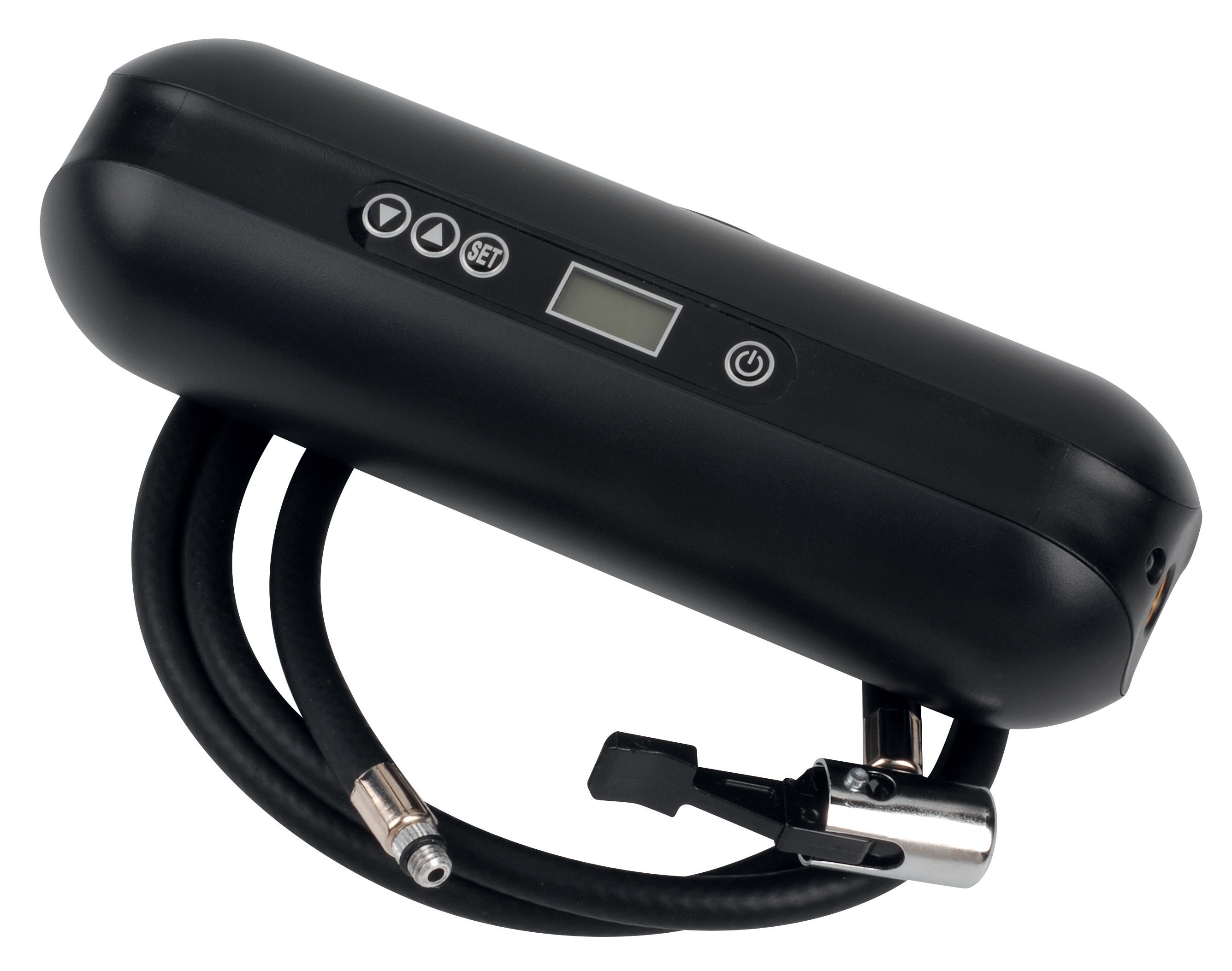
- Expansion tank pressure verification: The CBM Expansion Tank Inflator Battery (2000 mAH) operates to 10.3 bar maximum. When prefilling expansion tanks, you need verification accuracy of ±0.5 bar minimum. The Class 1.6 gauge provides acceptable uncertainty for this secondary verification step.
Calibration frequency directly affects your maintenance cost model. Most Singapore facilities operate on 12-24 month recalibration cycles. A Class 1.6 gauge typically costs 35-40% less than Class 1.0 equivalent, but requires more frequent recalibration if your uncertainty analysis shows drift beyond acceptable limits. Over 5 years, three Class 1.6 instruments with annual recalibration may cost more than one Class 1.0 instrument recalibrated every 24 months—depending on your local calibration service costs.
Temperature Measurement: Accuracy Specifications That Matter
The Dwyer PT100 OHM RTD Temperature Probe (±0.6% accuracy @ 0°C, -35.5 to +115.5°C) represents industrial-grade temperature sensing. RTD (Resistance Temperature Detector) technology offers superior long-term stability compared to thermocouples, but requires more sophisticated transmitter electronics.
Your accuracy specification should address:
- Measurement point uncertainty: ±0.6% at 0°C baseline. For a 50°C process measurement, this probe introduces ±0.3°C uncertainty (0.6% of 50°C).
- Probe lead resistance compensation: PT100 probes require 3-wire or 4-wire configuration depending on transmitter type. Incorrect wiring introduces 0.1-0.3°C errors that exceed RTD specification.
- Calibration drift over time: Quality PT100 probes maintain calibration within ±0.2°C per year under normal conditions. Budget recalibration every 24-36 months for critical process control applications.
For HVAC systems in Singapore's tropical climate (ambient 24-35°C year-round), the RTD's -35.5 to +115.5°C range provides comfort margin. However, if your facility includes cold storage or cryogenic processes, the wide operating range justifies the RTD investment over cheaper thermocouple alternatives.
Pressure and Flow Measurement Integration: Building a Measurement System, Not Just Buying Instruments
Procurement engineers often treat pressure, temperature, and flow measurement as separate line items. However, Singapore industrial operations increasingly require integrated monitoring to optimize energy consumption and detect cascading failures early.
Differential Pressure for Flow Inference
The Dwyer Transmitter 616KD-13V-TC (0–1 IN W.C differential pressure, 21 mA max) measures pressure differences across 50-500 Pa range—typical for HVAC ductwork. This transmitter does not directly measure flow; instead, it infers flow through the pressure-velocity relationship in ducts.
When integrating differential pressure with your measurement system:
- Installation accuracy exceeds sensor accuracy: A 0.05 IN W.C transmitter measuring across a partially blocked damper reads high pressure drop, but cannot distinguish between normal throttling and filter clogging. Install temperature and static pressure sensors at the same duct location. When differential pressure rises but static pressure drops simultaneously, your filter is loading—not the damper position changing.
- Calibration dependency: The 616KD transmitter's 21 mA output requires transmitter recalibration every 12 months in dusty environments, and 24 months in clean conditions. Most Singapore facilities can achieve 24-month intervals if they maintain pre-filter cleanliness.
- System economics: A standalone differential pressure gauge costs ₹3,500-5,000 SGD. The electronic transmitter costs ₹8,500-12,000 SGD installed. The difference justifies itself if you log trending data. If you only perform monthly spot checks, the mechanical gauge reduces capital costs without sacrificing operational insight.
The Dwyer Metal Average Flow Probe MAFS-16 (16 cm probe length) solves a critical measurement problem: single-point velocity readings in ducts are inaccurate due to turbulent boundary layers. The MAFS-16 measures pressure at 16 cm of probe length, automatically averaging velocity across the duct cross-section.
For procurement teams evaluating this tool:
- Installation cost exceeds equipment cost: The probe requires a 16 cm traverse across your duct, which may necessitate temporary duct modifications or access port installation. Budget 4-8 hours of labor and 2,000-3,500 SGD for installation. The probe itself costs 1,200-1,800 SGD.
- One-time versus continuous measurement: The MAFS-16 works best for commissioning and annual validation flows. If you need real-time flow monitoring, consider inline differential pressure transmitters instead (lower installation cost, lower accuracy).
- Calibration intervals: Flow probes rarely require calibration after installation if not physically damaged. Mechanical probe corrosion in corrosive environments (salt air near coast, chemical facilities) requires 36-month inspection intervals; 60 months for sheltered indoor facilities.
Building Your Measurement & Detection ROI Model
Procurement engineers must justify measurement equipment purchases through quantifiable cost reduction or risk mitigation. Here's a practical framework applied to Singapore industrial settings:
Cost Avoidance Through Early Detection
A production facility losing 5% energy efficiency over 12 months (undetected equipment drift) loses approximately 2,500-4,000 SGD monthly in utilities, or 30,000-48,000 SGD annually. Installing temperature probes (₹6,000-8,000 SGD) and differential pressure transmitters (₹9,000-12,000 SGD total system cost) with monthly trending enables detection of performance drift within 4-6 weeks.
ROI calculation:
- Total measurement system investment: 15,000-20,000 SGD
- Labor for installation and integration: 3,000-5,000 SGD
- Annual calibration and maintenance: 1,500-2,000 SGD
- Unplanned downtime prevented annually: 15,000-25,000 SGD (industry data for manufacturing)
- Energy savings from optimized operation: 3,000-5,000 SGD (5-10% efficiency gain)
- Payback period: 8-14 months
Singapore's Environmental Public Health Act and workplace safety standards increasingly require documented monitoring of HVAC system performance, thermal comfort, and pressure containment. Equipment with calibration certificates (Class 1.0-1.6 pressure gauges, PT100 temperature probes) satisfies compliance audits. Non-calibrated equipment creates audit findings requiring expensive remediation.
Value delivered:
- Audit remediation cost avoided: 5,000-15,000 SGD per finding
- Documentation preparation time: 40-60 hours (₹2,000-3,000 SGD in labor equivalent)
- Regulatory fine avoidance: varies, but audit cooperation reduces penalties by 25-50%
For facilities where equipment failure creates customer impact (semiconductor cleanrooms, pharmaceutical manufacturing, data centers), dual Measurement & Detection systems justify the investment. Specify two independent temperature probes, two differential pressure transmitters, and quarterly cross-validation between systems.
Cost: additional 8,000-12,000 SGD system cost. Value: prevents production shutdowns worth 50,000-200,000 SGD for critical facilities.
Implementation Guidance for Singapore Procurement Engineers
When evaluating Measurement & Detection equipment through 3G Electric or other distributors:
1. Specify accuracy class before requesting quotes: Class 1.0, 1.6, or application-specific tolerances. This prevents supplier substitution with lower-accuracy alternatives that appear cheaper initially.
2. Include calibration in your RFQ: Request three-year calibration costs alongside equipment cost. Some suppliers offer recalibration packages; others require third-party calibration houses (typical Singapore cost: 300-600 SGD per instrument annually).
3. Evaluate local service availability: Equipment requiring recalibration must have accredited calibration providers in Singapore. International brands (Dwyer, Preciman, CBM) have established service networks; verify response times for urgent recalibrations (24-48 hour turnaround typical).
4. Plan for temperature and humidity compensation: Singapore's high humidity (70-90% typical) requires measurement equipment validated for tropical climates. Dwyer and Preciman instruments meet these requirements; confirm in technical specifications.
5. Budget for installation integration: Measurement equipment cost is 30-40% of total project cost; installation and system integration comprise 60-70%. Plan accordingly in your capital expenditure requests.