Understanding Integrated Fluid System Architecture in Singapore Manufacturing
Plant managers across Singapore's chemical, automotive, food processing, and precision manufacturing sectors face a common challenge: managing multiple fluid delivery systems that must work in harmony. Over 35 years of supplying industrial equipment throughout Asia, 3G Electric has observed that facilities treating pressure regulation, pumping, and fluid delivery as separate concerns typically experience inefficiencies, equipment failures, and unexpected downtime.
An integrated approach treats these three components—pressure regulation, high-pressure fluid transfer, and controlled delivery through nozzles—as an interconnected system. This perspective shift transforms how you specify equipment and troubleshoot performance issues.
In Singapore's competitive manufacturing environment, where space is limited and energy costs are significant, integrated system design directly impacts your bottom line. A properly specified pressure regulator upstream prevents pump cavitation and extends service life. A correctly sized pump eliminates the need for oversized equipment and reduces energy consumption. Precision nozzles ensure material reaches only where needed, reducing waste and improving product quality.
Pressure Regulation as a System Foundation
Pressure regulation is not simply about controlling outlet pressure—it is about protecting your entire fluid system from damage and maintaining consistent process conditions.
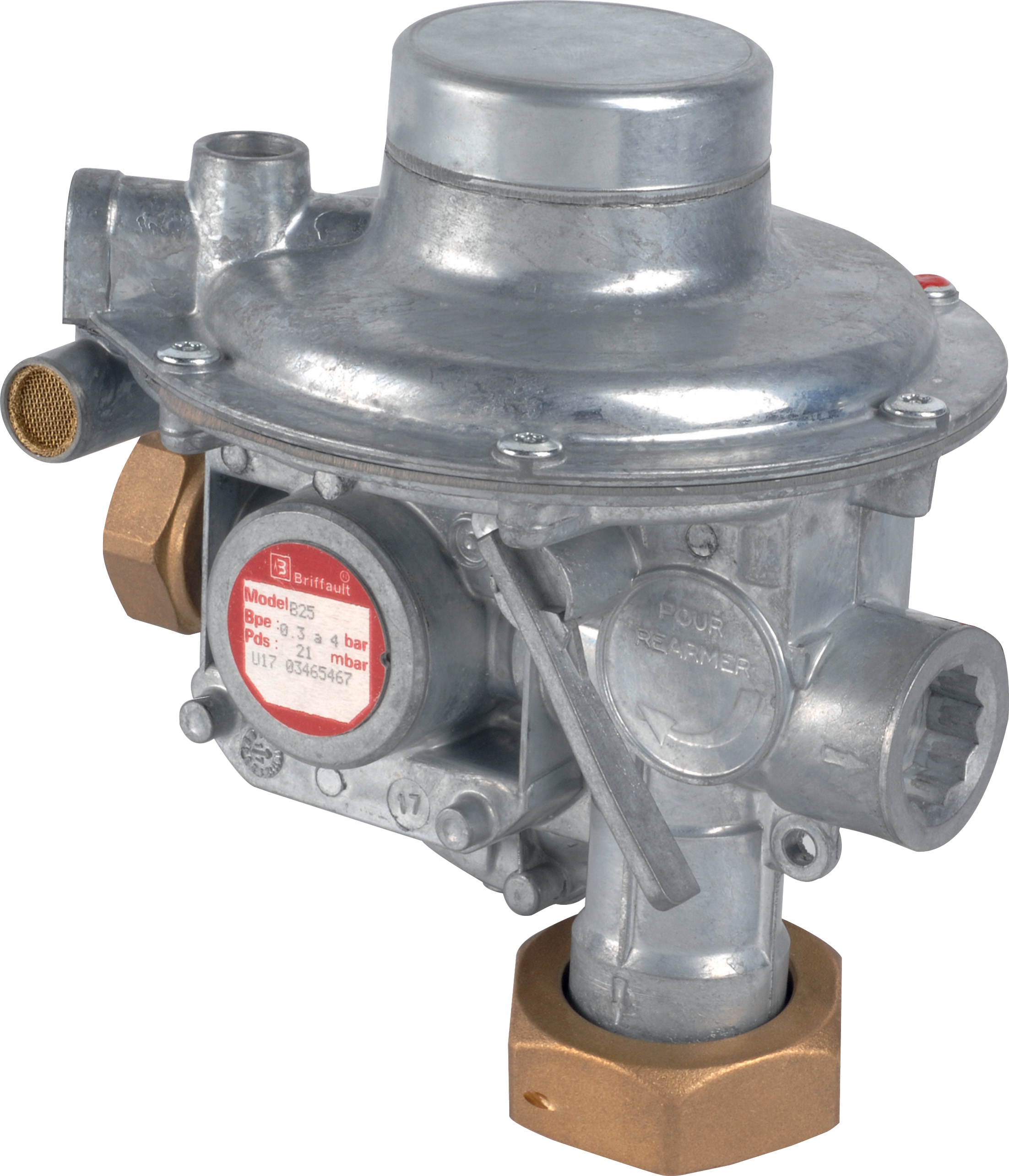
The Francel B25/37mb pressure regulator with integrated safety relief exemplifies this principle. Designed for laboratory and industrial gas distribution systems, it delivers 37 mbar outlet pressure with a 10 mm vent size, protecting downstream equipment from pressure spikes that commonly occur when demand changes abruptly.
For plant managers, the key consideration is where this regulator sits in your system architecture. When installed immediately downstream of your primary pressure source, it protects all secondary equipment: pumps, nozzles, filters, and sensors. The integrated safety relief feature means you eliminate a separate component, reducing leak points and maintenance requirements.
In pharmaceutical manufacturing facilities across Singapore, where product contamination risks exist, integrated safety relief in the regulator simplifies validation and cleaning procedures. In food processing applications, fewer components mean fewer crevices where bacterial growth could occur.
Practical Selection Criteria:
- Outlet pressure requirement: Match regulator specifications exactly to your process needs
- Flow rate capacity: Ensure the regulator can handle peak demand without pressure drop
- Safety rating: Verify the relief setting provides adequate protection margin above normal operating pressure
- Maintenance access: Select units with accessible adjustment points for your facility's preventive maintenance schedule
High-Performance Pumping: Matching Power to Process Requirements
Plant managers often view pump selection as a straightforward technical specification—determine required flow rate and pressure, then select a pump. This approach frequently results in oversized equipment consuming excess energy or undersized pumps operating at inefficient points on their performance curve.
Singapore's industrial sector benefits significantly from right-sizing pump selections. Energy efficiency is not optional—it is increasingly mandated through building standards and reflected in operational budgets. 3G Electric's experience with Pratissoli Italian-engineered pumps demonstrates that equipment design quality directly influences real-world efficiency.
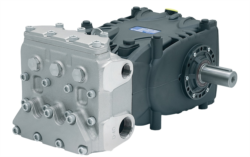
The Pratissoli KF30 pump delivers 106 L/min at 200 bar with 40 kW power input. This specification suits mid-range manufacturing applications: coating systems, precision cleaning, moderate-pressure hydraulic circuits, and fluid transfer operations. For facilities operating 16-20 hours daily, the efficiency of Italian pump engineering translates directly to reduced electrical costs and lower carbon footprint.
For larger-capacity operations, the Pratissoli MW40 pump provides 211 L/min at 210 bar with 85 kW power—doubling capacity while increasing power by roughly 2.1 times, demonstrating superior engineering efficiency. When processing plant requirements scale up, this pump maintains efficiency rather than operating an oversized KF30 at partial capacity.
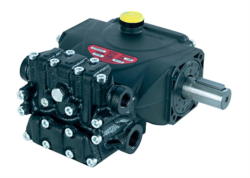
For high-pressure applications requiring compact footprints—common in Singapore's space-constrained facilities—the Interpump PUMP E1D1808 L offers a different solution. Delivering 8 L/min at 180 bar in a compact 5 kg form factor, this gear pump suits point-of-use applications, portable equipment, and distributed pumping architectures where multiple small pumps provide redundancy and flexibility.
Pump Selection Framework for Plant Managers:
- Calculate actual peak demand, not theoretical maximum
- Verify duty cycle: continuous operation requires different equipment than intermittent use
- Consider system pressure profile: peaks during startup differ from steady-state operation
- Evaluate noise levels if the pump operates near production or office areas
- Assess installation space: compact pumps may justify premium pricing if they eliminate facility modifications
Precision Spray Delivery: Converting Fluid Pressure into Manufacturing Value
Where the fluid ultimately performs its function—cleaning, coating, cooling, or treatment—precision spray nozzles translate pump performance into manufacturing results. Poor nozzle selection undermines excellent pressure regulation and high-quality pumping.
The Euspray flat jet nozzle with 1/4" M BSPT connection delivers targeted spray patterns at a 25° angle, designed specifically for industrial cleaning and coating applications. This specification sounds technical, but the practical implications are significant for plant managers.
The 25° spray angle creates a narrow, concentrated pattern suited to precision work—cleaning specific surfaces without overspray, applying coatings to defined areas, or directing cooling fluid exactly where needed. In contrast, wider-angle nozzles spray material everywhere, increasing waste and creating cleanup requirements.
The index 30 design indicates standardization—you can integrate multiple nozzles into a common manifold, enabling multi-point applications with consistent spray characteristics. In automotive parts cleaning, textile processing, or electronic component coating, consistency across dozens of spray points directly affects product quality and customer satisfaction.
The 1/4" M BSPT connection ensures compatibility with standard industrial piping, reducing fitting complexity and potential leak points. Over time, this simplicity reduces maintenance labor and spare parts inventory.
Nozzle Selection Strategy for Manufacturing Applications:
- Define the target spray pattern: flat jet, cone, mist, or solid stream
- Verify pressure rating: ensure the nozzle can withstand your system's peak pressure plus safety margin
- Calculate spray coverage area at your installation height and distance
- Confirm material compatibility: some nozzles suit aqueous solutions while others handle solvents or abrasive slurries
- Plan for maintenance: specify nozzles with replaceable spray tips to reduce downtime
System Integration: Connecting Components into Reliable Operations
The true advantage of integrated system thinking emerges when these three elements—regulation, pumping, and delivery—work together. A pressure regulator without adequate pump capacity cannot maintain stable downstream pressure during demand fluctuations. A powerful pump without precision nozzles wastes energy and material. A well-designed nozzle cannot perform if upstream pressure varies.
Singapore's manufacturing facilities increasingly operate in global supply chains where batch consistency and quality are non-negotiable. An integrated approach to fluid systems delivers this consistency.
Practical Integration Checklist:
- Install a pressure regulator immediately downstream of your primary pressure source, before any pump or secondary equipment
- Size the pump to deliver required flow at regulated pressure without exceeding design limits
- Select nozzles rated for your operating pressure with spray characteristics matched to your specific process
- Install pressure gauges at three points: upstream of the regulator, downstream of the regulator, and at the point of use
- Establish preventive maintenance schedules for each component: regulators require annual seal inspection, pumps need regular fluid analysis, nozzles need periodic cleaning or replacement
- Document your system specifications and maintain spare components for critical nozzles and regulator seals
With over 35 years supplying industrial equipment throughout Asia, 3G Electric understands that plant managers operate under constant pressure to reduce costs, improve reliability, and maintain quality. Integrated fluid system design addresses all three simultaneously. Rather than viewing pressure regulation, high-performance pumping, and precision spray delivery as separate purchasing decisions, treating them as interconnected components simplifies troubleshooting, reduces downtime, and delivers measurable improvements in operational efficiency.