Understanding Industry Applications: Portable vs. Stationary Systems for HVAC Contractors
Industry applications in HVAC contracting require strategic equipment placement decisions. Whether you're servicing residential complexes, commercial buildings, or industrial facilities across Singapore, understanding the distinctions between portable and stationary systems is essential for operational efficiency. With over 35 years of experience as a supplier of industrial equipment, 3G Electric has observed how contractor success depends on matching equipment deployment to job requirements.
Portable systems offer flexibility and rapid deployment, while stationary installations provide consistency and long-term cost advantages. This guide compares both approaches across four critical dimensions: deployment speed, operational costs, maintenance accessibility, and performance consistency.
Portable Equipment Systems: Flexibility and Rapid Deployment
Portable HVAC equipment excels in industries requiring frequent site changes, emergency response scenarios, and short-term installations. For contractors managing multiple renovation projects or maintenance calls across Singapore's diverse urban landscape, mobility is a competitive advantage.
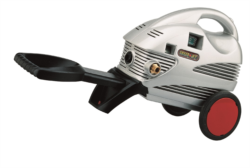
The Interpump GREEN JET GX24 VARIOJET CART exemplifies modern portable system design. Weighing just 11.4 kg with 90 bar pressure and 7 L/min flow capacity, this compact unit tackles light-duty cleaning applications while fitting into vehicle storage compartments. Contractors can transport complete cleaning systems between residential maintenance calls, industrial facility inspections, and emergency coil cleaning scenarios without dedicated space allocation.
Advantages of portable systems:
- Rapid deployment: Setup times measured in minutes rather than hours or days
- Lower site infrastructure requirements: No permanent installation, piping, or foundation preparation
- Vehicle-based mobility: Transport between multiple locations within a single workday
- Reduced capital commitment: Smaller equipment footprint means lower individual unit costs
- Ideal for emergency response: Quick mobilization for unexpected HVAC failures or seasonal demand spikes
Portable systems require contractors to manage hose connections, pressure regulations, and nozzle configurations at each site. The Euspray flat jet nozzle type HP 1/4"M index 065 angle 25° BSPT provides precision spray patterns for coil cleaning and component maintenance, but requires technician skill to optimize settings. Contractor teams must develop standardized procedures for equipment checkout, pressure calibration, and post-job inspection to maintain safety compliance and equipment longevity.
Singapore's tropical climate demands particular attention to portable equipment storage. High humidity environments accelerate corrosion of unpressurized metal components. Contractors operating portable systems should implement monthly inspection schedules, protective coatings for idle periods, and covered storage facilities to maximize equipment service life.
Stationary Equipment Installations: Consistency and Long-Term Performance
Stationary HVAC equipment systems anchor high-volume operations, central service facilities, and permanent industrial installations. Major building maintenance centers, HVAC repair shops, and industrial facility pressure cleaning stations justify fixed equipment infrastructure through utilization efficiency and operational consistency.
Stationary systems leverage high-capacity equipment like the Interpump PUMP W2035 L ATEX designed for sustained high-pressure applications. Operating at 35 L/min and 200 bar with 13.23 kW capacity, this ATEX-compliant pump delivers consistent performance across commercial cleaning operations, coil treatment, and industrial fluid delivery applications. Fixed installation allows full pressure optimization, eliminating deployment time and connection setup variables.
Advantages of stationary systems:
- Operational consistency: Standardized pressure, flow, and performance metrics across all jobs
- High utilization efficiency: Central facility deployment maximizes equipment availability across multiple technician teams
- Reduced setup variability: Technicians deploy with confidence in pressure characteristics and performance reliability
- Permanent infrastructure benefits: Water supply, electrical connections, and drainage systems support continuous operation
- Integrated safety systems: Permanent installations accommodate comprehensive pressure regulation, monitoring, and emergency shutoff mechanisms
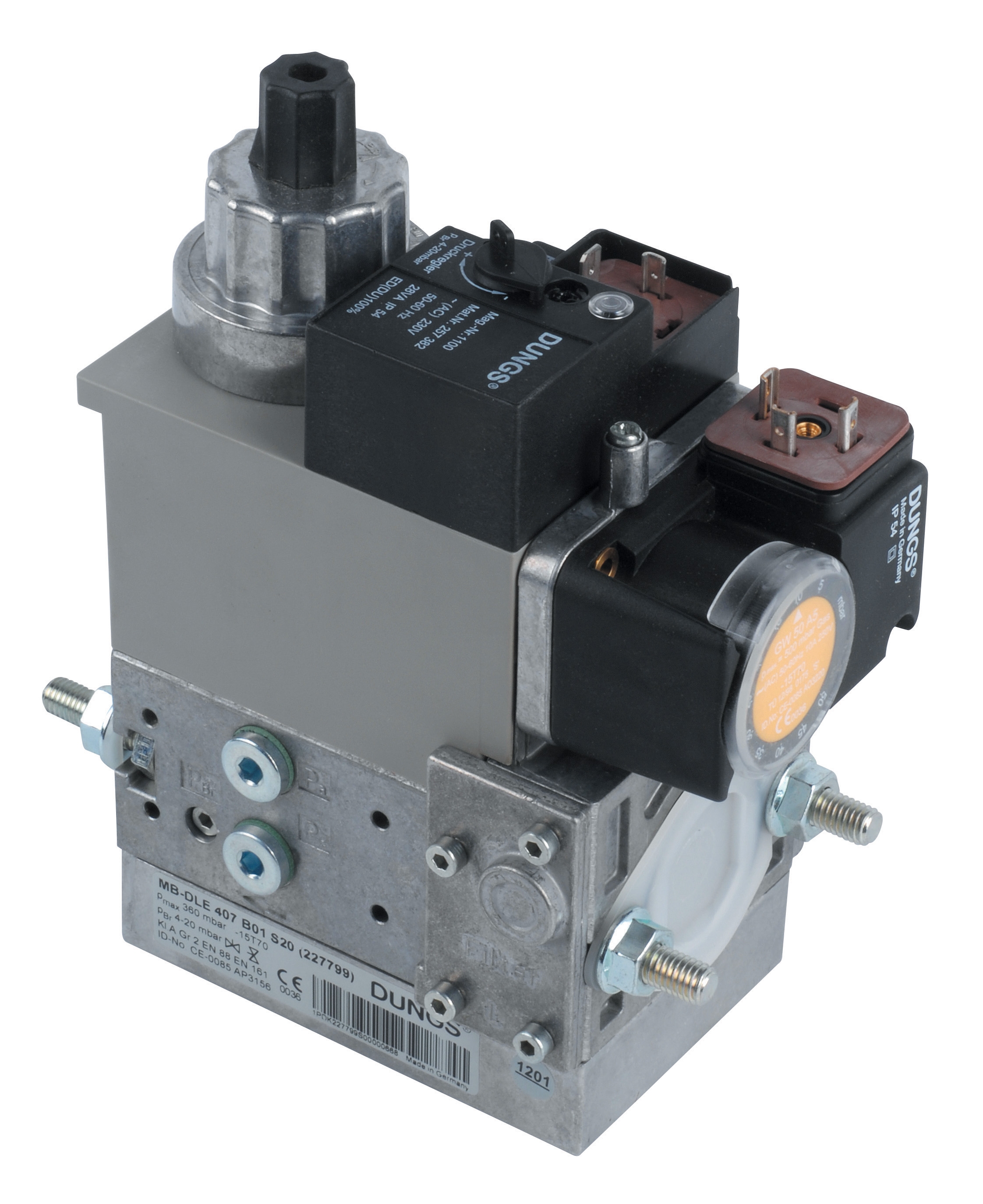
Stationary equipment in Singapore requires compliance with Building and Construction Authority (BCA) standards, electrical safety regulations (EDB certification), and hazardous area requirements. The Dungs MBDLE 415 B01.S52 integrated gas regulation and safety assembly demonstrates stationary system requirements—combining filter, regulator, and valve components for reliable operation at 220-230V AC, 50-60Hz power specifications. Permanent installations must undergo regular certification, pressure testing, and safety audits.
Contractors operating stationary equipment systems should establish quarterly maintenance schedules, documented pressure calibration records, and technician certification programs. The equipment accessibility and performance consistency justify initial installation investment through reduced operational overhead and enhanced job quality.
Comparative Cost Analysis: Capital Investment vs. Operating Expenses
Capital investment structures differ dramatically between portable and stationary deployments. Portable equipment typically requires lower unit costs with distributed purchases across multiple compact systems. Stationary installations demand substantial upfront capital for high-capacity equipment, facility preparation, and compliance infrastructure.
Portable system economics:
- Initial equipment investment: SGD 3,000–8,000 per unit
- Fleet deployment: Contractors typically maintain 3–5 portable units
- Total initial capital: SGD 9,000–40,000
- Operating costs: Fuel/power consumption distributed across multiple jobsites
- Maintenance: Decentralized, technician-performed basic service
- Single high-capacity unit: SGD 15,000–35,000
- Facility preparation (foundation, plumbing, electrical): SGD 5,000–15,000
- Compliance infrastructure and certification: SGD 3,000–8,000
- Total initial capital: SGD 23,000–58,000
- Operating costs: Concentrated facility overhead (water, electricity, maintenance)
- Maintenance: Specialized technician service contracts
Break-even analysis depends on utilization rates. Contractors performing 40+ pressure cleaning hours weekly justify stationary systems. Operations under 20 hours weekly favor portable deployment. Singapore's mixed-use commercial environment creates variable demand patterns—contractors serving both categories should evaluate hybrid deployments combining portable units for emergency/mobile response with stationary capacity for core facility operations.
Selecting Equipment for Singapore's Industry Applications
Equipment selection reflects job type, frequency, and infrastructure constraints. HVAC contractors in Singapore encounter distinct application categories:
High-rise residential maintenance: Multi-unit condominiums require consistent pressure cleaning for external units, internal ductwork treatment, and seasonal coil maintenance. Stationary equipment installed in central maintenance facilities supports scheduled service cycles with minimal deployment overhead.
Commercial retrofit projects: Building upgrades, system replacements, and emergency remediation demand rapid deployment. Portable systems maximize technician productivity across fragmented job schedules and site-specific constraints.
Industrial facility contracts: Manufacturing, food processing, and pharmaceutical applications require ATEX-compliance equipment and integrated safety systems. Stationary installations with certified equipment like the Pratissoli ZT12B0800606 high-pressure sewer cleaning hoses ensure regulatory compliance and consistent performance documentation.
Emergency response services: HVAC system failures in commercial buildings create time-critical service demands. Portable equipment enables rapid technician dispatch and on-site problem resolution within hours rather than days.
3G Electric's 35+ years of experience supporting industrial equipment distribution across Asia-Pacific markets demonstrates that successful contractor operations typically employ both portable and stationary systems. Portable equipment handles responsive service demands and mobile operations. Stationary installations support high-volume, recurring service contracts and facility-based operations. Contractors should evaluate current utilization rates, projected growth, facility availability, and capital constraints to determine optimal deployment mix.
Implementation Best Practices and Decision Framework
Establishing equipment strategy requires systematic evaluation across operational dimensions. First, analyze current workload patterns—document monthly hours by application type, geographic distribution, and client contract structures. This baseline identifies utilization characteristics and growth opportunities.
Second, assess facility constraints. Available space, electrical infrastructure, water supply reliability, and drainage systems determine stationary installation feasibility. Singapore's urban density creates variable facility conditions across different service territories.
Third, evaluate capital availability and ROI expectations. Conservative contractors prioritize portable systems with faster capital recovery. Growth-focused operations justify stationary investments supporting expansion targets.
Finally, consider regulatory and compliance requirements. ATEX-compliance equipment like the Interpump PUMP W2035 L ATEX becomes mandatory for hazardous area applications. Stationary installations require certification and documentation infrastructure. Portable systems reduce compliance complexity but require careful technician training.
Hybrid deployment strategies often deliver optimal results. Maintain 2–3 portable units for emergency response and mobile operations. Invest in single high-capacity stationary system supporting core facility operations and high-volume contracts. This approach balances flexibility, cost efficiency, and operational consistency while maintaining capacity for business growth.