Understanding Industry Applications for Spray Nozzle Systems
Spray nozzles are fundamental to countless industrial processes—from precision coating applications to high-pressure cleaning systems. In Singapore's manufacturing and processing sectors, equipment reliability directly impacts production schedules and product quality. Over 35 years, 3G Electric has supported industrial professionals across the region with high-performance fluid delivery components, including precision nozzles designed for demanding applications.
The Euspray flat jet nozzle HP 1/4"M BSPT represents the type of precision engineering found in modern industrial spray systems. With a 25° spray angle and index 30 design, these nozzles deliver consistent fluid patterns critical for coating uniformity and cleaning efficiency. However, spray nozzles operate under extreme conditions—high pressures, corrosive fluids, temperature variations, and particulate contamination—making troubleshooting essential for maintaining system performance.
This guide addresses the most common spray nozzle failures and performance issues encountered in industrial applications throughout Southeast Asia, providing actionable diagnostic procedures for maintenance teams.
Diagnosing Spray Pattern Degradation and Blockage Issues
Root Causes of Poor Spray Patterns
A compromised spray pattern is often the first indicator of nozzle deterioration. The causes fall into several categories:
Particulate Contamination and Blockage: Fluid containing suspended particles, scale, or debris accumulates in the nozzle orifice, restricting flow and distorting the spray pattern. This is the most common cause of premature nozzle failure in industrial systems.
Fluid Incompatibility: Certain fluids cause material degradation within the nozzle body or internal passages. Chemical reactions between the fluid and nozzle material (typically hardened steel or stainless steel) create deposits that narrow internal channels.
Temperature-Induced Thermal Stress: Rapid temperature fluctuations cause the nozzle body to expand and contract unevenly. Over time, this produces micro-cracks in the orifice edges, resulting in spray scatter and inconsistent patterns.
Orifice Erosion: High-velocity fluid containing abrasive particles physically wears the orifice walls. The 25° spray angle design depends on precise orifice geometry—even minimal erosion (0.1 mm) degrades spray uniformity significantly.
Practical Diagnostic Procedures
Visual Inspection Protocol:
- Remove the nozzle from the spray manifold and examine the visible orifice under magnification (10x minimum)
- Look for crystalline deposits, discoloration, or roughness around the orifice opening
- Check the 1/4" M BSPT connection threads for corrosion, scale buildup, or mechanical damage
- Inspect the spray angle convergence—uniform edges indicate proper condition; rough or beveled edges suggest erosion
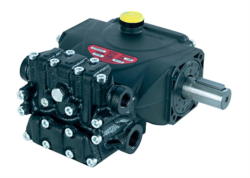
- Isolate the nozzle and apply system pressure (the Pratissoli KF30 pump operates at 200 bar, typical for industrial applications)
- Observe spray pattern shape and symmetry; asymmetrical patterns indicate orifice damage
- Measure spray angle with a visual reference card—deviation of more than ±2° from nominal 25° suggests replacement
- Listen for hissing or unusual acoustic signatures, which indicate internal turbulence from blockage
- Disconnect the nozzle from the pressure line
- Submerge it in clean fluid matching your system's working fluid
- Apply moderate hand pressure through a syringe or low-pressure hand pump
- If fluid flows freely, blockage is internal; if resistance is high, the orifice is partially obstructed
- For confirmed blockage, attempt ultrasonic cleaning with appropriate solvents before replacement
System Pressure Stability and Nozzle Performance Integration
Spray nozzle performance depends critically on stable system pressure. Pressure fluctuations cause inconsistent spray patterns and accelerate component wear.
Pressure Regulation and Nozzle Compatibility
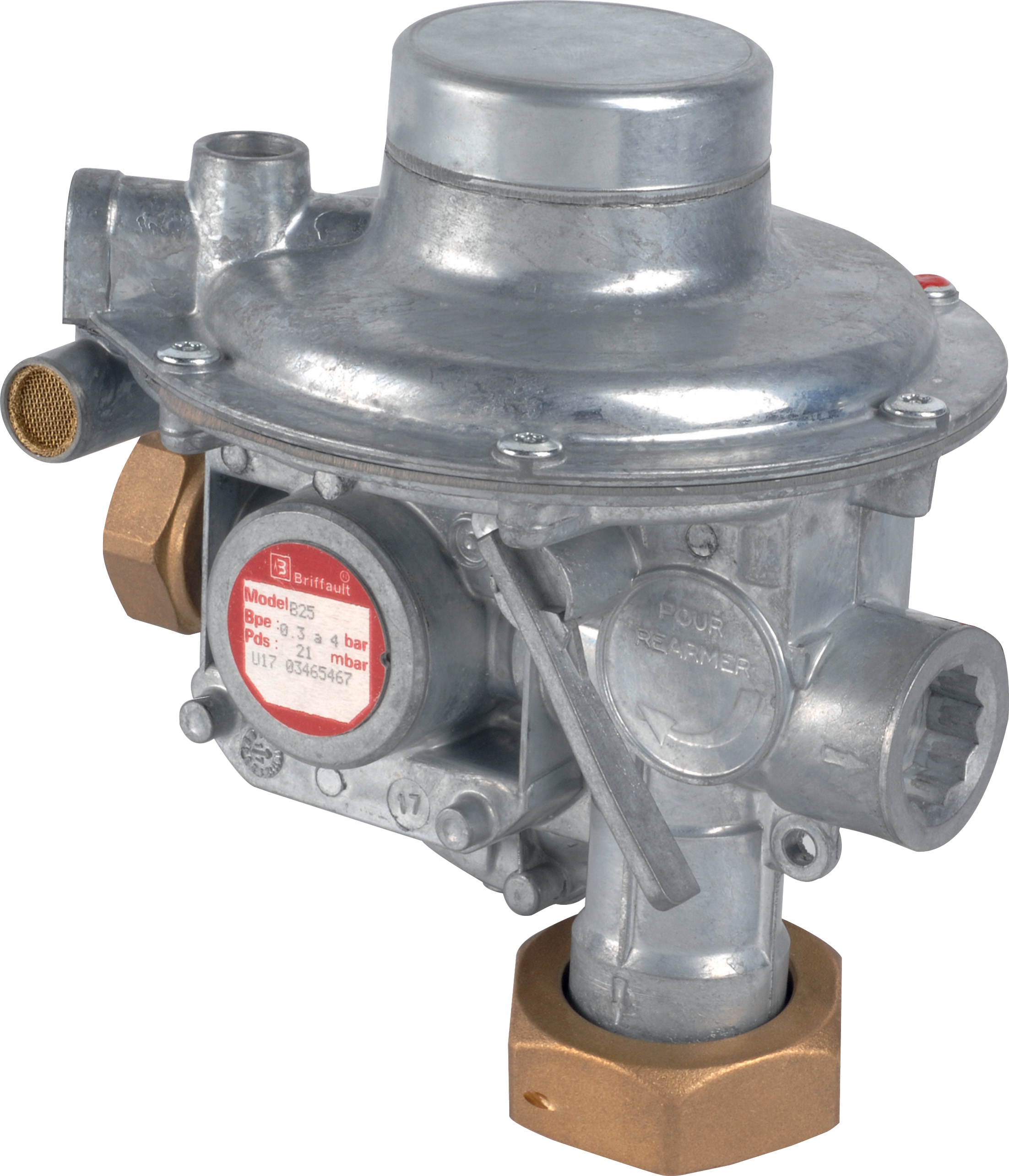
Industrial spray systems typically incorporate pressure regulators like the Francel B25/37mb pressure regulator with integrated safety relief. This regulator maintains outlet pressure at 37 mbar while providing essential safety protection. However, spray nozzles require consistent delivery pressure—variations of ±5% maximum are acceptable for most applications; deviations beyond this range indicate system problems.
When nozzles fail to deliver expected spray patterns despite appearing clean, pressure instability is often the culprit. The Francel regulator's integrated safety relief prevents over-pressure conditions that accelerate orifice erosion and material fatigue.
Diagnostic Procedure for Pressure-Related Nozzle Issues
Pressure Gauge Installation:
- Install calibrated pressure gauges immediately upstream and downstream of the nozzle
- Monitor pressure readings over 5-minute intervals during normal operation
- Record fluctuation ranges; acceptable variation is typically ±3–5% from setpoint
- Oscillating pressure (rapid up-and-down variations) suggests pump cavitation or inlet line restrictions
- Gradual pressure drift indicates regulator malfunction or internal leakage
- Sudden pressure spikes indicate shock waves from rapid nozzle opening/closing or system components slamming
- If pressure exceeds nozzle rated specifications, verify regulator calibration and adjust outlet pressure setpoint downward
- For pump-induced oscillation, check pump inlet filters, fluid level, and suction line for air leaks
- For gradual drift, inspect the regulator's relief valve seat for deposits or contamination
Multi-Nozzle Spray Array Diagnostics and Flow Distribution
Industrial coating and cleaning systems frequently employ multiple nozzles in arrays or manifolds. Uneven flow distribution between nozzles creates quality problems and accelerates selective nozzle failure.
Identifying Uneven Flow Distribution
Visual Observation Method:
- Operate the full spray array and observe spray intensity patterns
- Uneven spray coverage indicates that some nozzles receive higher flow than others
- Nozzles producing weaker spray patterns typically have partially blocked orifices or incorrect pressure supply
- For systems with accessible nozzles, isolate each nozzle's output using collection vessels
- Operate at standard working pressure for a fixed time (typically 1 minute)
- Measure collected fluid volume or weight
- Compare flow rates: deviations exceeding ±10% between nozzles indicate distribution problems or individual nozzle blockage
High-Performance Pump Considerations
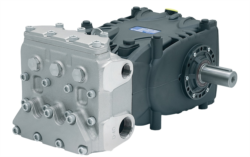
When troubleshooting multi-nozzle systems, consider the pump's capabilities. The Pratissoli MW40 pump delivers 211 L/min at 210 bar pressure with 85 kW power—sufficient for large spray arrays. However, as nozzles age and accumulate minor blockages, system back-pressure increases. This forces the pump to work harder, increasing heat generation and accelerating fluid degradation.
For systems using the Interpump PUMP E1D1808 L (8 L/min at 180 bar), blockage in even one nozzle can reduce system efficiency significantly. Implement quarterly preventive cleaning of all nozzles to maintain optimal flow distribution.
Preventive Maintenance and Industry Best Practices for Singapore Operations
Fluid Quality Management
Fluid cleanliness is the single most important factor in spray nozzle longevity. Implement these practices:
- Install and maintain inline filters upstream of the spray manifold; recommend 25 μm absolute filtration minimum
- Change filters quarterly or when differential pressure exceeds 3.5 bar
- Test fluid samples biannually for water content (maximum 200 ppm for most industrial fluids) and particulate count (ISO 4406 18/16/13 or better)
- For systems operating continuously in humid Singapore climate, monitor fluid degradation accelerated by moisture absorption
Scheduled Nozzle Inspection Protocol
- Monthly visual inspection of spray patterns and orifice condition
- Quarterly flow rate measurement and pressure logging
- Semi-annual detailed disassembly, cleaning, and dimensional verification of critical nozzles
- Annual replacement of nozzles in primary spray positions; retain cleaned units as emergency backups
Documentation and Trending
Maintain detailed records of:
- Nozzle replacement dates and part numbers (reference TEC02064 for Euspray specifications)
- Pressure readings and flow measurements
- Fluid sample analysis results
- Spray pattern quality assessments
Trending this data reveals patterns—for example, premature blockage may indicate inadequate fluid filtration, while rapid orifice erosion suggests system pressure exceeds nozzle specifications.
Supply Chain Reliability
With 35+ years of experience supporting industrial operations across Southeast Asia, 3G Electric maintains stock of critical spray nozzles and related components. Singapore's high production standards demand immediate component availability. Establish relationships with your distributor to ensure rapid replacement availability—extended downtime while waiting for components negates savings from extended nozzle life.
Summary
Spray nozzle troubleshooting requires systematic diagnosis addressing contamination, pressure stability, and flow distribution. Industrial professionals in Singapore operating high-performance systems should implement preventive maintenance emphasizing fluid cleanliness and regular inspection. By understanding how pressure systems, pump performance, and nozzle design interact, maintenance teams can maximize component lifespan and maintain consistent product quality.