Understanding Pumps & Compressors in HVAC Applications
Pumps & Compressors are the heartbeat of modern HVAC systems, yet their importance is often overshadowed by attention to chillers and air handlers. With over 35 years of experience distributing industrial equipment across Southeast Asia, 3G Electric has observed that HVAC contractors frequently underestimate the impact of proper pump and compressor selection on system efficiency, noise levels, and operational longevity.
In HVAC applications, you'll encounter two primary pump categories: hydronic circulation pumps for chilled water and hot water loops, and compressors for refrigerant circulation in air conditioning units. Each demands different selection criteria and installation considerations specific to Singapore's hot, humid climate.
The relationship between pump performance and system efficiency is direct and measurable. A poorly sized circulation pump can increase energy consumption by 15-25%, while an incorrectly matched compressor creates thermal stress that shortens equipment life by years. Understanding these interconnections helps you design systems that perform reliably in Singapore's demanding operating conditions.
Hydronic Pump Selection for Chilled Water Systems
Flow Rate and Head Pressure Calculations
Proper hydronic pump selection begins with calculating system flow requirements. The fundamental formula guides your selection:
GPM = (Tons of Cooling × 24) / ΔT
Where ΔT is the temperature differential across the chiller (typically 5°C for chilled water systems in Singapore). For a 50-ton system, this yields approximately 240 GPM. Never round down—undersized pumps create insufficient heat transfer, while oversized pumps waste energy.
After calculating flow, determine the total system head pressure by summing:
- Chiller pressure drop (typically 5-12 psi)
- Piping friction losses (calculated via Darcy-Weisbach or obtained from friction charts)
- Coil pressure drops (valve manufacturer data)
- Expansion tank static head
- Safety margin (10-15% additional head)
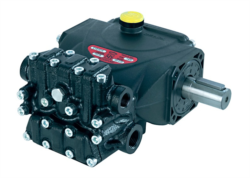
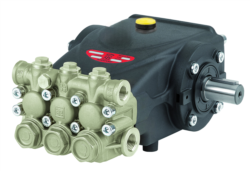
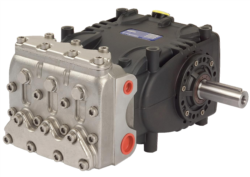
Products like the Interpump PUMP W953 R VALVE W/O RAILS (delivering 11.5 L/min at 172 bar with integrated valve) work well for smaller systems requiring both flow and pressure stability. For larger hydronic loops, the Pratissoli PUMP SN7061 L provides 61 L/min at 150 bar, suitable for medium commercial installations across Singapore.
Variable Speed Drive (VSD) Implementation
Singapore's building codes increasingly require or incentivize VSD pumps for HVAC applications. Why? A pump running at 80% speed consumes only 51% of the power (cube law relationship). Installing VSD-compatible pumps from the design phase eliminates costly retrofits later.
Select pumps with pressure-independent or differential pressure control compatible with building automation systems (BAS). This approach allows dynamic flow adjustment based on actual cooling demand—critical in Singapore's commercial buildings where occupancy varies dramatically throughout the day.
Refrigerant Compressor Integration and Flow Dynamics
Matching Compressor Displacement to System Load
While compressors aren't traditional "pumps," they function as positive displacement devices moving refrigerant through the cycle. Compressor selection must account for:
Capacity (Tons) = (Sensible Load × 400) / (Enthalpy Difference)
For Singapore's tropical climate, sensible cooling typically dominates (75-80% of total load), with latent cooling addressing humidity (20-25%). This ratio differs from temperate climates and affects refrigerant mass flow rates.
The refrigerant flow rate (mass/minute) depends on:
- Compressor displacement volume
- Suction pressure (varies with chiller evaporator temperature)
- Discharge pressure (condensing temperature)
- Compressor RPM
Products like the Interpump PUMP E2B2014 L FL.B3B14 (14 L/min at 200 bar, 5.37 kW) illustrate how industrial-grade pumps with precise pressure ratings ensure stable refrigerant circulation in demanding applications.
Oil Management in Refrigerant Circuits
Compressor oil circulation directly impacts efficiency and component life. Inadequate oil return causes bearing wear and reduced heat transfer; excess oil reduces heat transfer efficiency. In Singapore's high-humidity environment, oil hygiene becomes critical—moisture ingress causes acid formation that attacks compressor internals.
Ensure adequate oil return by:
- Maintaining proper suction superheating (8-12°C)
- Designing horizontal runs with upward slope (0.5-1% gradient)
- Installing properly sized oil separators
- Using low-pressure oil return systems for scroll compressors
System Integration: Pump-Compressor-Expansion Device Coordination
Pressure Drop and Capacity Modulation
Many contractors overlook how expansion device pressure drop affects pump selection. Electronic expansion valves (EEVs) create significant pressure drops that influence both refrigerant flow and compressor discharge pressure:
Refrigerant Flow = Compressor Displacement × RPM × Volumetric Efficiency
When EEV opening decreases (reducing capacity), refrigerant velocity through the valve increases, raising pressure drop. Conversely, wide-open operation during maximum load periods requires careful pressure relief management.
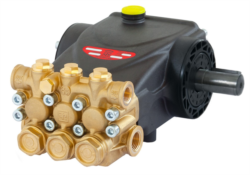
For commercial applications, the Interpump PUMP W916 R U.S. W/O RAILS (5.51 kW, 160 bar, 18 L/min) provides the stable, controlled pressure delivery necessary for precise system modulation in chiller applications.
Vibration Isolation and Noise Control
Singapore's dense urban environment demands quiet HVAC operation. Pump and compressor vibration transmits through refrigerant lines and water piping, creating noise that disturbs tenants. Design strategies include:
- Elastic pump mounts reducing transmission to structural steel
- Vibration dampers in refrigerant lines (suction and discharge)
- Flexible hose connections instead of rigid piping near compressors
- Acoustic insulation around machinery rooms
- Balanced impeller designs in centrifugal pumps minimizing vibration
Selector pumps with sealed bearing assemblies and low noise certificates specified in technical datasheets. The Delta Pump VM3 RL 2.4 demonstrates precision engineering, operating at 3500 rpm with tight pressure control (±0.3 bar), reducing system pressure fluctuations that generate noise.
Practical Application: Sizing a Chilled Water System for a Singapore Office Building
Design Scenario
Consider a 25-story office tower in Singapore's Central Business District:
- Total cooling load: 400 tons sensible
- Chilled water setpoint: 7°C
- Return water temperature: 12°C (5°C differential)
- Chiller evaporator pressure drop: 8 psi
- Piping distance (loop): 150 meters
- Control valve and coils total pressure drop: 18 psi
Step-by-Step Sizing
1. Calculate Flow Rate:
GPM = (400 × 24) / 5 = 1,920 GPM (8.64 m³/min)
2. Calculate Friction Losses:
Using 1.5-inch main distribution piping at 6 ft/s velocity:
- Main loop friction: ~12 psi per 100 feet × 1.5 = 18 psi
- Branch balancing losses: 6 psi
3. Total System Head:
- Chiller evaporator: 8 psi
- Piping friction: 24 psi
- Control valves and coils: 18 psi
- Expansion tank static head: 4 psi
- Total: 54 psi (3.7 bar)
Required: 1,920 GPM at 54 psi minimum
Selected: Centrifugal pump with VSD capability, 7.5 kW nominal, pressure-independent controller
5. Compressor Coordination:
For the refrigerant side:
- Required refrigerant mass flow: ~650 kg/hour
- At typical evaporator saturation (3°C), suction pressure: 1.5 bar absolute
- Condensing temperature (design): 45°C, discharge pressure: 16 bar absolute
- Pressure ratio: 10.7:1
- Compressor displacement: Select unit delivering refrigerant flow matching chiller design specifications
A reciprocating compressor with electronic unloading and variable displacement helps modulate capacity as building occupancy varies through the day.
Maintenance and Troubleshooting Considerations
Common HVAC Pump and Compressor Issues
Cavitation occurs when local pressure drops below refrigerant saturation pressure, creating vapor bubbles that collapse violently. Symptoms: noise, loss of capacity, eventual pump failure. Prevention: maintain suction pressure above minimum, ensure adequate liquid supply, monitor oil level.
Compressor liquid slugging happens when liquid refrigerant enters the compressor cylinder instead of pure vapor. This is immediately catastrophic, causing mechanical damage. Proper expansion device operation, adequate suction line superheating, and separator design prevent this failure mode.
Pump cavitation in hydronic systems results from:
- Low supply tank level
- High system temperature reducing liquid density
- Suction line filters becoming clogged
- Pump located above water source
Install pressure gauges at pump inlet (minimum 5 psi recommended) to detect cavitation onset.
Seasonal Preparation in Singapore's Climate
While Singapore lacks seasonal variation, the consistent heat and humidity create unique challenges:
- Monthly filter inspection: Tropical dust and salt spray contaminate chiller coils, increasing pressure drop
- Oil quality testing: High humidity promotes acid formation; oil analysis every 6 months identifies developing problems
- Vibration monitoring: Bearing wear accelerates in heat; trending baseline vibration data reveals degradation
- Refrigerant analysis: Dissolved moisture and acid levels indicate system hygiene; action levels differ from temperate climates
Choosing the Right Equipment for Your Singapore Operations
3G Electric's 35+ years supplying industrial equipment across Southeast Asia means we understand the specific demands of Singapore's HVAC market. We stock proven performers for both hydronic and refrigerant circuit applications:
For precision hydronic control, the Interpump PUMP E2B2014 L FL.B3B14 delivers compact, reliable performance at 14 L/min and 200 bar—ideal for modular chiller designs. The Pratissoli PUMP SN7061 L handles larger loops with its 61 L/min capacity at 150 bar, while the Interpump PUMP W916 R U.S. W/O RAILS provides industrial-grade reliability at 160 bar for retrofit applications.
For commercial chiller applications requiring integrated valve functions and precise pressure control, the Interpump PUMP W953 R VALVE W/O RAILS combines compact footprint (225 mm) with stable 172 bar operation.
When fuel support is required for dual-energy systems, the Delta Pump VM3 RL 2.4 fuel pump provides 20 bar precise pressure control with integrated solenoid valve, supporting emergency heating during tropical rainstorms that briefly overload cooling capacity.
Key Takeaways for HVAC Contractors
Pumps & Compressors represent the circulatory system of HVAC infrastructure. Proper selection, sizing, and integration directly impact energy consumption, equipment longevity, and occupant comfort. By understanding hydronic flow calculations, refrigerant dynamics, and component coordination, you position your firm as a technical resource rather than a commodity provider.
Singapore's competitive HVAC market demands excellence in every detail. The contractor who masters pump and compressor selection, maintains systems proactively, and educates clients on efficiency gains will win contracts and build reputation. Start with fundamentals—accurate load calculations, proper pressure drop accounting, and variable speed pump implementation—and your systems will outperform competitors' installations.