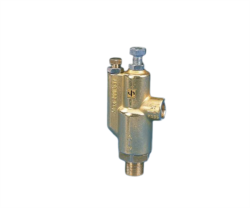
Gas Valves & Regulation: Understanding Pressure Classifications & TCO Implications
Gas valves and regulation systems form the backbone of industrial fluid control, yet procurement decisions often focus exclusively on initial purchase price rather than total cost of ownership (TCO). For procurement engineers across Southeast Asia, understanding the relationship between pressure ratings, system integration costs, and long-term operational expenses is critical. Drawing on 35+ years of industrial equipment distribution experience, 3G Electric helps organizations navigate the complexity of selecting regulation systems that balance performance, safety compliance, and budget efficiency.
Pressure rating selection directly impacts multiple cost centers: equipment durability, maintenance frequency, system downtime, safety compliance investments, and component replacement cycles. A valve rated for 170 bar versus 280 bar pressures carries different implications not just for performance but for your total ownership expense over 5-10 years of operation.
Section 1: Pressure Rating Classifications & Performance Comparison
Understanding Pressure Classes in Industrial Applications
Industrial regulation systems are classified into discrete pressure bands, each designed for specific application ranges. Southeast Asian procurement engineers must match application requirements to appropriate pressure classes to avoid costly over-specification or dangerous under-specification.
Low-Pressure Systems (0-100 bar): Suitable for HVAC, general pneumatic applications, and light industrial processes. These systems use simpler valve designs, require less maintenance, and feature lower component costs. However, they cannot handle high-flow or high-force applications.
Medium-Pressure Systems (100-200 bar): The workhorse classification for most industrial hydraulic and gas applications across manufacturing, construction, and processing facilities. The Pratissoli R1X/200 VALVE exemplifies this category, rated for 200 bar maximum pressure with 110 l/min flow capacity. This pressure class balances system robustness with cost-effectiveness, offering reliable performance for pump discharge applications and compatible with multiple pump series including SS70–SN71.
High-Pressure Systems (200-280+ bar): Industrial applications requiring concentrated force in compact spaces—industrial cleaning, material processing, and specialized manufacturing. The Pratissoli AUTOMATIC PRESS.REG. H288 operates at 280 bar maximum pressure with 20 L/min capacity, delivering precision pressure regulation for demanding hydraulic systems. These systems require premium materials, precise manufacturing tolerances, and specialized maintenance expertise.
Comparing Performance Specifications Across Pressure Classes
When comparing regulation systems, procurement engineers must evaluate multiple performance dimensions simultaneously. Flow rate capacity directly affects system throughput and production cycle times. A valve delivering 110 l/min (like the R1X/200) enables faster production cycles than lower-flow alternatives, but also requires larger pump capacity and higher energy consumption.
Temperature ratings indicate operational envelope and material selection. The H288 regulator handles fluid temperatures to 85°C, typical for standard industrial hydraulic oils. Applications requiring hotter fluids or extreme thermal cycling demand specialty valve materials, increasing costs by 30-50%.
Response time—how quickly a valve adjusts to pressure changes—affects system stability and product quality. Automatic pressure regulators like the H288 respond faster than manual alternatives, reducing pressure spikes that damage equipment and reduce component lifespan.
Compact form factors reduce installation costs and system footprint. The Pratissoli PUMP SRS65 weighs only 0.42 kg despite handling 170 bar at 6 L/min, enabling integration into space-constrained applications without expensive system redesigns.
Section 2: Total Cost of Ownership Analysis Across Pressure Ratings
Capital Equipment Costs vs. Operational Expense Dynamics
Initial procurement costs represent only 15-25% of a regulation system's five-year TCO in most Southeast Asian industrial operations. Procurement engineers frequently encounter pressure to minimize upfront equipment purchases, yet this approach often increases total ownership expense dramatically.
Equipment Cost Structure:
- Valve hardware: 20-30% of acquisition price
- Installation labor and system integration: 25-35%
- Commissioning, testing, and calibration: 15-20%
- Spare parts inventory establishment: 10-15%
- Training and documentation: 5-10%
Higher-pressure systems command 40-60% equipment cost premiums due to materials (stainless steel vs. standard steel), precision manufacturing requirements, and performance testing protocols. However, this premium often returns savings through extended component lifespan and reduced maintenance frequency.
Operational and Maintenance Cost Implications
Pressure rating directly correlates with maintenance requirements and system reliability. Lower-rated systems operating near their maximum pressure generate heat, accelerate fluid degradation, and experience 3-5x higher seal failure rates compared to systems operating at 60-70% of rated capacity.
Medium-Pressure Systems (100-200 bar): Typical annual maintenance costs range from 8-12% of equipment purchase price in Southeast Asian operations. Standard hydraulic fluid changes occur annually, seal replacements every 18-24 months, and component calibration annually. Unplanned downtime averages 40-60 hours yearly.
High-Pressure Systems (200+ bar): Advanced materials and precision engineering extend maintenance intervals but increase specialized labor costs. Annual maintenance expenses typically reach 10-15% of equipment purchase price. However, fewer unplanned failures reduce downtime to 15-25 hours yearly, offsetting higher maintenance labor rates.
The relationship becomes clear when comparing equivalent production requirements: A 200 bar system handling continuous operation may cost $8,000 initially but generate $1,200 annual maintenance expense over five years ($6,000 total). A lower-cost 100 bar alternative priced at $5,500 might accumulate $1,500 annual maintenance expense over five years ($7,500 total), resulting in higher total ownership cost despite lower capital investment.
Energy Efficiency and Pressure Optimization
System pressure directly impacts energy consumption. Unnecessarily high pressure ratings force pumps to work harder, consuming 15-30% additional electrical power. Conversely, inadequate pressure ratings cause production delays, requiring overtime labor and extended facility operation.
Optimal pressure selection requires matching application minimum requirements with system efficiency curves. The Pratissoli PUMP SRS65 delivers 6 L/min at 170 bar—sufficient for precise flow applications while avoiding excess pressure-driven energy waste. For sewer cleaning operations, the Pratissoli High Pressure Sewer Cleaning Hoses - Long Life and Pratissoli Pilotflex 120 hoses integrate complete system components including valves and fittings, optimizing energy transfer across the entire regulation circuit.
Section 3: Regional Sourcing Strategy and Vendor Evaluation for Southeast Asia
Regulatory Compliance Landscape Across Southeast Asian Markets
Regulation systems must comply with jurisdiction-specific standards. Singapore enforces strict pressure equipment directives based on European standards, while Indonesia, Malaysia, and Thailand maintain distinct compliance frameworks. Procurement engineers cannot employ single-specification approaches across the region—systems qualified for Singapore may require modifications for adjacent markets.
3G Electric's 35+ years of industrial distribution experience across Southeast Asia ensures specifications account for regional variations. European-engineered systems like Pratissoli components (Interpump Group manufacturing) meet or exceed regional compliance requirements while offering technical consistency across multiple markets.
Vendor Comparison Methodology for Pressure-Rated Systems
When evaluating regulation system suppliers, procurement engineers should develop comparative matrices across multiple dimensions:
Technical Specification Alignment:
- Pressure rating versus application requirement (target 60-80% rated capacity)
- Flow capacity and response time specifications
- Material compatibility with operational fluids
- Temperature operating envelope
- Certification documentation (PED, ISO, regional standards)
- Inventory availability for critical spare parts
- Lead times for standard and custom configurations
- Regional warehouse distribution (critical for 24-48 hour emergency response)
- Technical support availability during local business hours
- Documentation in primary regional languages
- Equipment cost including configuration complexity
- Installation labor requirements (estimate 40-60 hours for medium-pressure systems)
- Annual maintenance material and labor costs
- Spare parts pricing transparency
- Extended warranty or maintenance plan options
- Energy consumption differential versus alternatives
As a distributor serving industrial operations across Southeast Asia for over 35 years, 3G Electric maintains technical databases comparing pressure-rated regulation systems across equivalent performance categories, enabling procurement engineers to quantify TCO differences before vendor selection.
Section 4: Practical Specification Matching and Implementation Guide
Application-Specific Pressure Rating Selection
Procurement engineers must translate operational requirements into pressure specifications without over-specification waste. Consider typical Southeast Asian industrial applications:
Manufacturing Press Operations: Require consistent pressure (200-280 bar) with minimal fluctuation. The Pratissoli AUTOMATIC PRESS.REG. H288 automatic pressure regulation delivers this stability at 280 bar maximum, maintaining product quality while reducing pressure-related equipment stress.
Hydraulic Power Units: Serving multiple downstream applications (clamps, actuators, lifts) benefit from medium-pressure systems (170-200 bar) with flow capacity matched to concurrent demand. The Pratissoli R1X/200 VALVE at 200 bar and 110 l/min suits applications with multiple simultaneous loads.
Precision Flow Applications: Laboratory equipment, medical devices, and calibration systems require controlled, stable flow rates at moderate pressures (100-170 bar). The Pratissoli PUMP SRS65 delivers precise 6 L/min flow at 170 bar maximum, ideal for precision dosing or measurement applications.
High-Pressure Cleaning Systems: Sewer cleaning, surface preparation, and decontamination applications demand complete system integration with durable hoses rated for continuous high pressure. Complete packages like the Long Life hoses and Pilotflex 120 hoses include integrated valve regulation and fittings, reducing assembly risk and installation errors.
Implementation Checklist for Southeast Asia Procurement
1. Define Application Requirements: Document minimum and maximum operating pressures, flow rates, temperature ranges, fluid types, and duty cycle (continuous, intermittent, emergency use)
2. Calculate Optimal Pressure Rating: Select valve pressure rating at 60-80% of maximum application requirement, balancing safety margin with energy efficiency
3. Verify Regional Compliance: Confirm selected components meet Singapore, Indonesia, Malaysia, Thailand, or Vietnam standards as applicable
4. Evaluate Installation Infrastructure: Assess available space, existing connection standards (SAE, ISO, British Standard), and integration requirements with current systems
5. Establish Spare Parts Availability: Confirm regional distributor maintains critical spare parts inventory for 24-48 hour emergency response
6. Calculate Five-Year TCO: Model annual maintenance costs, expected downtime frequency, energy consumption, and component replacement cycles
7. Negotiate Warranty and Support: Specify technical support response times, included spare parts, and training requirements
8. Implement Commissioning Protocol: Schedule professional installation, pressure testing, response time verification, and operator training before production deployment
Conclusion
Gas valves and regulation system selection requires more sophisticated analysis than simple price comparison. Pressure rating decisions cascade through capital costs, operational expenses, maintenance labor, energy consumption, and production reliability. Procurement engineers in Southeast Asia benefit from systematic evaluation frameworks that quantify total cost of ownership across five-year operational horizons.
3G Electric's 35+ years of industrial equipment distribution experience equips procurement teams to navigate regional compliance variations, evaluate vendor technical capabilities, and specify systems that deliver both performance requirements and cost efficiency. By matching application pressure requirements to optimal valve classifications, establishing regional supply chain reliability, and calculating comprehensive TCO models, procurement engineers can confidently select regulation systems that serve operational excellence and financial objectives across Southeast Asian industrial operations.