Understanding Gas Pressure Regulation in Singapore Industrial Environments
Gas pressure regulation forms the backbone of countless industrial processes across Singapore, from pharmaceutical manufacturing and semiconductor production to food processing and laboratory operations. Proper pressure management ensures safety, consistency, product quality, and regulatory compliance—all essential factors in Singapore's highly regulated industrial landscape.
Over 35 years of distributing industrial equipment, 3G Electric has supported facilities throughout Southeast Asia in optimizing their gas delivery systems. The critical challenge many Singapore industrial professionals face is selecting and configuring pressure regulation systems that simultaneously meet stringent safety standards, maintain precise process control, and minimize operational costs.
Pressure regulators are not simply passive components—they are active control devices that stabilize outlet pressure regardless of inlet pressure fluctuations or flow rate changes. Understanding their application principles helps facility managers make informed decisions about equipment selection, installation protocols, and maintenance schedules.
Laboratory and Research Facility Applications
Laboratories and research institutions throughout Singapore depend on precise gas delivery for analytical instrumentation, experimental procedures, and calibration processes. These facilities typically work with specialty gases including compressed air, nitrogen, oxygen, argon, and occasionally more hazardous gases that demand rigorous safety protocols.
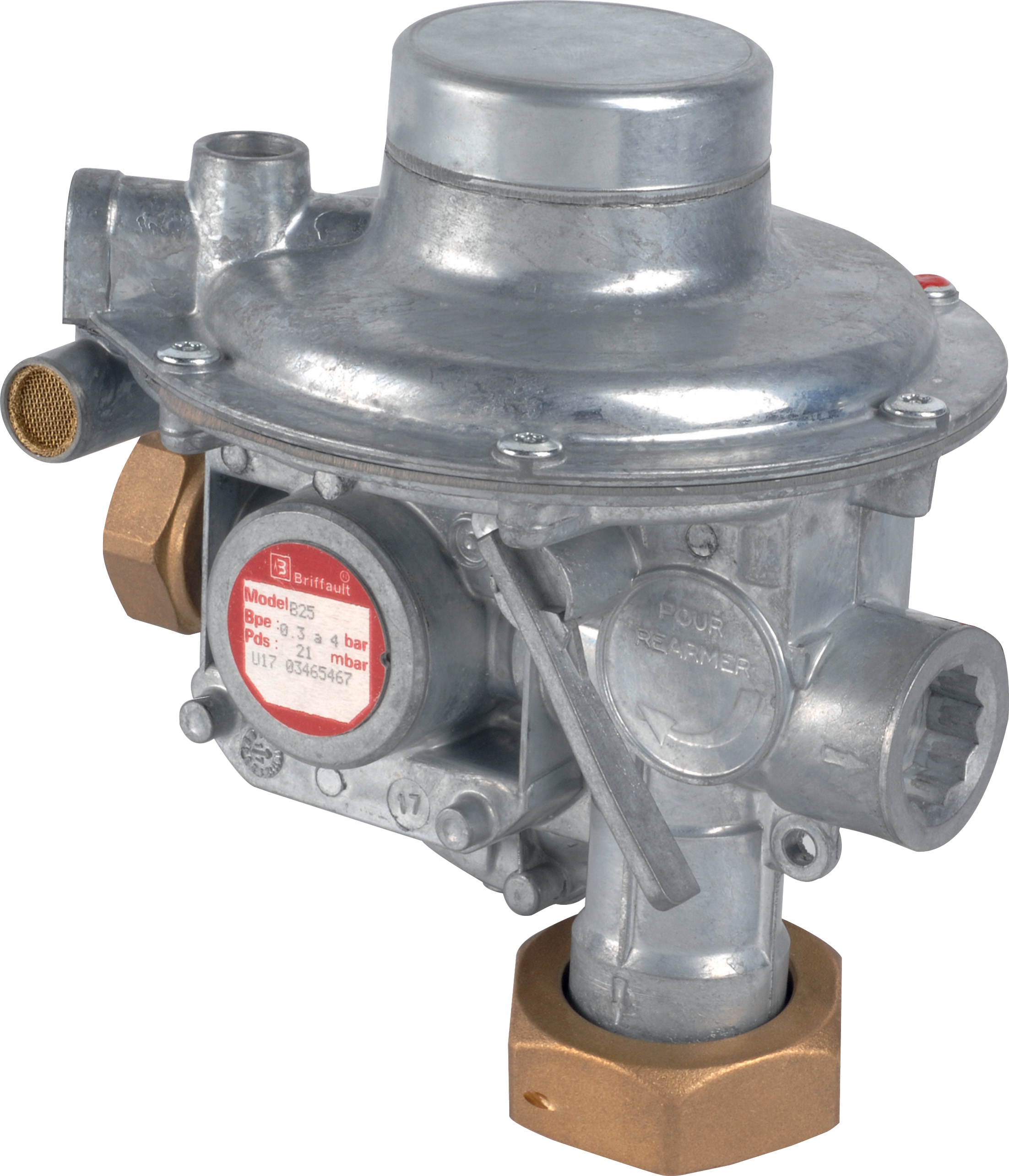
The Francel B25/37mb pressure regulator with integrated safety relief addresses a critical need in laboratory environments. This regulator delivers a stable 37 mbar outlet pressure while the integrated safety relief valve protects downstream equipment from over-pressure conditions. The 10 mm vent size provides adequate capacity for laboratory-scale flow rates without creating backpressure.
Key applications in laboratory settings include:
- Analytical Instrumentation: Gas chromatography, mass spectrometry, and atomic absorption spectroscopy systems require stable, consistent gas pressures to maintain calibration accuracy and reproducible results. Pressure fluctuations directly impact analytical precision and can compromise experimental validity.
- Gas Mixing Systems: When combining multiple gases for experimental procedures, independent pressure regulators on each gas line ensure proper ratio control. The safety relief function prevents dangerous over-pressurization of gas mixing manifolds.
- Calibration Standards: Reference gas mixtures used to calibrate industrial monitoring equipment require pressure stability. A regulator drift of even a few mbar can introduce significant measurement errors in downstream applications.
- Educational Demonstrations: University laboratories and vocational training centers benefit from integrated safety features that protect students while maintaining consistent gas delivery during demonstrations.
For Singapore laboratories operating under strict Quality Management System (QMS) requirements and ISO standards, the safety-integrated design reduces audit findings and simplifies documentation of safety compliance. The stable outlet pressure eliminates process variability, improving reproducibility and data quality.
Industrial Fluid Transfer and Pressure Applications
Beyond gas regulation, many Singapore industrial facilities must handle fluid transfer at elevated pressures—including hydraulic systems, chemical transfer, and circulation applications. This is where high-performance industrial pumps become essential components of facility operations.
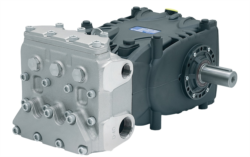
Facilities managing high-volume fluid transfer operations benefit from robust pump selection. The Pratissoli KF30 industrial pump, engineered for reliability and efficiency, delivers 106 L/min flow at 200 bar pressure with 40 kW power consumption. This makes it suitable for:
- Hydraulic Power Systems: Manufacturing equipment, press systems, and automated assembly lines depend on consistent hydraulic pressure. The KF30 provides the stable flow and pressure needed for precision hydraulic controls.
- Chemical Circulation: Cooling loops, chemical transfer, and process circulation systems in petrochemical facilities require pumps that handle various fluid viscosities and maintain pressure stability under changing load conditions.
- Water Jet Cutting Systems: High-pressure water jet applications for metal cutting and surface cleaning demand reliable pumps with consistent performance. The KF30's 200 bar rating suits industrial-scale water jet systems.
- Liquid Transfer in Confined Spaces: The 72 kg weight and compact design allow installation in equipment where space is limited—a common challenge in Singapore's congested industrial estates.
For facilities requiring even higher pressure and flow capabilities, the Pratissoli MW40 pump delivers 211 L/min at 210 bar with 85 kW power. This higher-capacity pump serves:
- Large-Scale Manufacturing Systems: Automotive parts manufacturing, precision machining centers, and industrial automation requiring sustained high-pressure fluid delivery
- Multiple Concurrent Applications: Facilities where several hydraulic systems operate simultaneously can use the MW40 as a central power source for multiple independent circuits
- Process Intensification: Chemical and petrochemical processes demanding higher pressures for reaction optimization or separation processes
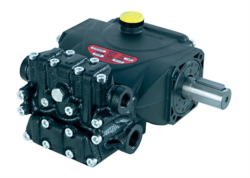
For applications requiring compact, lightweight solutions, the Interpump E1D1808 L gear pump delivers 8 L/min at 180 bar in a 5 kg package. This specialized pump serves:
- Mobile and Portable Equipment: Field maintenance operations, temporary installations, and portable testing equipment benefit from lightweight, high-pressure capability
- Integration into Compact Assemblies: Equipment designers can incorporate this pump into space-constrained designs while maintaining high-pressure performance
- Energy-Efficient Small-Scale Operations: At 2.72 kW power input, this pump minimizes energy consumption for applications not requiring full-scale system capacity
Precision Spray and Nozzle Integration
Many industrial cleaning, coating, and process applications in Singapore require precise liquid or slurry delivery through specialized nozzle systems. Pressure regulators ensure the correct spray atomization and coverage patterns by maintaining consistent pressure at the nozzle inlet.
The Euspray flat jet nozzle with 1/4" M BSPT connection provides targeted spray patterns essential for:
- Industrial Cleaning Operations: High-pressure cleaning of manufacturing equipment, facility maintenance, and surface preparation benefits from precise spray patterns. The 25° spray angle provides focused coverage without excessive overspray that wastes fluid and creates safety hazards.
- Coating and Finishing Applications: Automotive refinishing, industrial painting, and protective coating applications demand consistent spray patterns. Pressure stability from integrated regulators ensures uniform coating thickness and appearance.
- Cooling and Lubrication Delivery: Machine tool cooling, spindle lubrication, and cutting fluid application require precise fluid delivery at specified pressures. Incorrect pressure causes either insufficient cooling/lubrication or excessive fluid consumption.
- Dust Suppression Systems: Mining operations, construction sites, and bulk material handling in Singapore increasingly implement dust suppression through water misting. Proper nozzle pressure ensures effective particle capture without creating wet, slippery surfaces.
When pairing nozzles with pressure regulators like the Francel B25/37mb, facility professionals create integrated systems where pressure stability directly translates to process consistency, reduced material waste, and improved product quality.
Safety Compliance and Regulatory Considerations for Singapore Facilities
Singapore's regulatory environment—governed by the Ministry of Manpower (MOM), the Environmental Protection and Management Act (EMPA), and industry-specific standards—demands that pressure regulation systems incorporate multiple safety layers.
Integrated safety relief valves serve as critical protection against dangerous over-pressure conditions. The Francel regulator's built-in safety relief prevents pressure spikes that could damage downstream equipment, rupture containers, or create hazardous conditions for facility personnel. This design approach:
- Simplifies System Architecture: Rather than requiring separate relief valves, integrated designs reduce component count and potential leak points
- Ensures Coordinated Response: Safety relief activation is calibrated to the specific inlet pressure range and outlet requirements, preventing nuisance activations while guaranteeing protection
- Reduces Maintenance Burden: Fewer components means fewer items requiring periodic inspection, testing, and certification
- Facilitates Regulatory Compliance: Documentation of safety features integrated into the regulator itself simplifies compliance reporting for facility audits
Singapore's emphasis on workplace safety and environmental protection makes equipment selection decisions critical. Facilities should verify that selected equipment meets relevant international standards (ISO, ASME) and maintain comprehensive documentation of all gas regulation and pressure control systems.
Practical Implementation and Maintenance Strategies
Successful deployment of gas pressure regulation and fluid delivery systems requires attention to installation details, operational practices, and preventive maintenance.
Installation Best Practices:
- Install pressure regulators as close as practical to their point of use to minimize pressure drop in connecting lines
- Ensure adequate ventilation around safety relief vent outlets (such as the 10 mm vent on the Francel regulator) to prevent backpressure buildup
- Use appropriate pipe sizing to maintain velocity within recommended ranges (typically 2-4 m/s for gases)
- Verify that all connections are secure and use appropriate thread sealant for BSPT connections on nozzles and inlet/outlet ports
- Establish baseline pressure readings during normal operation and monitor for deviations that may indicate regulator drift or downstream blockages
- Schedule regular verification of outlet pressure using calibrated gauges—particularly important before critical batch processes or analytical runs
- Monitor flow rates and pressure drop across the system to detect developing component wear
- Include pressure regulators in preventive maintenance programs with periodic inspection intervals
- Test safety relief valve operation during scheduled maintenance windows to confirm proper function
- Keep detailed records of all pressure tests, relief valve activations, and maintenance activities for regulatory compliance
- For critical applications, consider implementing redundant regulators or backup systems to minimize production interruptions
Conclusion
Gas pressure regulation and fluid delivery systems are essential infrastructure components for modern Singapore industrial facilities. Whether operating laboratories requiring analytical precision, manufacturing facilities demanding hydraulic power, or cleaning systems needing consistent spray atomization, proper equipment selection and implementation directly impact safety, efficiency, product quality, and regulatory compliance.
3G Electric's 35+ years of industrial equipment distribution throughout Southeast Asia has demonstrated that equipment selection, installation methodology, and maintenance discipline work together to optimize system performance. By understanding the specific application requirements, selecting appropriate equipment like the Francel B25/37mb regulator, KF30 pump, or Euspray nozzle, and implementing sound operational practices, Singapore industrial professionals can build robust, safe, and efficient systems that support production goals and regulatory compliance.