Introduction: Dual-Fuel and Modulation Technologies in Industrial Burners & Combustion
Industrial process heating applications frequently encounter variable thermal demands, seasonal fuel availability, and the need for operational flexibility. Single-fuel, fixed-capacity burners cannot efficiently address these dynamic conditions. Dual-fuel burner systems and multi-stage modulation controls represent a critical evolution in combustion technology, enabling facilities to optimize fuel economics while maintaining consistent heat output across changing operational requirements.
Burners & Combustion systems that incorporate dual-fuel capability—typically natural gas with heavy fuel oil (HFO) or light fuel oil (LFO)—allow operators to switch between energy sources based on cost, availability, and regulatory constraints. Multi-stage modulation (typically 2-stage or 3-stage operation) reduces energy waste by proportioning burner output to actual demand rather than cycling on/off at full capacity. With over 35 years of experience as an industrial equipment distributor, 3G Electric has supported procurement teams across Southeast Asia in selecting and deploying these complex systems for refineries, chemical plants, food processing facilities, and district heating networks.
This article addresses the technical architecture, control logic, component integration, and procurement considerations that procurement engineers must understand when specifying dual-fuel, modulating burner installations in Singapore and the broader region.
Section 1: Dual-Fuel Burner Architecture and Fuel Switching Logic
System Configuration and Fuel Priority Management
Dual-fuel industrial burners operate with a primary fuel source and a secondary (standby) fuel, with automatic or manual switching capability. In Asia-Pacific refineries and petrochemical facilities, natural gas typically serves as the primary fuel due to lower cost and cleaner combustion characteristics. Heavy fuel oil or diesel fuel functions as the secondary fuel during periods of gas unavailability, supply disruptions, or cost advantage scenarios.
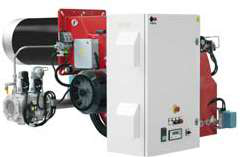
The FBR KN 1300/M TL EL exemplifies enterprise-grade dual-fuel burner design, delivering thermal power from 1700 to 11,500 Mcal/h with modulating control across two operational stages. This burner accommodates both gaseous and liquid fuel pathways, with separate fuel trains (pumps, atomizers, nozzles) optimized for each fuel's viscosity, combustion rate, and atomization characteristics.
Fuel Switching Control Logic
Dual-fuel switching logic typically operates on one of three strategies:
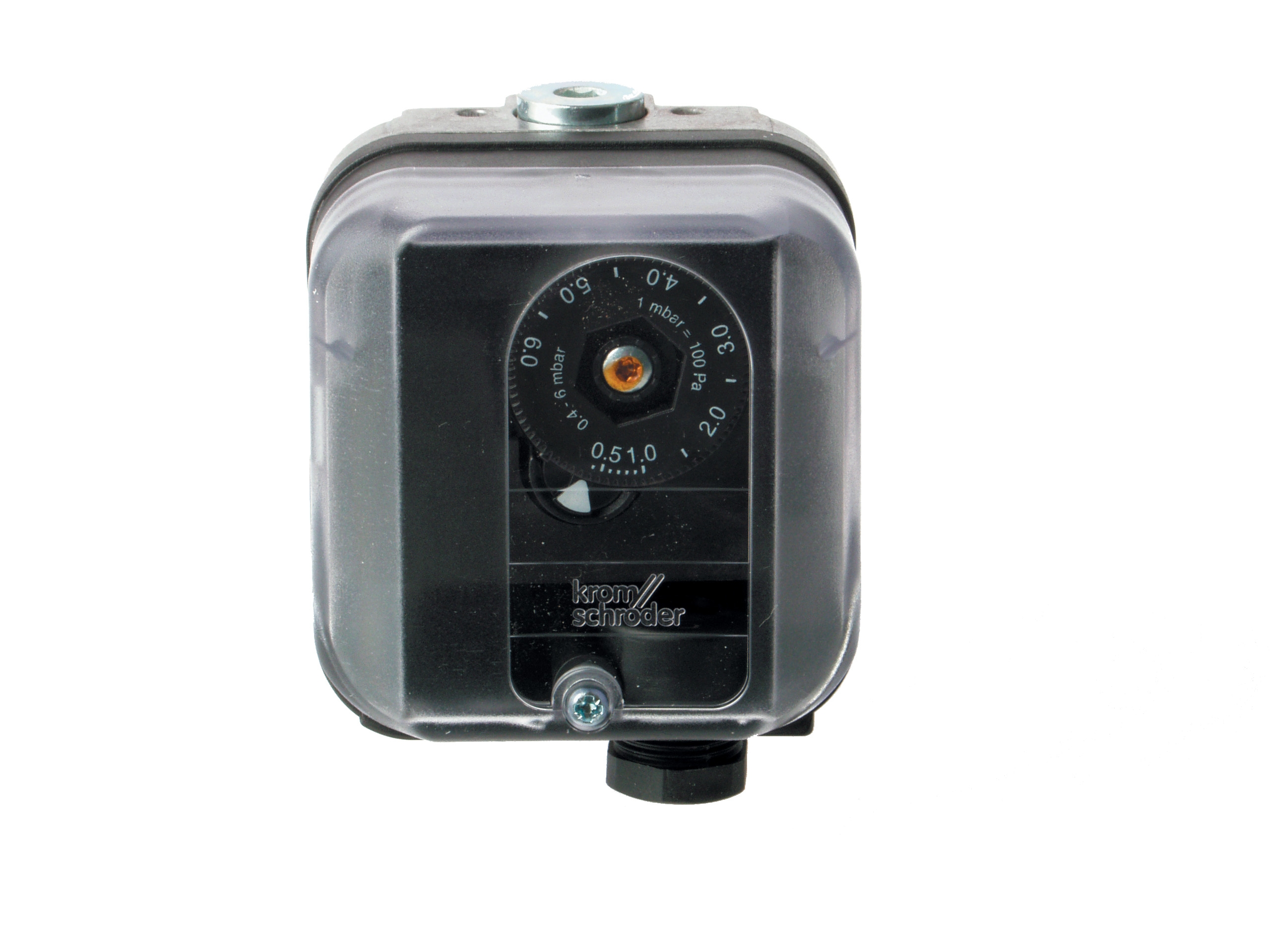
- Pressure-differential switching: Monitors fuel supply pressure on both fuel lines. If primary fuel pressure drops below a setpoint (typically 1–3 bar differential), the control system commands fuel selector valves to divert flow to the secondary fuel line. The Kromschroder DG 50U/6 pressure switch (SIL 3 rated, meeting EN 1854 and FM/UL standards) provides reliable pressure monitoring and switching signal generation, critical for safe, repeatable fuel transitions.
- Time-based switching: Operators or automated schedules demand fuel switching at predetermined intervals (e.g., switching to gas during low-cost overnight hours, reverting to oil during peak-rate periods). This strategy requires burner control relays capable of managing sequential fuel valve energization.
- Cost-optimized switching: Advanced facilities integrate fuel commodity price feeds into burner management systems, automatically switching to the most economical fuel within operational constraints. This demands sophisticated relay and sensor integration.
Practical Procurement Considerations
When specifying dual-fuel burners for Singapore industrial sites, procurement engineers must confirm:
- Fuel line isolation: Each fuel train must include isolation block valves, check valves (to prevent backflow), and strainers sized for the fuel's viscosity and particle content.
- Pressure regulation redundancy: Dual fuel paths require independent pressure regulators with manual override capability for emergency operation.
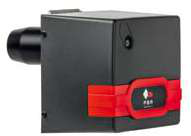
- Nozzle compatibility: Gas burners use single-point or multi-point gas nozzles; oil burners require mechanical or pressure-atomizing nozzles matched to fuel viscosity at operating temperature. The FBR GAS XP 60/2 CE TC EVO gas burner operates at 116–630 kW, illustrating the thermal range achievable with optimized gas-side combustion geometry.
- Flame detection mode switching: UV and ionization flame monitors respond differently to gas versus oil flame signatures. Control systems must adjust detection sensitivity or switch monitoring method during fuel changeover to maintain safe flame supervision.
Section 2: Multi-Stage Modulation Control and Load-Matching Strategies
Two-Stage and Three-Stage Modulation Fundamentals
Modulation refers to the burner's ability to vary thermal output continuously or in discrete steps to match actual heating demand. Two-stage modulation operates at high fire (100% capacity) and low fire (typically 40–60% capacity), with switching based on process temperature feedback. Three-stage systems add an intermediate stage (e.g., 70% capacity), providing finer load matching and reduced cycling losses.
The FBR KN 1300/M TL EL operates in 2-stage modulation with independent fuel control valves for each stage, allowing precise output adjustment while maintaining combustion stability and flame quality across the operating envelope.
Control Architecture for Modulating Systems
Modulating burner control relies on several integrated subsystems:
Temperature or Pressure Feedback Loop: A process thermostat or pressure transmitter monitors the output of the heating system (e.g., steam pressure, water temperature). If output falls below setpoint, the controller commands the burner to increase firing rate; if output exceeds setpoint, firing rate decreases. This proportional control minimizes overshoot and thermal cycling.
Burner Management Relay (BMR): The control relay orchestrates fuel valve sequencing, ignition timing, fuel switching, and safety shutdowns. The Kromschroder BCU 570WC1F1U0K1-E burner control relay supports both direct ignition and intermittent/continuous pilot modes, compliant with EN 746-2 and EN 676 standards. This unit manages the complex timing and permissive logic required for multi-stage, dual-fuel operations:
- Pre-purge sequence: Forces air through the combustion chamber before ignition to remove combustible vapor.
- Ignition trial: Energizes the igniter and monitors for flame establishment within a defined window (typically 4–8 seconds).
- Pilot stabilization: Confirms stable pilot flame before allowing main burner fuel valve opening.
- Modulation logic: Dynamically adjusts main burner fuel flow in response to demand signals, managing transition between low and high fire stages.
- Flame supervision: Continuously monitors flame status; initiates lockout if flame is lost during operation.
Load-Matching and Efficiency Gains
In typical on-off burner operation, a boiler at 50% load cycles the burner on and off repeatedly, incurring standby losses during off-periods and thermal lag during restarting. A modulating burner operating at steady 50% output:
- Reduces standby losses (burner flame is always present, but fuel input is halved).
- Eliminates thermal cycling, reducing flue gas temperature swings and associated radiation losses.
- Improves combustion efficiency by maintaining optimal air-fuel ratios across the modulation range.
- Extends component life by reducing thermal stress and mechanical cycling of fuel and air control valves.
Singapore's tropical climate and variable industrial processes (food processing, chemical batch reactions, district heating) benefit significantly from modulation capability, as thermal loads fluctuate throughout operating hours.
Section 3: Component Integration and Procurement Engineering Strategies
System Topology and Sensor Placement
A comprehensive dual-fuel, modulating burner installation requires careful spatial planning and sensor placement:
Fuel Supply Section: Separate fuel trains converge through check-valve logic before the burner. Pressure switches on each fuel line monitor supply integrity. For the FBR KN 1300/M TL EL, operating pressures typically range from 6–10 bar for gas and 8–20 bar for oil, necessitating appropriately rated regulators and gauges.
Combustion Air Supply: Forced-draft (FD) fan delivers metered air through a modulating air damper controlled by the burner relay. Air flow measurement (via differential pressure transmitter across an orifice plate or Venturi) provides feedback to the control logic, enabling air-fuel ratio optimization. The damper must respond quickly to fuel valve position changes, maintaining combustion stability during modulation transitions.
Flue Gas Discharge: Oxygen (O₂) or carbon dioxide (CO₂) analyzers installed in the flue gas stream provide real-time combustion efficiency data. Many advanced facilities integrate these signals into the burner management relay, allowing automatic trim adjustments to air damper position to maintain optimal excess air percentage (typically 2–4% O₂ for gas, 3–6% for oil).
Temperature and Pressure Monitoring: Process-side sensors (boiler outlet temperature, steam pressure, or water temperature) feed demand signals to the burner relay, closing the control loop. Installation of isolation ball valves and snubbers on pressure transmitter ports prevents transient spikes from triggering false shutdowns.
Electrical and Control Wiring Standards
Singapore industrial facilities must comply with PAS 79 (Code of Practice for Electrical Installations) and international standards EN 746-2 (safety of burner control systems) and EN 676 (safety of oil burners). Procurement engineers should specify:
- Flame detection circuit isolation: UV/ionization detector signals must be electrically isolated from AC mains, typically via dedicated transformer windings in the control relay, preventing RF interference.
- Fault alarm outputs: Control relays should provide dry contact outputs for lockout status, flame failure, and pressure switch fault conditions, allowing integration with facility SCADA or alarm systems.
- Manual reset provisions: After a safety shutdown, operators must manually reset the burner management relay; this prevents unattended automatic restart after serious faults.
Redundancy and Safety Considerations
For critical heating processes (refinery heaters, steam generation for power plants), dual burner arrangements provide availability even during maintenance. Procurement specifications should address:
- Switchover logic: Can one burner automatically assume full load if the primary burner fails? This requires proportional fuel valve actuation and flame monitoring on both burners.
- Common fuel supply conflicts: If both burners share a single fuel supply line, fuel valve failures on one burner can starve the other. Segregated fuel isolation may be necessary.
- Control system diversity: Specifying control relays from different manufacturers (e.g., Kromschroder for the primary burner, Siemens for a standby unit) reduces the risk of common-cause failures affecting both burners simultaneously.
Section 4: Specification, Commissioning, and Lifecycle Management
Technical Specification Template for Procurement
Procurement engineers should develop a detailed technical specification including:
Thermal Performance Requirements:
- Minimum and maximum thermal power (e.g., "1700–11,500 Mcal/h for dual-fuel operation").
- Turndown ratio (minimum modulating capacity as a percentage of maximum, e.g., "minimum 40% of rated output").
- Response time from low to high fire (e.g., "≤30 seconds for load step change").
- Primary fuel (e.g., "Natural gas, 50 mbar supply pressure, LHV ≥ 35 MJ/m³").
- Secondary fuel (e.g., "Heavy fuel oil ISO 6743-4 Grade D or equivalent, viscosity 1.5–3.0 cSt @ 100°C").
- Fuel switching strategy (manual vs. automatic, pressure-differential vs. cost-based).
- Burner management relay model and certification level (EN 746-2 Category 3, SIL 2/3).
- Flame monitoring method and response time (e.g., "UV detection, ≤3 second response to flame loss").
- Air/fuel ratio optimization method (oxygen trim, manual adjustment, or on-off air damper).
- Interlocks with facility safety systems (e.g., "burner shutdown if boiler pressure exceeds 15 bar").
- Supply voltage and phase (e.g., "3-phase 380/400 V, 50 Hz").
- Ambient temperature range (important for Singapore: typically 25–40°C for outdoor installations).
- Protection rating (IP classification) for electrical enclosures.
- Compliance with PAS 79, EN 746-2, EN 676, and relevant factory or plant standards.
Commissioning and Factory Acceptance Testing
Before shipment from the manufacturer, 3G Electric recommends commissioning protocols that verify:
- Fuel switching transitions: Under load, switch between primary and secondary fuels; confirm that modulation is maintained and no flame interruption occurs during transition.
- Air-fuel ratio verification: Using a calibrated flue gas analyzer, measure O₂ content at low fire, mid-stage (if 3-stage system), and high fire. Confirm excess air is within specification.
- Response time testing: Command a 20% load step; measure time for thermal output to stabilize. Verify oscillation does not exceed ±10% of setpoint.
- Flame monitoring sensitivity: Deliberately interrupt pilot or main flame; confirm control relay initiates lockout within the specified response time.
- Safety shutdown function: Test each shutdown input (high-pressure limit, low-pressure loss, high-temperature cutout); confirm burner de-energizes cleanly within 2 seconds.
Lifecycle and Maintenance Planning
Dual-fuel, modulating systems have higher component complexity than simple on-off burners, necessitating planned maintenance:
Annual Inspections:
- Clean or replace air filters; inspect FD fan bearings for wear.
- Verify pressure switch setpoints using a precision pressure gauge (±2% accuracy).
- Confirm flame detector window clarity; clean UV/ionization probe if sooting is evident.
- Inspect fuel valve solenoids for leakage; replace if energizing current exceeds rated levels.
- Full combustion analysis; recalibrate air-fuel ratio trim if O₂ setpoint has drifted >0.5%.
- Fuel nozzle inspection and replacement if erosion or clogging is observed.
- Burner management relay functional test; verify pilot ignition trial timing and flame supervision response.
- Residual fuel in oil-type burners requires proper draining and disposal in compliance with Singapore's Environmental Protection and Management (Hazardous Wastes) Regulations.
- Electronic control modules may contain lead or other restricted substances; confirm recycling partnership with certified electronics waste handlers.
With 35+ years of experience in industrial equipment distribution across Asia-Pacific, 3G Electric maintains relationships with leading burner OEMs and can facilitate spare parts procurement, technical training, and field service support for dual-fuel, modulating installations throughout Singapore and the region.
Conclusion
Dual-fuel, multi-stage modulating burner systems represent a sophisticated engineering solution for industrial facilities with variable thermal loads and fuel flexibility requirements. Successful procurement and deployment demand understanding of fuel switching logic, modulation control architecture, flame detection and safety relay integration, and lifecycle maintenance strategies. By specifying comprehensive technical requirements, conducting rigorous commissioning testing, and implementing planned maintenance protocols, procurement engineers can optimize thermal efficiency, extend equipment life, and ensure safe, reliable operation across the full range of industrial heating applications in Singapore and Southeast Asia.