Burners & Combustion: Understanding Thermal Output and Capacity Matching
In industrial heating operations across Singapore, one of the most costly mistakes plant managers make is oversizing or undersizing their Burners & Combustion systems. Unlike selecting a component based solely on specifications, thermal output matching requires understanding how your facility's actual heating demand compares to available burner configurations. With 35+ years of experience serving Southeast Asian industrial operations, 3G Electric has observed that 40% of burner inefficiencies stem from capacity misalignment rather than equipment failure.
This guide walks you through comparing burner thermal outputs and selecting the right capacity for your specific production environment. Whether you operate batch processes, continuous heating, or variable-load systems, understanding the relationship between burner type, modulation capability, and your operational profile will directly impact energy costs and equipment lifespan.
Section 1: Single-Stage vs. Two-Stage Combustion Output Profiles
Single-Stage Burners: Fixed Thermal Output
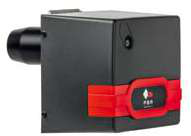
Single-stage burners operate at one fixed thermal output level. They are either fully on or fully off. The FBR X G OSR 2003 TC R S is a representative light-oil single-stage burner delivering 14.2–36.7 kW thermal output with a fixed operating point. This configuration is ideal for:
- Production lines with consistent, predictable heating loads
- Facilities operating near full capacity most of the time
- Applications where on/off cycling is acceptable
- Systems prioritizing low maintenance complexity
Two-Stage and Modulating Burners: Adaptive Thermal Output
Two-stage burners like the FBR FGP 130/M TC EVO SA operate at two discrete power levels (typically 40% and 100%), allowing them to match moderate load variations without cycling off completely. This light-oil diesel burner delivers up to 1326 Mcal/h through progressive two-stage combustion, making it suitable for:
- Facilities with 20–30% load variation throughout shifts
- Processes requiring smoother thermal delivery without frequent ignition
- Operations where fuel efficiency and reduced cycling wear are priorities
Modulating Burners: Continuous Load Matching
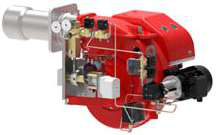
Modulating burners provide infinitely variable thermal output across their full range. The FBR KN 550/M TL EL is a dual-fuel heavy oil modulating burner delivering 698–6395 kW across two modulating stages. This technology is essential for:
- Batch processes with variable heating demand
- Facilities with part-load operation 40%+ of operating hours
- Systems requiring rapid response to load changes
- Plants prioritizing maximum energy efficiency
Section 2: Right-Sizing Methodology – Matching Demand to Burner Capacity
Step 1: Establish Your Actual Heating Load Profile
Before selecting any burner, document your facility's thermal demand across a typical operating week:
- Peak load: Maximum BTU/h or Mcal/h required during full production
- Average load: Typical operating point during standard shifts (often 60–75% of peak)
- Minimum load: Lowest heating requirement when production is reduced
- Load variation frequency: How often does demand shift between levels?
Step 2: Calculate Oversizing and Undersizing Risk
If you select a burner rated for 500 kW peak but your average load is only 350 kW:
- Oversizing consequence: The burner cycles on/off frequently at modulating burners' low-fire point, wasting fuel and accelerating component wear
- Cost impact: 15–25% higher fuel consumption over one year
- Maintenance impact: More frequent flame-out incidents and ignition system cycling
Conversely, if you select a 300 kW burner for this application:
- Undersizing consequence: The burner cannot meet peak demand; production bottlenecks occur
- Operational impact: Inability to meet customer delivery schedules
For most industrial applications, select a burner whose rated capacity matches your average load, not peak load. This ensures:
- Minimal cycling at typical operating conditions
- Lower fuel consumption during normal operations (80% of runtime)
- Better flame stability and safer combustion
- Extended equipment lifespan
Step 4: Account for Fuel Type Efficiency
Different fuels produce different thermal outputs at identical burner ratings:
| Fuel Type | Relative Output | Emissions Profile | Singapore Suitability |
|-----------|-----------------|-------------------|----------------------|
| Light Oil | 100% baseline | Higher NOx | Common, widely available |
| Heavy Oil | 95–98% baseline | Higher particulates | Industrial heavy-load applications |
| Dual-Fuel (Oil + Gas) | 100–102% | Lower NOx when gas-fired | Best for variable supply |
The FBR KN 550/M TL EL dual-fuel modulating burner offers flexibility: if natural gas supply becomes constrained (common during peak demand periods in Singapore), you can switch to heavy oil without losing capacity.
Section 3: Comparing Modulation Strategies for Different Operational Profiles
Fixed-Output Plants: Single-Stage Burners
If your facility operates one primary production line at near-constant capacity:
- Thermal output: Select exactly rated capacity
- Example: A beverage sterilization facility running 90% uptime at consistent load → FBR X G OSR 2003 TC R S single-stage at 14.2–36.7 kW is sufficient
- Fuel savings potential: 8–12% vs. oversized modulating system (due to simpler control)
- Installation cost: 20–30% lower than equivalent modulating system
If production varies seasonally or by shift but within predictable ranges:
- Thermal output: Select rated capacity at mid-range of your load envelope
- Example: Textile dyeing facility with 40–100% load variation → FBR FGP 130/M TC EVO SA two-stage at 1326 Mcal/h (upper range) provides both capacity for peak days and efficiency at reduced loads
- Fuel savings potential: 18–25% vs. single-stage at full capacity
- Control simplicity: Fewer sensors and adjustments than fully modulating systems
If production is unpredictable or batch-driven with frequent load shifts:
- Thermal output: Select rated capacity matching your peak typical load (not absolute maximum)
- Example: Custom chemical manufacturing with batch processes lasting 2–8 hours at varying temperatures → FBR KN 550/M TL EL modulating dual-fuel burner at 698–6395 kW range can scale output in real-time to match process demand
- Fuel savings potential: 25–35% vs. single-stage cycling on/off
- Control advantage: Integrates with PLC systems for automatic load matching
Section 4: Practical Comparison Matrix for Singapore Plant Managers
Quick Decision Table
| Plant Profile | Recommended Burner Type | Typical Thermal Output Range | Annual Fuel Savings vs. Oversized Single-Stage | Maintenance Frequency |
|---|---|---|---|---|
| Constant-load manufacturing | Single-stage | Exact rated capacity | Baseline (0%) | Low – annual inspection |
| Seasonal or shift variation | Two-stage progressive | 40–100% of peak demand | 18–25% | Medium – quarterly service |
| Batch or highly variable | Modulating dual-fuel | 10–100% of peak demand | 25–35% | Medium–High – biannual full service |
| Multi-facility with mixed loads | Modulating dual-fuel | Portfolio-matched capacity | 20–30% | High – continuous monitoring |
Load Profile Assessment Worksheet
Before contacting 3G Electric for a burner quote, document:
1. Peak thermal demand: _____ kW or _____ Mcal/h
2. Average thermal demand: _____ kW or _____ Mcal/h
3. Minimum thermal demand: _____ kW or _____ Mcal/h
4. Percentage of runtime at average load: _____% (typical: 60–80%)
5. Frequency of load changes: _____ times per shift or per day
6. Preferred fuel type: Light oil / Heavy oil / Dual-fuel (gas + oil)
7. Current burner issue: Oversizing / Undersizing / Inefficiency / Other
This data directly correlates to the right burner type and capacity. For example:
- If average load is 80%+ of peak → Single-stage or two-stage burner
- If average load is 50–75% of peak → Two-stage burner
- If average load is below 50% of peak or highly variable → Modulating burner
Singapore's Environmental Protection and Management Act sets NOx emission limits for industrial burners. The FBR X G OSR 2003 TC R S single-stage burner maintains NOx emissions below 120 mg/kWh, compliant with current standards. However, when right-sizing for lower-capacity operation, ensure your selected burner can meet emissions limits across its full operating range, not just at full fire. Modulating burners often maintain better emission performance at part-load than single-stage burners, making them preferable for facilities requiring sustained low-fire operation.
Key Takeaways for Plant Managers
Right-sizing is not about selecting the largest burner available—it's about matching your facility's actual thermal demand to the most efficient technology.
- Single-stage burners excel at constant-load operations and minimize upfront costs
- Two-stage burners balance flexibility and efficiency for moderate variation
- Modulating burners provide maximum efficiency for highly variable or batch operations
- Select based on your average operating load, not peak demand
- Document your load profile before procurement; this eliminates 70% of right-sizing errors
- Consider dual-fuel capability for Singapore operations where supply diversity improves reliability
3G Electric's 35+ years of experience in Southeast Asian industrial operations means our team can review your facility's load profile and recommend the optimal thermal output capacity. Contact us with your heating demand documentation, and we'll compare available options tailored to your production environment and budget.
---
Next Steps: Audit your current burner's operating hours at part-load vs. full capacity. If you're running at less than 70% of rated capacity for more than 50% of operating hours, a right-sized replacement could reduce annual fuel costs by 20–35%.