Understanding Multi-Fuel and Dual-Fuel Burner Systems
Multi-fuel and dual-fuel combustion systems represent a critical evolution in industrial heating infrastructure, particularly relevant for Singapore's energy landscape where fuel cost volatility and supply chain considerations influence equipment selection decisions. While single-fuel burners optimize for one specific fuel type, dual-fuel systems enable seamless switching between gaseous and liquid fuels—typically natural gas and light oil (kerosene or diesel)—without requiring equipment replacement.
For HVAC contractors managing commercial and industrial heating loads across Singapore, dual-fuel capability addresses several operational realities: seasonal gas availability fluctuations, competitive fuel pricing dynamics, and business continuity requirements during supply interruptions. The technical challenge lies not in the burner itself, but in the control architecture that manages fuel switchover, combustion parameter adjustment, and safety validation.
With 35+ years of experience distributing industrial equipment across Southeast Asia, 3G Electric has supported hundreds of HVAC contractors navigating these system complexities. The distinction between multi-fuel burners (which can operate on different fuels sequentially) and simultaneous dual-fuel burners (which burn both fuels concurrently) fundamentally impacts your control strategy and component selection.
Combustion Chemistry and Fuel Switching Logic
The physics of combustion changes measurably when switching fuel sources, requiring adjustment of three primary parameters: air-fuel ratio, nozzle/injector configuration, and combustion chamber residence time.
Gas vs. Oil Combustion Characteristics:
Natural gas combustion operates with a stoichiometric air-fuel ratio of approximately 17.2:1 (by mass), producing complete combustion at ~1960°C flame temperature. Light oil combustion requires roughly 14.7:1 air-fuel ratio and generates higher flame temperatures (~2200°C) due to denser carbon content. This distinction matters operationally: switching from gas to oil without adjusting air damper position and burner register settings will result in either incomplete combustion (excess fuel, black smoke, efficiency loss) or flame extinction (insufficient fuel).
The burner's control system must detect fuel-change commands, validate the switchover, and automatically adjust these parameters. The Kromschroder BCU 570WC1F1U0K1-E relay provides the safety-rated logic backbone for managing these transitions, supporting both direct ignition and intermittent/continuous pilot modes across fuel types. This component ensures that when your control algorithm issues a fuel-switch command, the burner doesn't simply shut down one fuel supply and start another—it validates flame extinction, confirms ignition conditions, and only permits the new fuel to flow once safety parameters are met.
Pressure and Flow Control During Switchover:
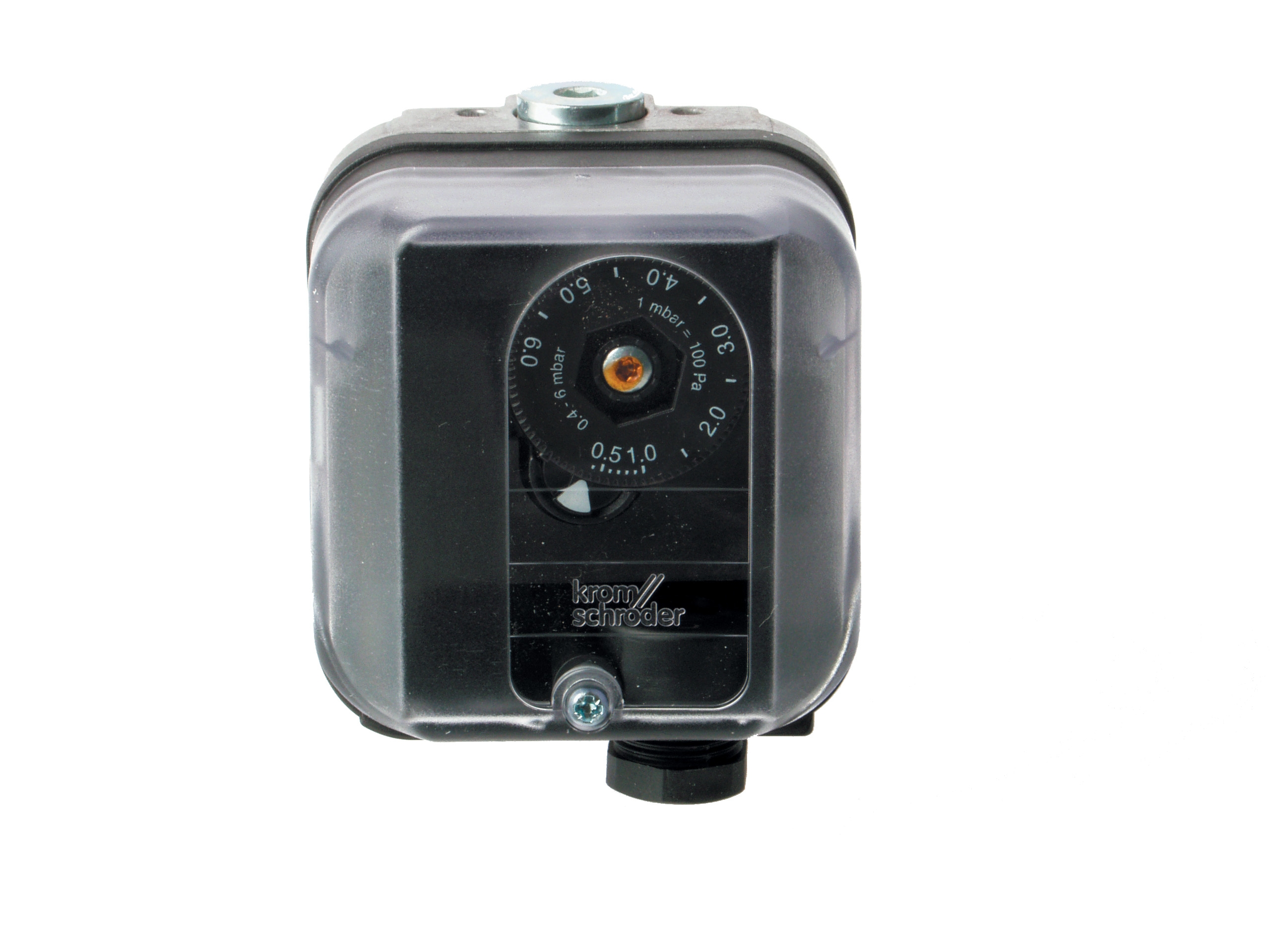
Oil burners require higher atomizing pressure (typically 8-10 bar at the nozzle) compared to gas burners (2-4 bar for standard burner heads). The Kromschroder DG 50U/6 pressure switch serves as a safety guardian in this scenario, maintaining SIL 3 rated monitoring throughout the fuel transition. For Singapore contractors managing equipment in tropical environments, this pressure switch's FM, UL, and AGA certifications ensure consistent performance across humidity and temperature variations that could otherwise affect sensing accuracy.
When transitioning from gas to oil operation:
1. Gas supply valve closes; air damper remains at safe minimum position
2. Safety control system confirms flame extinction (monitored through UV or ionization detection)
3. Oil pump starts; system builds pressure to atomization threshold
4. Ignition system energizes (typically hot-surface or spark ignition for oil)
5. Oil fuel supply opens only after atomizing pressure reaches setpoint (verified by pressure switch)
6. Control system validates flame establishment before stabilizing at operating setpoint
Reversing this sequence (oil to gas) follows similar logic but typically requires shorter confirmation times, as gas ignition establishment happens faster than oil combustion stabilization.
Dual-Fuel Burner Hardware and Control Integration
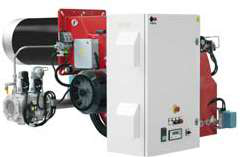
The FBR KN 1300/M TL EL dual-fuel heavy oil burner exemplifies the hardware integration required for sophisticated combustion control. This two-stage modulating burner operates across a thermal power range of 1700–11,500 Mcal/h, with independent fuel supply circuits and nozzle configurations optimized for each fuel type.
System Architecture for Dual-Fuel Operation:
Professional dual-fuel burners incorporate:
- Separate fuel supply trains: Distinct piping, filtration, and regulation for gas and oil to prevent cross-contamination and maintain optimal pressure profiles
- Dual ignition systems: Either shared ignition (hot surface or spark) serving both fuels or independent ignition paths with fuel-type-specific parameters
- Modulating air dampers: Positioned to adjust secondary air (combustion air) independently of which fuel is operating
- Nozzle/injector configurations: Oil nozzles remain in position but non-functional during gas operation; gas burner head receives metered fuel during gas mode
- Multi-stage control logic: Two-stage operation allows partial load operation on either fuel, optimizing efficiency during low-demand periods
The Siemens LFL 1.622 safety control unit provides the intelligence layer for this architecture, monitoring both UV and ionization flame signals and managing controlled air damper modulation. For dual-fuel systems operating in Singapore's commercial environment, this unit's capability to handle medium to high power ratings (typically 80 kW to several megawatts) covers most HVAC contractor applications.
Control Logic for Fuel Selection:
Your burner management system (BMS) or building automation system (BAS) initiates fuel selection based on operational parameters:
- Economic dispatch: Compare real-time fuel costs and select lowest-cost available fuel
- Demand profile: Use high-energy-density oil for peak-demand periods; switch to gas for base-load operation
- Availability logic: If primary fuel supply pressure drops below minimum operational threshold, automatically switch to secondary fuel
- Seasonal optimization: Pre-program fuel selection based on weather forecasts (heating vs. cooling season transitions)
The transition typically occurs during low-load operation (50% burner output) or during a brief burner shutdown followed by restart on the new fuel. Avoid switching fuels at high output levels, as combustion instability during the transition can trip safety systems and interrupt heating delivery.
Practical Implementation and Field Commissioning for Singapore Contractors
Successful dual-fuel burner deployment requires systematic commissioning and operator training—areas where many HVAC contractors encounter field challenges.
Pre-Switchover Checklist:
- Verify fuel supply pressure for both gas and oil: gas typically 2–4 bar, oil 8–10 bar at burner inlet
- Confirm atomizing pressure achieves 80–90% of nozzle rating before ignition system energizes
- Validate that fuel filters show acceptable pressure differential (typically <0.5 bar across filter elements)
- Test flame monitoring system response time: flame signal should appear within 1–2 seconds of ignition command
- Confirm that burner blockage or flame quality monitoring (smoke meter readings for oil operation) meets local environmental standards
After switching to a new fuel, measure and document:
- Excess air percentage: Use portable combustion analyzer to verify 3–5% excess oxygen in flue gas for gas operation; 4–6% for oil operation
- Flue gas temperature: Typically 180–220°C under normal load; temperatures above this indicate heat exchanger fouling
- CO2 concentration: Natural gas should achieve 8–10% CO2 at optimal air-fuel ratio; oil burners typically reach 12–13% due to carbon-rich fuel composition
- Particulate emissions (for oil operation): Use smoke number scale (Bacharach or equivalent); target Bacharach 0–1 for clean operation, maximum Bacharach 3 to stay within Singapore Environmental Agency guidelines
Create a fuel-switchover procedure document specific to your installation that includes:
1. Conditions triggering automatic switchover (e.g., gas supply pressure <1.8 bar)
2. Manual fuel selection if BMS override is required
3. Expected time to achieve stable flame after switchover (typically 15–30 seconds)
4. Troubleshooting steps if switchover fails (flame loss, pressure validation failure)
5. Recovery procedure to re-establish operation on primary fuel
6. Contact information for equipment support (3G Electric provides technical support for all distributed products across Singapore operations)
Long-Term Maintenance Implications:
Dual-fuel systems require more extensive maintenance than single-fuel alternatives:
- Oil nozzles: Must be cleaned or replaced annually if oil operation exceeds 500 running hours per year (oil deposits accumulate and alter spray pattern)
- Gas regulator response: Validate annually that gas pressure regulation maintains setpoint within ±0.1 bar during load modulation
- Filter element change intervals: Shorten for oil operation (typically every 250–500 hours) compared to gas operation (annual for well-maintained systems)
- Combustion head inspection: Check oil burner nozzle cleanliness quarterly during heavy oil operation; gas burner register and air introduction ports annually
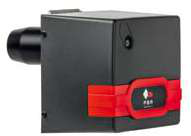
The FBR GAS XP 60/2 CE TC EVO two-stage gas burner demonstrates how modern gas burner design simplifies maintenance when operating in gas-only mode, but dual-fuel configurations necessitate the additional oversight described above.
Summary and Equipment Selection Framework
For Singapore HVAC contractors evaluating dual-fuel burner systems, successful implementation depends on three factors: appropriate hardware selection (burner type, control relays, pressure switches), systematic commissioning procedures, and ongoing operator training.
When selecting control components, prioritize safety-rated equipment meeting EN 746-2, EN 676, and SIL 3 standards—not because regulations mandate these for all applications, but because these standards embed the fuel-switchover logic and flame validation that prevents costly downtime and unsafe operation. 3G Electric's 35+ years distributing industrial equipment across Southeast Asia has demonstrated that contractor success correlates strongly with component selection that emphasizes robustness during transitions rather than optimizing for steady-state operation alone.
Contact 3G Electric for technical consultation on dual-fuel burner specification and control system design tailored to your Singapore operation's load profiles, fuel cost dynamics, and facility constraints.