Understanding Burners & Combustion Fuel Quality Challenges
Fuel contamination, viscosity variations, and supply inconsistencies are often overlooked root causes of burner failures in industrial plants. While control relays, solenoid valves, and flame monitoring systems receive most troubleshooting attention, the fuel itself—whether gas, oil, or dual-fuel blends—directly impacts combustion reliability and equipment lifespan.
3G Electric has supplied industrial combustion equipment globally for over 35 years, and our technical teams consistently observe that 40-50% of burner performance issues trace back to fuel quality rather than hardware defects. Plant managers who implement fuel quality diagnostics typically reduce unplanned shutdowns by 25-35% and extend burner service intervals significantly.
This troubleshooting guide addresses the practical steps to identify, diagnose, and resolve fuel-related combustion problems before they cascade into control system failures.
Section 1: Diagnosing Fuel Contamination and Supply Issues
Common Contamination Scenarios
Fuel contamination manifests differently depending on system type:
Gas Burner Contamination:
- Moisture in supply lines causes ice formation in regulators during cold ambient conditions, restricting gas flow and causing intermittent ignition
- Rust particles and scale from aging steel piping lodge in control valve screens and pilot burner nozzles, creating blockages
- Liquid carryover from compressor discharge contaminates gas-fuel burners when air compressors are undersized or lack proper separation
- Water emulsion in heating oil (from condensation in storage tanks) prevents proper atomization and causes yellow/orange flame with incomplete combustion
- Sediment and sludge accumulate in tank bottoms, clogging burner nozzles and fuel filters after extended storage or temperature cycling
- Microbial growth in tank bottom water layers produces acid and sludge that attacks fuel system components
Step-by-Step Fuel Quality Diagnostic
Step 1: Visual Inspection and Smell Test
- Draw a fuel sample directly from the burner supply line (not the tank) into a clear glass container
- For oil: Check for darkening, visible particles, water droplets at bottom, or sludge residue
- For gas: Listen for hissing sounds at regulator outlets indicating moisture freeze or vapor lock
- Odor changes (rotten egg smell in gas, chemical smell in oil) indicate degradation or microbial contamination
- Measure fuel supply pressure at the burner control inlet using a calibrated gauge
- Oil burners: Should maintain 2.0-3.5 bar continuous. Fluctuations >0.5 bar indicate pump wear or filter clogging
- Gas burners: Pressure drop >0.2 bar between supply regulator outlet and control valve indicates line restrictions
- Compare current readings to commissioning baseline; gradual degradation suggests filter or line fouling
- Yellow/orange flames with black smoke = fuel too rich, poor atomization, or water contamination
- Pale blue flames with pulsing = intermittent fuel delivery, possibly due to vapor lock in suction lines
- Flame lifting away from burner tip = fuel pressure too high or atomization nozzle damaged from particulate impact
- For oil systems: Visually inspect bypass valve condition and differential pressure indicator
- A full or bypass-active filter increases backpressure, reducing nozzle spray quality and combustion efficiency
- Filter change intervals typically shorten 40-60% in high-contamination environments
Fuel Supply System Corrections
For Gas Burners:
- Install a moisture separator (dryer cartridge) immediately upstream of the burner regulator to capture condensed water
- Replace undersized air compressor with one sized 20-30% above actual demand to prevent carryover
- Flush gas supply piping with nitrogen at 3-4 bar for 30 minutes to remove scale and particles before restarting
- Add a secondary fuel tank with settling time of 48 hours before the first burner activation to allow sediment and water to stratify
- Install a 25-micron return-line filter with visual clogging indicator in addition to suction-side 150-micron filter
- For aged storage tanks: Drain bottom 10-15% of tank contents quarterly to remove accumulated sludge and water
Section 2: Pressure Switch and Control System Response to Fuel Quality Degradation
Fuel quality changes directly stress pressure switches and ignition control relays by introducing timing variability and false pressure readings.
How Contamination Triggers False Lockouts
When fuel flow becomes erratic due to contamination:
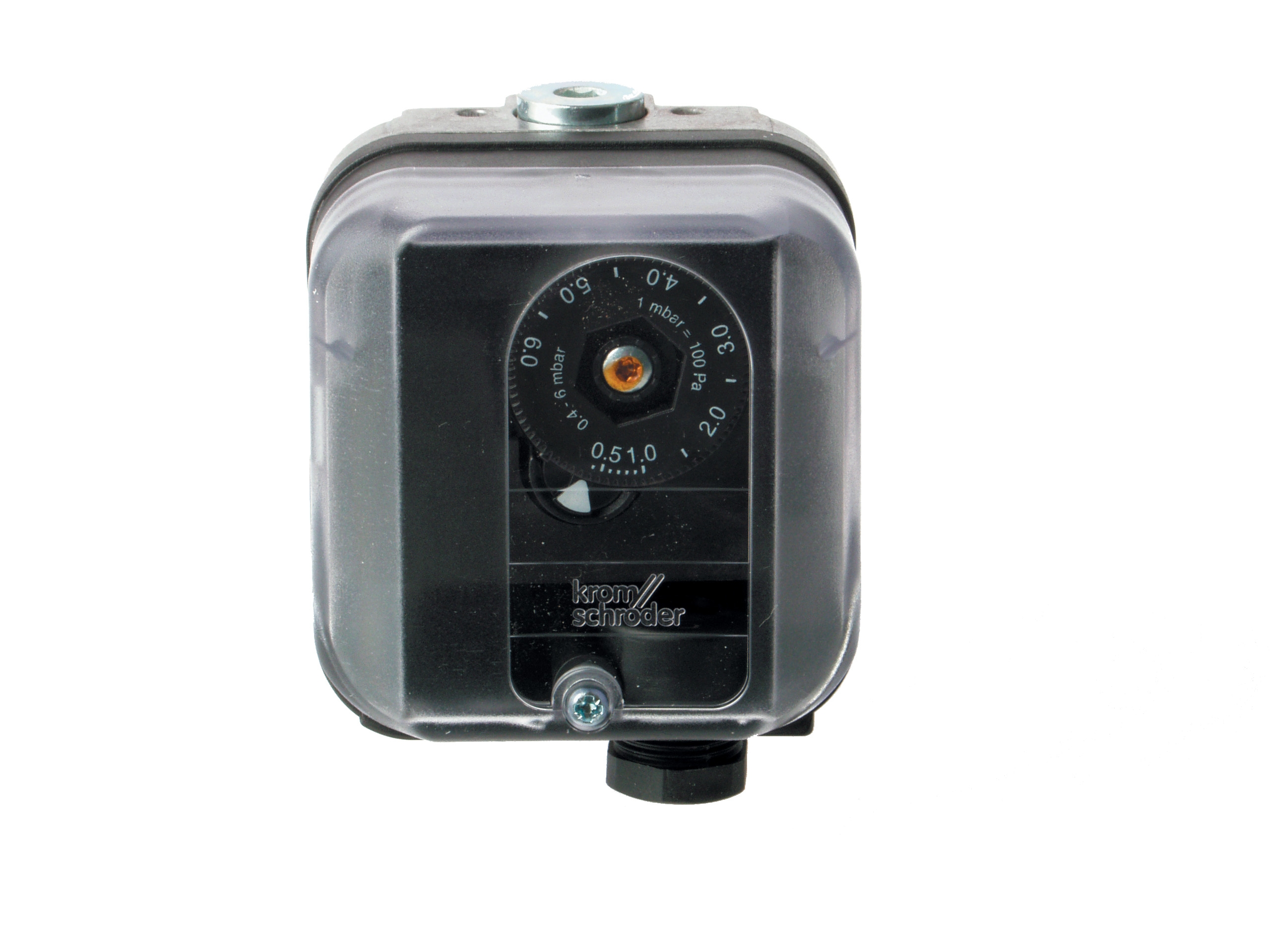
- The Kromschroder DG 50U/6 pressure switch (SIL 3 rated) may detect artificially low pressure peaks if fuel atomization pressure fluctuates
- Control relays like the Kromschroder BCU 570WC1F1U0K1-E interpret unstable pressure signals as failed ignition attempts
- After 3-4 false ignition sequences, the burner enters lockout, requiring manual reset
Diagnostic Testing for Pressure Switch Malfunction vs. Fuel Issue
Differentiation Test:
1. Trigger burner startup and record time-to-ignition using a multimeter stopwatch function (0.5-second resolution)
2. Perform 5 consecutive startup cycles and calculate average ignition delay
- Normal ignition: 1-3 seconds (depends on control relay type)
- Degraded fuel: 4-8 seconds with increasing variation between cycles
- Failed pressure switch: No ignition or lockout on first cycle
3. If ignition delay increases 50%+ from baseline, the issue is fuel supply instability, not the pressure switch
4. Verify pressure switch calibration using a manual pump (apply pressure in 0.1 bar increments) to confirm switch actuation point matches nameplate setpoint
Critical Action: Never assume a pressure switch has failed until you confirm fuel supply pressure is stable during diagnostic testing. Replacing a functional pressure switch wastes budget and masks the underlying fuel quality problem.
Recommended Control System Configuration for Contaminated Fuel Environments
- Pair the pressure switch DG 50U/6 with a burner control relay BCU 570WC1F1U0K1-E that supports 5-10 second ignition delay tolerance
- Configure the relay for continuous pilot ignition mode (not intermittent) in high-contamination zones; continuous pilot reduces fuel atomization variability
- Set control relay reset timer to 60 seconds (extended from standard 30 seconds) to allow fuel pressure to stabilize after transient disturbances
Section 3: Fuel Viscosity Matching to Burner Hardware and Operating Mode
Oil burners are viscosity-sensitive; mismatched fuel grades cause atomization failure and incomplete combustion that manifests as control system errors.
Viscosity-Related Combustion Failures
Too-Viscous Fuel (Cold Season or Grade Mismatch):
- Nozzle pressure required to achieve fine atomization exceeds pump capacity
- Burner produces coarse droplets that fall before combustion completes
- Result: Yellow flame, incomplete combustion, smoke, carbon accumulation on heat exchanger surfaces, and reduced thermal efficiency
- Safety impact: Flame monitoring sensors may not reliably detect coarse flame, leading to intermittent flame-loss signals
- Fuel vaporizes partially before reaching burner nozzle tip (vapor lock in suction line)
- Leads to inconsistent fuel flow and pressure fluctuations that trigger false pressure switch alarms
- Ignition reliability decreases; flame ignition timing becomes unpredictable
Fuel Viscosity Selection Matrix for Industrial Burners
| Burner Type | Ambient Temp Range | Recommended Fuel Grade | Kinematic Viscosity (mm²/s @ 40°C) | Pressure Range (bar) |
|---|---|---|---|---|
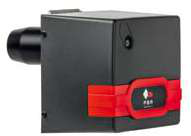
| Light oil burner (FBR GAS XP series) | -5 to +30°C | ISO 2F or ISO 4F | 2.0-4.5 | 8.5-12.5 |
| Medium oil burner | +5 to +40°C | ISO 4F or ISO 6F | 4.5-10.0 | 12.5-18.0 |
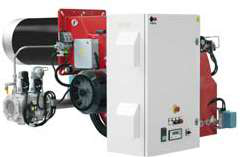
| Heavy oil burner (FBR KN 1300/M series) | +15 to +50°C | ISO 6F or ISO 8F | 10.0-60.0 | 18.0-28.0 |
Correcting Viscosity-Related Issues
For Cold Climate Operation:
- Pre-heat fuel to 40-50°C using immersion heaters in supply tanks; this reduces viscosity by 50-70% and improves atomization consistency
- Switch to lighter fuel grade (e.g., ISO 4F instead of ISO 6F) during winter months
- Increase strainer bypass valve setpoint by 0.2-0.5 bar to account for higher fuel viscosity during startup transient
- Insulate fuel supply lines and suction-side components to prevent vapor formation
- Install vapor return lines from burner nozzle tip to fuel tank to allow micro-boil vapor to escape without creating pressure spikes
- Monitor fuel temperature continuously; if tank temperature exceeds 45°C, reduce nozzle pressure by 0.5-1.0 bar to prevent over-atomization
Dual-fuel burners like the FBR KN 1300/M TL EL are particularly sensitive to oil viscosity changes because they switch between gas and oil modes. Maintain oil viscosity within ±10% of design spec; larger deviations may trigger uncontrolled switching or ignition delays during mode transitions.
Section 4: Long-Term Fuel Quality Management and Preventive Strategy
Establishing a Fuel Quality Baseline
Within the first 30 days of burner commissioning (or after significant fuel system modifications):
1. Perform ASTM D6595 fuel analysis if available (includes viscosity, water content, ash, sulfur)
2. Establish baseline pressure readings, ignition delay times, and flame color under optimal conditions
3. Document all readings in a maintenance log as the reference standard
4. Repeat testing every 6-12 months or immediately after suspected contamination events
Preventive Maintenance Calendar
Monthly Tasks:
- Visual inspection of fuel tank exterior for corrosion or leaks
- Check fuel filter differential pressure indicator; change if 75% full
- Verify fuel supply pressure readings match baseline; trend any gradual decline
- Drain 5-10% of tank bottom to remove settled water and sediment
- Inspect suction-line strainer basket for visible particulate accumulation
- Run 3-5 ignition cycles and measure average time-to-ignition; compare to baseline
- Full tank internal inspection and cleaning (for tanks >1000 liters)
- Replace fuel filters regardless of condition (preventive replacement)
- Conduct ASTM D6595 fuel analysis to confirm grade and detect microbial contamination
- Inspect and clean fuel nozzle tip using ultrasonic cleaning (do not soak in harsh solvents)
Fuel Storage Best Practices
- Keep fuel tanks at 50-85% capacity to minimize air/fuel interface where moisture condenses
- Maintain storage temperature between 15-30°C; extremes beyond this range accelerate oxidation and water absorption
- Add biocide treatment annually if microbial growth indicators appear (rotten-egg odor, sludge formation)
- Use nitrogen blanketing on large tanks (>10,000 liters) to prevent oxygen entry and moisture absorption
Working with 3G Electric for Fuel System Upgrades
3G Electric's technical team can recommend component upgrades based on your fuel quality audit. For high-contamination environments, we supply:
- The Siemens LFL 1.622 safety control unit with enhanced pressure signal filtering to tolerate transient pressure spikes from contaminated fuel
- Multi-stage filtration packages combining 150-micron intake strainers with 25-micron return-line filters
- Upgraded burner nozzles with larger orifices (if thermally acceptable) to reduce sensitivity to fuel viscosity changes
Our 35+ years of experience in global equipment distribution means we've troubleshot these issues across diverse climates, fuel sources, and industrial applications. Contact our technical support team with fuel quality questions specific to your region or application.
Conclusion
Fuel quality is the foundation of reliable burner operation, yet it's frequently overlooked during troubleshooting cycles. Plant managers who shift from component-focused diagnostics to system-level fuel quality management gain measurable improvements in:
- Ignition reliability and uptime
- Extended service intervals for nozzles, control relays, and pressure switches
- Reduced emission levels and improved combustion efficiency
- Lower overall maintenance cost per operational hour
Begin with the diagnostic steps in Section 1, establish your baseline fuel quality metrics, and implement the preventive calendar in Section 4. This structured approach transforms fuel quality from a reactive problem source into a proactive operational lever.