Introduction: Burners & Combustion System Selection in Singapore's Industrial Context
Burners & Combustion equipment represents a significant capital investment for industrial facilities across Singapore. The choice between dual-fuel and single-fuel systems directly impacts operational flexibility, maintenance costs, energy procurement strategies, and long-term capital expenditure. Procurement engineers face competing demands: maximizing uptime during fuel supply disruptions, controlling operating costs, meeting stringent safety standards, and simplifying spare parts inventory.
With over 35 years of experience distributing industrial equipment throughout Asia-Pacific, 3G Electric has supported procurement teams through hundreds of burner system evaluations. This article provides a practical, quantitative framework for comparing dual-fuel versus single-fuel burners & combustion architectures—essential reading for facilities planning capital upgrades or new installations across Singapore's petrochemical, food processing, and manufacturing sectors.
Technical Architecture: Understanding Dual-Fuel and Single-Fuel Burner & Combustion Design
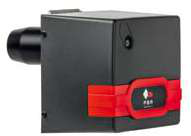
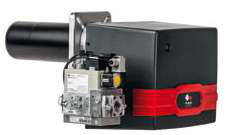
Single-fuel burners & combustion systems are engineered for one fuel type—either natural gas or heavy fuel oil (HFO). These designs feature streamlined ignition circuits, simplified nozzle geometry, and purpose-built air damper configurations. A typical gas-only system like the FBR GAS XP 60/2 CE TC EVO delivers thermal power from 116–630 kW with two-stage modulation, optimizing combustion efficiency across varying load conditions while maintaining noise levels at 66–69 dBA.
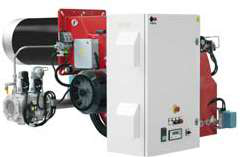
Dual-fuel systems, conversely, integrate separate combustion pathways within a single burner frame. The FBR KN 1300/M TL EL heavy oil burner exemplifies this architecture: it operates across dual stages with modulating control, delivering 1700–11500 Mcal/h thermal output while maintaining the mechanical and electrical infrastructure to switch between fuels. This flexibility demands more complex control logic, additional solenoid valve redundancy, and dual-path fuel metering.
Control architecture differs significantly between systems. Single-fuel installations typically employ simpler relay-based control units—such as the Siemens LFL 1.622 safety control unit—which manage flame detection and air damper positioning for one fuel stream. Dual-fuel systems require multi-function relays capable of managing fuel selection logic, cross-fuel validation, and seamless switchover during operation or maintenance windows.
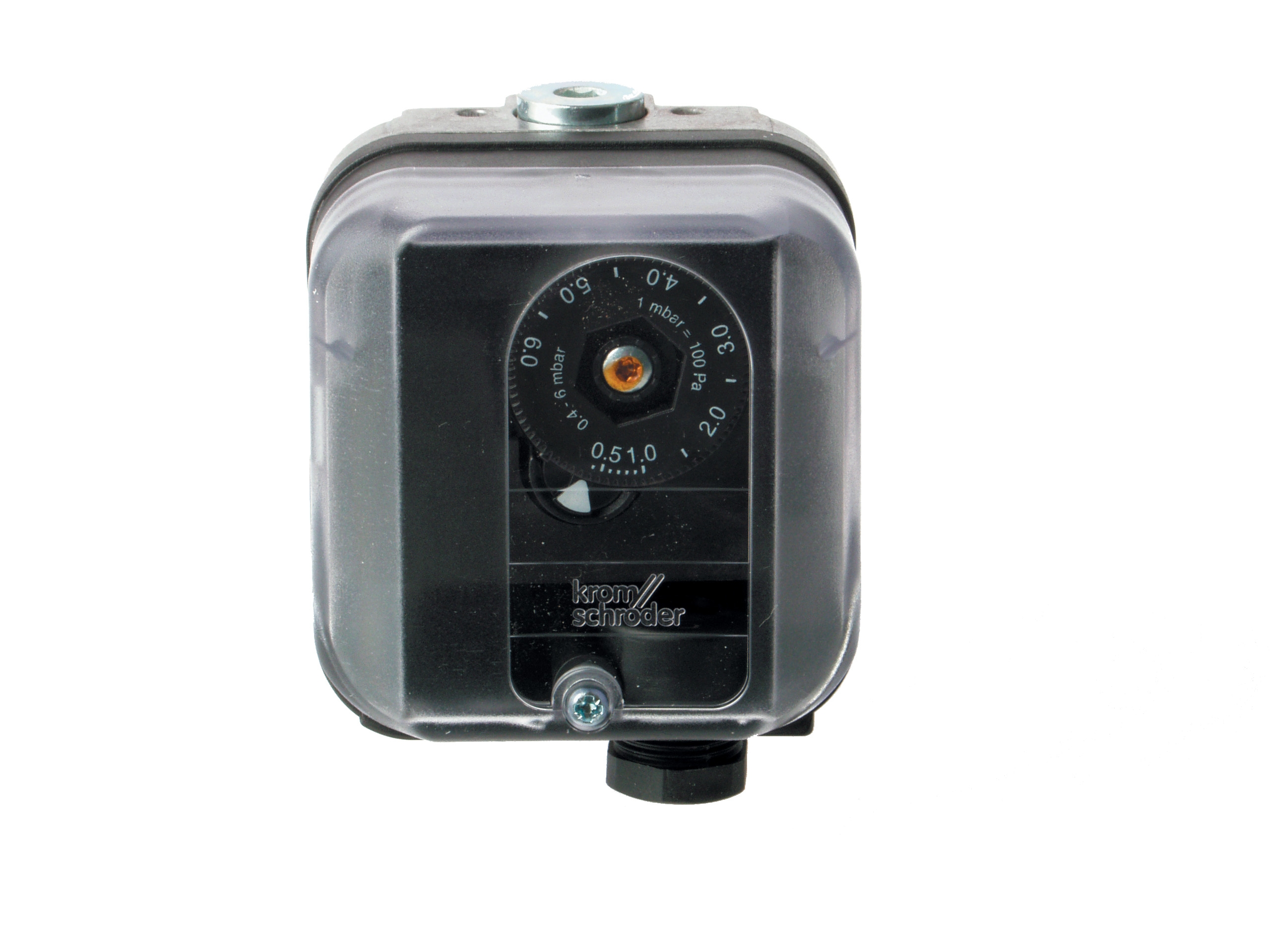
Pressure switch technology adds another layer of differentiation. The Kromschroder DG 50U/6 pressure switch, rated SIL 3 and Performance Level e, monitors fuel supply integrity across both gas and oil applications. In dual-fuel burners, pressure switches validate fuel availability before allowing ignition attempts, preventing no-fire lockouts caused by temporary supply fluctuations.
Cost-Benefit Analysis: Capital, Operating, and Maintenance Economics
Capital Equipment Costs
Single-fuel burners command a significant price advantage at point of purchase. A gas-only burner with basic two-stage control typically costs 25–35% less than an equivalent dual-fuel installation. For a 500 kW thermal capacity system, this translates to SGD 15,000–25,000 in upfront savings. This differential widens when including associated control panels: single-fuel relay configurations are less expensive to engineer and commission than dual-fuel systems requiring cross-fuel validation logic.
Dual-fuel systems offset higher capital costs through operational flexibility. Facilities with dual-fuel capability avoid standalone backup burner installations, reducing total installed equipment cost when viewed holistically. Instead of maintaining separate gas and oil burners (with duplicate control systems, piping, and nozzles), a single dual-fuel unit consolidates fuel flexibility into one mechanical platform.
Operating Cost Drivers
Fuel cost arbitrage represents the primary operational advantage of dual-fuel systems in Singapore's energy market. Natural gas prices (delivered through piped networks or liquefied natural gas imports) fluctuate independently from fuel oil prices (influenced by crude oil benchmarks and supply-chain dynamics). Procurement teams equipped with dual-fuel capability can execute tactical fuel switching when price differentials exceed 10–15%, potentially generating 3–8% annual savings on energy spend for facilities operating 6000+ hours annually.
Example calculation for a 5 MW thermal facility:
- Annual operating hours: 7000
- Dual-fuel system capital premium: SGD 80,000
- Fuel cost differential opportunity (conservative 5% arbitrage): SGD 120,000 annually
- Simple payback period: 8 months
This analysis assumes stable fuel supply infrastructure. During regional supply disruptions (such as LNG import delays or pipeline maintenance windows), dual-fuel capability prevents costly production shutdowns entirely—a risk mitigation benefit difficult to quantify but strategically valuable.
Maintenance and Spare Parts Economics
Single-fuel systems simplify spare parts inventory. Procurement teams stock fewer nozzle variants, control valves, and ignition components. Annual maintenance budgets for gas-only systems typically run 2–4% of installed equipment cost, with predictable consumables (ignition electrodes, control relays, fuel filters).
Dual-fuel burners increase spare parts complexity. Each fuel path requires separate nozzles, atomizing air components, and fuel metering valves. Total spare parts inventory typically grows 40–60% compared to single-fuel equivalents. However, this complexity is partially offset by reduced backup system maintenance: with no standalone secondary burner, total maintenance spend often remains comparable to single-fuel plus backup scenarios.
Control component reliability becomes critical. The Kromschroder Relay BCU 570WC1F1U0K1-E, compliant with EN 746-2 and EN 676 standards, provides direct ignition and intermittent/continuous pilot options suitable for both single and dual-fuel applications. In dual-fuel configurations, this relay must cycle between fuel streams reliably—failures in this component create cascading fuel-switch problems that extend downtime compared to single-fuel relay failures.
Procurement Decision Framework: Quantitative and Qualitative Factors
When Single-Fuel Systems Make Economic Sense
Fixed fuel supply contract: If your facility operates under long-term fixed-price fuel contracts (common for large-scale gas customers on 3–5 year agreements), fuel arbitrage opportunities diminish. Capital cost savings justify single-fuel investment.
Predictable thermal load: Facilities with stable, consistent thermal demand (within ±15% variation) realize better combustion efficiency with purpose-built single-fuel burners. The FBR GAS XP 60/2 optimizes across its rated 116–630 kW range; outside this envelope, efficiency curves flatten.
Limited maintenance resources: Smaller procurement teams with constrained technical depth often prefer single-fuel simplicity. Dual-fuel troubleshooting requires cross-training on two fuel system pathways; single-fuel teams execute faster root-cause analysis.
Stringent noise requirements: Single-fuel systems achieve lower acoustic signatures (the FBR GAS XP 60/2 operates at 66–69 dBA). Dual-fuel burners typically generate 2–4 dBA additional noise due to mechanically complex air damper arrangements.
When Dual-Fuel Systems Justify Higher Capital Costs
Volatile regional fuel markets: Singapore's dual-fuel accessibility (pipeline gas plus marine bunker oil supply) creates genuine fuel cost volatility. Quarterly price fluctuations of 15–25% are common, making tactical switching economically viable.
Supply chain redundancy requirement: Facilities supporting mission-critical operations (hospitals, data centers, food processing with perishable inventory) value dual-fuel as operational insurance against localized fuel disruptions.
Seasonal thermal demand variation: Facilities with 40–60% swings in thermal load (such as beverage manufacturing with summer cooling demands) benefit from dual-fuel fuel switching to optimize overall energy costs across operating seasons.
Future capacity expansion: If facility expansion is planned within 5–7 years, dual-fuel burners accommodate future boiler additions without capital reinvestment. Single-fuel systems often require complete replacement.
Modulating control priority: The FBR KN 1300/M TL EL dual-fuel design supports continuous modulation across 1700–11500 Mcal/h, crucial for facilities requiring precise thermal load matching to minimize standby losses.
Integration Considerations: Control Systems and Safety Architecture
Procurement engineers must evaluate control system compatibility regardless of fuel choice. Single-fuel systems integrate straightforwardly with existing burner management systems (BMS) through standard relay interfaces and pressure switch inputs. The Siemens LFL 1.622 provides UV and ionization flame monitoring suited to both configurations, with air damper control for combustion optimization.
Dual-fuel integration demands additional specification discipline. Fuel selection logic must prevent simultaneous gas and oil ignition attempts—a catastrophic condition. Dual-fuel systems require either mechanical interlocks (fuel cut-off solenoids preventing multi-fuel flow) or sophisticated electrical interlocks managed through the burner control relay. The Kromschroder BCU 570WC1F1U0K1-E supports both intermittent and continuous pilot ignition modes, enabling flexible pilot selection across fuel types.
Pressure switch redundancy becomes essential in dual-fuel systems. While single-fuel installations may operate with one pressure switch monitoring fuel supply, dual-fuel burners ideally employ dual switches—one for each fuel path—or a single dual-function switch managing gas and oil pressure independently. The Kromschroder DG 50U/6, rated SIL 3, meets the functional safety requirements for critical fuel supply validation in either configuration.
Singapore's Pressure Equipment and Structural Steelwork Safety Regulations align with EN standards referenced by both single and dual-fuel systems. Procurement engineers must verify control system compliance with EN 746-2 (burner control) and EN 676 (burner safety) regardless of fuel choice—dual-fuel systems inherit no additional regulatory burden, though commissioning complexity increases.
Conclusion and 3G Electric's Support for Procurement Excellence
The choice between dual-fuel and single-fuel burners & combustion systems hinges on reconciling capital cost efficiency against operational flexibility and fuel market dynamics unique to each Singapore facility. Single-fuel systems deliver lower upfront costs, simpler maintenance protocols, and optimized combustion performance within their design envelope. Dual-fuel systems provide tactical fuel switching capability, supply-chain redundancy, and capacity flexibility valuable for facilities facing volatile regional energy markets or planning expansion.
Quantitative analysis—comparing three-year total cost of ownership including capital, fuel arbitrage opportunities, and maintenance—yields the most defensible procurement recommendations. Qualitative factors (maintenance team expertise, regulatory environment, supply chain risk tolerance) serve as tiebreakers when financial metrics diverge.
3G Electric's 35+ years of industrial equipment distribution experience positions our team to support procurement engineers through detailed technical evaluations. We maintain inventory of both single-fuel burners (such as the FBR GAS XP 60/2 CE TC EVO) and dual-fuel systems (including the FBR KN 1300/M TL EL), alongside all associated control components—relays, pressure switches, and safety interlocks. Our technical specialists conduct site-specific cost-benefit modeling, integrate systems with existing facility infrastructure, and provide commissioning support ensuring both single and dual-fuel installations achieve design efficiency targets.
Contacting our Singapore procurement team enables access to competitive pricing, technical specification validation, and delivery logistics optimized for your facility's timeline and geographic location.