Understanding Burners & Combustion Control Architecture
Burners & Combustion systems in industrial HVAC applications are far more than simple ignition devices—they are precision control systems that manage fuel delivery, air mixing, ignition sequencing, and flame verification across dozens of operating cycles. For HVAC contractors in Singapore managing critical heating loads, understanding the control relay architecture is essential to system reliability and regulatory compliance.
The core function of a burner control relay is to orchestrate the combustion sequence: verify pilot ignition, monitor main flame status, modulate fuel supply, and safely shut down if flame loss occurs. Unlike simple on-off switches, modern burner control relays like the Kromschroder BCU 570WC1F1U0K1-E support multiple ignition modes (direct ignition, intermittent pilot, continuous pilot) to accommodate different burner designs and operational requirements.
At 3G Electric, with 35+ years of experience in industrial equipment distribution across Southeast Asia, we've observed that control relay failures represent the second-largest cause of unplanned burner shutdowns in Singapore facilities. Most failures stem from incorrect relay specification for the burner type, not manufacturing defects. This guide addresses the practical selection and integration challenges HVAC contractors face daily.
Relay Selection: Matching Control Features to Burner Requirements
Selecting the correct burner control relay begins with understanding your specific burner's ignition strategy and flame monitoring needs. Industrial burners fall into three categories: gas-only, oil-only, and dual-fuel systems. Each requires different control logic and safety interlocks.
Gas Burner Control Requirements
Gas burners typically use direct spark ignition or intermittent pilot ignition. The control relay must detect pilot flame presence (usually within 3-5 seconds of spark initiation) and then command main gas valve opening once pilot stability is confirmed. The Kromschroder BCU 570WC1F1U0K1-E is specifically designed for these sequences, supporting both ignition modes while meeting EN 746-2 and EN 676 safety standards required in Singapore. Its key advantage is flexibility: the same relay can handle different burner configurations through simple parameter adjustment rather than hardware changes.
Dual-Fuel and Oil Burner Control
Oil and dual-fuel burners demand more complex control logic. The Siemens LFL 1.622 is purpose-built for medium to high-power dual-fuel systems, featuring both UV and ionization flame detection. UV detection (ultraviolet light) responds instantly to flame presence but can trigger false signals from stray electrical noise. Ionization detection (measuring electrical conductivity in the flame) is slower but immune to ambient light interference. The LFL 1.622 combines both sensors—UV for fast response, ionization for confirmation—creating a redundant safety system that meets SIL 2 requirements for critical applications.
For HVAC contractors, the practical choice between UV-only, ionization-only, and dual-detection relays depends on three factors:
- Burner type: Oil and dual-fuel systems work better with ionization; pure gas systems can use either
- Installation environment: Workshops with arc welding or outdoor units exposed to sunlight benefit from ionization redundancy
- Modulation requirements: Systems requiring proportional air-fuel adjustment need relays with proportional output capacity
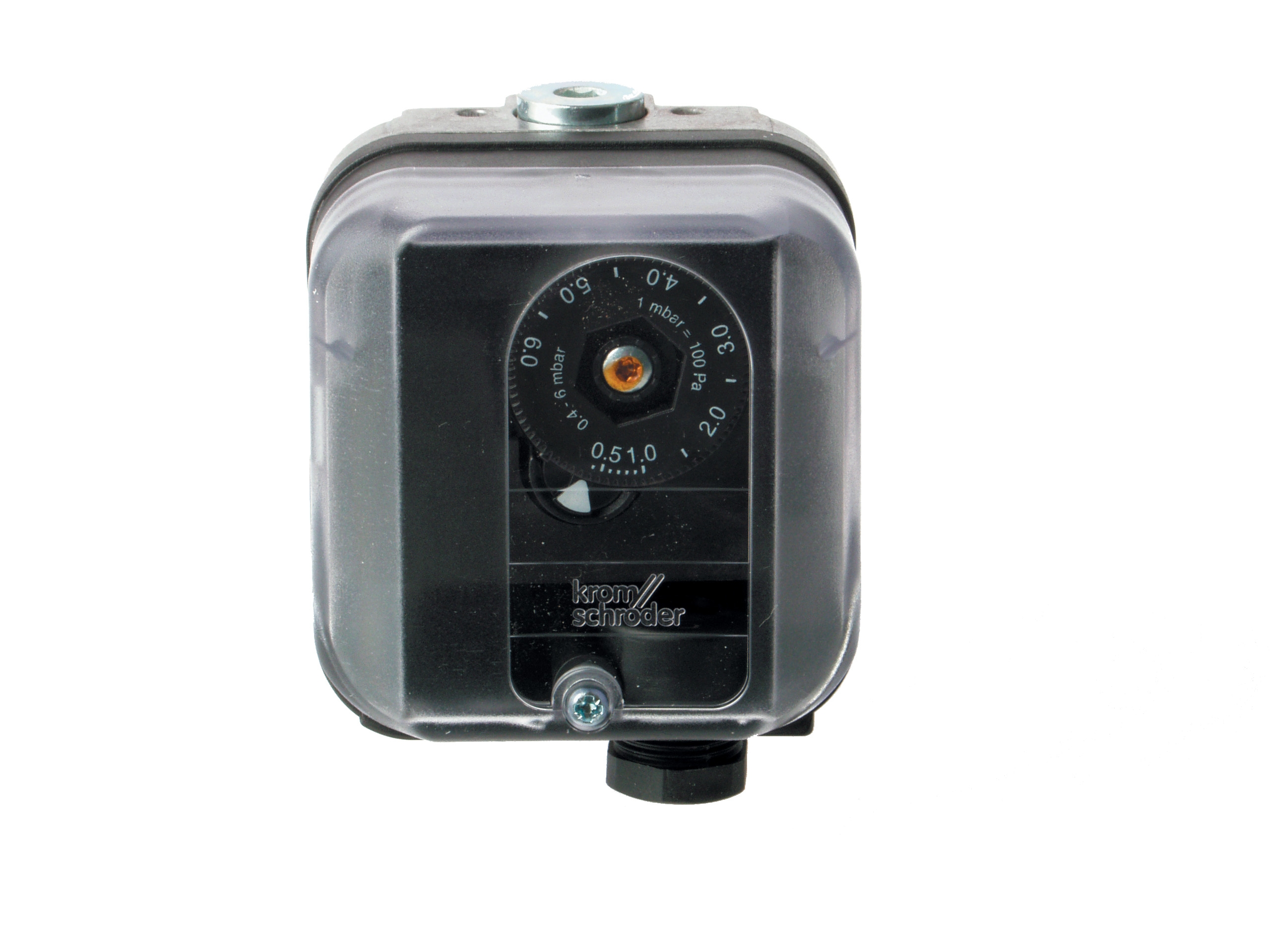
Burner control relays don't operate in isolation—they depend on pressure switches to verify fuel line integrity and air supply. The Kromschroder DG 50U/6 is a SIL 3-rated pressure switch designed specifically for burner control interlocks. In Singapore's humid coastal environment, this pressure switch's FM and UL certifications ensure reliable operation even with condensation and salt exposure in plant environments.
The DG 50U/6 serves two critical functions: confirming fuel supply pressure before ignition (preventing dry-fire damage) and monitoring air supply pressure during operation (preventing incomplete combustion and carbon monoxide production). HVAC contractors must size this switch appropriately—undersizing creates nuisance shutdowns; oversizing delays fault detection.
Flame Detection and Safety Interlock Strategies
Flame detection is where relay selection directly impacts both safety and operational reliability. Singapore's Safety and Health at Work Act requires burner systems to shut down within 5 seconds of flame loss, which means your flame detection circuit must reliably distinguish between real flame and false signals.
Ultraviolet Flame Detection
UV sensors detect the ultraviolet radiation emitted by hydrocarbon combustion (primarily from the C2 swan band around 310 nm). In traditional industrial settings, UV detection works well because real flames emit strong UV while stray electrical noise does not. However, two conditions compromise UV reliability in Singapore facilities:
1. Welding and arc operations nearby: Arc light contains UV energy that can trigger false flame detection
2. Direct sunlight on oil burners: Morning sun on outdoor installations can cause UV sensors to interpret sunlight as flame
These issues explain why many Singapore plants have migrated toward ionization detection for outdoor units.
Ionization Flame Detection
Ionization detection measures the electrical conductivity created when a flame ionizes combustion gases. The sensor applies a small DC voltage across the flame (typically 80-120V), and the burner control relay monitors the resulting current. Real flame creates stable, continuous current; electrical noise creates transient pulses. This fundamental difference makes ionization immune to optical interference.
The tradeoff: ionization has slower response time (200-400 ms vs. 50-100 ms for UV) and requires slightly higher maintenance because electrode deposits must be periodically cleaned. For continuous-duty industrial applications, this maintenance cost is negligible.
Dual-Detection Redundancy
The Siemens LFL 1.622 implements best-practice redundancy: UV for speed, ionization for confirmation. The relay waits for UV signal within the ignition delay window, then cross-checks with ionization to confirm real flame. If ionization fails to confirm within a set time, the relay logs a fault without shutting down (assuming continuous pilot operation), allowing maintenance teams to schedule repair rather than disrupt production.
For Singapore HVAC contractors managing critical facilities (hospitals, data centers, universities), this dual-detection approach has become standard. The incremental cost (typically 15-20% more than single-detection relays) is justified by reduced nuisance shutdowns and compliance with SIL 2+ safety requirements.
Integration and Commissioning Considerations for Singapore Installations
Relay selection is only the first step—proper integration ensures the selected relay performs reliably in your specific installation.
Environmental Factors in Singapore
Singapore's tropical climate creates three environmental challenges for burner control systems:
- High humidity and salt spray: Corrosion affects electrical contacts and sensor elements. Use stainless steel fasteners and conformal coating on PCB circuits
- Temperature cycling: Day-night cycles in outdoor units create thermal stress. Mount relays in climate-controlled electrical enclosures whenever possible
- Power quality variability: Industrial areas with large motor loads experience voltage fluctuations. Install 24V DC power supplies with ±10% regulation for relay operation
Flame sensor placement is critical and often overlooked. The UV or ionization electrode must have direct line-of-sight to the flame envelope—not blocked by burner housing, not positioned where combustion byproducts will accumulate. In practice:
- Mount sensors at 45-60° angle to the flame axis for optimal signal
- Use shielded sensor cable routed separately from power conductors (minimum 150 mm separation)
- Install a clear, washable sight glass or quartz element in front of the sensor to protect against dust and fuel oil spray
- Plan for quarterly cleaning of optical surfaces; in dusty or high-soot environments, monthly cleaning is necessary
The Kromschroder DG 50U/6 must be calibrated to the specific burner and fuel line. For gas systems, the fuel pressure switch is typically set 10-15% above normal operating pressure—this ensures the switch opens (confirming fuel availability) before the burner control relay attempts ignition. For oil systems, preheat the oil to operating temperature (typically 40-50°C for heavy fuel oil) before adjusting the pressure switch, as viscosity changes dramatically with temperature.
In Singapore's industrial settings, we recommend field verification of pressure switch setpoints using a calibrated pressure gauge—don't rely on the factory setting, as different installations have different fuel line characteristics.
Modulation Integration
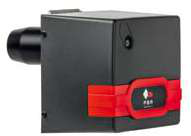
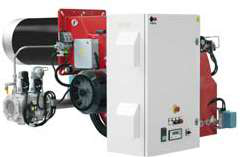
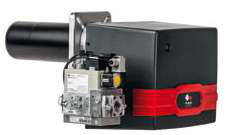
For systems using FBR GAS XP 60/2 CE TC EVO (two-stage gas burners) or FBR KN 1300/M TL EL (dual-fuel modulating burners), the control relay must support proportional output to the burner's modulation motor. Not all relays can do this—some are on-off only. Verify that your selected relay (e.g., Kromschroder BCU 570 or Siemens LFL 1.622) supports the modulation signal type (0-10V, 4-20mA, or stepper motor pulses) required by your specific burner.
Commissioning Checklist for HVAC Contractors
Before handing off a burner system to the client:
- Verify flame detection signal strength at the relay input (typically minimum 2.0V for UV, 0.5 µA for ionization)
- Confirm fuel pressure and air pressure are within the burner manufacturer's specified ranges
- Perform a loss-of-flame test: extinguish the pilot light and verify shutdown occurs within 5 seconds
- Run a modulation sweep (if applicable) and verify proportional output tracks the demand signal
- Check that all safety interlocks (low fuel pressure, low air pressure, high temperature) trigger relay shutdown
- Document baseline performance data (flame signal amplitude, stabilization time, shutdown response time)
This documentation becomes your baseline for future maintenance troubleshooting.
Working with 3G Electric for Relay and Control Component Supply
At 3G Electric, we've distributed Burners & Combustion control equipment throughout Singapore and Southeast Asia for over 35 years. Our role is to help HVAC contractors access the right control components and provide technical support during selection and commissioning.
When you contact 3G Electric about a burner control relay selection, we ask three qualifying questions:
1. Burner specification: Model, fuel type (gas/oil/dual), power rating (kW or Kcal/h), and any existing relay documentation
2. Ignition and flame detection strategy: Current detection method, any history of false shutdowns, and safety level requirements (SIL rating)
3. Modulation and integration: Does the system require proportional output, and what control signals does the burner accept?
Based on these inputs, we recommend specific relays—not a generic "this works for everything" product. We also maintain local inventory of the Kromschroder and Siemens relays described in this guide, allowing same-day or next-day delivery for emergency replacements.
Our technical team can also support commissioning: we can provide field guidance via phone or video, clarify safety standard compliance questions, and help troubleshoot integration issues during startup.