Understanding Burner Control Relay Architecture and Function
Burners & Combustion systems require sophisticated control logic to manage ignition sequences, flame monitoring, fuel valve actuation, and safety interlocks. Control relays form the operational backbone of modern burner systems, translating sensor inputs into precise equipment responses.
The Kromschroder Relay BCU 570WC1F1U0K1-E exemplifies enterprise-grade burner control architecture. This relay supports three distinct ignition modes—direct ignition, intermittent pilot ignition, and continuous pilot ignition—enabling deployment across diverse industrial heating applications from small commercial units to large-scale process facilities.
Procurement engineers evaluating control relays must understand the operational flow: sensor inputs (flame detection, pressure, temperature) feed into the relay's logic module, which processes safety sequences and outputs control signals to fuel valves, igniters, and dampers. The BCU 570 complies with EN 746-2 (burner control equipment) and EN 676 (safety controls for gas burners), standards mandatory across European Union member states and increasingly adopted as best practice throughout Southeast Asia.
With over 35 years of industrial equipment distribution experience, 3G Electric has observed that procurement decisions often overlook relay timing specifications. Response times—particularly for ignition cutoff during flame loss—directly impact safety performance and insurance liability. The BCU 570 provides programmable timing windows (typically 1–5 seconds) that accommodate different fuel types and burner geometries without requiring hardware replacement.
Pressure Switch Selection: Critical Safety Boundary Control
Pressure switches function as safety boundaries in Burners & Combustion systems, protecting equipment from dangerous operating conditions. These devices must transition electrical contacts with absolute precision at defined pressure thresholds while maintaining certification-level reliability.
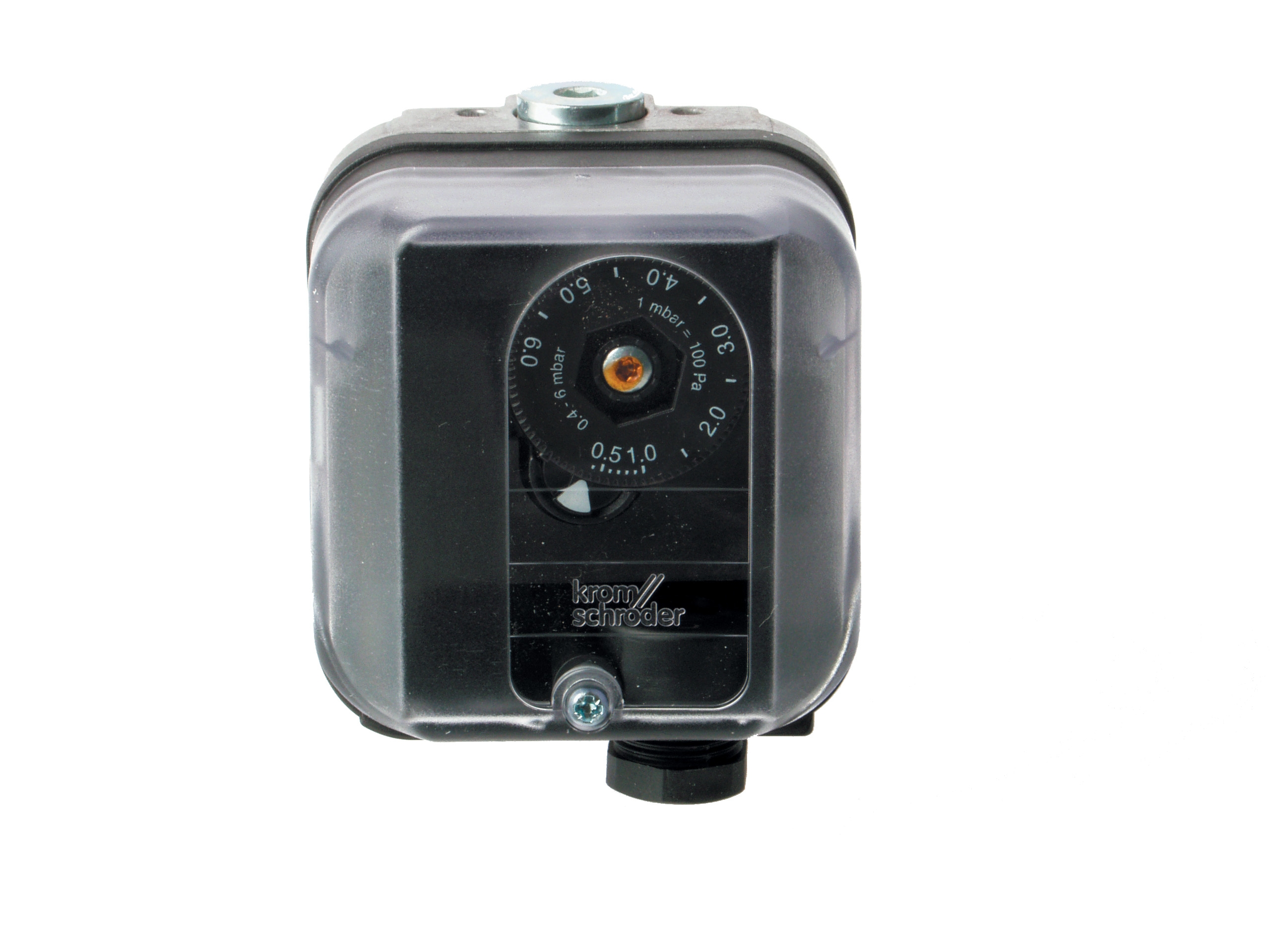
The Kromschroder Pressure Switch DG 50U/6 carries SIL 3 (Safety Integrity Level) and Performance Level e certifications—the highest safety designations for industrial components. This rating means the switch maintains safe shutdown capability even with single-component failures. Compliance certifications include EN 1854 (European pressure equipment directive), FM and UL (North American standards), AGA (American Gas Association), and GOST-TR (Russian Federation standards).
For procurement engineers in Southeast Asia, SIL 3 certification provides critical insurance and regulatory coverage. Singapore's Energy Efficiency Improvement Scheme and Malaysia's Standards and Industrial Research Institute (SIRIM) increasingly require demonstrated safety component certification. Thailand, Indonesia, and Vietnam are harmonizing toward IEC standards, making internationally certified components essential for equipment longevity across regional supply chains.
The DG 50U/6 operates across 0.5–6 bar differential pressure ranges, accommodating both combustion air proving switches and fuel pressure verification roles. Critical procurement considerations include:
- Switching capacity: 230V AC, 4A (1,000VA inductive load) for 24V pilot solenoid valve circuits
- Repeatability: ±3% maximum deviation across 10,000 operating cycles—essential for consistent system behavior
- Response hysteresis: 10–15% differential prevents relay chatter and extends electrical contact lifespan
- Environmental tolerance: IP 54 enclosure rating for installations with condensation and spray exposure
Integrated Safety Control Units: Coordinating Multi-Function Protection
Modern industrial Burners & Combustion systems require coordinated safety supervision across multiple parameters simultaneously. Single-function relays cannot provide adequate protection—modern systems demand integrated safety control units combining flame monitoring, air proving, fuel proving, and time-limit functions.
The Siemens Relay LFL 1.622 represents this integrated approach for medium to high-power burner applications. This safety control unit integrates dual flame monitoring methods—ultraviolet (UV) and ionization detection—eliminating single-point flame detection failures. The UV sensor detects visible light from flame combustion (response time <200ms), while the ionization circuit measures flame-generated ion current as a backup. Applications can configure either sensor as primary with cross-check validation.
Key procurement advantages of integrated units include:
- Reduced component count: One relay replaces five separate devices, lowering system cost and installation complexity by approximately 35–40%
- Factory-tested logic sequences: Manufacturer testing validates interaction between flame monitoring, air damper modulation, ignition sequencing, and shutoff logic—critical for systems unable to undergo factory commissioning
- Standardized diagnostic interfaces: Built-in LED indicators and standard DIN43650C electrical connectors simplify field diagnostics and reduce commissioning time by 20–30%
- Scalability across burner classes: The LFL 1.622 accommodates gas, oil, or dual-fuel burners with power ratings from 60 kW to 2,000+ kW through external transformer ratios
For Southeast Asian procurement engineers, the LFL 1.622's dual-sensor flame monitoring addresses regional infrastructure challenges. Electrical supply instability can corrupt single ionization circuits; UV backup detection eliminates false shutdowns during voltage fluctuations common in industrial areas.
Practical Specification Framework for Burner Control System Integration
Successful procurement requires systematic evaluation across four specification dimensions:
Safety Certification Alignment: Match control relay certifications to destination market and customer requirements. SIL 2 typically satisfies Singapore and Malaysia industrial codes; SIL 3 requirements apply to hazardous area installations and large thermal input units. Document certification chain—control relay must work seamlessly with pressure switches and flame sensors rated to equivalent safety levels.
Ignition Mode Compatibility: Specify control relay ignition capability matching planned burner hardware. Direct ignition (hot surface ignitor or spark) requires simpler relay logic and suits newer installations. Intermittent pilot (pilot fuel burns during main burner trial) reduces heating energy but demands precise timing control. Continuous pilot (pilot always burning) provides fastest ignition response but increases pilot fuel consumption. The BCU 570 supports all three modes through configuration without hardware modification—critical for procurement flexibility when customer requirements change post-award.
Environmental and Installation Constraints: Southeast Asian industrial environments present specific challenges. High ambient temperatures (35–45°C regularly) degrade component lifespan; specify controls with extended temperature ratings or cooling provisions. High humidity promotes corrosion; specify IP 54 minimum protection and stainless steel hardware. Vibration from adjacent machinery requires shock-resistant pressure switch mounting and relay enclosure isolation.
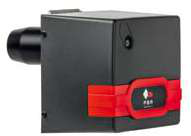
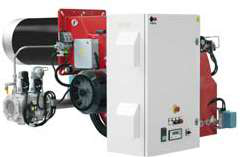
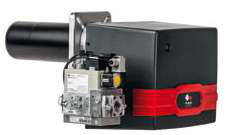
Fuel Type and Burner Power Scaling: Control relay specifications must scale accurately with thermal input. Gas burners typically use simpler relay logic; dual-fuel burners (FBR KN 1300/M TL EL heavy oil burner with modulating control, 1700–11500 Mcal/h output) require sophisticated switching sequences to prevent fuel mixing and ensure clean transitions. High-power burners (FBR GAS XP 60/2 CE TC EVO, 116–630 kW gas burner) often exceed standard relay switching capacity, necessitating auxiliary contactors or solid-state switching modules.
Diagnostic and Maintenance Access: Specify control systems with built-in diagnostic capability. The BCU 570 and LFL 1.622 both include status indication and standard connector configurations enabling field technicians to perform troubleshooting without relay replacement. This reduces maintenance cost by 50–60% over equipment lifespan.
Procurement Decision Checklist for Burner Control Systems
When evaluating control relay and safety component specifications, procurement engineers should systematically address:
- What is the required safety integrity level (SIL) for this installation location and customer risk profile?
- What ignition modes must the control relay support—direct, intermittent pilot, continuous pilot, or all three?
- Does the burner use single fuel (gas or oil) or dual-fuel capability, and what are transition frequency requirements?
- What is the maximum thermal power (kW or Mcal/h), and does this exceed standard relay switching capacity?
- What environmental conditions (temperature, humidity, vibration) will the control system experience?
- What diagnostic interfaces and maintenance access are required for field troubleshooting?
- Are spare parts and technical support availability adequate in destination markets (Singapore, Malaysia, Thailand, Indonesia, Vietnam)?
- What certification standards apply in destination market—EN 746-2, UL, CSA, or combination?
With 35+ years supplying industrial burner components across Southeast Asia, 3G Electric maintains deep technical relationships with equipment manufacturers and field service teams. This enables rapid specification validation, technical problem-solving, and cost optimization across regional supply chains. Control relay and pressure switch specifications often represent the difference between reliable, compliant industrial systems and costly field failures; investment in thorough upfront specification pays measurable dividends throughout equipment operational life.