Introduction: Why Air-Fuel Ratio Tuning Matters for Your Burner System
Burners & Combustion systems depend on precise air-fuel balance to deliver reliable performance. When the air-fuel ratio drifts out of specification, you risk excess fuel consumption, elevated emissions, incomplete combustion, and increased maintenance costs. Singapore's environmental regulations and industrial safety standards demand that maintenance teams actively monitor and adjust combustion parameters rather than rely on initial factory settings.
With over 35 years of experience supplying industrial combustion equipment across Asia-Pacific, 3G Electric has supported hundreds of maintenance teams in optimizing burner performance. This guide translates that field experience into actionable procedures you can implement immediately to improve system reliability and operational cost.
Section 1: Understanding Air-Fuel Ratio Fundamentals and Your Measurement Tools
What is Stoichiometric Combustion?
Stoichiometric combustion occurs when fuel and air combine in exact proportions, with no excess of either. For natural gas, this ratio is approximately 17:1 (air to fuel by weight). However, industrial burners intentionally operate slightly rich or lean of stoichiometric to balance efficiency, flame stability, and emissions.
Rich combustion (excess fuel) produces:
- More stable flame and better ignition reliability
- Higher carbon monoxide (CO) and unburned hydrocarbons
- Lower flame temperature and potential fouling
- Lower fuel consumption and cleaner emissions
- Higher NOx formation due to elevated flame temperature
- Risk of flame instability and flame-out
Most industrial burners operate at 2–5% oxygen remaining in flue gas, which represents a practical balance between efficiency and safety.
Essential Measurement Equipment
To tune air-fuel ratio effectively, you need:
- Flue gas analyzer: Measures O₂, CO, CO₂, NO, and flame temperature. Digital multigas analyzers (typically in the SGD 3,000–8,000 range) are essential for accurate commissioning and periodic audits.
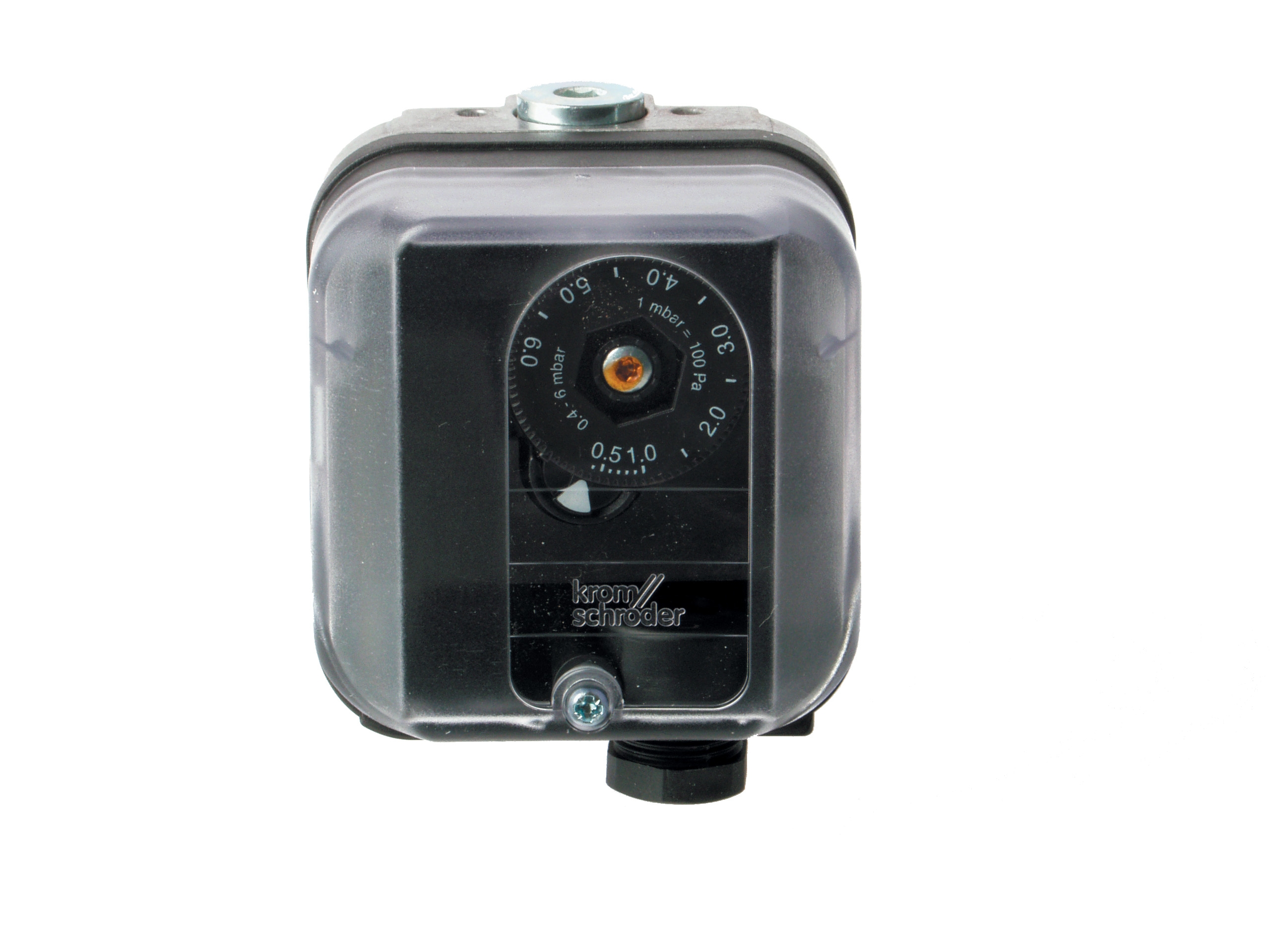
- Pressure gauges: Fuel line and combustion air pressure at the burner inlet. The Kromschroder DG 50U/6 pressure switch provides real-time monitoring with SIL 3 certification, critical for safety-interlocked systems.
- Flow meters: Optional but recommended for large installations to verify burner air and fuel flow rates.
- Thermometers: Flue gas exit temperature and combustion air inlet temperature (influences air density and ratio).
Documentation and Baseline Records
Before beginning any tuning work, establish baseline readings:
- Record flue gas composition (O₂, CO, CO₂) at current operating condition
- Note fuel pressure, burner air pressure, and burner firing rate
- Photograph the burner flame appearance (color, shape, stability)
- Document boiler or process equipment outlet temperature and load
These baselines allow you to measure the impact of adjustments and provide evidence of compliance for regulatory audits.
Section 2: Step-by-Step Air-Fuel Ratio Tuning Procedure
Pre-Tuning Safety Checks
Before adjusting combustion parameters:
1. Isolate the system: Shut down the burner and lock out electrical power at the main disconnect. Verify with your burner control relay—such as the Kromschroder BCU 570WC1F1U0K1-E—that fuel solenoids are de-energized and pilot ignition is disabled.
2. Inspect the burner: Check for scaling, soot buildup, or fuel nozzle blockage. Clean the combustion chamber if necessary.
3. Verify fuel quality: Confirm natural gas or oil meets your system specifications. Water contamination or incorrect grade fuel will prevent accurate tuning.
4. Test control interlocks: Manually cycle your flame detection and safety relay (e.g., Siemens LFL 1.622) to confirm proper operation before restart.
Tuning Procedure for Two-Stage Gas Burners
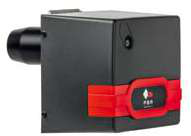
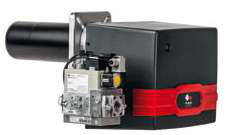
For burners like the FBR GAS XP 60/2 CE TC EVO, which operates at low and high firing rates:
Step 1: Establish Low-Fire Operating Point
- Start the burner on low fire and allow 10–15 minutes for thermal stabilization.
- Measure flue gas composition at the outlet (typically 150–250 mm downstream of the burner chamber exit).
- Target: 3–4% O₂ at low fire for safety and stability.
- If O₂ > 5%, the mixture is too lean; gradually open the combustion air damper (or increase air fan speed if modulating) until reaching target.
- If O₂ < 2%, reduce air or verify the burner nozzle is not oversized for low-fire load.
- Command the burner to high fire and wait 10 minutes for stabilization.
- Measure flue gas composition again.
- Adjust air-fuel ratio to maintain 3–4% O₂; use fuel pressure adjustment (typically +/−10% range) if the burner has independent fuel and air control loops.
- Note any changes in flame color or noise; stable blue flame with slight roar indicates good combustion.
- Record CO levels: target < 100 ppm for natural gas, preferably < 50 ppm.
- Record NOx levels: natural gas burners typically produce 50–150 ppm depending on flame temperature and air excess.
- Calculate thermal efficiency: (Inlet water temperature − Outlet water temperature) × flow rate / fuel energy input.
- Compare to design specification; efficiency should be within 2–3% of manufacturer rating.
- Record all measurements on your maintenance log.
- Simulate a flame loss by blocking the flame detector view; confirm the burner shuts down within 3 seconds and does not re-ignite without operator restart.
- Verify the Kromschroder BCU 570WC1F1U0K1-E or equivalent safety relay enters lockout mode.
Tuning Dual-Fuel Burners (Oil/Gas)
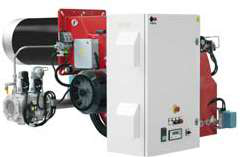
Heavy oil burners like the FBR KN 1300/M TL EL require additional considerations:
- Oil requires preheating (typically 50–80°C) to reduce viscosity; verify tank heater and temperature sensor before tuning.
- Oil combustion produces higher flame temperature and NOx; maintain target O₂ at 4–5% to balance emissions.
- Switching between oil and gas: shut down burner completely, allow flame to cool, verify fuel selector position, then restart. Do not attempt mid-cycle fuel switching.
- Oil nozzle spray angle must match burner quarl geometry; mismatched nozzles cause uneven flame and combustion instability.
Section 3: Emissions Compliance and Continuous Monitoring
Singapore Environmental Regulations
The National Environment Agency (NEA) and Pollution Control Department set limits for NOx and CO emissions from industrial combustion sources. Typical requirements for burners > 100 kW:
- NOx: 150–300 mg/Nm³ (varies by fuel type and boiler age)
- CO: < 100 mg/Nm³
- Opacity: Flue gas must not exceed Ringelmann Grade 1 (visual assessment)
Your facility must maintain records of emissions testing (typically every 2–3 years for licensed workshops) and corrective actions. Poor air-fuel ratio tuning is a common cause of audit failures.
Continuous Monitoring Best Practices
1. Monthly visual inspections: Check flame appearance, fuel line connections, and burner chamber cleanliness. Soot buildup indicates incomplete combustion (too rich).
2. Quarterly flue gas spot checks: Use a portable multigas analyzer to verify O₂ and CO remain within target ranges. Compare to baseline.
3. Annual professional emissions testing: Engage a licensed environmental consultant to perform full emissions compliance testing and provide a certified report.
4. Pressure monitoring: Install permanent pressure gauges (or sensor-based displays connected to your Kromschroder DG 50U/6 pressure switch) on fuel and air lines to detect drift over time.
Root Causes of Air-Fuel Ratio Drift
Common reasons for ratio deviation between tuning cycles:
- Fuel composition changes: Natural gas calorific value varies seasonally; heavier gas in winter requires air adjustment.
- Nozzle wear: Oil nozzles wear over 3,000–5,000 operating hours; narrowed spray angle reduces mixing efficiency.
- Damper wear: Combustion air dampers develop friction or binding; they require lubrication and periodic repositioning.
- Sensor fouling: O₂ sensors in flue gas can drift due to soot or corrosion; calibration drift of 0.5–1% O₂ is common after 1 year.
Section 4: Troubleshooting Common Tuning Issues
Problem: Burner Cycles On and Off Frequently
Likely cause: Air-fuel ratio too lean; flame detection signal is marginal or intermittent.
Resolution:
1. Reduce air slightly (close damper 5–10%) or increase fuel pressure by 5%.
2. Verify burner flame detector (UV or ionization cell) is clean and positioned correctly.
3. Check control system voltage supply; low voltage (< 200 V on 230 V supply) can cause intermittent flame signal loss.
4. Confirm your safety relay—such as the Siemens LFL 1.622—has not degraded; if in doubt, perform a test cycle and observe response time.
Problem: High CO Levels (> 200 ppm) at Normal Operating Point
Likely cause: Air-fuel ratio too rich; incomplete combustion due to insufficient oxygen or blocked air path.
Resolution:
1. Check burner air filter for clogging; replace if pressure drop > 50 Pa.
2. Open combustion air damper fully; measure air pressure at burner inlet (should be 50–150 Pa depending on burner design).
3. Inspect oil nozzle for partial blockage (oil burners only); pass a thin wire through the central orifice without forcing.
4. If air path is clear, fuel pressure may be excessive; reduce by 2–3 bar and re-measure CO.
Problem: Burner Will Not Ignite or Re-ignite After Shutdown
Likely cause: Ignition air too lean or fuel pressure too low; control relay not sequencing correctly.
Resolution:
1. Verify pilot fuel solenoid valve opens (listen for audible click and feel warm gas line).
2. Confirm pilot ignition electrode gap is 3–5 mm and spark is visible (blue spark = good; no spark indicates electrode carbon fouling or high-voltage failure).
3. Check main fuel solenoid valve pressure drop; if > 0.5 bar at normal flow, valve is failing and requires replacement.
4. Verify your Kromschroder BCU 570WC1F1U0K1-E control relay is receiving 24 VDC; measure with a multimeter at control input terminals.
5. Allow burner to cool for 2–3 minutes before retry; lockout timers prevent rapid re-attempt and may cause confusion.
Problem: Flame Temperature and Flue Gas Temperature Drop Significantly Over 2–3 Months
Likely cause: Burner chamber or heat exchanger fouling; air-fuel ratio compensating for reduced heat transfer.
Resolution:
1. Shut down and cool the system completely (allow > 30 minutes).
2. Access the burner chamber and inspect for soot or scale deposits; remove with soft brush (do not use abrasive pads on stainless burner quarls).
3. For boiler systems, chemical descaling may be required if water-side fouling is severe; contact a licensed boiler service provider.
4. Re-tune air-fuel ratio after cleaning; flue gas temperature should return to baseline within 1–2%.
Maintenance Schedule and Record-Keeping
Monthly:
- Visual inspection of burner flame and fuel connections
- Spot check flue gas O₂ and CO with portable analyzer
- Measure and record fuel pressure, air pressure, and flue gas temperatures
- Clean or replace burner air filter if pressure drop > 50 Pa
- Full flue gas emissions testing (professional)
- Calibrate O₂ and CO sensors
- Inspect and clean burner nozzle (oil systems)
- Test safety interlocks and flame detection circuit
- Deep cleaning of burner chamber and heat exchanger
- Replace burner gaskets and seals if leakage observed
- Professional burner alignment and flame pattern verification
Maintain a log of all adjustments, test results, and parts replaced. This documentation protects your facility during NEA compliance audits and supports warranty claims.
Conclusion
Air-fuel ratio tuning is not a one-time commissioning task—it is an ongoing responsibility for maintenance teams operating industrial burners in Singapore. By following the procedures in this guide, you will optimize fuel consumption, reduce emissions, and extend equipment life. 3G Electric supplies the Kromschroder BCU 570WC1F1U0K1-E, Kromschroder DG 50U/6, Siemens LFL 1.622, and other critical burner control components to support your commissioning and maintenance programs. Contact our technical team for assistance selecting monitoring and control equipment suited to your specific burner model and industrial application.