Understanding Burner Control Relays and Their Role in Combustion Safety
Burners & Combustion systems in industrial facilities depend on sophisticated control architecture to manage ignition sequences, flame monitoring, and fuel modulation safely. At the heart of this architecture sits the burner control relay—a component that coordinates the entire ignition process and responds to flame detection feedback in real time.
Unlike simple on/off switches, modern burner control relays are intelligent safety devices. They execute complex logic sequences: energizing ignition transformers, opening fuel solenoids, monitoring flame presence, and shutting down the burner if flame is lost within critical safety windows. The Kromschroder Relay BCU 570WC1F1U0K1-E exemplifies this sophistication, supporting both direct ignition and intermittent/continuous pilot modes while maintaining compliance with EN 746-2 and EN 676 standards—critical requirements for Singapore industrial operations.
Procurement engineers must recognize that relay selection is not interchangeable. A relay specified for indirect pilot ignition on a small residential boiler cannot be substituted into a medium-power industrial heating system running dual-fuel capability. The consequences—failed ignition sequences, undetected flame loss, or safety interlocks failing to function—directly impact facility uptime, insurance coverage, and regulatory standing.
With over 35 years of industrial equipment distribution experience, 3G Electric has observed that many facility downtime incidents trace back to incorrect relay or safety component specifications during the procurement phase rather than failures in operation. This guide provides the practical framework procurement engineers need to avoid these costly errors.
Pressure Switches: The First Line of Safety Interlock Verification
Before any fuel reaches the burner, pressure switches serve as critical gatekeepers in the combustion control chain. These devices monitor fuel pressure, air pressure, and pressure differentials—preventing ignition if conditions fall outside safe operating windows.
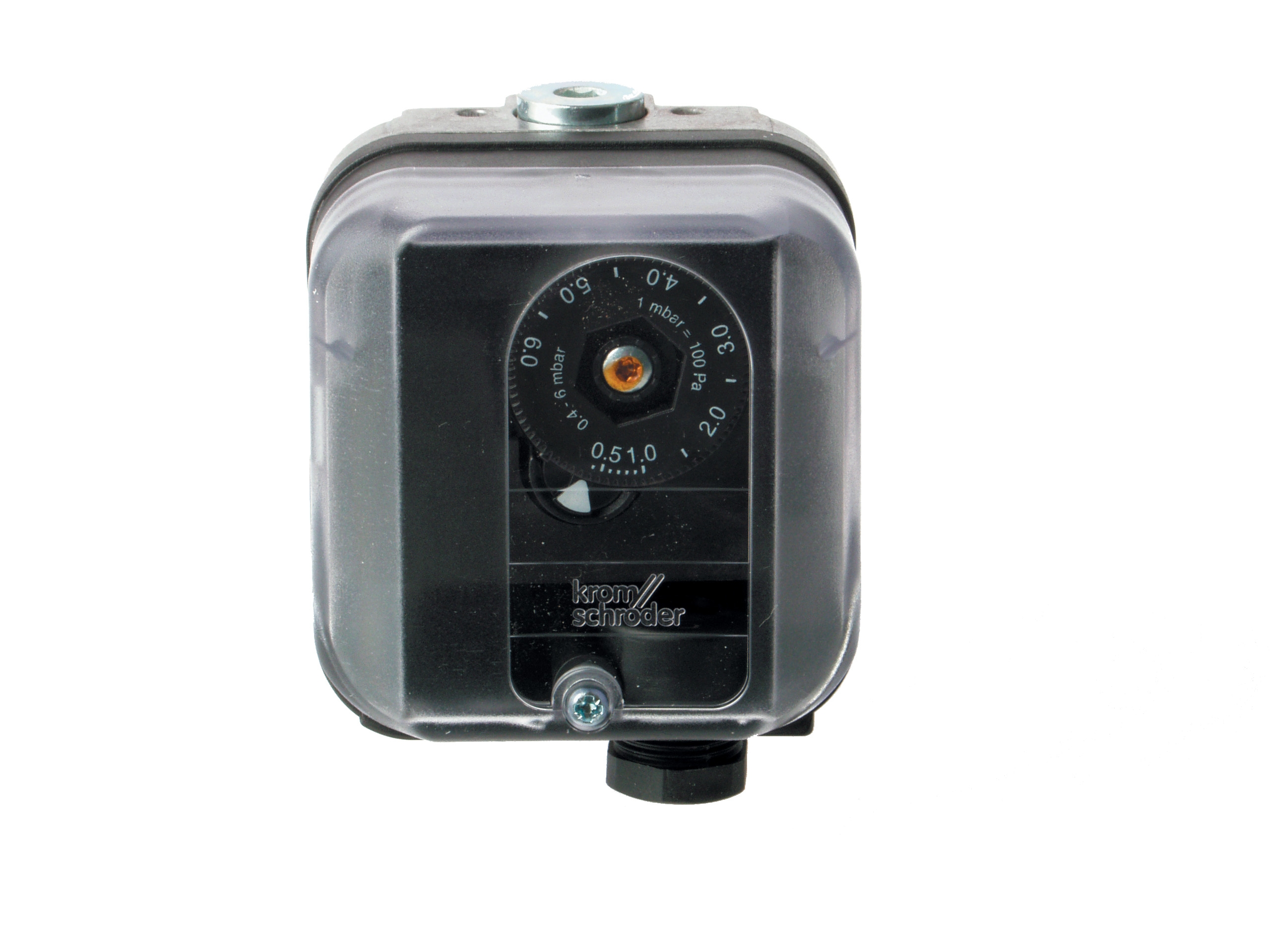
A pressure switch rated only for general industrial use is fundamentally different from one designed for burner safety applications. The Kromschroder Pressure Switch DG 50U/6 represents burner-specific design: SIL 3 rated and Performance Level e certified, meeting EN 1854, FM, UL, AGA, and GOST-TR standards. This multi-standard certification is not marketing window-dressing—it signals that the device has undergone rigorous third-party validation for functional safety in high-consequence environments.
For procurement engineers evaluating pressure switches, several specification dimensions must align:
Pressure Range and Hysteresis
The DG 50U/6 operates within defined pressure windows. Too narrow a hysteresis band (the pressure differential between switch opening and closing) causes nuisance shutdowns; too wide, and the switch fails to catch genuine pressure anomalies. Singapore's tropical humidity, temperature fluctuations, and altitude variations near sea level all influence calibration requirements. Specify pressure switches with adjustment ranges rather than fixed-point models when possible.
Response Time and Repeatability
Safety-rated pressure switches must demonstrate consistent switching behavior across thousands of cycles. Repeatability becomes critical in facilities running 24/7 operations. A switch that drifts 5% in sensitivity over 18 months introduces creeping risk that may not trigger alarms until catastrophic failure occurs.
Environmental Rating and Connector Type
Burner installations in Singapore often contend with salt-air exposure (coastal regions), high humidity, and industrial dust. A pressure switch with IP 67 rating and stainless-steel wetted parts resists corrosion far longer than a basic IP 54 unit. The connector type—DIN 43650C, M12, or proprietary—must match your facility's wiring infrastructure and spare-parts availability.
Procurement engineers should request pressure switch data sheets specifying drift compensation, temperature coefficient, and long-term stability warranties. Components with 5+ year stability guarantees often cost 15-20% more but eliminate replacement cycles during critical production windows.
Flame Detection and Safety Relay Integration: Coordinating Multiple Sensors
Modern burner combustion control requires coordinated action between multiple sensors and the main safety relay. The Siemens Relay LFL 1.622 exemplifies this integration challenge: it accepts UV and ionization flame detection inputs, processes them through safety logic, and commands air damper modulation—all within certified safety parameters.
When procurement teams specify flame detection systems in isolation from control relays, integration problems surface during commissioning. UV sensors may respond to stray sunlight differently than ionization rods; response times may not match relay watchdog timer windows; connector types may require field adapters that compromise safety certification.
Flame Detection Method Selection
UV (ultraviolet) detection responds to the UV radiation emitted during combustion. Ionization detection measures electrical conductivity across flame gaps. Neither is universally superior; the choice depends on fuel type, burner geometry, and site conditions:
- UV detection works well for gas burners and responds quickly (50-300 milliseconds) but can suffer false triggering from arc welding, mercury lighting, or daylight in poorly shielded installations. Singapore facilities with nearby welding operations should carefully evaluate UV immunity requirements.
- Ionization detection is slower (300-800 milliseconds) but less susceptible to ambient light. It works reliably with oil or gas but requires periodic cleaning in dusty environments.
The LFL 1.622 supports both detection methods, allowing procurement engineers to select the approach matching site conditions. However, this flexibility creates selection responsibility: specifying UV without evaluating site lighting conditions leads to nuisance shutdowns; specifying ionization without cleaning protocols leads to delayed flame loss detection.
Relay Response Logic and Safety Intervals
Burner control relays enforce mandatory safety intervals: after ignition command, a burner must prove flame within typically 4-7 seconds, or the relay initiates a safe shutdown sequence. This "flame supervision window" is non-negotiable safety logic, not adjustable configuration.
Procurement engineers must verify that relay response times match burner ignition characteristics. A burner requiring 8 seconds to develop stable flame cannot operate safely with a 7-second supervision window. Conversely, specifying 10-second windows when 5-second response is available introduces unnecessary delay in detecting genuine ignition failures.
Request vendor documentation specifying:
- Flame detection response time (sensor + relay processing)
- Supervisory window duration
- Safe shutdown initiation time
- Time to full fuel shutoff
These intervals must be validated against actual burner performance data, not assumed from ratings plates.
Specifying Dual-Fuel and Multi-Stage Burners: Control Complexity and Safety Implications
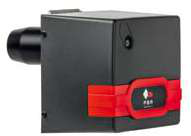
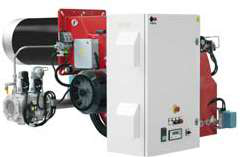
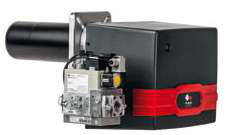
Industrial heating applications increasingly specify dual-fuel or modulating burners to optimize operating costs. The FBR GAS XP 60/2 CE TC EVO provides two-stage gas modulation (116–630 kW), while the FBR KN 1300/M TL EL delivers dual-fuel capability with modulating control (1700–11,500 Mcal/h). These advanced burners introduce control complexity that standard single-stage, single-fuel relays cannot handle.
Modulating Control and Proportional Valve Integration
Two-stage and modulating burners require proportional control of fuel supply—fine adjustments to fuel pressure or flow to match thermal load. This demands control relays with analog output capability, not just on/off switching. The complexity multiplies: proportional valve response curves must match relay output ramps; sensor feedback from load controllers must integrate with burner modulation logic; safety shutdowns must occur faster than proportional valve closing rates.
For procurement engineers, this means:
1. Specify relays with documented modulation output ranges (e.g., 4-20 mA signals)
2. Request valve response data showing opening/closing times at various signal levels
3. Verify relay software firmware supports your specific burner's modulation curve (if factory-programmable)
4. Plan commissioning time for system tuning; factory defaults rarely work optimally on first install
Fuel Switchover Sequences in Dual-Fuel Systems
The FBR KN 1300/M TL EL operates on either heavy oil or gas. Switchover must occur safely: the control relay must close one fuel solenoid, wait for residual pressure bleed, prove flame still stable, and then open the alternate fuel solenoid. This sequence takes 20-40 seconds depending on piping volumes and equipment design.
Procurement specifications for dual-fuel systems must include:
- Fuel switchover procedure documentation
- Maximum allowed flame interruption duration
- Solenoid closing/opening lag times
- Pressure relief valve settings on each fuel line
- Manual switchover isolation provisions for maintenance
Without these details embedded in the procurement specification, field engineers improvise during commissioning, creating unstable switchover sequences that trigger nuisance shutdowns under load changes.
Certification, Standards Compliance, and Regulatory Verification
Singapore's industrial sector operates under the Ministry of Manpower's safety regulations and equipment standards referenced in the Workplace Safety and Health Act. Gas equipment in particular must comply with PED (Pressure Equipment Directive) equivalent safety requirements, and electrical control equipment must meet EMC (electromagnetic compatibility) standards.
The Kromschroder BCU 570WC1F1U0K1-E carries EN 746-2 (safety controls for gas burners) and EN 676 (automatic shut-off valves). The DG 50U/6 carries EN 1854 (safety controls and devices for burner installations) plus international approvals (UL, FM, AGA). These are not interchangeable; EN 746-2 is specifically for control relays, while EN 1854 covers pressure switches.
Procurement engineers should:
1. Request certification documentation for every control component
2. Verify certifications are current (standards are revised periodically; 10-year-old certificates may not satisfy new facility requirements)
3. Check that certificates match your specific burner application (gas vs. oil vs. dual-fuel)
4. Maintain certification documentation in facility records for insurance and regulatory audits
3G Electric's 35+ years supplying industrial equipment across Southeast Asia means we maintain current certification files for all control components. When procuring through 3G Electric, you gain access to verified certification documentation, reducing the risk of regulatory compliance gaps during facility audits.
Procurement Checklist: Making Specification Decisions
When procurement teams encounter a burner control specification requirement, use this checklist to ensure complete, safe, and compliant purchasing decisions:
Burner and System Parameters
- Confirm burner fuel type(s): gas only, oil only, or dual-fuel
- Specify thermal power range in kW or Mcal/h
- Define operating mode: single-stage on/off, two-stage, or modulating
- Identify any pilot ignition requirement: direct, intermittent, or continuous pilot
- Confirm relay supports your ignition and pilot mode
- Verify flame detection input compatibility (UV, ionization, or both)
- Check that modulation output (if needed) matches your proportional valve input
- Request response time and safety interval documentation
- Confirm EN 746-2 certification for your burner fuel type
- Define pressure parameters being monitored: fuel inlet, air inlet, or differential
- Specify required pressure range and adjustment hysteresis
- Confirm SIL 3 or equivalent rating for your risk assessment
- Verify EN 1854 certification
- Specify environmental protection rating (IP 67 recommended for Singapore humidity)
- Request wiring diagrams showing relay, pressure switch, and burner solenoid interconnection
- Plan for modulation tuning if two-stage or proportional valves are involved
- Allocate commissioning time for safety function testing (flame supervision window, pressure interlock response)
- Assign responsibility for safety system validation testing
- Request current certification files for all control components
- Confirm component suitability for your facility's electrical supply (voltage, frequency, grounding)
- Specify spare parts availability for 5+ year horizon
- Establish warranty and support terms with your supplier
Following this framework transforms burner control procurement from a checkbox exercise into a strategic engineering decision that maximizes safety, reliability, and regulatory confidence.