Understanding Burners & Combustion Fundamentals for Equipment Specification
When procuring burners & combustion equipment, your role extends beyond identifying brand names and SKUs. You must understand the combustion process itself to make informed purchasing decisions that protect your organization's investment. Combustion efficiency directly impacts operating costs, emissions compliance, and equipment longevity.
At 3G Electric, our 35+ years of global industrial equipment distribution has taught us that procurement decisions made without combustion knowledge often result in oversized systems, energy waste, or incompatible components. The combustion process involves three critical elements: fuel, oxygen, and ignition. Your specification must account for how these elements interact within your specific industrial environment.
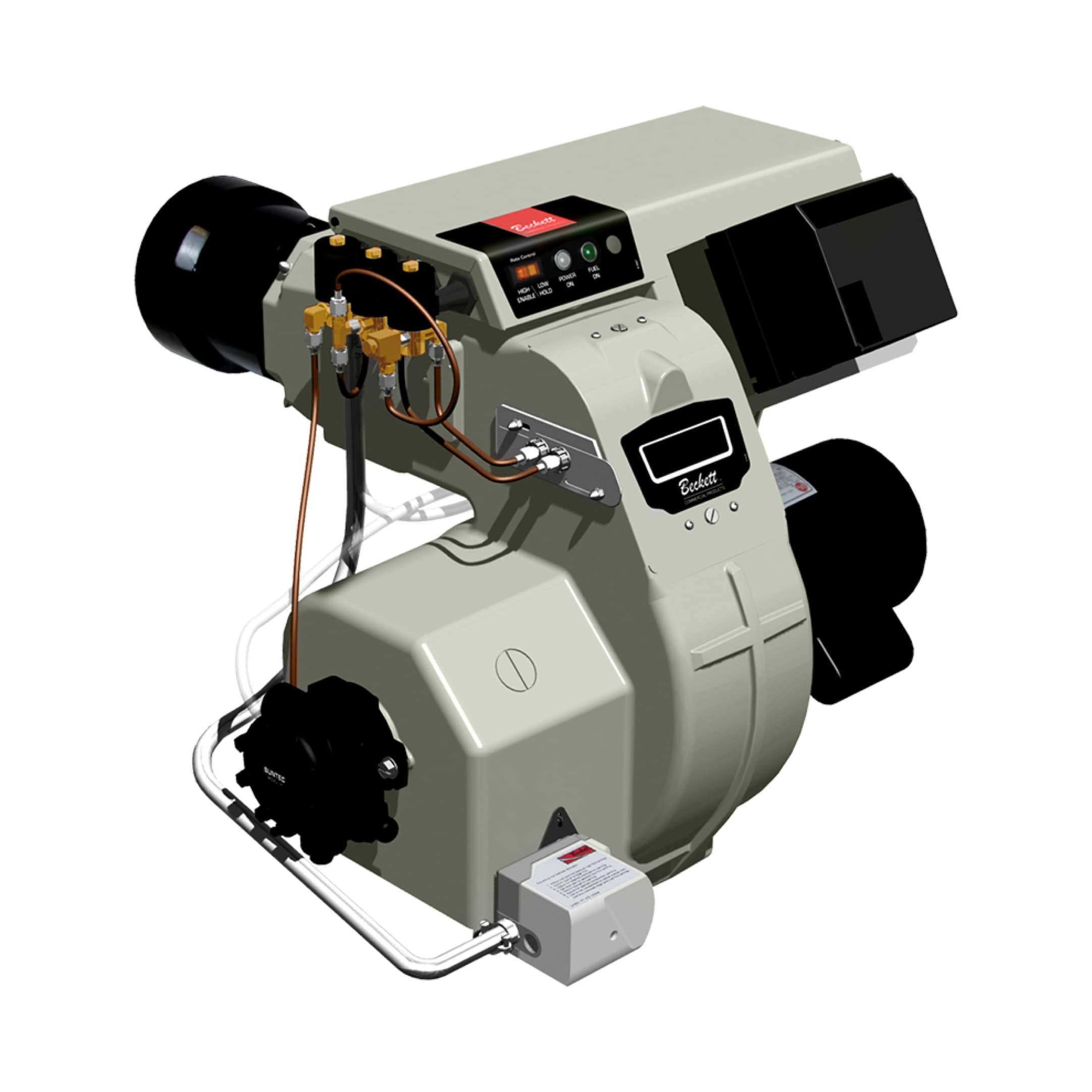
Fuel type selection is the foundational decision. Oil-based systems, natural gas, LPG, and dual-fuel configurations each present distinct advantages and operational challenges. An oil burner like the Beckett CF3500 (17-35 GPH) operates on completely different principles than gas systems. Oil burners require atomization to break fuel into fine particles for complete combustion, while gas burners rely on mixing gas with air at specific ratios. Understanding these differences prevents specification errors that can cost months in equipment changeovers.
The combustion chamber design, fuel delivery pressure, air supply volume, and ignition method must all align with your selected fuel type. Mismatches in any of these areas compromise performance and reliability.
Fuel Type Analysis: Matching Burner Selection to Your Industrial Process
Oil Burner Systems and When to Specify Them
Oil burners excel in facilities with consistent heating demands and existing oil storage infrastructure. The Beckett CF3500 oil burner delivers 17-35 GPH (gallons per hour) capacity with direct spark ignition, making it suitable for mid-range commercial and light industrial heating applications. Key procurement considerations for oil systems include:
- Storage and handling: Oil requires proper storage tanks, regular maintenance, and compliance with environmental regulations
- Fuel quality: Oil degradation affects combustion efficiency; procurement must factor in fuel testing and treatment costs
- Ignition reliability: Direct spark systems require electrode maintenance and replacement schedules
- Emission standards: Oil combustion produces higher particulate matter; verify local emissions regulations before specifying
When evaluating oil burner specifications, request technical data on turndown ratio (the range between minimum and maximum firing rates). The Beckett CF3500's broad GPH range allows flexibility in load management, reducing energy waste during partial-load operations common in seasonal heating applications.
Natural Gas Burner Systems for Cost-Effective Operations
Natural gas represents the preferred fuel in regions with established pipeline infrastructure. Gas combustion produces fewer emissions and lower operational costs compared to oil. However, gas burner systems require different component specifications, particularly in fuel control and safety devices.
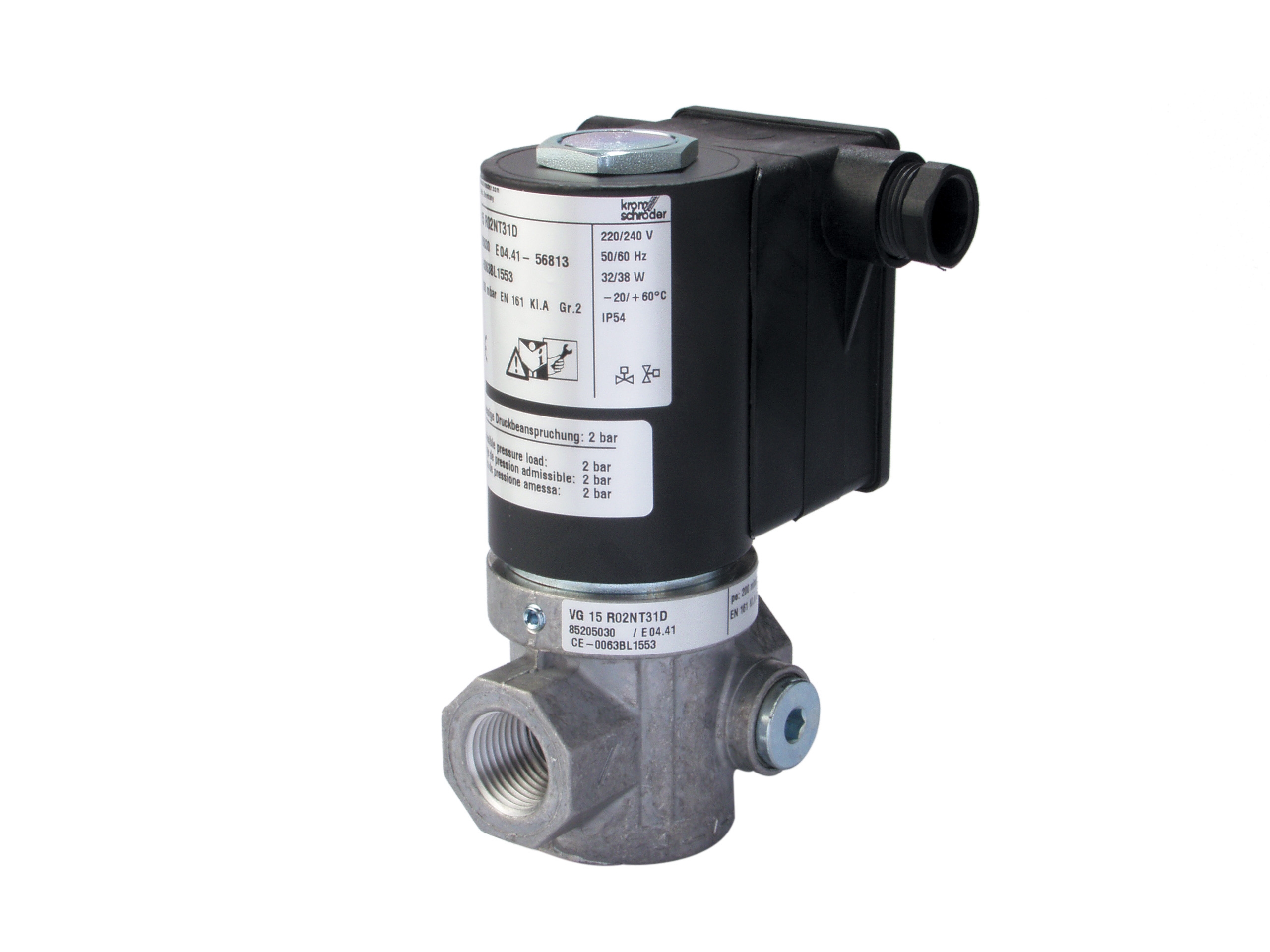
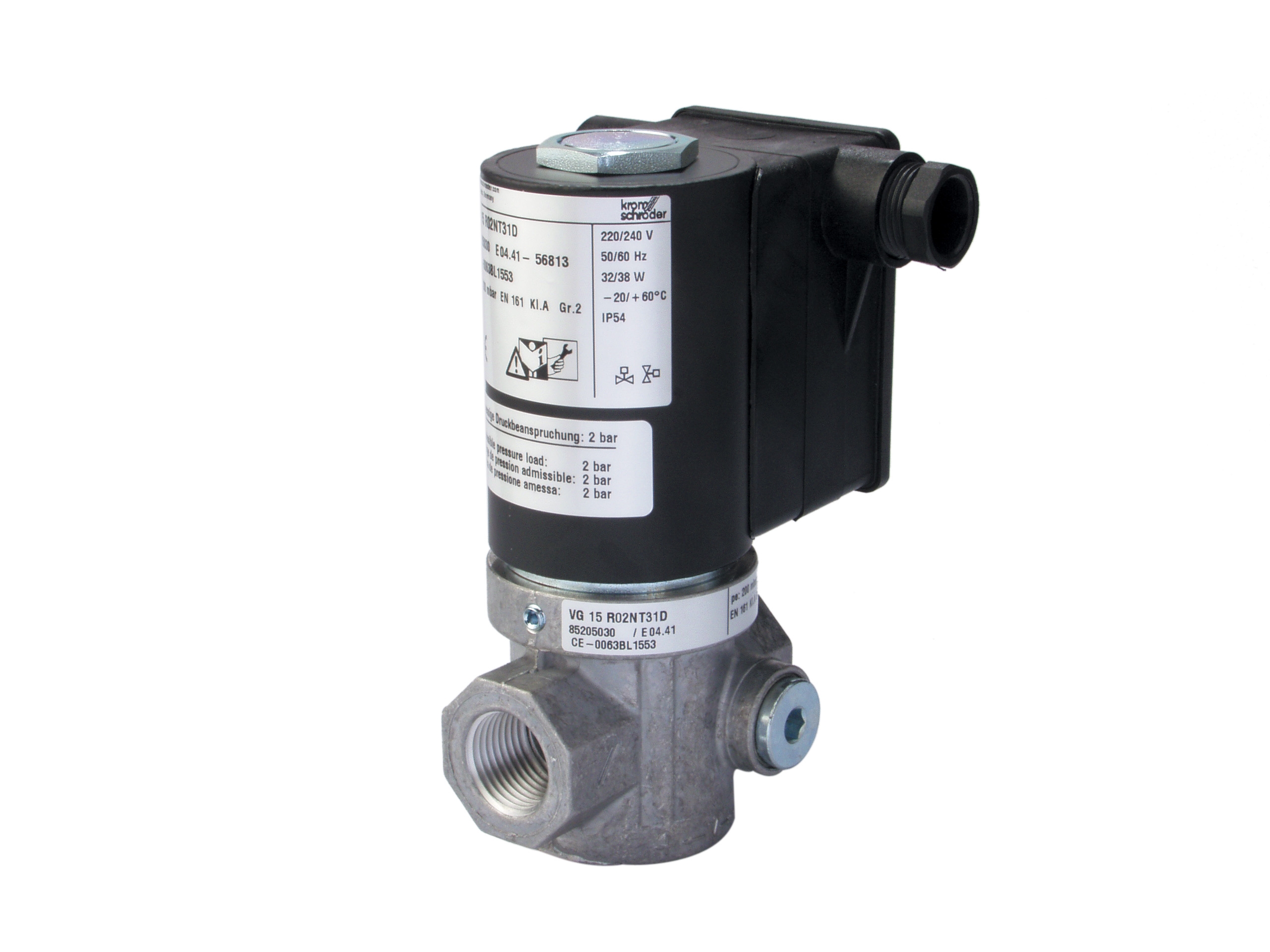
Gas burners depend on solenoid valves to regulate fuel flow and manage ignition safety sequences. These components must respond rapidly to control signals and fail safely if electrical power is interrupted. When specifying gas systems, procurement must account for:
- Solenoid valve response times: Fast-acting valves enable precise combustion control but cost more
- Gas pressure regulation: Consistent fuel pressure is critical for stable flame characteristics
- Air-gas mixing ratios: Improper mixing results in incomplete combustion and increased emissions
- Safety interlocks: Flame detection and fuel shutoff systems prevent dangerous fuel accumulation
For rapid response gas control, the CBM Fast gas solenoid valve VAS 110R/NW provides millisecond-level valve actuation. This speed is essential in modulation systems where burners continuously adjust firing rates to match load demand. Slower solenoid valves create lag that reduces system responsiveness and combustion stability.
Dual-Fuel Systems: Flexibility and Complexity
Industrial facilities with dual-fuel burners can switch between oil and gas based on fuel availability and cost. This flexibility provides operational resilience but demands careful procurement specification. Dual-fuel systems require:
- Redundant fuel supply systems: Complete piping, filtration, and regulation for both fuels
- Pilot light management: Ensuring reliable ignition regardless of primary fuel selection
- Control system compatibility: The burner controller must manage fuel selection logic without operator intervention
- Performance validation testing: Specification should require factory testing of both fuel modes
Dual-fuel burners justify higher capital costs only when your facility experiences significant fuel price volatility or supply disruption risk. Overspecifying dual-fuel capability when single-fuel operation suffices wastes procurement budget.
Combustion Control and Safety Component Specification
Beyond fuel and burner selection, procurement engineers must specify control components that govern safe and efficient combustion. These components directly impact system reliability and operational safety.
Solenoid Valve Selection for Different Operating Regimes
Solenoid valves control fuel delivery and safety shutoff in burner systems. Selection depends on your burner's operational characteristics:
- Fast-acting valves (CBM VAS 365R/NW and VAS 110R/NW) suit systems requiring rapid flame modulation or frequent on-off cycling. These valves open and close within 50-150 milliseconds, enabling responsive combustion control
- Slow-acting valves (CBM VAS 340R/LW and VAS 125R/LW) work in systems with stable, predictable loads where gradual fuel adjustment is acceptable
Procurement engineers often overlook solenoid valve selection complexity. Specifying fast-acting valves in stable-load applications wastes capital on unnecessary performance, while slow valves in dynamic systems create control lag that increases emissions and reduces efficiency.
Request flow ratings and pressure drop specifications from suppliers. Undersized solenoid valves restrict fuel flow and reduce burner capacity; oversized valves reduce control precision. The correct size delivers required fuel volume at design pressure with minimal pressure loss.
Flame Detection and Safety System Integration
Modern burners & combustion systems require integrated flame detection that confirms successful ignition within seconds. UV flame detectors, ionization sensors, and photocell devices each have distinct application ranges and reliability characteristics.
When specifying flame detection, procurement must align sensor type with fuel type and operating environment:
- Oil burners traditionally use UV sensors, though ionization can work in some applications
- Gas burners commonly use ionization sensors due to cost and reliability
- Industrial environments with high ambient light may require UV sensors despite higher cost
Safety relay modules monitor flame detection signals and execute fuel shutoff if flame is lost. Specification should require manual reset capability to prevent automatic restart after unsafe shutdowns, protecting equipment and personnel.
System Sizing and Capacity Planning
Procurement decisions extend beyond component selection to overall system sizing. Undersized burners cannot meet facility heating demands; oversized systems operate inefficiently at partial load for extended periods.
Load Calculation Methodology
Work with your engineering team to establish peak heating load, typical operating load, and minimum turndown requirements. A facility with 10 MW peak heating demand may operate at 40% load during mild weather and 80% during cold periods. Specifying a single 10 MW burner means operating at 40% capacity much of the time, dramatically reducing efficiency.
Right-sized specifications often call for multiple smaller burners or modulating burners that adjust firing rate to match demand. This approach maintains high efficiency across the full operating range.
Turndown Ratio and Modulation Range
Turndown ratio describes the minimum firing rate as a percentage of maximum capacity. A burner with 4:1 turndown can fire as low as 25% capacity. Higher turndown ratios enable operation across wider load ranges without shutting down and restarting.
The Beckett CF3500's 17-35 GPH range offers approximately 2:1 turndown, suitable for applications with moderate load variation. Facilities with extreme load swings (seasonal heating with summer shutdowns) may justify more sophisticated modulating systems.
Procurement Best Practices and Total Cost of Ownership
Effective procurement extends beyond initial equipment cost to consider lifetime operational expenses.
Specification Documentation Standards
Create detailed specification documents that include:
- Fuel type and supply conditions (pressure, temperature, quality)
- Peak and minimum firing rates
- Turndown ratio requirements
- Safety interlocking requirements
- Emission compliance standards
- Maintenance access and serviceability
- Integration with existing control systems
Detailed specifications prevent misunderstandings with suppliers and enable accurate competitive bidding.
Vendor Evaluation Beyond Price
The lowest-cost bid often reflects incomplete specifications or excluded components. Evaluate vendors on:
- Technical support availability during commissioning
- Parts availability for maintenance and repairs
- Warranty terms and service obligations
- Local technical service capabilities
- Factory testing and performance documentation
At 3G Electric, our 35+ years in industrial equipment distribution demonstrates that vendor partnerships reduce long-term costs through better support, faster troubleshooting, and reliable parts availability.
Spare Parts Strategy
Procurement must include spare parts availability analysis. Critical components like solenoid valves, ignition electrodes, and fuel nozzles wear predictably. Establishing relationships with distributors ensures parts availability when equipment fails.
Request supplier recommendations for spare parts kits based on expected maintenance intervals. Budget for these consumables in your total cost of ownership analysis.