Understanding Abnormal Noise and Vibration in Pumps & Compressors
With over 35 years of experience distributing industrial equipment globally, 3G Electric has observed that noise and vibration complaints represent the most frequently overlooked early warning signs in Pumps & Compressors operations. These symptoms typically emerge 4-8 weeks before complete system failure, providing a critical window for preventive intervention.
Abnormal acoustic signatures and mechanical vibration stem from multiple sources: bearing degradation, misalignment, cavitation inception, impeller damage, or internal component wear. Unlike pressure loss or flow rate reduction issues that may manifest gradually, noise and vibration changes are immediately perceptible to operating personnel, making them invaluable diagnostic indicators.
Maintenance teams must recognize that standard operating noise differs fundamentally from alarm-state noise. A healthy centrifugal pump typically produces a steady, low-frequency hum (65-75 dB). Conversely, high-pitched squealing, rhythmic hammering, or random chattering sounds indicate distinct mechanical failures requiring immediate investigation.
The challenge for global maintenance operations lies in establishing baseline acoustic profiles during commissioning, then systematically comparing operating conditions against these benchmarks. Environmental variables—ambient temperature, surrounding equipment, intake manifold design—all influence noise characteristics, making context-aware diagnosis essential.
Diagnostic Procedures for Identifying Noise Sources
Step 1: Baseline Documentation and Frequency Analysis
Initiate troubleshooting by establishing comprehensive baseline data during equipment commissioning. Record operating sound levels using industrial sound meters (Class 2 minimum) at standardized measurement points: pump discharge line, motor coupling location, bearing housing, and suction manifold. Document frequencies using smartphone acoustic analysis applications or dedicated vibration analyzers.
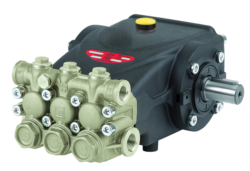
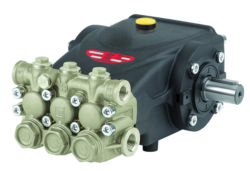
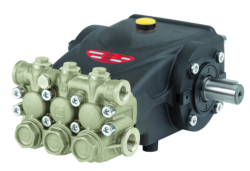
For Interpump E3B2515I R and Interpump E3B2515 L series installations, establish baseline readings during first-week operation under nominal flow and pressure conditions. Store this data digitally with timestamp, ambient temperature, inlet pressure, and discharge pressure readings.
Step 2: Vibration Measurement and Trend Analysis
Vibration monitoring employs three measurement axes: vertical (Z), horizontal lateral (Y), and axial (X). High-frequency vibration (1000-5000 Hz) typically indicates bearing or coupling issues, while low-frequency vibration (10-200 Hz) suggests misalignment or foundation problems.
Utilize accelerometers mounted directly on pump housing near bearing cartridges. Velocity measurements between 0.1-0.3 inches/second indicate normal operation. Readings exceeding 0.5 inches/second warrant immediate investigation. For multi-stage equipment like the Interpump E3B1515 DX*VALV.DX + GEARBOX RS500H, monitor each stage independently as vibration may localize to specific sections.
Implement monthly trend logging. Gradual vibration increases (0.05 in/sec monthly) suggest progressive bearing wear, while sudden spikes indicate acute damage or impeller collision.
Step 3: Acoustic Signature Interpretation
Different failure modes produce distinctive sound patterns:
- Cavitation Onset: Irregular crackling resembling gravel in discharge lines; occurs when inlet pressure drops below vapor pressure by 2-3 psi
- Bearing Degradation: Squealing or grinding at bearing housing location; increases with temperature elevation
- Misalignment: Rhythmic thumping synchronized with shaft rotation; may accompanied by visible coupling vibration
- Impeller Damage: Intermittent chirping or clicking; frequency increases with pump speed
- Valve Malfunction: Rapid chattering in discharge lines; specific to valve-integrated systems like Interpump E3C1021 DXV.DXNO.C/J configurations
Record audio samples using high-fidelity smartphone microphones positioned 12 inches from noise source. Compare spectrograms against baseline recordings. Frequency shift of ±500 Hz typically indicates wear progression requiring planning for maintenance windows.
Root Cause Analysis and Corrective Actions
Bearing-Related Noise and Vibration
Bearing failures account for approximately 40% of unplanned Pumps & Compressors shutdowns. Early detection prevents complete bearing seizure and secondary damage to shafts and housings.
Diagnostic Indicators:
- High-frequency (2000+ Hz) squealing or grinding sounds
- Elevated bearing housing temperature (exceeding normal by 15-20°C)
- Intermittent vibration spikes during startup
- Brown discoloration on shaft near bearing when inspected during maintenance
1. Verify lubrication condition and schedule—inadequate lubrication causes 70% of premature bearing failures
2. Check bearing housing alignment using dial indicators; maximum radial runout tolerance is 0.002 inches
3. Inspect bearing seals for contamination or moisture ingress
4. Compare current bearing cartridge manufacturer specifications against original equipment documentation
5. Schedule bearing replacement during next planned maintenance window; continued operation may result in $15,000-$45,000 in secondary equipment damage
For bearing-intensive applications, 3G Electric recommends switching to premium extended-life bearing cartridges during scheduled replacements, adding minimal cost but extending service intervals by 18-24 months.
Misalignment Issues in Coupling Systems
Motor-to-pump coupling misalignment represents the second-leading cause of premature Pumps & Compressors degradation. Both angular and parallel misalignment exceed acceptable tolerances in approximately 60% of field installations.
Detection Methods:
1. Dial Indicator Method: Mount indicators on pump and motor shafts; rotate shafts manually while observing deviation. Angular misalignment exceeding 0.001 inches/inch of coupling diameter requires correction. Parallel misalignment beyond 0.005 inches demands realignment.
2. Visual Inspection: Examine wear patterns on flexible coupling elements. Uneven wear on one side indicates angular misalignment; symmetric wear suggests parallel offset.
3. Vibration Phase Analysis: Compare vibration phase relationship between motor and pump. Opposite-phase vibration (180° differential) indicates coupling misalignment.
Corrective Procedure:
1. Loosen motor mounting bolts sufficiently to allow 0.5-1.0 inch movement
2. Use tapered shim sets under motor feet to correct angular misalignment
3. Translate motor horizontally using soft-faced mallets to eliminate parallel offset
4. Re-check with dial indicators; iterate until tolerance achieved
5. Torque mounting bolts progressively in cross pattern (85-120 ft-lbs typical for industrial motors)
6. Perform final vibration check with operating equipment
Proper alignment extends coupling life from 2-3 years to 5-7 years and reduces overall system vibration by 35-50%.
Impeller and Rotor Damage Assessment
Damaged impellers in Pumps & Compressors systems produce distinct acoustic signatures distinguishable from bearing or alignment problems. Interpump E3C1515 L units and similar multi-stage configurations show localized damage progression that, if detected early, prevents catastrophic failure.
Symptom Recognition:
- Intermittent chirping or clicking sounds at blade passage frequency (typically 2-4 times shaft rotation frequency)
- Gradual flow rate reduction without pressure change
- Oscillating discharge vibration at specific operating speeds
- Small debris or metallic particles in suction strainer—collect and analyze
1. Shut equipment down immediately; do not continue operation with suspected impeller damage
2. Close suction and discharge isolation valves
3. Remove pump casing inspection cover if accessible; visually inspect impeller for cracks, erosion, or cavitation pitting
4. Measure impeller clearances using feeler gauges at 4 points around circumference; compare against manufacturer specifications (typically 0.015-0.035 inches)
5. Check suction strainer for debris indicating impeller fragmentation
6. If cracks or significant erosion visible, schedule immediate pump replacement or impeller service
Progressive impeller erosion reduces efficiency 2-4% monthly if left uncorrected. Early intervention prevents outlet blockage and secondary system contamination.
Preventive Maintenance Protocols and Monitoring Best Practices
Establishing Predictive Maintenance Programs
Modern maintenance teams should transition from reactive (failure-driven) to predictive (data-driven) approaches. Implement continuous or monthly vibration and acoustic monitoring for critical Pumps & Compressors installations. 3G Electric's 35+ years of global distribution experience demonstrates that systematic monitoring reduces unplanned downtime by 65-75% and extends equipment service life by 40-60%.
Implementation Framework:
1. Data Collection: Establish standardized measurement protocols at fixed locations, times, and operating conditions
2. Baseline Establishment: Document 2-3 months of normal operation data before establishing alarm thresholds
3. Trend Analysis: Monthly comparison of current readings against 6-month rolling average; investigate deviations exceeding 15%
4. Alert Thresholds: Define four-level escalation—green (normal), yellow (investigate within 30 days), orange (schedule maintenance within 14 days), red (shutdown imminent, implement within 48 hours)
5. Maintenance Integration: Coordinate predictive data with preventive maintenance calendars; accelerate planned intervals if trends indicate accelerating degradation
Environmental and Operational Controls
External factors significantly influence Pumps & Compressors noise and vibration characteristics:
- Temperature Management: Bearing noise increases 2-3 dB per 10°C temperature rise. Maintain inlet temperatures 5-10°C below maximum equipment specifications
- Pressure Stability: Fluctuating discharge pressure (±5 psi variance) indicates control valve problems or downstream restrictions. Stabilize pressure within ±2 psi using properly tuned regulators
- Flow Rate Optimization: Operating near rated flow minimizes vibration. Flow rates below 60% of nominal or above 110% of nominal increase noise levels significantly
- Suction Conditions: Maintain suction pressure within manufacturer specifications; low suction pressure (below -3 psi gauge) initiates cavitation within seconds
- Foundation Integrity: Inspect concrete foundation annually for cracking or settlement. Deteriorated foundations increase system vibration 20-30%
Documentation and Escalation Procedures
Maintenance teams must establish systematic documentation protocols enabling equipment history analysis and failure prediction:
1. Create digital logs capturing date, time, equipment identification, operating parameters (flow, pressure, temperature), noise level (dB), vibration measurement (in/sec), and observations
2. Photograph or record audio/video of anomalies for specialist review
3. Flag trend reversals; equipment operating normally after previous degradation may indicate temporary obstruction clearing rather than problem resolution
4. Escalate to engineering or equipment specialists when measurements exceed predetermined thresholds
5. Schedule manufacturer consultation before replacing critical components; Interpump and similar OEM technical teams often provide cost-effective refurbishment options
Conclusion
Systematic diagnosis of noise and vibration in Pumps & Compressors represents perhaps the most cost-effective strategy for preventing catastrophic failures and maintaining operational reliability. By implementing the protocols outlined in this guide—baseline documentation, frequency-specific diagnostic procedures, and predictive monitoring frameworks—maintenance teams globally can extend equipment service life, reduce unplanned downtime, and optimize total cost of ownership.
3G Electric's 35 years of industrial equipment distribution experience demonstrates that organizations prioritizing early acoustic and vibration diagnosis achieve failure-free operation rates 60-70% higher than reactive maintenance approaches. The investment in monitoring equipment and technician training pays dividends within 6-12 months through extended equipment life and reduced emergency service costs.
When planning Pumps & Compressors maintenance or replacement programs, consult directly with 3G Electric's technical specialists regarding equipment specifications and troubleshooting support aligned with your operational environment and performance requirements.