Understanding Controls & Safety: Pressure Drop Fundamentals
Pressure drop across solenoid valves represents one of the most misdiagnosed issues in industrial Controls & Safety systems. When gas or fuel flows through a solenoid valve, resistance created by the valve's internal geometry causes pressure loss. This pressure differential directly impacts valve opening time, closing reliability, and overall system response—critical factors for maintaining safety interlocks.
At 3G Electric, our 35+ years of experience distributing industrial equipment has shown us that procurement engineers frequently underestimate how pressure drop accumulates across multiple control components. A single valve operating at 0.3 bar above minimum specification may function adequately. Add a second valve in series, plus filter restriction and pilot line losses, and your system suddenly operates below safe operating thresholds. The flame detection circuit loses sensitivity. The solenoid coil struggles to maintain armature position. Safety shutoff timing increases beyond acceptable limits.
The challenge intensifies in global operations where altitude, temperature variations, and regional gas quality differ significantly. A valve specified for European natural gas at sea level may perform inadequately in high-altitude Southeast Asian installations using LPG with different viscosity profiles.
Diagnosing Pressure Drop Issues: Measurement and Analysis
Proper diagnosis requires systematic pressure monitoring at multiple points. Begin by establishing baseline pressures with a calibrated analog or digital gauge (0-5 bar range minimum) at the inlet and outlet of each solenoid valve in your Controls & Safety circuit.
Critical measurement locations:
- Upstream of the main gas solenoid
- Between the main solenoid and any pilot solenoid valves
- After the complete valve assembly but before the burner manifold
- At the pilot gas outlet (if piloted system)
Record measurements under three conditions: system at rest, pilot ignition sequence, and main burner operation. Compare against manufacturer specifications—most quality valves maintain pressure drop below 0.15-0.25 bar at nominal flow rates.
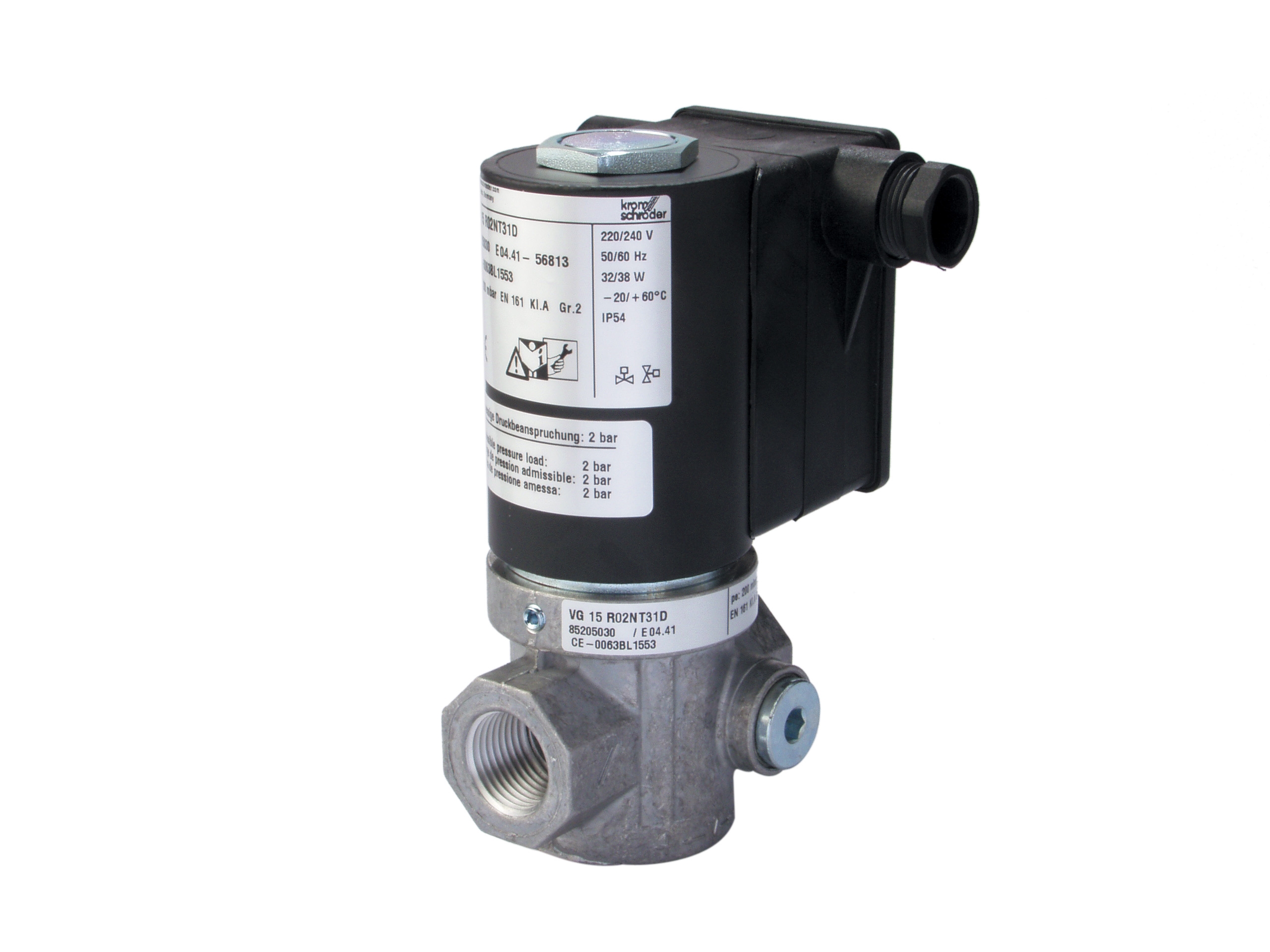
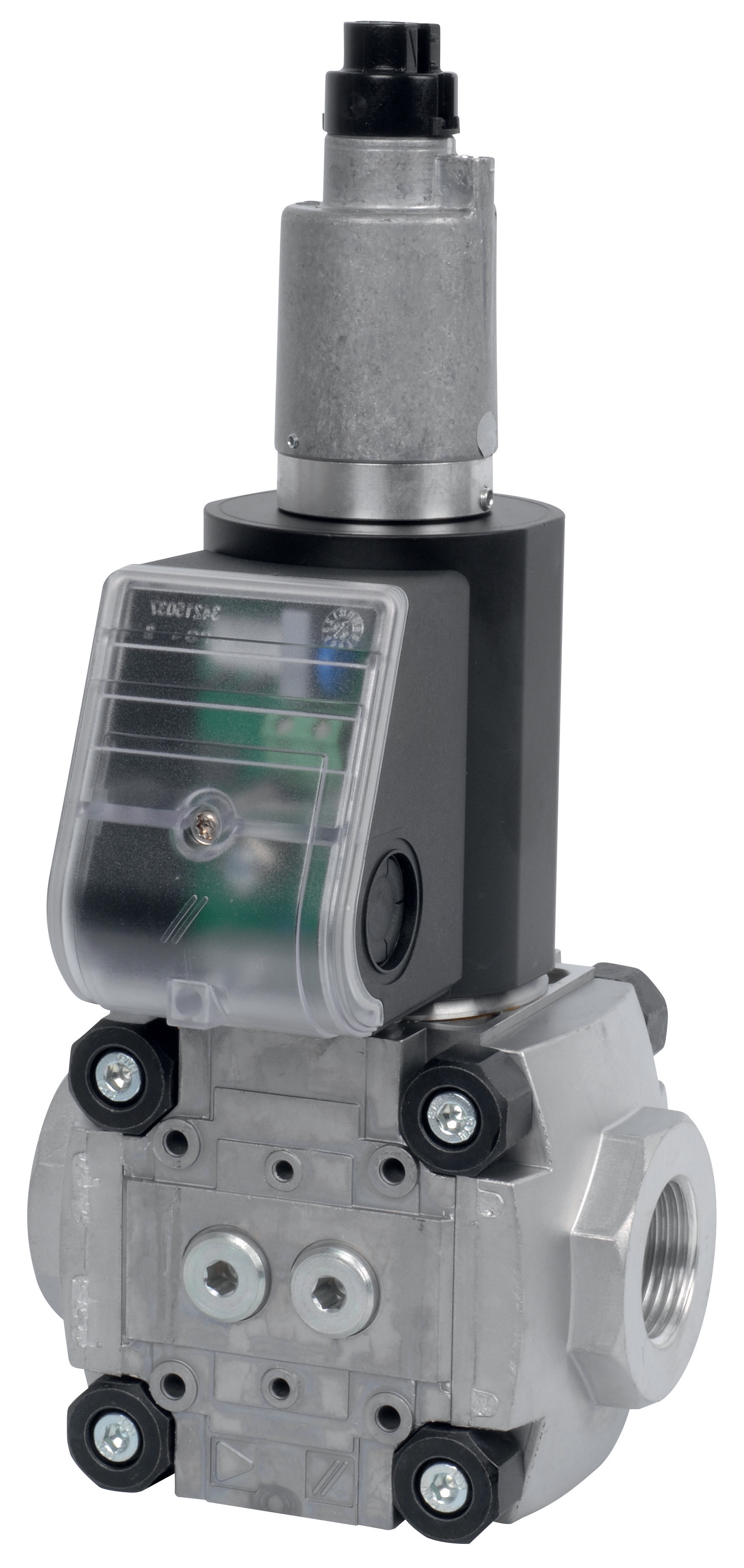
For the CBM Slow gas solenoid valve VAS 340R/LW, acceptable pressure drop at rated flow should not exceed 0.2 bar. For the faster-response CBM Fast gas solenoid valve VAS 110R/NW, design characteristics allow slightly higher drop (0.25-0.3 bar) due to reduced internal passage diameter. Deviation beyond these ranges indicates either:
- Contamination within the valve seat or orifice
- Coil aging reducing electromagnetic force (affecting armature seating pressure)
- Pilot gas supply line obstruction
- Incorrect valve orientation (particularly for the CBM Slow gas solenoid VAS 125R/LW)
If pressure drop exceeds specification, isolate individual components. Remove the solenoid valve from the circuit and measure directly. Excessive drop in isolation confirms internal valve degradation. Normal isolation measurements but high system drop suggests external piping restrictions or integration issues with the CBM Relay DMG 970-N MOD.03 control block's internal passages.
Pressure Drop Impact on Safety Response Times
Pressure drop directly affects solenoid valve response timing—a safety-critical parameter in Controls & Safety systems. When operating pressure at the valve inlet drops below a critical threshold, the magnetic field's attractive force must overcome both spring tension and inlet pressure differential. This creates a measurable delay in valve opening.
Consider a practical scenario: Your burner's safety lockout timer specifies 0.5 second maximum closing time for the main solenoid. Under ideal conditions, the CBM Fast gas EV VAS 365R/NW achieves this. However, if pilot line pressure drop has reduced inlet pressure by 0.4 bar due to a partially-blocked filter or long pilot supply tubing, the armature response slows to 0.8-1.2 seconds. The safety controller now detects delayed shutdown—triggering a fault condition and system lockout.
This scenario commonly appears in retrofitted installations where fast-response solenoid valves are added to older pilot gas circuits. The existing pilot supply line, sized for lower flow demands, cannot support the higher flow requirements of newer fast gas solenoids. Procurement engineers often overlook pilot supply line capacity during specification.
Practical solutions:
- Verify pilot gas supply line diameter matches valve inlet flow requirements (typically 4-6mm minimum for fast solenoids)
- Install pressure regulators immediately upstream of solenoid banks to maintain stable inlet pressure
- Add bypass passages in the Relay DMG 970-N MOD.03 if internal flow restrictions exceed 0.15 bar
- Separate slow and fast solenoid supplies with individual pilot lines
Integration and System-Level Troubleshooting
Pressure drop becomes a system-level issue when multiple components interact. The CBM Relay DMG 970-N MOD.03 integrates solenoid valve control with pilot gas distribution and safety interlocks. Internal passages that distribute pilot gas to multiple solenoids can accumulate sludge, carbon deposits, or moisture over time.
When troubleshooting Controls & Safety failures affecting multiple valves simultaneously, suspect the relay block before condemning individual solenoids. Symptoms include:
- Inconsistent response times between the main solenoid and pilot valves
- Pressure readings within specification at relay inlet, but low at outlet manifolds
- Intermittent opening of pilot solenoids despite stable electrical signals
- Heating of the relay body (indicates flow restriction causing pressure-driven friction)
For installations using both the VAS 340R/LW slow solenoid and VAS 110R/NW fast solenoid in tandem, pressure drop distribution is critical. The slow solenoid should experience minimal pressure drop (0.15 bar maximum) because it operates continuously during burner operation. The fast solenoid, which cycles on/off during ignition, tolerates higher drop. If system design routes both through identical passages in the relay block, the slow valve's operating pressure degrades, affecting flame stability during main burner operation.
Maintenance and prevention strategy:
- Flush the Relay DMG 970-N MOD.03 at 18-month intervals using filtered nitrogen at 1.5x normal operating pressure
- Install a fuel gas filter (100-150 micron) upstream of the relay block
- Perform annual pressure drop audits on all solenoid circuits
- Document baseline measurements during commissioning for future comparison
- Replace solenoid coils showing age-related performance degradation (typically 7-10 years), not just when failures occur
Procurement engineers should verify that supplier documentation includes pressure drop specifications at multiple flow rates, not just nominal conditions. 3G Electric's 35+ years of experience confirms that procurement decisions based solely on cost or brand reputation—without detailed pressure specifications—lead to system incompatibilities that surface months after installation.
Selecting Components for Pressure Management
When specifying replacements, pressure management requirements should drive component selection. The CBM Slow gas solenoid VAS 125R/LW is engineered for applications requiring low pressure drop and gentle flow control. Use it for pilot gas supplies feeding multiple downstream solenoids. Reserve the CBM Fast gas EV VAS 365R/NW for direct main gas control where rapid response takes priority over pressure conservation.
For global operations, account for regional gas properties. European natural gas (approximately 11 kWh/m³, lower density) produces different pressure profiles than LPG (higher density, higher flow resistance). Request pressure drop data from suppliers using the specific gas type you operate with—not generic specifications assuming ideal conditions.
Ultimately, Controls & Safety system reliability depends on maintaining component pressure within tight operating windows. Pressure drop is not merely a system inefficiency—it is a safety parameter that procurement engineers must monitor, measure, and manage as systematically as electrical continuity or coil resistance.
Partner with distributors like 3G Electric who maintain extensive technical resources and pressure-test all solenoid valves before shipment. Demand detailed pressure specifications, request flow curves showing drop across rated operating ranges, and verify that supplied components have been factory-tested at your intended operating pressure and temperature conditions.