Understanding Gas Valves & Regulation: A Procurement Perspective
Gas Valves & Regulation form the critical control backbone of industrial gas distribution systems. For procurement engineers, selecting the right regulation equipment requires balancing performance specifications, connection compatibility, pressure capacity, and total cost of ownership. Unlike general technical specifications, procurement decisions must account for supply chain reliability, maintenance accessibility, and long-term vendor support.
At 3G Electric, we've distributed industrial gas regulation equipment globally since 1990, supporting procurement teams across manufacturing, energy, and process industries. Our 35+ years of experience in equipment specification reveals that most procurement challenges stem not from component failure, but from specification mismatches during the design phase.
This guide compares practical regulator configurations to help your procurement team make informed decisions aligned with operational and budgetary requirements.
Section 1: Threaded vs. Flanged Connection Systems
Connection Type Comparison for Different Applications
The foundational procurement decision involves connection methodology. Two primary approaches dominate industrial installations: threaded connections and flanged connections.
Threaded Regulators offer significant procurement advantages for smaller-scale installations and retrofit applications. The CBM Pressure regulator threaded D1"1/2 500 Mbar PS 5/300 Mbar exemplifies this approach, featuring:
- Direct NPT/BSPP threading for rapid field installation
- Minimal additional pipeline components required
- Lower initial capital equipment costs
- Reduced installation labor compared to flange configurations
- Ideal for modular system designs where components may be relocated
Threaded systems excel in applications requiring frequent reconfiguration or where space constraints limit installation footprint. For procurement teams managing distributed facilities, threaded regulators reduce inventory complexity by eliminating flange-specific variations.
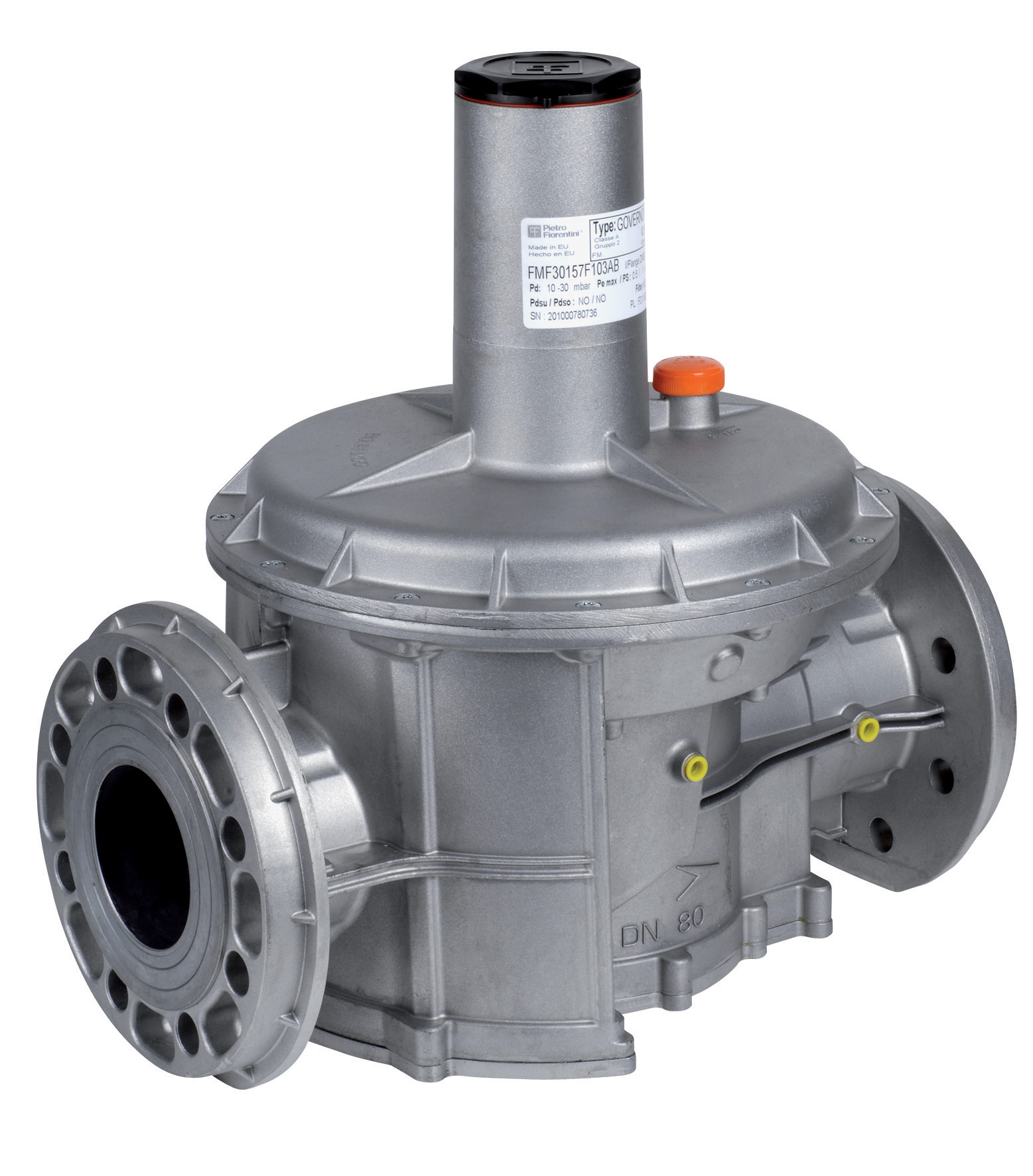
Flanged Regulators deliver superior performance in high-pressure, high-flow industrial environments. Compare two configurations from our inventory:
The CBM Pressure regulator with flanges DN50 500 Mbar PS 5/300 Mbar and CBM Pressure regulator with DN65 flanges 500 Mbar PS 5/300 Mbar demonstrate how DN (nominal diameter) scaling accommodates increasing flow demands:
- DN50 flanged regulators handle flow rates typically 15-25% higher than DN50 threaded equivalents
- DN65 scaled design supports 40-60% greater throughput without pressure loss degradation
- Flange connections eliminate threading stress points—critical for high-vibration environments
- Superior sealing reliability under extreme pressure cycling
- Preferred in permanent installations where stability and performance predictability matter most
Procurement consideration: While flanged systems carry 20-35% higher component costs, they reduce lifecycle maintenance expenses through improved reliability. For continuous-duty industrial processes operating 8,000+ annual hours, flanged configurations typically deliver superior ROI.
Section 2: Pressure Rating Specifications and Application Matching
Decoding Pressure Nomenclature for Specification Accuracy
Regulator pressure designations contain multiple parameters that procurement engineers must correctly interpret. Consider the specification "500 Mbar PS 5/300 Mbar" appearing across multiple CBM products:
Component Breakdown:
- 500 Mbar = Inlet working pressure (upstream side)
- PS 5/300 Mbar = Outlet pressure setting range (5 Mbar minimum to 300 Mbar maximum achievable)
This specification structure directly impacts procurement decisions:
High-Pressure Industrial Regulators (500 Mbar inlet) suit:
- LNG vaporization facilities requiring precise pressure reduction
- Industrial burner systems with elevated supply-line pressures
- Compressed gas distribution networks spanning extended pipeline distances
- Applications where inlet pressure fluctuation exceeds ±50 Mbar
- Municipal/commercial gas distribution networks
- Hospital and laboratory gas systems
- Building heating and hot water equipment
- Food processing and manufacturing facilities
The outlet pressure range (PS 5/300 Mbar) determines operational flexibility. A 295 Mbar adjustment window supports diverse process demands—from low-pressure pilot lights requiring minimal gas supply to equipment demanding elevated outlet pressures. Procurement teams should verify that specified regulators accommodate your facility's minimum and maximum required downstream pressures with adequate margin.
Pilot Light Integration and Safety Considerations
Sophisticated gas regulation systems integrate pilot light functionality for ignition control and flame monitoring. The CBM 1-flame pilot light 0.150.082 represents a critical subsystem component.
Procurement implications for pilot light integration:
- Integrated pilot regulation reduces overall system component count, simplifying installation and maintenance
- Safety-certified pilot systems satisfy regulatory compliance requirements across jurisdictions
- Modular pilot design enables equipment upgrades without complete regulator replacement
- Standardized pilot interfaces (0.150.082 specification) ensure compatibility across equipment generations
When specifying complete gas control systems, procurement teams must verify pilot light pressure requirements compatibility with regulator outlet settings. Pilot circuits typically require 15-50 Mbar, necessitating secondary regulation in systems with higher primary outlet pressures.
Section 3: Specialized Regulation: Gas-Specific Regulator Selection
Comparing Standard and Safety-Equipped Regulators
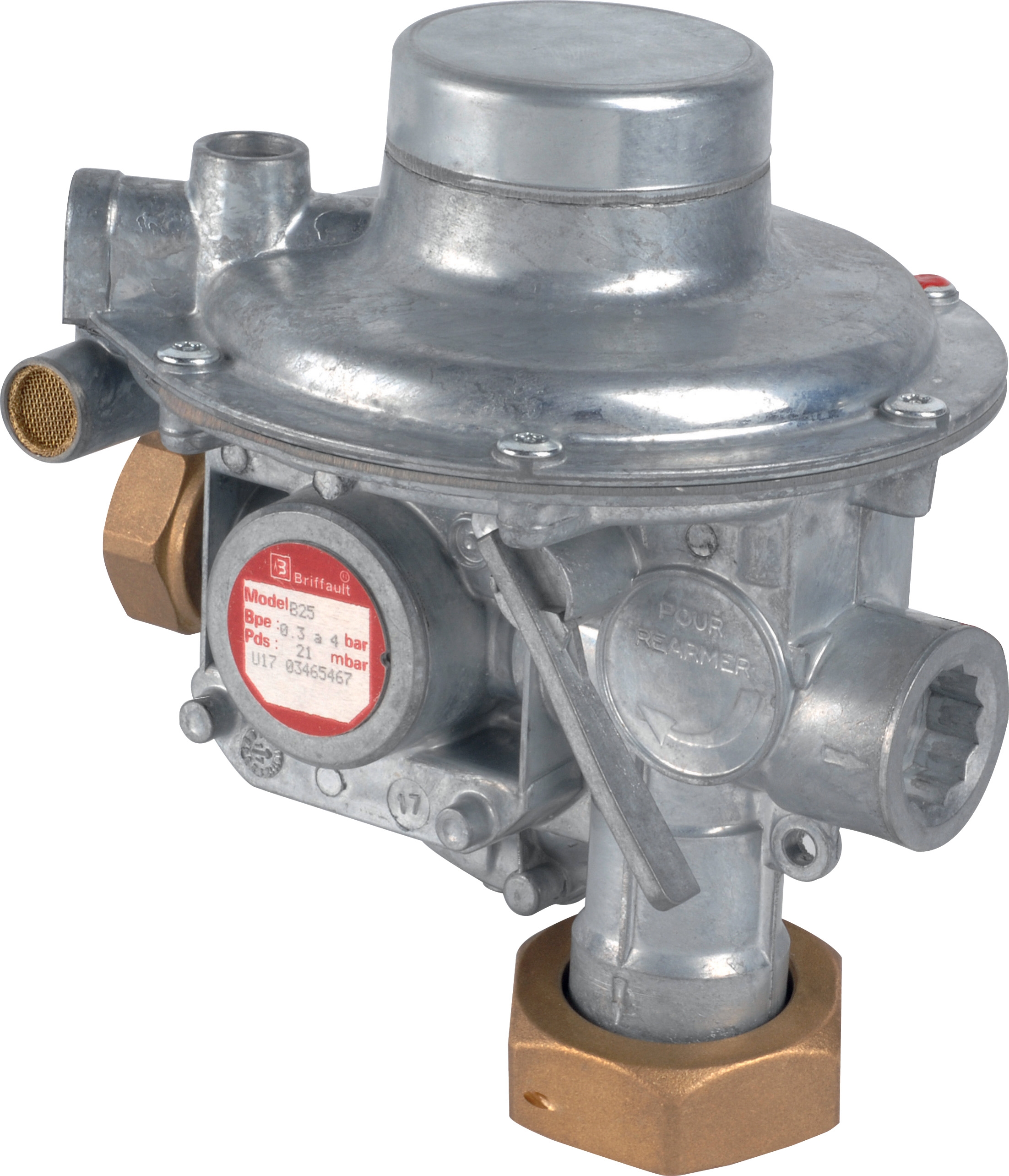
The CBM Regulator Francel B10/37mbar with safety introduces an important procurement category: safety-integrated regulators combining pressure reduction with secondary safety functions.
B10/37mbar Specification Interpretation:
- B10 = Inlet pressure rating (10 bar/1000 Mbar equivalent)
- 37mbar = Standard outlet pressure setting
- "with safety" = Integrated secondary pressure limiting (typically 10-15% above primary setting)
Safety-equipped regulators deliver:
- Dual-function protection: Primary regulation plus secondary overpressure backup
- Reduced auxiliary components: Secondary safety shutoff integrated within main regulator body
- Simplified commissioning: Single-unit installation replacing traditional two-component safety arrangements
- Compliance alignment: Meets European and international safety directives without additional equipment
- Predictable failure modes: Integrated design ensures coordinated response to system faults
Procurement cost analysis often favors integrated safety regulators despite 15-25% higher unit costs. Advantages include:
- Single supplier accountability for system safety function
- Reduced installation labor (one connection point versus two)
- Simplified spare parts inventory management
- Unified warranty and technical support
- Lower commissioning time and regulatory approval complexity
Application-Specific Selection Matrix
Regulator selection depends on four primary procurement variables:
Pressure Range Requirements:
- Low-pressure applications (under 100 Mbar): Standard single-stage regulators
- Medium-pressure (100-300 Mbar): Dual-outlet or proportional regulators
- High-pressure (300+ Mbar): Multi-stage or pilot-operated designs
- Small installations (under 50 m³/h): Threaded DN10-DN25
- Medium facilities (50-200 m³/h): Flanged DN50
- Large industrial plants (200+ m³/h): Flanged DN65 or multi-regulator parallel arrangements
- Temporary/modular systems: Threaded connections preferred
- Permanent industrial facilities: Flanged configurations recommended
- Retrofit applications: Threaded for minimal structural modifications
- New construction: Flanged for long-term reliability
- Basic industrial applications: Standard regulators (e.g., FAG series)
- Safety-critical facilities: Integrated safety regulators (e.g., DTG series)
- Specialized gas types: Application-specific certified designs
Section 4: Procurement Decision Framework and Total Cost Analysis
Capital Expenditure vs. Lifecycle Cost Modeling
Procurement engineers frequently face pressure to minimize initial capital expenditure. However, gas regulation equipment operates across extended service lifecycles (10-20 years typical). Comprehensive cost analysis must account for:
Direct Equipment Costs:
- Regulator unit cost
- Installation fittings and adapters
- Commissioning and calibration services
- Maintenance and seal replacement cycles (threaded systems require more frequent service)
- System downtime during maintenance procedures
- Energy efficiency impact on downstream equipment
- Spare parts inventory requirements
For a typical industrial facility operating 8,000 hours annually:
Scenario A - Threaded Regulator (FAG10016):
- Initial cost: $850
- Annual maintenance: $200 (quarterly seal inspections, biennial seal replacement)
- 10-year total cost: $2,850
- Typical replacement cycle: 8-10 years
- Initial cost: $1,200
- Annual maintenance: $80 (annual inspection, minimal seal wear)
- 10-year total cost: $2,000
- Typical replacement cycle: 12-15 years
- Initial cost: $950
- Annual maintenance: $120 (integrated safety reduces secondary component costs)
- 10-year total cost: $2,150
- Typical replacement cycle: 10-12 years
- Regulatory compliance: Eliminates separate secondary safety equipment costs
This analysis demonstrates that lowest initial price frequently results in highest lifecycle costs. Procurement teams should model facility-specific scenarios accounting for actual operating hours, maintenance accessibility, and safety certification requirements.
Vendor Selection and Supply Chain Considerations
Regulation equipment procurement extends beyond product specifications to encompass vendor capability:
3G Electric Procurement Advantages (35+ Years Global Experience):
- Established supply relationships: Direct CBM/DTG/BLO manufacturing partnerships ensure consistent component availability
- Technical specification support: Our procurement specialists provide application-specific recommendations, reducing specification errors
- Global distribution network: Strategic inventory positioning minimizes lead times across regions
- Warranty and support infrastructure: Comprehensive technical support throughout equipment lifecycle
- Regulatory compliance expertise: Guidance on jurisdiction-specific safety and environmental requirements
Procurement teams should evaluate vendors based on:
- Product breadth: Single-source capability for complete gas control systems reduces coordination complexity
- Technical documentation quality: Complete specifications, installation guides, and maintenance protocols
- Application references: Documented experience with similar industrial facilities
- Spare parts availability: 10+ year parts support for installed equipment base
- Training and commissioning services: Professional installation support reduces field errors
Conclusion: Strategic Procurement Decisions for Gas Regulation Systems
Gas Valves & Regulation procurement requires balancing multiple competing priorities: initial cost, operational reliability, safety compliance, and supply chain stability. The products referenced in this guide—from threaded CBM FAG regulators through integrated safety DTG systems—represent established solutions across diverse industrial applications.
Procurement engineers who move beyond simple cost comparison toward comprehensive lifecycle analysis typically identify significant total-cost savings through improved equipment selection. 3G Electric's 35 years of global distribution experience has consistently demonstrated that proper specification during the procurement phase prevents costly operational issues during equipment service life.
Approach gas regulation procurement strategically: engage technical specialists early in specification development, model realistic lifecycle costs including maintenance and downtime, and partner with vendors offering comprehensive support throughout your equipment's operational lifespan.